
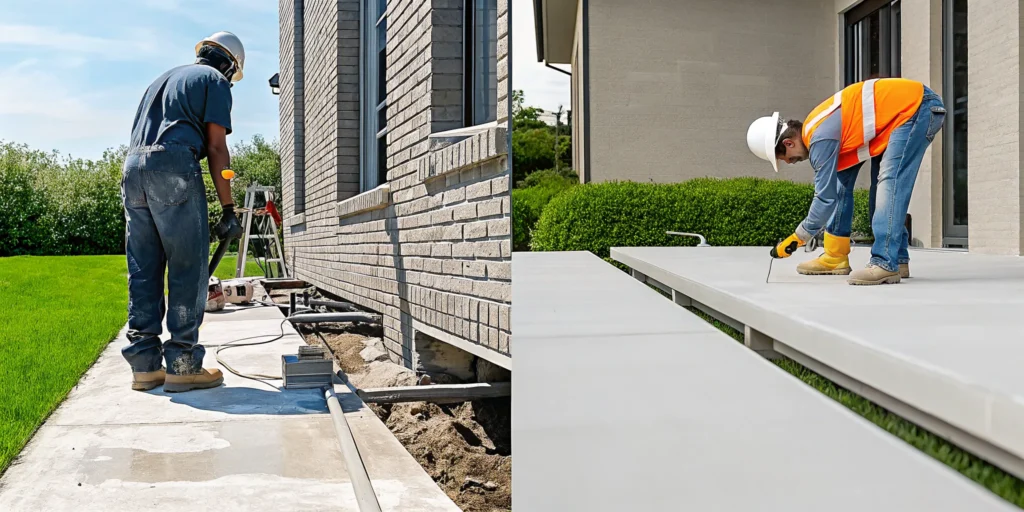
Cracks in your drywall or stuck doors are often signs of foundation movement caused by North Texas clay. This local soil expands and shrinks with the weather, pulling your home apart over time. Finding foundation repair services in Dallas is the first step toward a safe home.
Foundation repair methods for Dallas homeowners often include steel push piers, helical piers, concrete underpinning, and polyurethane foam injection to address the region’s shifting expansive clay soil. Steel push piers and helical piers are built to reach stable bedrock deep underground to stop your house from sinking further into the soft and moving ground. For lighter lifting tasks like driveways and garage floors. Polyurethane foam injection is a fast option that cures in minutes without adding heavy weight to the local soil base. Working with local experts ensures that your chosen fix addresses the unique challenges of the North Texas area. This gives you lasting strength and protects your home’s total value.
Before you choose a repair plan, you should understand the forces acting on your home. Knowing what causes foundation problems in Dallas will help you see why certain methods work better than others. The path to a lasting solution begins with
Foundation Repair Methods: What Causes Foundation Problems in Dallas?
Seeing new cracks in your walls or floors can be scary. If you own a home in North Central Texas, you likely deal with the odd soil under your feet. Dallas sits on a long belt of land called the Blackland Prairie. This place has a high amount of clay in the dirt. Most foundation repair work in Dallas starts by looking at this soil. It is the top reason for house movement in our area. The clay here is deep and goes down for many feet. This makes it hard to keep a house steady without help.
The Role of Expansive Clay Soil
The dirt in Dallas is what pros call expansive clay. This means the soil acts like a sponge. When it gets wet, it swells and grows in size. When it dries out, it shrinks and leaves gaps. This soil movement in North Texas puts a lot of stress on your home. The ground does not move the same way in all spots. One part of your house might push up while the rest sinks. This rough force leads to cracks in your slab or bricks. You might also notice that your doors start to stick. These are clear signs that the clay is moving your home. The soil can push with tons of force as it grows.
How Yearly Weather Affects Your Home
Our weather in Texas moves from one shift to the next. We often have very wet springs followed by hot, dry summers. This cycle makes the foundation problems worse. During a drought, the clay pulls away from your slab. This leaves the edge of your home without any support. When the big rains come back, the soil fills those gaps and pushes up fast. This back and forth can pull your home apart over time. It is a big part of why many people need concrete repair work for their flat slabs. The cycle repeats every year and gets worse with each turn. Most homes built on this soil will see some movement during their life.
Drainage and Plumbing Issues
Water is a major factor in how soil behaves. If your gutters do not work well, water pools near your walls. This makes the clay under the edge of your home stay too wet. This can cause the soil to turn into a soft mud that cannot hold the weight of your house. Plumbing leaks under the slab can also cause hidden issues. These leaks feed the clay and make it grow in one spot. You might see a heave where the floor bumps up in the middle of a room. Keeping the water level even around your home is key. Many pros suggest using a soaker hose during the dry months. This helps stop the soil from shrinking too much and pulling away. Proper drainage is just as vital as the foundation repair methods used to fix the damage.
Steel Push Piers and Helical Piers
Steel piers offer a strong and lasting fix for homes with sinking floors. In North Texas, foundation repair services in Dallas often use these tools to reach past shifting clay. These piers move the weight of your home from weak topsoil down to solid ground. This stops the structure from moving when the clay soil shrinks or swells. By reaching deep below the active soil zone, these piers provide a base that does not change with the weather.
How Steel Push Piers Work
Steel push piers are tough pipes made of high-strength steel. We use the weight of your home to push these piers through the soft clay. They keep going until they hit rock or very firm soil. This American Society of Civil Engineers study shows how moving loads to firm layers stops sinking. Once in place, these piers hold your home up and can even lift it back to its right spot. This helps to close cracks in bricks or walls that grew over time.
This method is a top choice for heavy brick homes or big buildings. The piers stay hidden under the ground and work for a long time. While they may cost between $5,000 and $15,000, they provide a fix that lasts. The cost often depends on how many piers your home needs to stay level. You can get a clear price for your home. Talk to our skilled foundation repair experts during a free check.
When to Use Helical Piers
Helical piers look like giant screws with metal plates on the end. Instead of being pushed, they are spun into the ground with a small machine. This method is great for lighter parts of a home, like porches or decks. It also works well in tight spots where big tools cannot fit. These piers reach deep enough to get past the clay soil that causes so much trouble in Dallas. Because they don’t need heavy force, they are safe to use near older walls.
Because they screw into the earth, these piers provide grip right away. They do not need the weight of a building to work. This makes them a good pick for new builds or for fixing light structures. At Solid Base Foundations, we use pier systems from the Supportworks network. These parts are made to last and keep your home steady for years to come. These systems are tested by experts to make sure they can handle the unique soil in North Texas.
Concrete Underpinning for Pier-and-Beam Homes
Owning an older home in Dallas often means dealing with a pier-and-beam foundation. These homes have a classic look, but they are prone to shifting as the ground moves. If you notice sagging floors or doors that stick, concrete underpinning might be the right fix. This old method has helped keep North Texas homes stable for many years. It is a common choice for houses built before modern slab foundations became the norm.
When you deal with foundation issues, it is vital to act fast. Small cracks can grow into big problems if the soil under your home keeps moving. Many local parts of the city, like those in East Dallas, have many older pier-and-beam homes. These houses need a sturdy base to handle the harsh Texas weather. This method offers a way to add that base by reaching deep into the earth.
How Concrete Underpinning Works
Concrete underpinning is a method where pros pour or drive concrete piers deep into the ground. These piers sit right under the footings of your home. The goal is to reach soil that does not shift as much as the top layer. By doing this, the weight of your house moves from the weak soil to the strong piers below. This help keeps your foundation repair services in Dallas focused on long-term results.
The work starts with digging holes at key points around the base of your house. Workers then pour wet concrete into these holes or use pre-made blocks. Unlike foam, which is light and fast, concrete needs time to set. It can take a few days for the piers to reach their full strength. After they are set, the crew can finish the job and level the floors. This method is a frequent choice for concrete repair services in older areas.
Each pier acts like a new leg for your home. By placing them at load points, the crew can lift the parts of the house that have sunk. This process takes care and skill to avoid damage to the rest of the house. It is a labor-heavy task that requires digging and moving heavy blocks. But for many homes, it is the only way to find a stable layer of soil deep beneath the yard.
Benefits for Older and Historic Homes
Many people in Dallas choose this method because it has a long and proven track record. For historic homes or pier-and-beam houses, concrete piers provide a solid base that builders trust. It is a simple way to add support without using complex new tools. Since it uses heavy items, it mimics the weight of the first base. This makes it a good fit for old homes that need a strong foundation to stay level.
Concrete piers can also support key points under the center of a house. For homes with crawl spaces, this allows crews to target the exact spots where the floor is sagging. This careful focus helps keep the look and feel of a historic home while fixing the core issues. It is a trusted way to fix foundations. It works well for people who want a fix that has lasted for a long time. It helps keep the charm of an old home while making it safe to live in.
In many cases, this method also costs less for smaller jobs. If only a few points need support, pouring concrete can be a smart move. It does not need the same high-tech gear as steel piers or foam injection. This makes it an easy option for many homeowners who need to fix their floors on a low budget. But it is always best to have a pro check your home first to see if it is the right match.
Why Clay Soil Matters for Concrete Piers
While concrete is strong, it is also heavy. In the Dallas area, the ground is full of expansive clay soil, often called the Blackland Prairie. This type of soil swells when it is wet and shrinks when it is dry. These shifts can cause heavy concrete piers to settle or move over time. The Texas Department of Licensing and Regulation notes that expansive soils can put great stress on home foundations. Because concrete is so heavy, it can put even more pressure on the shifting clay.
Another thing to think about is the time it takes to finish the work. Concrete needs days to cure before it can hold the full weight of a house. This means the job site may stay open longer than it would with other methods. Also, because concrete is not as precise as foam, it can be harder to get an exact lift. Homeowners should weigh these facts when they look at their options for repair. If the clay soil is deep, other tools like steel piers might be a better fit.
The local weather also plays a big role in how well concrete piers work. During a hot Texas summer, the clay soil can pull away from the piers as it dries. This can leave gaps that lead to more shifting later on. On the other hand, heavy rains can turn the clay into a soft mess that does not support the weight well. Knowing how the soil in your yard acts is key to choosing the best repair method. A local expert can help you understand the risks of using heavy concrete in your specific area.
Slabjacking vs. PolyLevel Foam Injection
When you need to fix a sinking concrete slab, you must choose between old and new methods. Traditional slabjacking, or mudjacking, has been a common fix for years. But modern technology has brought a better way with PolyLevel foam injection. We are an exclusive PolyLevel dealer. This engineered foam solves local soil issues better than heavy cement mixes.
How Mudjacking and PolyLevel Differ
Mudjacking uses a thick slurry of cement, sand, and soil to lift concrete. This mix is very heavy and puts a large load on the already weak soil in North Texas. In contrast, PolyLevel uses an expanding polyurethane foam. This foam is light but strong. It fills voids and lifts slabs without adding more weight to the ground. This helps prevent the slab from sinking again due to the weight of the repair itself.
The application process is also much cleaner with foam. Mudjacking requires large holes to pump the heavy slurry. PolyLevel needs only small holes, about the size of a penny. This makes the fix much less invasive for your home. You can find more about how we use these tools by looking at our project gallery of local repairs.
Precision and Cure Times
Precision is a key factor when you want a level finish. PolyLevel foam expands as soon as it is under the slab. This gives the person doing the work great control over the lift. Mudjacking is less precise because the slurry does not expand. It relies on the pressure of the pump to move the concrete. This can lead to uneven results or cracked slabs if not handled with extreme care.
Cure time is another big win for the foam method. A mudjacked slab can take 24 to 72 hours to dry and reach full strength. During this time, you cannot use the surface. PolyLevel cures in about 15 minutes. You can walk or drive on the slab almost as soon as the job is done. This speed is vital for busy families who need their garage or driveway back quickly.
Method Comparison Table
| Feature | Mudjacking (Slabjacking) | PolyLevel Foam Injection |
|---|---|---|
| Material Weight | 100+ lbs per cubic foot | About 2 lbs per cubic foot |
| Hole Size | Large (1-2 inches) | Small (5/8 inch) |
| Precision of Lift | Moderate | High |
| Curing Time | 24-72 hours | 15-30 minutes |
| Longevity | Can wash out over time | Waterproof and permanent |
| Total Invasiveness | Messy and disruptive | Clean and quiet |
Why Soil Type Matters for Your Choice
The expansive clay soil in Dallas makes the weight of your repair very important. When soil shrinks and swells, a heavy mudjacking slurry can cause more damage. The extra weight can push the slab down deeper into the soft clay. PolyLevel is the foundation repair method that accounts for this risk. It provides a stable lift that does not burden the soil.
According to the United States Geological Survey, the physical traits of soil play a huge role in how it supports a structure. Adding a heavy cement mix to an area that is already failing is often a short-term fix. Using a light, waterproof foam ensures your repair lasts through wet and dry seasons. This is why we focus on engineered solutions that work with the local ground, not against it.
How to Choose the Right Foundation Repair Method
Selecting the best way to fix your home can feel hard when there are so many options. The right choice depends on your home’s design, the soil around it, and how much it has moved. Most homeowners in North Texas deal with foundation repair services in Dallas because of the local clay soil. This soil expands when wet and shrinks when dry, which puts a lot of stress on your slab.
Find the signs of damage
The first step is to look for clues that your home is shifting. You might see cracks in your brick, gaps around your windows, or doors that do not close right. These signs help show how deep the problem goes. If you see cracks that are wider at the top than the bottom, it often means the ground is falling away from the house. Finding these issues early can keep repair costs lower before the damage gets worse.
Get an expert check
You should never try to pick a fix on your own. It is important to book a free foundation inspection with a pro who knows local soil. A trained expert will check your home’s levels and find the root cause of the shift. They can tell if you have a plumbing leak or if the house needs deep structural support. This step gives you a clear plan based on facts instead of guesses.
Check your home type
The type of house you own will limit which methods work best. Slab homes often benefit from steel piers or foam injection. Houses with a crawl space may need concrete blocks or wood shims. The American Society of Civil Engineers provides tips on how homes should handle soil movement. Your pro will look at your home’s frame to make sure the fix is a good fit.
- Spot the issues: Look for floor cracks, stuck doors, or gaps in your siding.
- Call a pro: Get an expert to look at the house and give you a free quote.
- Pick your method: Choose between deep piers for big shifts or foam for small slab lifts.
- Think about the soil: Make sure the fix can handle the local clay soil that moves with the rain.
- Check the warranty: Always ask if the work has a long-term guarantee that stays with the house.
Compare your options
Once you have a plan, look at the pros and cons of each fix. Some methods, like mudjacking, are cheap but can be heavy and messy. Others, like PolyLevel foam, are light and fast but may not work for every deep shift. High-quality experienced foundation repair professionals will offer a few ways to solve the problem. They should explain why one pier type is better than another for your yard.
Verify long-term support
A good fix should last for the life of your home. Be sure to check the warranty on any work you buy. Many deep pier systems come with a lifetime guarantee that moves to the next owner. This adds value to your house if you ever decide to sell it. The U.S. Department of Housing and Urban Development often requires these repairs to be done right to pass a loan check. A strong warranty proves the team stands behind their work.
Frequently Asked Questions
How much does it cost to repair a foundation in Dallas?
Foundation repair costs in Dallas depend on the damage and the method used. Minor crack fixes may cost you a few hundred dollars. Major pier systems often range from $5,000 to $15,000 or more. PolyLevel foam injection usually costs between $1,500 and $5,000. Slabjacking is a cheaper option at about $500 to $1,500. Since each home is unique, get a free foundation inspection for an exact price.
Does homeowners insurance cover foundation repair in Texas?
Most standard home insurance plans in Texas do not cover your foundation repair. They usually exclude damage from soil movement or settling. Coverage may only apply if a covered event like a fire or a sudden plumbing leak causes the issue. Be sure to check your policy or talk to your agent to see what is covered. It is vital to catch your foundation issues early to avoid high costs.
What is the difference between mudjacking and polyurethane foam injection?
Mudjacking uses a heavy cement mix to lift your concrete. This mix can weigh 100 pounds per cubic foot and may cause more settling. PolyLevel uses a light foam that weighs only about 2 pounds per cubic foot. This foam is more precise and cures in minutes. Unlike mudjacking, the foam will not wash out over time. This makes concrete repair services using foam a smart and lasting choice for your home.
How long does foundation repair take?
The time you need for foundation repair depends on the job size. Small crack repairs may only take a few hours. Slabjacking or foam injection usually takes just one day to complete. Installing steel piers for your house can take between two and five days. This depends on how many piers you need and how easy they are to reach. Concrete piers may take longer because they need time to dry and set properly.
Ready to find the right foundation repair method?
The sticky clay soil in North Texas will keep moving and shifting during every wet and dry cycle until you take steps to steady it. Waiting to fix these foundation issues often leads to big damage and much higher repair costs for your family down the road. By acting now, you can stop the sinking before it hurts your doors and windows or creates large cracks in your inside walls. A fast fix helps keep your home level and safe for years while protecting the total value of your house. Our team will check your home to find the most lasting and good way to fix your own soil problems and foundation type. We use tested ways to fix your home once and for all so you do not have to worry about new cracks.
Ready to find the right foundation repair method? Call (940) 365-4221 to schedule a free foundation inspection and estimate.