
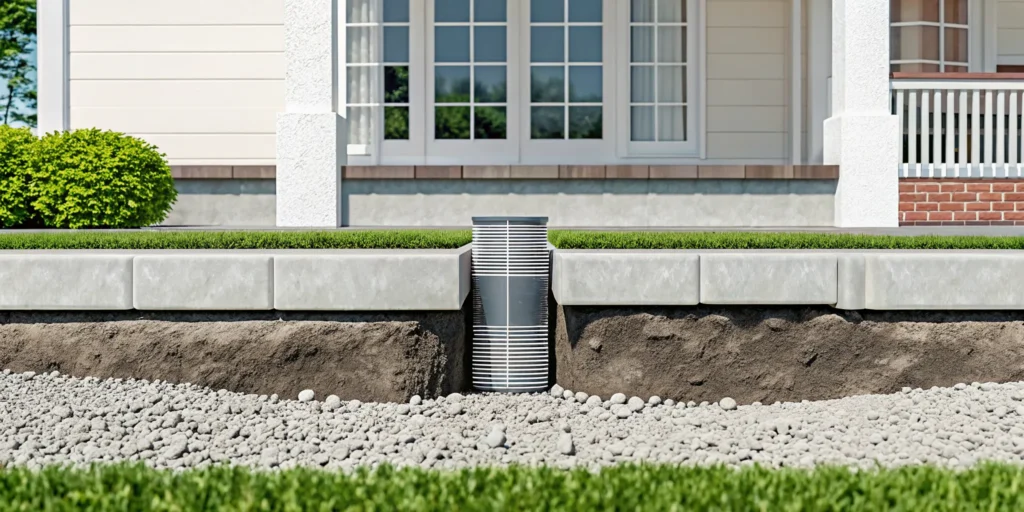
When you hear the term helical piles, you might picture a major construction project. The reality is much simpler and smarter. Think of them as giant steel screws that we twist deep into the earth, far below the unstable clay soil that causes so many foundation problems for Dallas homeowners. Unlike traditional methods that require massive excavation and pouring concrete, this process is clean, fast, and precise. The piles anchor your home to solid, load-bearing ground, providing a permanent solution that stops settling in its tracks. In this article, we’ll break down how this technology works and why it’s one of the most effective ways to restore your home’s stability.
Key Takeaways
- Bypass Problem Soil for a Permanent Fix: Helical piles work like giant steel screws, drilling past the unstable clay soils common in North Texas to anchor your home’s foundation to solid ground deep below the surface.
- Get a Faster Repair with Less Disruption: The installation process is significantly quicker and cleaner than traditional methods, meaning less damage to your yard and immediate structural support without waiting for concrete to cure.
- Confirm They’re Right for Your Home: A professional assessment is the only way to know for sure if helical piles are the best solution; an expert will analyze your soil and your home’s specific needs to create a reliable repair plan.
What Are Helical Piles?
If you’re dealing with a settling foundation, you’ve probably heard a few technical terms for the different repair methods. One of the most reliable and innovative solutions we use is the helical pile. Think of it as a giant steel screw designed to support your home from deep underground. Unlike methods that require major excavation, helical piles are twisted into the earth, anchoring your foundation to stable soil far below the surface. This technique is a game-changer for foundation repair, especially here in the Dallas area where shifting clay soils cause so many problems for homeowners.
Helical piles provide a permanent solution by transferring the weight of your house off the unstable soil near the surface and onto solid, load-bearing ground. This process not only stops your foundation from sinking further but can also be used to lift it back toward its original position, helping to close cracks and level floors. They are an incredibly strong and versatile tool in our arsenal, allowing us to secure your home’s structural integrity with minimal impact on your property and landscaping. It’s a modern, efficient way to give you back your peace of mind.
Understanding the Parts: Steel Shafts and Helical Blades
So, what exactly makes up a helical pile? It’s simpler than it sounds. Each pile has two main components: a central steel shaft and one or more helical blades. The shaft is a strong, round steel pipe that acts as the core of the pile. Welded to this shaft are the helical blades, which look like large screw threads. These blades are the key to the pile’s design. As we install the pile, the blades pull it into the ground, pushing soil aside instead of requiring a large hole to be dug first. This clean, efficient design is what makes the installation process so smooth.
How They Transfer Your Home’s Weight to Stable Soil
The magic of a helical pile is how it uses those simple parts to support a massive structure like your home. Using hydraulic machinery, we twist the pile into the ground just like a screw into wood. The pile goes deep beneath your foundation, past the shifting topsoil and clay, until it reaches a layer of stable, dense soil or bedrock that can support the weight. The helical blades anchor the pile firmly in this stable layer. Once the piles are in place, we attach brackets to them and your foundation, effectively transferring the entire weight of your home onto the piles and the solid ground they’re resting in.
Why Choose Helical Piles for Your Foundation?
When you discover a foundation problem, your mind probably jumps to thoughts of a messy, drawn-out repair process. But it doesn’t have to be that way. Helical piles offer a modern solution that is efficient, strong, and minimally invasive, making them an excellent choice for many homeowners in the Dallas area. Unlike traditional concrete piers that require extensive excavation and long curing times, helical piles provide immediate support with less impact on your property.
Choosing the right foundation repair method is a big decision, and helical piles present some compelling advantages. They are engineered for long-term stability, installed with precision, and can be adapted to a wide range of soil conditions and structural needs. From the moment we start the installation, you’ll see why this technology has become a trusted method for securing homes. Let’s look at some of the key benefits that make helical piles a standout option.
Faster Installation with Less Disruption to Your Yard
One of the biggest perks of helical piles is how quickly they can be installed. Because they are screwed into the ground with hydraulic machinery, there’s no need to wait for concrete to cure. This means the entire installation process is significantly faster than traditional methods, getting your home back on solid ground sooner.
This speed also comes with a much smaller footprint on your property. We use lighter, more compact equipment, which means we can work without tearing up your lawn or damaging your landscaping. You won’t have to deal with a massive excavation site in your yard. Instead, the process is clean and targeted, preserving the look of your home while we secure its future.
An Eco-Friendly Foundation Repair Solution
If you’re looking for a more environmentally conscious way to repair your foundation, helical piles are a great fit. The installation process has a smaller carbon footprint compared to methods involving concrete. Manufacturing cement is an energy-intensive process, but steel helical piles are often made from recycled materials and can be recycled again if ever removed.
The installation itself is also gentler on the earth. Since there’s minimal soil displacement, the local ecosystem around your home is left largely undisturbed. Less heavy machinery is needed, which translates to lower fuel consumption and emissions. Choosing helical piles means you’re not only making a smart choice for your home but also a responsible one for the environment.
Versatile Strength for Different Structures
Don’t let their streamlined design fool you; helical piles are incredibly strong. They are engineered to support immense loads, making them suitable for everything from a small deck or porch to a large family home or commercial building. This versatility is a major advantage, as it allows us to design a custom solution that perfectly matches your property’s specific needs.
Whether we’re working on a new construction project or repairing an existing foundation, helical piles can be adapted to fit the situation. They can be installed in tight spaces where other methods wouldn’t be feasible and can be used for both permanent and temporary support. You can see examples of their diverse applications in our work across the Dallas area.
Proven Performance You Can Count on Immediately
With helical piles, there’s no waiting game. As soon as a pile is installed to the proper depth and torque, it’s ready to bear weight. This is a stark contrast to concrete piers, which require days or even weeks to cure before they can handle the load of your home. This immediate load-bearing capacity allows us to begin stabilizing or lifting your foundation right away.
This efficiency not only saves time but also provides instant peace of mind. Once the piles are in place, they are connected to your foundation with a steel bracket, and you can rest assured that your home is secure. This proven, immediate performance is why so many homeowners trust helical piles for a lasting foundation repair solution.
A Look at the Helical Pile Installation Process
One of the best things about helical piles is how efficiently they can be installed. Unlike traditional foundation work that requires extensive excavation and can turn your yard into a major construction zone, the helical pile process is much cleaner and quicker. It’s a precise, engineered approach that our team has down to a science. We use specialized equipment to place each pile exactly where it needs to go, ensuring your home gets the support it needs with minimal disruption to your life and landscaping.
This process is all about getting straight to the solution. By screwing the piles deep into the ground, we bypass the unstable soil near the surface and anchor your foundation to solid, load-bearing strata. Let’s walk through what you can expect when our crew arrives at your home.
The Tools We Use for the Job
To install helical piles correctly, you need the right equipment. Our team uses machinery like excavators fitted with a special hydraulic tool called a torque motor. Think of it as a powerful, high-tech drill that allows us to twist the steel piles deep into the earth with incredible precision. This isn’t a job for standard construction equipment; the torque motor is essential because it continuously measures the resistance, or torque, as the pile goes into the ground. This data tells us exactly when the pile has reached stable soil and can support the required weight, taking all the guesswork out of the foundation repair process.
The Step-by-Step Installation
The installation process is methodical and efficient. First, we select the right helical blade (the screw-like tip) for your property’s specific soil conditions. This piece is welded to a galvanized steel shaft. Using the torque motor, we rotate the pile into the ground. As it goes deeper, we can bolt on additional shafts to extend its length until we reach the target depth and torque. This ensures the pile is anchored firmly in stable soil. Once the pile is secure, we attach it to your home’s foundation with a heavy-duty steel bracket. The entire time, we are monitoring the torque to confirm the pile’s load-bearing capacity.
How Long Does Installation Take?
You’ll be surprised at how quickly helical piles can be installed. On average, it takes about 30 seconds for every foot of pile we drive into the ground. Because there’s no major digging or concrete to pour and cure, the entire project timeline is significantly shorter than with other methods. This speed is a huge advantage for homeowners. It means our team is on-site for less time, there’s far less disruption to your yard and daily routine, and your foundation is stabilized almost immediately. You can see examples of our efficient work on past projects.
When Aren’t Helical Piles the Best Fit?
Helical piles are a fantastic solution for many foundation problems, but they aren’t the right fit for every single situation. Like any tool, they work best under the right conditions. Understanding their limitations can help you make a more informed decision about your home’s foundation repair. The three main factors that can make helical piles a less-than-ideal choice are the type of ground under your home, the sheer weight of the structure, and your project budget.
It’s important to have a clear picture of these potential challenges. A professional assessment is the only way to know for sure what your property needs, but knowing the possibilities helps you ask the right questions. Let’s look at a few scenarios where we might recommend a different approach for your foundation repair. We believe in finding the perfect solution for your specific home, and sometimes that means exploring alternatives to ensure a stable, long-lasting result. Our goal is to give you peace of mind, and that starts with an honest conversation about what will work best for your property’s unique needs. We’ll always walk you through the pros and cons of each option so you feel confident in your decision.
Challenges with Rocky Ground
Helical piles are designed to screw deep into the earth until they hit a stable, load-bearing layer of soil. This works perfectly in clay, silt, and sand. However, if your property sits on top of solid bedrock or extremely rocky soil, installation can get tricky. The helical blades can have a tough time penetrating dense rock, which can stop the pile from reaching its target depth. In some cases, trying to force a pile through can damage it. This is why a thorough site evaluation is our first step, ensuring the ground conditions are suitable for a successful installation.
Load Limits for Extremely Heavy Structures
While helical piles are incredibly strong and can support immense weight, they do have their limits. For most residential homes and many commercial buildings, they are more than sufficient. However, for exceptionally heavy or large-scale structures, a different type of deep foundation system might be necessary. Proper design considerations are critical to ensure the foundation is safe and stable for the long haul. Our team always calculates the specific load requirements of your home to determine if helical piles can provide the support you need or if another solution would be better.
A Look at the Cost
Cost is a practical consideration for any home repair project. The price of a helical pile installation can vary quite a bit, depending on the number of piles needed, the depth they need to reach, and your specific soil type. While some homeowners worry about the upfront investment, it’s helpful to view it in terms of long-term value. A permanent foundation solution protects your home’s value and prevents more costly structural problems down the road. We offer financing options to help manage the expense, and we always start with a free, transparent estimate so you know exactly what to expect.
How Does North Texas Soil Affect Helical Piles?
If you live in the Dallas area, you know our soil has a mind of its own. The expansive clay that’s so common here can shrink during dry spells and swell dramatically with rain, putting immense pressure on your home’s foundation. This constant movement is a leading cause of foundation problems in our region. Fortunately, helical piles are engineered to handle these challenging conditions. They are designed to bypass the unstable, shifting topsoil and anchor your home to the solid, stable ground deep below, providing a lasting solution for your peace of mind.
Ideal Soil Conditions for Helical Piles
One of the best things about helical piles is their versatility. They aren’t picky about soil types and can be installed effectively in a wide range of conditions, from the dense clay we see around Dallas to sandier or rockier terrain. The magic is in the design. The helical plates, or blades, on the steel shaft are engineered to interact with the soil, distributing your home’s weight evenly and creating a secure anchor. This adaptability makes them a reliable choice for the diverse soil landscape across North Texas, ensuring a stable foundation no matter what’s under your property.
Performance in Expansive Clay Soils
Expansive clay soil is the main culprit behind many foundation issues in our area. This type of soil acts like a sponge, swelling with moisture and shrinking as it dries out. This cycle of expansion and contraction can cause foundations to shift, settle, and crack. Helical piles offer an excellent foundation repair solution because they are designed to completely bypass this volatile layer of soil. We install them deep into the ground until they reach a stable, load-bearing stratum that isn’t affected by moisture changes. By transferring the weight of your home to this solid ground, helical piles provide steadfast support that holds up against the soil’s movement.
The Impact of Groundwater and Weather
From long droughts to sudden downpours, North Texas weather can be unpredictable, and it directly affects groundwater levels and soil stability. High groundwater or saturated soil can complicate many types of foundation work, but helical piles can be installed efficiently even in wet conditions. A major advantage is that they are ready to bear weight immediately after installation, so you don’t have to wait for the ground to dry out. This makes them a dependable solution year-round, ensuring your home remains stable and secure regardless of what the Texas weather throws our way.
Common Uses for Helical Piles
One of the best things about helical piles is their versatility. Their unique design makes them a reliable solution for a wide range of structural challenges, from supporting a family home to anchoring a commercial building. Because they can be installed quickly in different soil types and for various load requirements, they have become a go-to for engineers and foundation specialists. Let’s look at some of the most common ways we put them to work.
Supporting and Lifting Home Foundations
If you’ve noticed cracks in your walls or floors that seem to be getting worse, your home’s foundation is likely settling. Helical piles are an excellent tool for this exact problem. We use them to build strong foundations deep in the ground, bypassing the unstable soil near the surface. The piles are screwed into the earth until they reach a solid, load-bearing layer, transferring the weight of your home onto stable ground. This stops the settlement in its tracks. In many cases, we can also use the piles to carefully lift the foundation back toward its original level as part of our foundation repair services.
Securing Commercial Buildings and New Construction
Helical piles aren’t just for repairs; they are also a top choice for new construction. For both commercial properties and new homes, they provide a dependable foundation from the start, especially when soil conditions are less than ideal. Engineers and contractors often prefer them because they can be installed quickly, with minimal site disruption, and their load capacity is immediately verifiable. In fact, helical piles have emerged as a preferred foundation among many telecom engineers and contractors for structures like cell towers. This professional trust shows just how reliable they are, which you can see in our work across the Dallas area.
Anchoring Retaining Walls and Solar Panels
Beyond supporting vertical weight, helical piles are also fantastic for resisting sideways pressure. This makes them perfect for anchoring retaining walls. Installed horizontally into the earth behind the wall, they can also be used as “tie-backs” that prevent the wall from bowing or collapsing under the pressure of the soil. This same anchoring strength makes them useful for other applications, like securing large solar panel arrays against wind uplift or stabilizing swimming pools on sloped properties. If you have a unique structural challenge, feel free to contact us to discuss your specific project needs.
Helical Piles vs. Traditional Foundation Piers
When you discover your home needs foundation work, you’ll likely encounter a few different repair methods. The two most common categories are helical piles and traditional foundation piers, like pressed concrete or drilled concrete piers. While both are designed to support your home, they work in very different ways. Understanding these differences is key to choosing the right solution for your property.
Traditional piers often rely on heavy equipment for deep excavation and use concrete that needs time to cure and gain strength. Helical piles, on the other hand, are screwed into the ground with lighter machinery and are ready to bear weight immediately. Let’s compare them side-by-side so you can see how they stack up in terms of installation, performance, and cost. This will help you have a more informed conversation with your foundation repair specialist.
Comparing Installation Speed and Environmental Impact
One of the biggest advantages of helical piles is the installation process. It’s fast, clean, and creates minimal disruption to your home and yard. We use hydraulic equipment to screw the piles into the ground, a process that is quiet and free of the heavy vibrations that can damage your property. Because there’s no concrete involved, there’s no curing time needed. The piles can take on your home’s weight as soon as they are installed.
This is a sharp contrast to traditional methods that often require extensive excavation, loud machinery, and a waiting period for concrete to set. The efficiency of helical piles not only gets your life back to normal faster but also preserves your landscaping, saving you from additional repair costs down the road.
A Look at Long-Term Performance and Upkeep
When it comes to protecting your home, you want a solution that lasts. Properly installed helical piles are known for their incredible durability, often outliving traditional concrete foundations. A key reason for this is the verifiable performance during installation. As we drive a helical pile into the earth, we can measure the installation torque in real time. This data tells us exactly how much weight the pile can support, ensuring it meets the specific structural needs of your home.
This reliable verification process gives you immediate confidence in the repair. With concrete piers, strength is assumed based on the mix and curing process, but it isn’t measured on-site in the same way. The long-term stability and predictable performance of helical piles make them a dependable choice for securing your home’s foundation for years to come.
Breaking Down the Costs
Talking about cost is always important. While helical piles can sometimes have a higher upfront material cost than some traditional options, they often provide better overall value. The savings come from the efficiency of the installation. A faster, less labor-intensive process means lower labor costs. Plus, since there’s less disruption to your yard and property, you avoid the secondary costs of replanting your garden or repairing your patio.
Think of it as an investment in a long-term, reliable solution. The durability and verifiable strength of helical piles mean you’re less likely to face recurring issues. To get a clear picture of what a repair might cost for your specific situation, the best first step is to get a professional assessment and a free estimate.
Is a Helical Pile System Right for You?
Deciding on the right foundation repair method can feel overwhelming, but it really comes down to a few key factors specific to your home and property. Helical piles are an incredibly effective and versatile solution, but like any tool, they work best in the right situation. Understanding your home’s needs is the first step in determining if a helical pile system is the perfect fit to restore its stability and give you peace of mind. Let’s walk through what you need to consider.
Assessing Your Property’s Soil and Load Needs
The two most important factors in this decision are your property’s soil and the weight of your home, also known as the structural load. Helical piles are designed to transfer that load from unstable soil near the surface to solid, load-bearing soil deeper underground. They are remarkably versatile and can be engineered to support everything from a small porch to a large commercial building. The key is ensuring they can reach that stable soil layer. A professional evaluation will determine if the soil composition on your property is suitable and, if so, how deep the piles need to go to provide lasting support for your foundation repair.
Common Myths About Helical Piles, Debunked
There are a few common misconceptions about helical piles that might give homeowners pause, so let’s clear them up. One myth is that they are only for large, commercial projects. This simply isn’t true; they are an excellent and widely used solution for residential homes. Another concern is cost. While there is an investment, the quick, minimally invasive installation often reduces labor costs, making them a competitive option. Plus, properly installed helical piles are a long-term fix that can even outlive traditional concrete foundations. Finally, rest assured that helical piles are an engineered solution designed to meet and exceed local building code requirements.
Why a Professional Assessment Is the First Step
You can’t know for sure if helical piles are the right choice without a professional opinion. An expert assessment is the only way to get a clear picture of what’s happening beneath your home. A trained technician will analyze your foundation, evaluate the soil conditions, and calculate the specific load requirements of your structure. This detailed evaluation determines the type, size, and depth of the piles needed to secure your home permanently. If the soil near the surface is too weak, we can simply use extensions to reach stronger strata deeper down. The best way to start is to schedule a free estimate to get a clear, actionable plan from a specialist.
Related Articles
Frequently Asked Questions
How do I know if helical piles are the right solution for my foundation problems? The only way to know for sure is with a professional assessment. Helical piles are a great fit for many homes, especially in our local clay soil, but the best solution depends on your specific situation. An expert will evaluate your home’s structural load, the soil conditions on your property, and the extent of the foundation settlement to determine if helical piles can provide the permanent support you need.
Will the installation process damage my landscaping? We understand how much your yard means to you, and minimizing disruption is one of the biggest benefits of helical piles. The process uses smaller, specialized equipment that doesn’t require major excavation. This means we can typically install the piles without tearing up your lawn, garden beds, or patios, preserving the look and feel of your property while we secure its foundation.
Are helical piles a permanent fix for my foundation? Yes, they are designed to be a permanent, long-term solution. The piles are made from galvanized steel to resist corrosion and are installed deep underground, past the unstable topsoil. By anchoring your home to a solid, load-bearing layer of earth, they provide lasting stability that isn’t affected by the shifting soils near the surface, giving you confidence in your home for years to come.
What makes helical piles a good choice for the expansive clay soil in North Texas? Expansive clay soil, which is common across the Dallas area, is a major cause of foundation issues because it shrinks and swells with moisture changes. Helical piles are an ideal solution here because they completely bypass that volatile layer of clay. We screw them deep into the ground until they reach a stable stratum that doesn’t move, effectively transferring your home’s weight off the troublesome clay and onto solid ground.
How long does a typical helical pile installation take? You’ll likely be surprised by how quickly the work is completed. Because the piles are screwed into the ground and don’t require waiting for concrete to cure, the installation phase is significantly faster than traditional methods. While the total project time depends on the number of piles your home needs, the process is very efficient and minimizes the time our crew is on your property.