
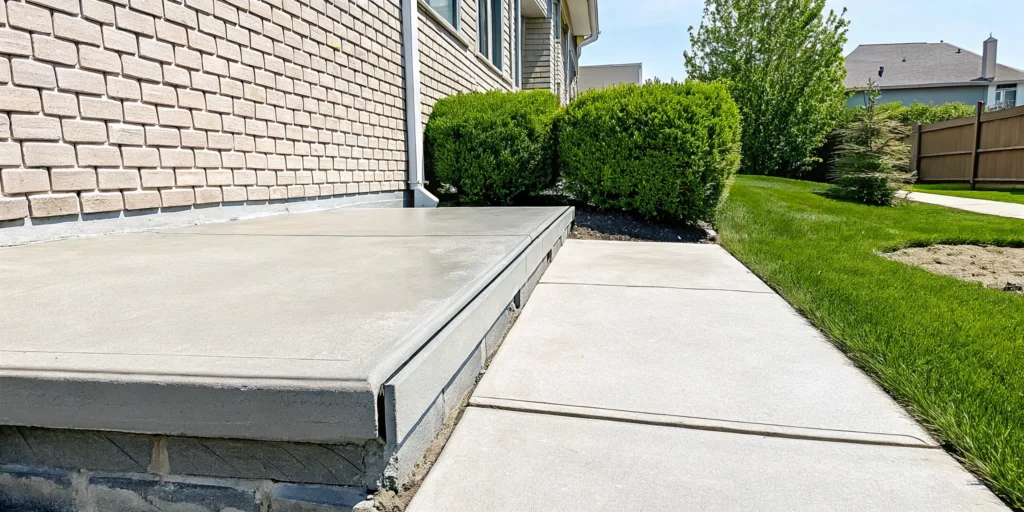
Your concrete patio isn’t failing on its own; the ground beneath it is the real culprit. Think of your patio as a rigid raft floating on a sea of soil. When that soil moves, sinks, or pushes up, the concrete has no choice but to follow, leading to the cracks and tripping hazards you’re seeing now. Before you can choose the right fix, you have to figure out why your patio became uneven in the first place. This article will help you diagnose the root cause and explore the best options for a lasting uneven concrete patio repair.
Key Takeaways
- Address the Real Problem: Your uneven patio isn’t failing on its own; the real issue is unstable ground. Lasting repairs must solve the underlying cause, whether it’s soil erosion, poor drainage, or invasive tree roots.
- Choose the Right Solution: A cosmetic patch won’t fix a structural problem. For minor surface issues, a self-leveling compound might work, but for sunken slabs, you need a professional method like polyjacking that lifts the concrete and fixes the problem at its source.
- Recognize the Red Flags: Don’t ignore major warning signs like sinking slabs, widening cracks, or water pooling near your home’s foundation. These point to serious issues that require a professional assessment to ensure a safe and permanent solution.
Why Is My Concrete Patio Uneven?
That sinking feeling you get when you see a new crack or an uneven spot on your patio is frustrating. It’s easy to assume the concrete itself is failing, but the real problem is almost always happening out of sight, deep in the ground below. Think of your patio as a rigid raft floating on a sea of soil. When that soil moves, sinks, or pushes up, the concrete raft has no choice but to follow, leading to the cracks, dips, and tripping hazards you’re seeing now. This is especially true in the Greater Dallas area, where our unique soil conditions create a challenging environment for any concrete structure. Understanding what’s happening beneath the surface is the first step to finding a lasting fix, not just a temporary patch. Before you can choose the right repair method, you have to play detective and figure out why your patio became uneven in the first place. Most issues boil down to one of four common culprits, and identifying the right one is key to a successful, long-term solution.
Shifting Soil and Erosion
The ground beneath your patio isn’t as solid as you might think, especially here in North Texas. We have expansive clay soil that acts like a sponge, swelling when it’s wet and shrinking dramatically when it dries out. This constant movement puts a lot of stress on the concrete slab above. Over time, water runoff from rain or sprinklers can also wash away the soil supporting the edges of your patio. This erosion creates empty pockets, and without proper support, the heavy concrete will sink and crack into those voids. This is a primary reason why professional foundation repair is often needed to stabilize the ground first.
Water Damage from Poor Drainage
Where does all that water causing soil shifts come from? Often, it’s from poor drainage around your home. If your gutters are clogged, your downspouts empty right next to your patio, or your yard slopes toward your house, you’re directing water exactly where you don’t want it. This saturates the soil, weakening its ability to support the patio slab. You might even see water pooling on the surface after it rains. This excess moisture not only causes sinking but can also lead to more serious issues if it gets near your home’s foundation. Proper concrete repair often involves addressing these drainage problems to prevent a repeat performance.
Pesky Tree Roots
Those beautiful, mature trees in your yard have powerful root systems that can extend far beyond the canopy. As tree roots grow in search of water, they can make their way under your concrete patio. Over the years, these roots thicken and expand with incredible force, pushing the slab upward from below. This process, called “heaving,” creates bumps, slopes, and significant cracks in the concrete surface. It’s a slow but relentless process that can cause major damage. If you have large trees close to your patio, their roots are a likely suspect for any unevenness you’re seeing.
An Improper Foundation
Sometimes, the problem dates back to the day your patio was installed. A concrete slab needs to be poured on a solid, well-compacted base of gravel to ensure it stays stable for years to come. If the original contractor cut corners by pouring the concrete directly onto unprepared soil, they set it up for failure. Without that proper base, the soil underneath will naturally settle and shift over time, and the patio will sink and crack. It’s a sign of a job that wasn’t done right from the start, which is why working with an experienced team you can trust is so important.
How to Assess Your Uneven Patio
Before you can fix your patio, you need to play detective for a bit. A proper assessment is the most important step because it tells you exactly what you’re dealing with. It helps you figure out the scale of the problem and, more importantly, what’s causing it in the first place. Skipping this part is like putting a bandage on a broken arm; it might look a little better, but it doesn’t solve the real issue. Taking a few minutes to understand the “what” and the “why” will save you a lot of time, money, and frustration down the road. It’s the difference between a temporary patch and a lasting solution that lets you enjoy your outdoor space for years to come.
Measure the Damage and Find Problem Spots
First, let’s figure out how uneven your patio actually is. Grab a long, straight board or a 4-foot level and lay it across different areas of the concrete. You’ll quickly see where the gaps are (the low spots) and where the board rocks back and forth (the high spots). Mark these problem areas with chalk so you have a clear map of the damage. This simple step helps you understand the scope of the work. For very slight issues, you might be able to get away with a DIY fix. For minor unevenness, the solution might be to “grind down high spots and filling low spots with concrete patching compound.” But if you’re seeing significant dips or heaves, you’re likely looking at a bigger project.
Pinpoint the Root Cause
Now for the most critical part: figuring out why your patio is uneven. An uneven surface is usually a symptom of a deeper problem. Often, the culprit is the ground underneath. “If the soil isn’t adequately compacted before pouring concrete, it can settle over time, causing the concrete surface to become uneven.” Another common issue is water. Poor drainage can allow water to “erode the soil beneath a concrete slab, leading to uneven settling.” Identifying these root causes is key to a permanent fix. Without addressing unstable soil or drainage issues, any concrete repair you perform will only be a temporary patch before the problem returns, which is why a professional assessment can be so valuable.
Your Top Concrete Patio Repair Options
Once you’ve figured out what’s causing your patio problems, you can explore the best way to fix them. The right solution really depends on the extent of the damage. A few cosmetic cracks are a world away from a slab that has sunk several inches. For some homeowners, a simple DIY compound might do the trick, but for sinking and significant settling, you’ll need a more robust approach that addresses the ground beneath the slab. These more advanced methods lift and stabilize the concrete, correcting the problem at its source instead of just putting a bandage on it.
Choosing the right fix is crucial because an incomplete repair can lead to more headaches and expenses down the road. For example, simply resurfacing a slab that’s sinking due to soil erosion won’t last; the new surface will just crack and sink again. That’s why it’s so important to match the repair method to the root cause. Professional concrete repair focuses on creating a stable, long-lasting result. Sometimes, an uneven patio can even be a symptom of a larger issue with your home’s foundation. If you see similar cracking or settling near your house, it might be time to consider if you need foundation repair as well. Let’s walk through the most common options, from heavy-duty lifting to simple surface fixes.
Lifting with Polyurethane Foam
If your patio slab has sunk but is still in good shape, lifting it with polyurethane foam is a fantastic, modern solution. This method, often called polyjacking, is minimally invasive and incredibly effective. A professional team drills a few small, dime-sized holes into the sunken slab. Then, they inject a structural-grade polyurethane foam into the voids beneath the concrete. This foam expands, almost like magic, filling the empty space and gently lifting the slab back to its original position. The material is waterproof, so it helps prevent future erosion, and it cures in about 30 minutes, meaning you can use your patio again the very same day.
Using Mudjacking for Large Dips
Mudjacking is the traditional method for lifting sunken concrete, and it’s still a reliable option, especially for large, heavy slabs. The process is similar to polyjacking but uses a different material. Instead of foam, a slurry made of cement, sand, and other materials is pumped beneath the slab to lift it. The holes required for mudjacking are larger than those for polyurethane foam, and the material is much heavier. While it’s a proven technique, the cure time is longer, and the material can sometimes erode over time if the underlying water issues aren’t fully resolved. A professional can help you decide if this classic method is the right choice for your patio.
Fixing Minor Issues with Self-Leveling Compounds
For patios with only minor imperfections, like shallow dips or a slightly uneven texture, a self-leveling compound can be a great DIY-friendly fix. This solution is best for surface-level problems, not for slabs that have sunk due to soil issues. You simply pour the liquid compound over the clean, prepped low spots on your patio. True to its name, the compound spreads out on its own to create a smooth, level surface. It’s an excellent way to smooth things over before painting or applying another finish, but remember, it’s a cosmetic fix. It won’t lift a sunken slab or solve any underlying structural problems.
When to Use Resurfacing and Overlays
If your patio slab is stable but the surface looks worn out, cracked, or stained, resurfacing is your best bet. This process gives your patio a complete facelift without having to tear it out and start over. An expert will thoroughly clean and prepare the existing concrete before applying a thin, cement-based overlay. This new layer covers up all the old imperfections, creating a fresh, durable surface. You can even add color or stamp patterns into the overlay for a decorative touch. It’s a perfect way to restore your patio’s beauty and can be a stunning part of a larger repair project, as you can see in some of our work.
Tools and Materials for Patio Repair
Having the right tools for the job can be the difference between a weekend project and a lasting solution. While a trip to the hardware store can get you started on minor fixes, professional contractors use specialized equipment to deliver precise, durable results. Understanding what each approach involves will help you decide which path is right for your patio.
What You’ll Need for a DIY Fix
For small dips or minor uneven spots, a DIY approach can be tempting. Your shopping list will likely include a concrete leveling compound, which you can pour into low areas to create a flatter surface. You’ll also need basic tools like a trowel to spread the compound, a bucket for mixing, and a level to check your work. While some online forums might mention mudjacking as an easy fix, it requires renting specialized equipment to pump a slurry underneath the slab. This method can be messy and difficult to control without experience, so it often falls outside a typical DIY project scope. These fixes are best for cosmetic issues, not for addressing underlying structural problems.
The Tools a Pro Uses for Lasting Results
When you hire a professional team, you’re paying for both their expertise and their advanced equipment. Instead of a simple leveling compound, we use specialized tools for a lasting concrete repair. For lifting sunken slabs, we use polyjacking equipment that injects a high-density polyurethane foam beneath the concrete. This material is strong, lightweight, and waterproof, providing a stable lift that also helps prevent future erosion. We also use tools like laser levels to ensure the slab is lifted with precision. This professional-grade equipment allows us to address the root cause of the problem, ensuring your patio is not just level, but structurally sound for years to come.
Common Repair Mistakes to Avoid
Fixing an uneven concrete patio might seem like a straightforward weekend project, but a few common missteps can turn a simple repair into a recurring headache. Cutting corners or using the wrong approach often leads to more significant problems and wasted money down the line. When you’re dealing with something as foundational as your home’s concrete, getting it right the first time is key. A failed repair doesn’t just look bad; it can mean the original problem, like poor drainage or shifting soil, is still at play and potentially getting worse. This can lead to even bigger cracks, more significant sinking, and safety hazards in your own backyard.
Whether you’re attempting a DIY fix or just want to understand what a professional process looks like, knowing what not to do is just as important as knowing what to do. We see the results of well-intentioned but flawed repairs all the time. By learning to spot these common pitfalls, you can make a more informed decision about how to handle your patio. From improper surface prep to ignoring the root cause of the issue, these errors can compromise the integrity of the fix. Avoiding these mistakes will help ensure your repair is effective and long-lasting, preserving your outdoor space for years to come.
Don’t Skip the Surface Prep
Think of it like painting a wall. You wouldn’t just slap a new coat of paint over dirt and peeling spots, right? The same principle applies to concrete. Proper surface preparation is essential for any repair material to bond correctly. If you pour a new compound over a dirty, crumbling surface, it won’t stick. The patch will quickly crack, flake, or break away, and you’ll be right back where you started. A thorough cleaning to remove all dirt, grease, and loose debris is the first step to a successful and durable concrete repair. This ensures the new material can form a strong, lasting connection with the old slab.
Don’t Ignore Underlying Drainage Problems
If your patio is uneven, there’s a good chance water is the culprit. An uneven slab can cause water to pool or, even worse, direct it straight toward your house. This can lead to serious moisture issues and even compromise your home’s foundation. Simply leveling the concrete without addressing the poor drainage is like putting a bandage on a deeper wound. The problem will just come back. It’s crucial to identify and fix the source of the water issue, whether it’s clogged gutters, improper grading, or something else. Ignoring this step can risk the structural integrity of your entire home, potentially leading to the need for extensive foundation repair.
Don’t Use the Wrong Materials
Not all concrete repair products are created equal, and using the wrong one is a recipe for failure. A simple crack filler from the hardware store isn’t designed to lift a sunken slab, and a self-leveling compound won’t fix a deep structural issue. Treating the symptom instead of the source with a mismatched product will only provide a temporary cosmetic fix. Professionals use specific materials, like high-density polyurethane foam, for slab lifting because they are engineered to provide support and durability. Choosing the right material for your specific problem is critical for a repair that actually lasts.
How Much Does Patio Repair Cost?
Figuring out the budget is a big first step when you’re dealing with an uneven patio. The final cost can swing quite a bit depending on whether you decide to tackle the project yourself or bring in a professional. While a DIY fix might seem cheaper on the surface, it’s important to weigh the costs of materials and tools against the value of a long-lasting, professional repair.
The total price depends on the size of your patio, the severity of the damage, and the repair method you choose. For example, a simple crack fill is much less expensive than lifting an entire sunken slab. Understanding the difference between a weekend DIY project and a professional concrete repair job will help you set a realistic budget and make the best choice for your home and your wallet. Let’s break down what you can expect.
DIY vs. Professional Repair Costs
Going the DIY route can be tempting if you’re looking to save on labor. Basic materials for a small patch job might only cost between $50 and $200. However, you also have to factor in the price of renting specialized tools and the very real possibility of mistakes that could lead to bigger, more expensive problems down the road. While some sources suggest DIY savings can be significant, it doesn’t account for your time or the risk.
Hiring a professional team costs more upfront, but you’re paying for expertise, efficiency, and peace of mind. For a full repair, you might see estimates ranging from $1,500 to $5,000, depending on the job’s complexity.
What Affects the Final Price?
Several key factors influence the final quote for a professional patio repair. The biggest is the extent of the damage; a few minor cracks are much simpler to fix than a large, sunken section caused by soil erosion. The specific materials used, such as high-density polyurethane foam for concrete lifting, also play a role in the cost but provide superior, lasting results.
Your contractor’s labor costs will be a major part of the estimate, covering the team’s time and skill. Finally, site conditions matter. If your patio is in a hard-to-reach area, it may require more time and effort, which can affect the price. The best way to get a clear number is to get a detailed, on-site estimate from a trusted professional.
When Should You Call a Professional?
While a small crack might seem like a simple DIY project, knowing when to step back and call an expert is key to protecting your property. Some issues are more than surface-deep and require a professional diagnosis to prevent bigger, more expensive problems later on. If you’re on the fence, look for these tell-tale signs that it’s time to get an expert opinion.
Red Flags That Require an Expert Eye
If your patio slabs are noticeably sinking or the cracks are actively growing wider, it’s a sign of a deeper issue. This often points to problems with the soil underneath, which may have settled over time because it wasn’t compacted properly before the concrete was poured. While it might just look like an aesthetic issue now, ignoring these red flags can lead to serious safety hazards or even structural damage to your home’s foundation. An expert can tell the difference between a minor flaw and a symptom of a much larger problem that a simple patch job won’t solve. Getting a professional assessment early can save you a lot of trouble.
Big Structural Problems and Safety Concerns
When an uneven patio becomes a clear trip hazard for your family and guests, it’s time to call for help. But the risks go beyond a potential fall. Sunken concrete can also disrupt proper drainage, causing water to pool around your home and potentially seep into your foundation. This can create significant moisture problems. A professional concrete repair service does more than just fix the surface; they find the root cause. One of the biggest mistakes homeowners make is treating the symptom instead of the source. An expert ensures the real problem is solved for a safe, long-lasting result.
How to Prevent Future Patio Problems
After you’ve repaired your uneven patio, the last thing you want is a repeat performance. Taking a few preventive steps can save you a lot of time and money in the long run. The key is to manage the same forces that caused the damage in the first place: water, soil, and wear and tear. By staying proactive, you can keep your patio stable, safe, and looking great for years to come.
Install Better Drainage
Water is the number one enemy of stable concrete. When it doesn’t have a clear path to drain away from your home, it pools around and under your patio slab. This can erode the soil, saturate the ground, and put pressure on your foundation. Uneven concrete often disrupts proper drainage, creating a cycle of damage. To prevent this, make sure your gutters are clean and your downspouts direct water far from the patio. You should also check that the soil around the slab is graded to slope away from your house. Excess water is a primary cause of serious foundation repair needs, so managing it is crucial.
Stick to a Regular Maintenance Schedule
Think of concrete maintenance as a small investment that protects your larger one. A simple routine can make a huge difference. Start by cleaning your patio regularly and inspecting it for small cracks or chips. Sealing these minor issues promptly prevents water from getting in and making them worse. It’s also a good idea to have your patio professionally cleaned and sealed every few years. A quality sealant protects the surface from moisture, stains, and the Texas sun. Catching problems early can help you avoid a major concrete repair project down the line and keeps your patio looking its best.
Care for Your Soil and Expansion Joints
The ground beneath your patio is constantly shifting. In the Dallas area, our clay soil expands when wet and shrinks when dry, which can cause concrete to heave and settle. While you can’t stop the weather, you can manage its effects by maintaining consistent moisture levels in the soil around your foundation during dry spells. Also, be mindful of tree roots, which can grow under a slab and lift it. Expansion joints are another key feature to maintain. These small gaps are designed to let the concrete move without cracking. Keep them clean and sealed to prevent water from seeping underneath and eroding the soil. You can see how we address underlying soil issues in our work across the area.
How to Choose the Right Dallas Concrete Contractor
Finding the right person for a home repair project can feel like the hardest part of the job. When it comes to something as important as your home’s concrete, you want to be sure you’re hiring a team you can trust. The right contractor won’t just fix the problem; they’ll provide a lasting solution and give you peace of mind. A poor choice could lead to a repair that fails in a year, costing you more money and stress. On the other hand, a great contractor provides quality craftsmanship that protects your home’s value for years to come. Choosing a contractor in a busy area like Dallas means you have a lot of options, which can be overwhelming. The key is to know what to look for and what to ask. A little bit of homework before you hire can save you from major headaches. Think of it as a job interview where you’re the one in the hiring seat. Focusing on a few key areas will help you confidently pick a professional who will get the job done right the first time.
What to Look for in a Professional Team
A great contractor’s reputation is built on more than just technical skill. You’re looking for a team that is experienced, transparent, and professional from start to finish. First, check their experience and specialization. A company that focuses specifically on concrete repair will have deeper knowledge than a general handyman, especially with the unique soil conditions in the Dallas area. They should have a proven track record of solving problems just like yours. Next, look for proof of their quality. A confident contractor will be proud to show you examples of their work and share customer testimonials. Check their website for a gallery of past projects and look for online reviews to see what other homeowners are saying. Finally, and this is non-negotiable, ensure they are fully licensed and insured. This protects you and your property from any liability during the repair process.
Key Questions to Ask Before You Hire
Once you’ve narrowed down your list to a few potential contractors, it’s time to get some estimates and ask some important questions. Don’t be shy; a true professional will be happy to provide clear answers.
Start with these questions:
- How long have you been repairing concrete in the Dallas area? This helps you gauge their local experience.
- What is your proposed solution for my patio, and why is it the best approach? Their answer will reveal their expertise and problem-solving process.
- Can I see examples of similar projects you’ve completed? Ask to see their portfolio to get a feel for the quality of their work.
- What kind of warranty or guarantee do you offer? This shows they stand behind their repairs.
- Do you offer any financing options? Since repairs can be a significant investment, it’s good to know if financing is available to make the cost more manageable.
Related Articles
- Concrete Repair – Solid Base
- Ultimate Guide to Foundation Repair Options
- A Homeowner’s Guide to Foundation Repair Services
- How to Fill Large Cracks in Concrete Like a Pro
Frequently Asked Questions
How can I tell if my uneven patio is a serious problem or just a cosmetic issue? The best way to tell is by looking at the type of damage. Small, hairline cracks or a rough surface texture are often just cosmetic. The real red flags for a deeper problem are when entire sections of the concrete have sunk, creating a noticeable slope, or when cracks are actively getting wider over time. If your patio is pulling away from your house or causing water to pool near your foundation, it’s a clear sign that the ground underneath is unstable, and you should get a professional opinion.
Polyjacking sounds new. Is it really better than the traditional mudjacking method? While both methods lift concrete, they work very differently. Mudjacking uses a heavy slurry of mud and cement, which requires larger holes and a longer time to cure. Polyjacking, on the other hand, uses a lightweight, high-density foam injected through small, dime-sized holes. This foam is waterproof, which helps prevent future soil erosion, and it cures in about 30 minutes. For most residential patios, we find polyjacking is a cleaner, faster, and more durable solution.
My patio is really cracked and uneven. Can’t I just pour a new layer of concrete on top of it? Pouring new concrete over a failing slab is unfortunately just a temporary patch. The underlying problem, like shifting soil or poor drainage, will still be there. Before long, that same issue will cause the new layer to crack and sink, and you’ll be right back where you started. A true, lasting repair involves stabilizing the ground and lifting the existing slab or, in severe cases, replacing it entirely.
If my patio is sinking, does that automatically mean my house foundation has problems too? Not necessarily. Your patio slab and your home’s foundation are usually separate structures. However, the soil and water issues that cause a patio to sink can certainly affect your house as well. If you notice your patio is uneven, it’s a good idea to walk around your home and look for other warning signs, like cracks in the brick or interior walls, sticking doors, or gaps around window frames. If you see those, it’s wise to have an expert assess both.
How long does a professional patio repair like polyjacking usually take? You might be surprised by how fast it is. For an average-sized patio, the entire polyjacking process can often be completed in just a few hours. The team drills the small holes, injects the foam to lift the slab, and cleans up the site. Because the polyurethane foam cures so quickly, your patio is typically ready to walk on and use again the very same day.