
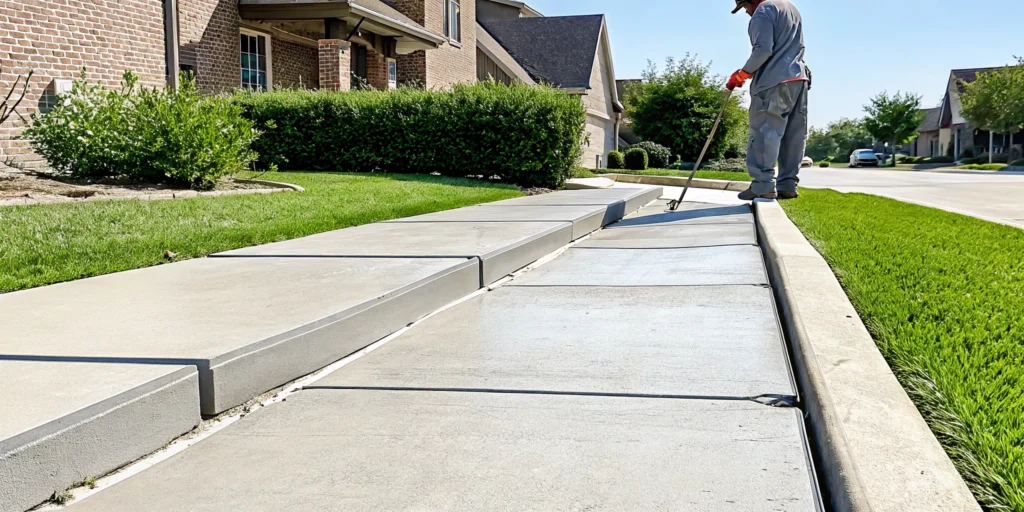
Here in North Texas, our soil has a mind of its own. The expansive clay beneath our homes and sidewalks is constantly shifting, shrinking in the dry heat and swelling with heavy rain. This endless cycle is the primary reason why sidewalks sink, crack, and become uneven. It’s a problem that won’t fix itself and often gets worse over time. Because of these unique ground conditions, effective sidewalk leveling Dallas requires a method that not only lifts the concrete but also stabilizes the volatile soil beneath it. This guide will explain the science behind our local soil issues and how modern repair techniques provide a durable, long-term solution that addresses the root cause of the problem.
Key Takeaways
- Proactive repair is a smart investment: An uneven sidewalk is more than an eyesore; it’s a safety hazard and a legal liability for Dallas homeowners. Addressing issues promptly protects your property value and prevents potential accidents.
- Leveling is usually the smarter choice: In most cases, repairing your sidewalk with leveling is better than a full replacement. It’s more affordable, finished in hours instead of days, and saves your landscaping, all while delivering a durable, long-lasting solution.
- Protect your investment with the right pro and plan: The success of your repair depends on the contractor, so always verify insurance and compare estimates. Once the job is done, simple preventative steps, like improving water drainage, will help keep your sidewalk stable for years.
Why Level Your Sidewalk? A Dallas Homeowner’s Guide
That uneven slab of concrete in front of your house might seem like a minor annoyance, but a sunken or cracked sidewalk can create bigger problems than you think. Here in the Dallas area, our expansive clay soil is notorious for shrinking during dry spells and swelling with heavy rain. This constant movement creates voids beneath concrete slabs, causing them to settle and become uneven over time. While it’s tempting to ignore a small crack or a slightly tilted section, these are often early warnings of a bigger issue that won’t fix itself. An unlevel sidewalk is more than just an eyesore; it’s a serious trip hazard for your family and neighbors, a potential legal liability, and a drag on your home’s curb appeal. Before you start budgeting for a messy and expensive tear-out, it’s worth exploring a better way. Modern repair methods offer a lasting, cost-effective solution that protects your property and your peace of mind. Understanding why leveling your sidewalk is so important is the first step toward making the right choice for your home.
What Is Sidewalk Leveling?
Sidewalk leveling is a repair technique designed to fix settled or uneven concrete slabs without tearing them out and starting over. Think of it this way: over time, the soil underneath your sidewalk can wash away or compact, creating empty spaces or voids. This loss of support causes the heavy concrete slab above to sink and crack. Sidewalk leveling, sometimes called mudjacking or poly-leveling, fills those voids. This process lifts the existing concrete back to its original position, restoring a stable, even surface. It’s an effective method of concrete repair that addresses the root of the problem, not just the symptom.
Sidewalk Safety and Your Liability
An uneven sidewalk is more than just an eyesore; it’s a serious trip hazard for your family, neighbors, and anyone passing by. A raised edge of just half an inch can be enough to cause a fall and potential injury. What many Dallas homeowners don’t realize is that they are often responsible for maintaining the sidewalk adjoining their property. According to the Dallas City Code, property owners are required to repair defective sidewalks. Addressing these issues promptly not only keeps your community safe but also protects you from potential liability claims.
Protecting Your Property’s Value
Your sidewalk is one of the first things people see when they look at your home, making it a key part of your property’s curb appeal. A cracked, sinking sidewalk can give the impression that a home is poorly maintained, which can detract from its value. Leveling your sidewalk is a smart investment that instantly improves your home’s appearance. It’s also typically much faster and more affordable than a complete replacement. By choosing to repair instead of replace, you get a beautiful, safe walkway without the major expense and disruption of a full-blown construction project, helping preserve your property’s worth.
Does Your Sidewalk Need Repair?
It’s easy to overlook the concrete path leading to your front door until it becomes a glaring issue. That one little crack or slight slope can seem minor at first, but these are often the first signs of a bigger problem brewing beneath the surface. Uneven sidewalks aren’t just an eyesore; they can pose real risks to your family and visitors. Understanding what to look for is the first step in deciding whether your sidewalk needs attention. Let’s walk through the common signs that your sidewalk is calling for help and the safety hazards you should be aware of.
Telltale Signs of a Problem
The most obvious sign is when one section of your sidewalk is higher than another, creating a noticeable lip. You might also see spiderweb cracks spreading across the surface or a slab that has clearly sunk or tilted. These issues are often caused by soil settlement or water erosion underneath the concrete. The good news is that you don’t always have to tear everything out. Techniques like concrete leveling can often fix cracked and settled slabs on sidewalks and driveways. Many Dallas-area communities have rules requiring you to keep your sidewalk safe, so addressing these problems early is always a smart move.
Spotting Common Safety Hazards
An uneven sidewalk is a classic trip hazard. It’s a risk for everyone, from kids playing in the yard to mail carriers and visiting grandparents. Sinking concrete can also lead to more significant problems, including deep cracks, breaks, and even a drop in your property’s value. Ignoring these issues won’t make them go away; they typically worsen over time as the soil continues to shift. Taking a proactive approach to maintaining your property not only makes it safer but also protects your investment. A level, stable sidewalk provides peace of mind, and you can see examples of what a finished repair looks like in our work.
Level or Replace? Making the Right Choice
When you see a cracked or uneven sidewalk, your first thought might be that you need to tear it all out and start over. While replacement is sometimes the only answer for severely crumbled concrete, you often have a better option: leveling. Deciding between the two comes down to a few key factors: cost, time, and long-term stability. Let’s walk through what you need to consider to make the best choice for your property.
Comparing the Costs
For most homeowners, the budget is the first thing on their minds. The good news is that professional concrete repair is almost always more affordable than a full replacement. Tearing out old concrete, hauling it away, preparing the ground, and pouring a new slab is a labor-intensive and expensive process. Leveling, on the other hand, uses your existing concrete, saving you a significant amount of money. While every project is different, you can often repair a sidewalk for a fraction of the cost of replacing it. We also offer straightforward financing options to make any necessary repairs fit comfortably within your budget.
Factoring in Time and Disruption
A full sidewalk replacement can turn your front yard into a construction zone for days. It involves loud demolition, heavy equipment, and a waiting period while the new concrete cures. Sidewalk leveling is a much faster and cleaner process. Our team can often complete the job in just a few hours, and because there’s no excavation, your lawn and garden beds remain untouched. Best of all, you can typically walk on your newly leveled sidewalk the very same day. It’s a minimally invasive solution that gives you maximum results with little disruption to your daily life.
Which Solution Is More Durable?
It’s natural to wonder if leveling is just a temporary patch. The truth is, modern leveling techniques provide a durable, long-term solution. By injecting polyurethane foam beneath the slab, we not only lift the concrete but also stabilize the soil underneath it. This process fills voids and compacts loose soil, addressing the root cause of the settlement. A properly leveled sidewalk is less likely to sink again and can easily last for many more years. You can see the lasting quality of our projects by looking at examples of our work throughout the Dallas area.
Common Myths About Sidewalk Leveling
A few misconceptions keep people from considering sidewalk leveling. One common myth is that any concrete repair is going to be extremely expensive. As we’ve covered, leveling is actually a very cost-effective alternative to replacement. Another myth is that the process is messy. Unlike older methods, our polyurethane foam injection is a clean and precise technique that requires only small, dime-sized injection holes. There’s no mud or concrete splatter to worry about. The best way to get clear, accurate information is to contact us for a free, no-obligation estimate.
A Look at Sidewalk Leveling Methods
When your sidewalk starts to sink or crack, you don’t always have to resort to a full, costly replacement. Sidewalk leveling offers a practical and efficient alternative. The goal is to restore your sidewalk to its original position, eliminating trip hazards and improving your home’s curb appeal without the mess and expense of demolition. The two most common techniques for this are polyurethane foam injection, often called poly-leveling, and the more traditional method of mudjacking.
Both methods work by adding material underneath the concrete slab to lift it back into place, but they go about it in very different ways. Each approach has its own set of benefits and is suited for different situations. Understanding the pros and cons of each can help you feel more confident when you talk to a contractor. The right choice for your Dallas home will depend on your budget, how quickly you need the job done, and your long-term goals for the property. Let’s walk through how each one works so you can get a clearer picture of what to expect.
Polyurethane Foam Injection (Poly-Leveling)
Polyurethane foam injection is a modern and highly effective way to handle concrete repair. This method involves drilling a few small, dime-sized holes into the sunken sidewalk slab. A specialized, high-density polyurethane foam is then injected into the void beneath the concrete. As the foam expands, it fills the space and gently lifts the slab back to its original position. Once the sidewalk is level, the small holes are patched, becoming nearly invisible.
The biggest advantages of poly-leveling are its speed and precision. The foam cures in minutes, meaning you can walk on your sidewalk almost immediately after the job is done. It’s also incredibly lightweight, so it won’t add extra stress to the soil underneath. Plus, the process is clean and doesn’t require any heavy equipment on your lawn.
Mudjacking (Slabjacking)
Mudjacking is the traditional method of sidewalk leveling and has been around for decades. The process is similar in concept to poly-leveling but uses a different material. Instead of foam, mudjacking involves pumping a slurry, typically made of soil, sand, cement, and water, underneath the concrete slab. To do this, contractors drill larger holes, usually about two inches in diameter, into the sidewalk. The heavy slurry is then forced under the slab to raise it.
While mudjacking can be a less expensive option upfront, it has some drawbacks. The material is very heavy, which can sometimes cause the soil to settle further over time. The process can also be messier, and the larger drill holes are more difficult to patch discreetly. It also takes longer for the slurry to dry, so you’ll have to wait before you can use your sidewalk again.
How to Choose the Right Method
So, how do you decide between poly-leveling and mudjacking? If your priority is a fast, long-lasting, and minimally disruptive repair, polyurethane foam is usually the superior choice. It’s a cleaner process and the material is waterproof, so it won’t wash away over time. While it might have a higher initial cost, its durability often makes it a better investment for protecting your property. Mudjacking can work for certain situations, especially if the budget is the primary concern.
Ultimately, the best way to know for sure is to have a professional assess the situation. A qualified contractor can examine the extent of the damage and the condition of the underlying soil to recommend the most effective solution for your property. Getting a free estimate is the perfect first step toward a safe and level sidewalk.
What’s the Cost of Sidewalk Leveling in Dallas?
Let’s talk numbers. Seeing an uneven sidewalk can immediately make you think about the cost, but you might be surprised at how affordable leveling can be, especially when you compare it to a full replacement. The final price tag depends on a few key things, so understanding the breakdown can help you feel more confident when you review a quote. Let’s walk through what you can expect for your Dallas home.
A Look at Average Costs
In the Dallas area, the cost for sidewalk leveling can range from around $750 to $6,000 or more. That’s a big window, I know. The price often depends on the method used and the scale of the problem. Traditional mudjacking is typically on the lower end, while polyurethane foam injection (poly-leveling) can be higher due to the advanced materials. The scope of your project is the biggest driver of cost. A single sunken slab will be much less expensive to fix than a long, winding walkway with multiple problem spots. This is why getting a professional to assess your specific situation is the only way to get an accurate number for your concrete repair project.
Factors That Influence Your Quote
When a professional comes out to give you an estimate, they’re looking at several factors to calculate the final cost. The size of the job is the most obvious one; more square footage means more material and time. They’ll also consider how easy it is to get their equipment to the site. A sidewalk in an open front yard is more accessible than one in a tight, fenced-in backyard. The extent of the damage also plays a part. If there are large voids under the concrete that need to be filled or significant cracks to seal, that will add to the total. You can see examples of different project scopes in our work gallery.
Exploring Your Payment Options
Don’t let the potential cost keep you from addressing a hazardous sidewalk. Many homeowners find the expense much more manageable than they expected. First, always start by getting a free, no-obligation estimate. This gives you a clear, concrete number to work with. At Solid Base, we believe in transparency, which is why we offer free estimates to all Dallas-area homeowners. We also understand that this can be an unplanned expense, which is why we provide flexible financing options. You can often get pre-qualified for a payment plan quickly, making it easier to fit this important repair into your budget without delay.
How to Choose a Dallas Sidewalk Leveling Contractor
You’ve done your research and decided that leveling your sidewalk is the right move. Now comes the most important part: finding the right team for the job. The success of your project, from the price to the durability of the repair, really hinges on the contractor you choose. A great contractor brings not just the right tools, but the experience and integrity to do the job right the first time. After all, you’re not just hiring a service; you’re inviting a team of professionals to care for your home.
Choosing a contractor can feel overwhelming, but it doesn’t have to be. By focusing on a few key areas, you can confidently sort through your options and find a reliable partner for your project. Think of it as a hiring process where you’re in the driver’s seat. You want a team that is transparent, skilled, and respects your property. Let’s walk through exactly what to look for, what to ask, and which warning signs should make you think twice.
Must-Have Credentials and Insurance
Before you even look at a quote, make sure any contractor you consider is fully licensed and insured. This is non-negotiable. Proper insurance, including general liability and worker’s compensation, protects you from any liability if an accident happens on your property. While it might be tempting to try a DIY fix or go with the cheapest handyman, professional concrete repair is a job for experienced pros. Ask for proof of insurance and don’t be shy about verifying it. A reputable company will have this information ready and will be happy to provide it. This simple step ensures you’re working with a legitimate business that stands behind its work and protects its customers.
The Importance of Multiple Estimates
Don’t settle for the first quote you receive. It’s always a good idea to get at least three estimates from different companies. This isn’t just about finding the lowest price. Comparing quotes allows you to see different proposed methods, materials, and timelines. As one expert notes, “Always get quotes from different companies to compare methods and prices. This helps you find the best deal and a lasting solution.” Use the estimate process as an interview. Do they answer your questions clearly? Do they explain their process thoroughly? A lowball offer might be tempting, but it could signal inexperience or cut corners. A detailed, transparent quote from a company willing to talk you through it is a great sign. Feel free to contact us for a free, no-obligation estimate to include in your comparison.
Red Flags to Avoid
Knowing what to look for is just as important as knowing what to avoid. Keep an eye out for these red flags as you evaluate contractors. Be cautious of anyone who uses high-pressure sales tactics or demands you sign a contract on the spot. Also, be wary of quotes that are excessively high without justification. Modern leveling with polyurethane foam is often more affordable than a full replacement. A contractor who suggests major excavation may also be a red flag, as today’s equipment is designed to be minimally invasive. You can see examples of our clean and efficient projects on our Our Work page. Finally, avoid any contractor who asks for a large cash payment upfront. A small deposit is standard, but a huge down payment could mean you’re taking on all the risk.
Understanding Dallas Sidewalk Regulations
It might come as a surprise, but that stretch of concrete in front of your house is likely your responsibility. Many Dallas homeowners don’t realize that the city places the duty of sidewalk maintenance squarely on the property owner. Understanding these local rules isn’t just about following the law; it’s about ensuring your property is safe for your family, neighbors, and anyone passing by. If your sidewalk has seen better days, knowing what the city expects is the first step toward finding a solution.
Navigating city codes can feel a little overwhelming, but the core message is simple: a safe sidewalk is a shared community benefit, and property owners play the leading role in maintaining it. Let’s break down exactly what that means for you.
What Dallas Ordinances Say
When it comes to sidewalk maintenance, Dallas city ordinances are quite clear. The responsibility for fixing a broken or uneven sidewalk falls to the owner of the property next to it. According to the Dallas Code Library, the “abutting property owner shall reconstruct or repair the sidewalk,” and the cost of that work must be covered by the owner. This means if your sidewalk is cracked, lifted, or poses a safety hazard, it’s up to you to arrange and pay for the repairs. The city’s goal is to ensure all public walkways are safe for pedestrians, and they empower homeowners to make that happen.
Staying ADA Compliant
Beyond just fixing cracks, your repairs must also meet the standards of the Americans with Disabilities Act (ADA). This is a crucial detail that ensures your sidewalk is accessible to everyone, including individuals who use wheelchairs, walkers, or other mobility aids. An ADA-compliant sidewalk is free of abrupt changes in level, wide enough for passage, and has a smooth, stable surface. When you hire a professional for concrete repair, they will understand these specific requirements. Making sure your sidewalk is compliant isn’t just about avoiding potential fines; it’s about creating an inclusive and safe path for every member of your community.
Your Legal Responsibilities as a Property Owner
Neglecting a hazardous sidewalk can have serious consequences that go beyond a notice from the city. As a property owner, you can be held liable if someone is injured because of your defective sidewalk. The city’s code explicitly states that the abutting property owner can be held responsible for damages caused by a sidewalk in disrepair. This legal responsibility underscores the importance of addressing issues like severe cracks, uneven slabs, and tripping hazards promptly. Taking care of your sidewalk is a key part of protecting yourself from liability while also looking out for the well-being of your neighbors.
How Long Does Sidewalk Leveling Take?
One of the biggest perks of leveling your sidewalk instead of replacing it is how quickly the job gets done. While a full concrete replacement can disrupt your life for days or even weeks, most sidewalk leveling projects are finished in a fraction of the time. You won’t have to deal with a torn-up yard, loud demolition, or a long wait for new concrete to cure.
The exact timeline depends on a few things, like the size of the job, the method used, and even the weather on the day of the repair. But in general, you can expect a fast and efficient process that gets your sidewalk back in shape with minimal hassle. We’ll walk through what a typical project looks like and when you can start using your newly leveled walkway.
A Typical Project Timeline
For most homeowners, sidewalk leveling is a same-day affair. Unlike a major concrete pour that can take days, a professional team can often level your uneven sidewalk slabs in just a few hours. The primary factor that affects the timeline is the scope of the project. Leveling a single, small section of sidewalk will be much quicker than addressing multiple large slabs across your property. With polyurethane foam injection, the process is incredibly efficient. Our team drills small, dime-sized holes, injects the foam, and the slab is lifted in minutes. Once the work is done, the holes are sealed, and the site is cleaned up, leaving you with a safe, even surface.
How Weather and Season Play a Role
Here in Dallas, we know the weather can be unpredictable. Extreme heat, heavy rain, and freezing temperatures can all affect a concrete repair project. While polyurethane foam can be installed in a wide range of temperatures, it’s best to avoid scheduling work during a downpour. Saturated soil can make the lifting process more complicated and less predictable. A professional contractor will keep an eye on the forecast and work with you to find the best day for the job. The goal is to ensure the ground is stable so the repair is effective and long-lasting. A little flexibility with scheduling can go a long way in guaranteeing a successful outcome.
When Can You Use Your Sidewalk Again?
This is where sidewalk leveling truly shines. After a full concrete replacement, you might have to wait days or even a week before you can walk on the new slab. With polyurethane foam leveling, you can use your sidewalk almost immediately. The foam cures and becomes stable in about 15 to 30 minutes. By the time our crew packs up their equipment and cleans the area, your sidewalk is typically ready for foot traffic. This means you, your family, and your neighbors can safely use the walkway the very same day, without any extended disruption. If you’re ready to learn how quickly your specific sidewalk issue can be solved, get a free estimate from our team.
The Long-Term Perks of Sidewalk Leveling
Choosing to level your sidewalk instead of replacing it isn’t just about saving money today. It’s a smart investment in your property’s future, offering benefits that last for years. Beyond the immediate fix for a hazardous walkway, leveling provides a durable, less invasive, and more sustainable solution. When you understand the long-term advantages, you can see why so many Dallas homeowners opt for repair over a full-scale replacement. It’s about getting a better result with less headache, both now and down the road.
A More Eco-Friendly Option
Think about what happens when you replace a concrete sidewalk. The old, broken slab gets demolished and hauled away, usually ending up in a landfill. Then, a new batch of concrete is mixed and poured, a process that requires significant energy and resources. Sidewalk leveling, on the other hand, works with what you already have. This method of concrete repair fills the empty spaces in the soil underneath your existing slab, restoring its stability and structural integrity. By preserving the original concrete, you minimize waste and reduce your project’s environmental footprint, making it a much greener choice for your home.
Less Disruption to Your Yard
A full sidewalk replacement can turn your front yard into a construction zone. The process often involves heavy machinery, loud demolition, and the risk of damage to your lawn, flowerbeds, and sprinkler systems. Concrete leveling is a far cleaner and quieter alternative. Since the process doesn’t require any major excavation, our team can complete the job with minimal impact on your landscaping. The equipment we use is designed to be non-invasive, so you don’t have to worry about your beautiful yard being torn up. You get a perfectly level sidewalk without the mess and stress of a major project.
Lasting Safety and Durability
Some homeowners worry that leveling is just a temporary patch, but that’s a common misconception. A properly leveled sidewalk provides a truly long-lasting solution because it addresses the underlying cause of the problem: unstable soil. By injecting material to fill the voids beneath the slab, we create a solid, stable base. This action makes the sidewalk more durable and far less likely to sink or settle again in the future. You get a safe, even surface that protects your family and visitors from trip hazards for years to come, giving you valuable peace of mind.
Preventing Future Sidewalk Issues
Once your sidewalk is level and safe again, the last thing you want is a repeat performance. Taking a few proactive steps can protect your investment and prevent future problems from cropping up. Think of it as simple home maintenance, just like cleaning your gutters or checking your smoke detectors. Most sidewalk issues boil down to one main culprit: water and its effect on the soil beneath the concrete.
When the soil supporting your sidewalk washes away or becomes too saturated, it can no longer provide a stable base. This leads to the sinking, cracking, and tripping hazards you just paid to fix. By managing water flow, performing simple upkeep, and understanding the original cause of the problem, you can keep your sidewalk looking great for years to come. These preventative measures don’t just protect your sidewalk; they also help safeguard your home’s foundation, which is often vulnerable to the same soil and water issues. A little attention now can save you a lot of time, money, and stress down the road.
Improve Your Property’s Drainage
Water is the number one enemy of stable concrete. When your property has poor drainage, rainwater pools around and under your sidewalk, eroding the soil and creating voids. This is a recipe for sinking slabs. The best defense is a good offense, so take a walk around your property and check your drainage. Make sure your gutters are clean and that downspouts are directing water at least three to five feet away from your sidewalks and foundation. You should also check the slope of the ground, or grading, around your concrete. The soil should gently slope away from the sidewalk to encourage water to run off instead of soaking in.
Simple Maintenance Tips
You don’t have to be a concrete expert to keep your sidewalk in good shape. Regular, simple maintenance can make a huge difference. Walk your sidewalk every few months and look for small cracks. Sealing these with a concrete caulk from your local hardware store can prevent water from seeping underneath the slab and causing bigger problems. It’s also a good idea to avoid driving or parking heavy vehicles on your sidewalk, as it wasn’t designed to support that much weight. If you do spot new cracks or signs of settling, getting a professional opinion on concrete repair early can stop a minor issue from becoming a major one.
Address the Root Causes of Settlement
Sidewalk leveling fixes the immediate problem, but it’s wise to understand what caused the settlement in the first place. Common causes in the Dallas area include soil erosion from poor drainage, natural soil settlement, and the expansion and contraction of clay soils during wet and dry periods. Sometimes, the issue can even be a slow, hidden plumbing leak under the slab. By identifying the root cause, you can take more specific preventative action. Homeowners can also compare broader Dallas concrete leveling options and mudjacking Dallas alternatives before choosing a repair path. Our team of experienced professionals can help diagnose these underlying issues during your initial assessment, giving you a complete picture of your property’s health and how to maintain it long-term.
Related Articles
Frequently Asked Questions
How long does a leveled sidewalk actually last? A professionally leveled sidewalk is a long-term solution, not a temporary patch. Modern polyurethane foam injection addresses the root of the problem by filling voids and stabilizing the soil beneath the slab. This creates a solid base that prevents future sinking. As long as major drainage issues are also managed, you can expect the repair to last for many years, giving you a safe and stable walkway.
My sidewalk has a lot of cracks. Is it too far gone to be leveled? It really depends on the condition of the concrete. Leveling is a great option for slabs that are still mostly in one piece, even if they have some cracks. The process can lift and stabilize these sections effectively. However, if the concrete is completely shattered or crumbled into small pieces, replacement might be the better choice. The only way to know for sure is to have a professional assess the specific damage.
Is the leveling process messy? I’m worried about my landscaping. This is a common concern, but you can relax. The polyurethane foam injection method we use is incredibly clean and minimally invasive. Our team drills a few small, dime-sized holes to inject the foam, so there’s no need for heavy equipment that can tear up your lawn or garden beds. The entire process is designed to fix your sidewalk with very little disruption to your property.
Why is there such a big price range for sidewalk leveling? The final cost depends on a few key factors specific to your property. The total square footage of the area that needs to be lifted is the biggest variable. We also consider the size of the void beneath the concrete, as this determines how much material is needed to lift and stabilize the slab. This is why we provide a free, on-site estimate, so we can give you an exact price based on your unique situation.
Am I really responsible for the public sidewalk in front of my house? Yes, in most cases you are. Dallas city ordinances state that the owner of an adjacent property is responsible for repairing and maintaining the sidewalk to keep it safe for public use. This means addressing trip hazards from cracked or sunken slabs is your responsibility. Taking care of it promptly not only improves your curb appeal but also protects you from potential liability.