
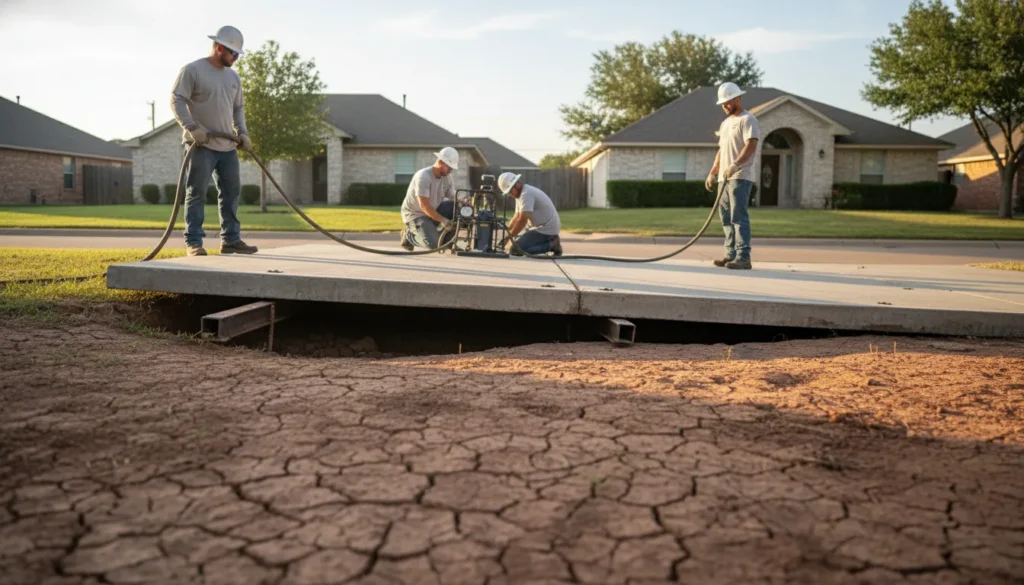
Heavy cement slurries pumped under sunken Dallas driveways often compress the underlying clay, worsening the initial settlement. When regional soils shrink and swell, traditional heavy repair methods quickly fail.
Mudjacking Dallas driveways is a traditional leveling method that pumps a heavy slurry of sand, soil, and cement beneath a settled slab to lift it. However, this heavy material is often poorly suited for North Texas, where the underlying subgrade consists of highly active and expansive clay. Research from the Texas A&M Transportation Institute shows that the swelling and shrinkage of sub-grade soils is a major driver of slab degradation. Adding thousands of pounds of heavy, wet cement slurry onto this active clay often causes the repaired concrete slab to settle even further over time. Because of these severe soil movements, local property owners now choose lightweight, waterproof polyurethane foam as a cleaner, faster, and more durable alternative.
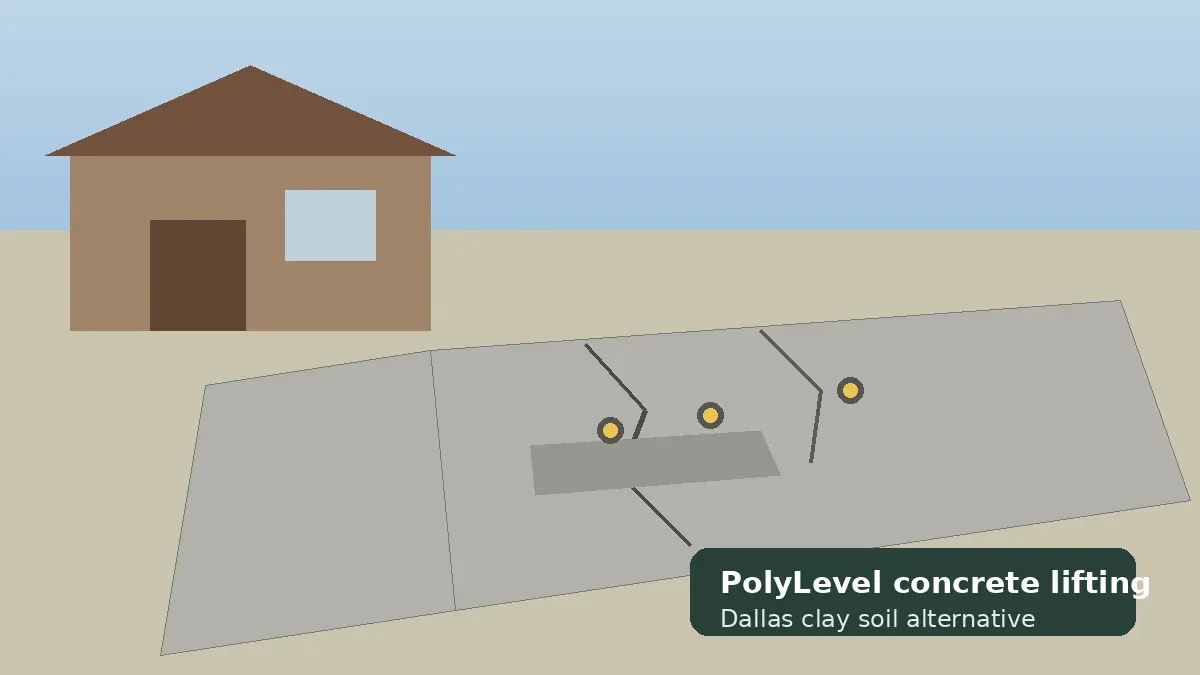
For homeowners comparing repair options for a sunken driveway, our driveway leveling in DFW guide explains when PolyLevel lifting makes sense and how soon the driveway can be used again.
Request a free no-obligation estimate for Dallas concrete leveling from Solid Base Foundations.
Before you hire a repair contractor, you must understand how traditional leveling methods perform in local clay soils, how long each repair takes, and whether the lift material will add new stress below the slab.
Mudjacking Dallas basics: what homeowners are really searching for
Quick answer: Mudjacking in Dallas usually means lifting settled driveways, sidewalks, patios, or pool decks. The key decision is whether a heavy slurry or a lightweight foam lift makes more sense for local clay soil.
When homeowners search for mudjacking dallas, they usually want to fix a sinking driveway, sidewalk, or patio. This method is an old way to lift settled slabs. But many people use the term to mean any type of concrete leveling in Dallas. While the name is famous, the classic slurry method might not suit every local yard.
How the process works
Classic mudjacking is a simple, mechanical process. Technicians drill large holes into your settled slab. They then pump a heavy slurry of soil, sand, and cement beneath the concrete to force it upward. This wet mixture fills the empty spaces below. Once the void is full, the pressure lifts the concrete back to its original height. But the heavy slurry takes up to three days to cure.
Local ground conditions play a massive role in how concrete behaves. The Dallas area soil is primarily composed of expansive clay. This clay swells when wet and shrinks when dry, which leads to concrete settlement and cracking. You can read about these soil shifts in a study by the Texas A&M Transportation Institute. Because the clay shifts, adding a heavy slurry can make the sinking worse.
Limitations of traditional slurry
Homeowners must also look at the physical state of their slabs. If your cracked concrete is broken into tiny pieces, mudjacking cannot help. When cracked pieces are less than three feet square, leveling is no longer a safe option. In those cases, you must replace the entire slab instead of lifting it. Another big limit is the weight of the slurry. The heavy cement mix adds thousands of pounds of extra weight to our already weak clay soil.
Also, classic mudjacking leaves big marks. Technicians must drill large holes to pump the thick slurry under the slab. These holes are often two inches wide. Even after technicians fill them, the round patches look like big spots across your driveway. If you want to keep your yard looking neat, these large scars might be a dealbreaker.
Finding a better alternative
Many homeowners in North Texas now turn to polyurethane foam instead of old-school slurry. This method uses an expanding foam to lift the slab. The foam is lightweight. This means it does not press down on the weak clay soil below. The process requires tiny holes about the size of a penny. You can read about PolyLevel as a faster alternative to see how it works.
Speed is another big reason people choose foam. Mudjacking takes days to dry, but polyurethane cures in just fifteen minutes. You can walk or drive on the concrete almost right away. When you look at different concrete repair services in Dallas, you should think about your own schedule. To find the right option for your home, get a free estimate today.
How mudjacking lifts settled concrete
Quick answer: Mudjacking lifts concrete by drilling holes and pumping a cement-based slurry under the slab. It can fill voids, but the material is heavy, messy, and slow to cure.
Homeowners often search for mudjacking Dallas to fix sunken driveways, sidewalks, or patios. This traditional repair method works by pumping a heavy mixture under settled slabs to raise them back to their proper level. But before choosing this method, you should understand how the system works and how it reacts with local soils.
North Texas soil challenges
Concrete structures in the Dallas area often shift due to unique ground conditions. This local ground consists mainly of heavy clay. This clay swells when wet and shrinks when dry, which makes slabs crack and sink. You can learn more about subgrade clay movement and how it degrades pavements from Texas researchers. The heavy slurry used in traditional mudjacking adds extra weight to these unstable clay soils, which can trigger more sinking later on.
Because of this issue, many homeowners now choose lighter materials. If you are dealing with sunken pathways, you can explore professional Dallas concrete leveling services to find a long term solution. Modern options often provide more stable support than heavy mud slurry.
The step-by-step process
The standard lifting method uses heavy equipment to pump a mixture of sand, soil, and cement under pressure. This work must be done carefully to prevent the concrete from cracking further during the lift.
- Drilling access holes: Technicians drill holes through the sunken concrete slab. These holes are usually about one to two inches wide to allow the heavy mixture to flow underneath.
- Mixing the slurry: The crew mixes water, soil, sand, and cement to create a thick, liquid slurry. This mixture is heavy and dense, designed to fill large voids under the concrete.
- Pumping the mixture: Workers pump the slurry through the drilled holes using a hydraulic pump. As voids fill, pressure forces the concrete slab up to its proper height.
- Patching the holes: Once the slab is level, the team cleans the holes. They fill the openings with fresh concrete and smooth the surface to match.
- Curing and drying: The slurry must dry and harden before you can use the concrete. Traditional mudjacking mixtures usually require 24 to 72 hours of drying time before they can hold heavy weight.
Slab assessment and limitations
Not every sunken concrete slab is a good candidate for this repair method. If a slab is broken into many small pieces, lifting it may not be possible. Slabs with pieces smaller than three feet square are usually too weak to lift and must be replaced instead.
Before scheduling any work, you should get a thorough site assessment. A professional inspector can check the condition of your concrete and test the underlying soil. This step ensures that you choose the right repair method for your home. You can request a no-obligation inspection today to get started.
Why North Texas clay soil changes the mudjacking decision
Quick answer: North Texas clay expands when wet and shrinks when dry. Any concrete leveling method used in Dallas has to account for that movement instead of adding unnecessary weight to unstable soil.
Dallas homeowners often face sinking outdoor concrete. Driveways, patios, and sidewalks can crack and tilt as the ground shifts. If you are looking at mudjacking Dallas concrete slabs, you must think about what lies beneath them. Homeowners looking for uneven concrete repair in Dallas need to understand how this soil affects their options.
Traditional mudjacking is a common way to lift heavy slabs. The method relies on pumping a slurry of soil, sand, and cement beneath the slab to lift it. But the unique nature of our local ground makes this method less helpful. North Texas has active earth that moves constantly throughout the year.
Behavior of North Texas clay
The main issue is that Dallas area soil is primarily composed of expansive clay. This clay swells when wet and shrinks when dry. It can push up against concrete walkways with immense force when wet. When hot, dry weather returns, the clay shrinks back down.
This constant swelling and shrinking puts stress on your home’s concrete slabs. Over time, the movement creates deep cracks and uneven joints. If a slab is pushed up and then left unsupported, it will tilt or sink. This behavior makes permanent repairs difficult for typical concrete lifters.
Wet and dry seasonal cycles
Texas weather is famous for extreme shifts. We experience heavy spring storms followed by weeks of baking summer heat. This cycle causes the soil beneath your concrete to act like a giant sponge. As the clay expands and shrinks, it does not always return to its original shape.
When wet clay shrinks, it leaves behind empty spaces called voids. These voids mean your heavy concrete driveway is now hovering over empty air. Without solid support, the weight of the concrete causes it to sink into the hollow areas. Water then pools in these low spots, which makes the drainage problems even worse.
The weight problem with slurry
This is where the trouble with mudjacking begins. Mudjacking slurry is made of heavy sand, dirt, and cement. When contractors pump this heavy mixture under a slab, they add thousands of pounds to the weak clay beneath it. This extra weight puts a heavy load on soil that is already struggling to hold up the concrete.
In wet seasons, this heavy slurry can sink deep into the soft, saturated clay. Instead of keeping the concrete level, the added weight can accelerate future sinking. The soil simply cannot support both the concrete slab and the heavy mudjacking material underneath it. As a result, the slab often sinks again after only a few months.
To avoid this cycle, homeowners should look for lighter options. Modern techniques use high density polyurethane foam rather than heavy wet mud. Many local professionals now offer PolyLevel foam concrete lifting to old repair methods. This lightweight foam expands to fill voids and lift slabs without placing extra weight on active North Texas clay.
Mudjacking vs PolyLevel for Dallas concrete leveling
Quick answer: PolyLevel uses lightweight polyurethane foam instead of cement slurry. For many Dallas slabs, that means smaller holes, faster cure time, less mess, and less added weight on clay soil.
If you own a home in North Texas, you know how hard the climate is on your driveways and walkways. Shifting ground often leaves concrete slabs uneven, cracked, or sunken. To fix these safety hazards, homeowners usually look for local slab leveling help to restore their surfaces. Two common methods dominate the local market: traditional mudjacking and modern PolyLevel polyurethane foam injection.
The weight on Dallas soil
Choosing between these systems means you must look beneath your concrete. Our regional soil contains high levels of expansive clay, which swells when wet and shrinks when dry. Traditional mudjacking pumps a slurry of soil, sand, and cement beneath the slab to lift it. Because this mixture is heavy, it adds a massive load to unstable ground. When you place that weight on top of moving clay, the slab often sinks again over time.
In contrast, PolyLevel uses an expanding polyurethane foam. The foam is lightweight and exerts almost no extra pressure on the soil. It expands to fill voids and lift the slab without overloading the ground below. This makes the foam a more stable option for homes built on shifting North Texas clay.
Cure times and local disruption
Cure time is another major factor for local homeowners. Traditional mudjacking needs large holes, often up to two inches wide, to pump the heavy slurry. The slurry then takes days to dry and harden. During this time, you cannot use your driveway, patio, or sidewalk. The process can also leave a messy residue across your lawn and concrete.
On the other hand, you can choose the PolyLevel concrete lifting system for your property. Technicians drill tiny holes the size of a penny to inject the liquid. The foam expands to lift the concrete in minutes. Because PolyLevel cures in 15 minutes, you can walk or drive on the slab almost immediately. The work is clean, quiet, and does not disrupt your daily routine.
Comparing your repair options
To help you make the right choice for your home, we compared both methods across several key categories. We looked at how each system handles North Texas moisture, soil weight, and installation mess. This comparison shows why many homeowners now avoid traditional mudjacking in favor of modern foam solutions.
The table below compares the two options for common Dallas concrete leveling needs.
| Feature. | Mudjacking. | PolyLevel. |
|---|---|---|
| Material weight. | Heavy slurry. | Light foam. |
| Hole size. | Large holes. | Penny-size holes. |
| Cure time. | One to three days. | About 15 minutes. |
| Disruption. | More mess. | Fast cleanup. |
| Moisture. | Can erode. | Waterproof foam. |
| Use case. | Stable soils. | Driveways and walks. |
| Limits. | Moving clay. | Broken slabs. |
Mudjacking uses a heavy slurry, while PolyLevel uses lightweight expanding foam. PolyLevel also cures in 15 minutes, so most repaired surfaces can return to use much faster than traditional slurry work.
While concrete leveling saves money compared to replacing a slab, both methods have limits. If your concrete is broken into tiny pieces less than three feet square, leveling is no longer an option. In those cases, you will need to replace the surface. For slabs that are still intact, foam injection remains the standard choice to protect against shifting Texas clay.
When is PolyLevel a better alternative to mudjacking?
Quick answer: PolyLevel is often a better fit when the slab is mostly intact, access is tight, appearance matters, or you need the surface ready for use the same day. For a detailed comparison, review PolyLevel vs mudjacking before choosing a repair method.
Concrete leveling is a smart way to fix sunken concrete slabs around your home. If your patio or driveway sinks, you do not always have to replace the whole slab. In fact, concrete leveling saves 50% to 75% of the cost of full replacement. While traditional mudjacking in Dallas remains a common choice, choosing polyurethane foam lifting offers a better path for local soils.
Both methods aim to raise the concrete, but they use different materials and processes. Mudjacking involves drilling holes in concrete and pumping a slurry of soil, sand, and cement under the slab. Polyurethane foam injection uses small, minimally invasive drill holes to inject an expanding foam. For many North Texas properties, the lighter and cleaner foam method works best.
Weight and soil reaction
Soil conditions play a large role in how well your concrete stays level. The Dallas area soil is mostly made of expansive clay. According to academic research on sub-grade soils, this clay swells when wet and shrinks when dry. This constant shifting leads to concrete settling and cracking over time.
Mudjacking materials are heavier than polyurethane foam. This heavy slurry can add extra weight to unstable or already saturated North Texas clay soils. This extra weight often causes the soil to sink further, dragging the repaired concrete down with it. In contrast, lightweight polyurethane foam expands to fill voids without sinking the underlying soil.
Curing times and cleanliness
For residential properties, the installation process and speed are crucial. Traditional mudjacking needs drilling large, noticeable holes into your concrete to pump the thick slurry. The process is often messy and can leave thick residue on your driveway or patio. Furthermore, mudjacking slurry needs 24 to 72 hours to set before you can use the surface.
Modern polyurethane foam is cleaner and faster, meaning most repair jobs are completed in under an hour with a cure time of just 15 minutes. This means you can use your driveway or walkway almost immediately. The injection holes are also small, measuring about the size of a penny, which makes the repair hard to see. If you want a quick fix, choosing concrete repair services in Dallas will save you time and hassle.
Slab damage and structural limits
Not every concrete slab is a good candidate for leveling. If your concrete is badly cracked, leveling may not work. For instance, if cracked pieces of concrete become too fragmented, repair is no longer an option. A slab that has broken into pieces smaller than 3 square feet will likely need a complete replacement.
You also need to watch for active foundation movement or drainage problems. Concrete leveling cannot fix deep foundation settling or active soil washing beneath a structure. If soil is washing away, you will need a structural assessment before you lift the concrete. An inspection helps you choose between mudjacking, foam injection, or deep foundation repair.
How much does mudjacking cost in Dallas?
Quick answer: Mudjacking cost in Dallas depends on slab size, settlement depth, access, soil conditions, drainage, and whether the concrete needs lifting, sealing, or replacement.
Many Dallas homeowners face sinking driveways and uneven patios. Replacing damaged concrete is expensive and disruptive. You can save 50 to 75 percent on repair costs by choosing concrete leveling instead of pouring new slabs. Mudjacking is one common way to lift these sunken surfaces back into place.
Key variables affecting project costs
Your final price depends on several key variables. The overall size of the slab and the depth of the empty void beneath it are the main factors. Deep voids require more slurry mixture to lift the concrete. Poor yard drainage and heavy soil erosion can also increase the scope of work.
Site access is another critical detail. If a team can drive their equipment right to the work area, the job is easier. Hard to reach backyards or tight spaces often raise labor costs. Slabs with extensive cracking or deep fractures may also require more careful handling.
Dallas soil and structural challenges
Dallas weather is tough on concrete. This movement happens because North Texas features expansive clay soil that swells when wet and shrinks when dry. The shifting soil leaves empty pockets beneath concrete driveways and walkways. Heavy mudjacking slurry can add too much weight to this unstable soil, causing the slab to sink again later.
Some traditional soil stabilization methods use lime. But our local clay soils react poorly with lime. This chemical reaction can cause the concrete slab to buckle and become rough. To avoid these expensive issues, many local homeowners select lightweight polyurethane foam instead of heavy traditional mudjacking mixtures.
The repair method you choose also plays a major role in the overall cost. While traditional mudjacking may seem cheaper at first, it often fails when the heavy slurry sinks back into the soft clay. Polyurethane foam is a modern and lightweight option that does not overload North Texas soil. Choosing a long-term solution keeps you from paying for the same repair twice.
Estimating and planning your repairs
Every concrete repair project is unique. Because of this, reliable contractors do not quote flat prices over the phone. A technician must inspect the damage in person to measure the slab and check for hidden voids. You can request a request an estimate to get an accurate price for your specific concrete leveling needs.
Addressing these issues early prevents small cracks from turning into major safety hazards. If you are worried about the upfront cost, you can explore our flexible financing options to make the project more affordable. Repairing your concrete now protects your property value and prevents future damage.
What to expect from a Dallas concrete leveling inspection
Quick answer: A concrete leveling inspection should evaluate the slab, soil movement, drainage, voids, cracks, nearby structures, and whether lifting is safer than replacement.
Before starting any repair, a professional must look at the damage on your property. Our team uses their deep Greater Dallas experience to inspect your uneven concrete slab. We measure how much the slab has settled and check the size of existing cracks. This step helps us see if the slab is stable or if it needs immediate repair.
The initial structural assessment
During the visit, our specialists look for signs of soil movement under your driveway or patio. Many homeowners search for concrete repair solutions when they notice sinking slabs. Our team checks for empty spaces, called voids, beneath the concrete where soil has washed away. We also inspect your drainage patterns to find where water pools.
Our main goal is to decide if your problem is concrete-only or a larger foundation issue. Sinking patios are often simple fixes. But cracked house walls mean you have a serious foundation issue. If we find deep soil movement, we will explain how this impacts your whole home. Our clear process ensures you receive the correct diagnosis before any work starts.
Evaluating soil and drainage patterns
The local soil plays a huge role in concrete settlement across North Texas. Dallas area soil is made of expansive clay that swells when wet and shrinks when dry, which causes slabs to sink. Researchers show that this clay swelling and shrinkage degrades pavement and shifts outdoor structures. Our inspectors look for dry, cracked soil around your slabs as a clear sign of this clay movement.
Poor backyard drainage can speed up this damage by washing away the soil beneath your concrete. When water pools near your driveway, it softens the clay and creates large voids. Homeowners searching for mudjacking Dallas often do not realize that heavy mud mixes can sink further into these wet soils. We examine your yard’s slope to ensure your repaired concrete will stay stable for years.
Choosing the right repair method
Once the inspection is complete, we explain your repair options. Solid Base Foundations is the exclusive local dealer for the PolyLevel system. This system is part of the Foundation Supportworks network, which provides highly tested and reliable structural products. We often recommend using lightweight PolyLevel repair to traditional concrete repair.
We want to make sure you have all the facts. Our team offers a free no-obligation estimate for every local homeowner. During this visit, we explain our findings and show you exactly how we will restore your sinking slabs. You can also get a concrete leveling quote to schedule a no-obligation assessment. You can trust us to protect your property with durable Dallas driveway and sidewalk leveling.
Frequently Asked Questions
Quick answer: These answers address common Dallas homeowner questions about mudjacking, PolyLevel, cost, cure time, and when concrete replacement is the better choice.
How much does mudjacking cost in Dallas?
While exact pricing depends on the size and condition of your concrete slab, leveling is highly cost-effective. According to local concrete repair estimates, professional concrete leveling saves fifty to seventy-five percent compared to complete slab replacement. The final price varies based on the amount of material needed to lift the sunken area.
Is mudjacking still a popular service in Dallas?
Traditional mudjacking is declining in popularity across North Texas because many local contractors now favor polyurethane foam injection. According to PolyLevel contractors, mudjacking slurry is much heavier than lightweight foam. Heavy slurry often overloads the unstable clay soils in Dallas, which can cause repaired concrete to sink again.
Why choose polyurethane foam over traditional mudjacking?
Polyurethane foam offers several key advantages over traditional mudjacking slurry. Foam injection is minimally invasive and uses tiny drill holes to lift the concrete. Additionally, polyurethane is lightweight, meaning it does not add extra weight to unstable soils. Research from the Texas Transportation Institute confirms that expansive minerals in local clay cause significant soil movement and buckling.
How fast is concrete leveling with foam injection?
Foam injection is significantly faster than traditional mudjacking methods. Most local polyurethane repairs can be completed in less than an hour. While mudjacking slurry requires twenty-four to seventy-two hours of drying time, polyurethane foam cures in about fifteen minutes. Homeowners can use their leveled concrete driveways or patios immediately after the work is done.
Ready to permanently lift your sinking North Texas concrete?
Leaving uneven concrete slabs untreated leads to worsening trip hazards, pooling water around your foundation, and very expensive long term structural repairs for your home. Taking action today prevents these safety issues from becoming worse when the next heavy rain causes the expansive North Texas clay soils to shift again. Our quick PolyLevel process for concrete leveling options can restore your driveways, sidewalks, and patios to their original positions in just fifteen quiet minutes.
Ready to permanently restore your uneven concrete driveways and safety hazard walkways? schedule a concrete leveling estimate today to secure your home, protect your family from safety hazards, and prevent expensive future concrete leveling and foundation bills.