
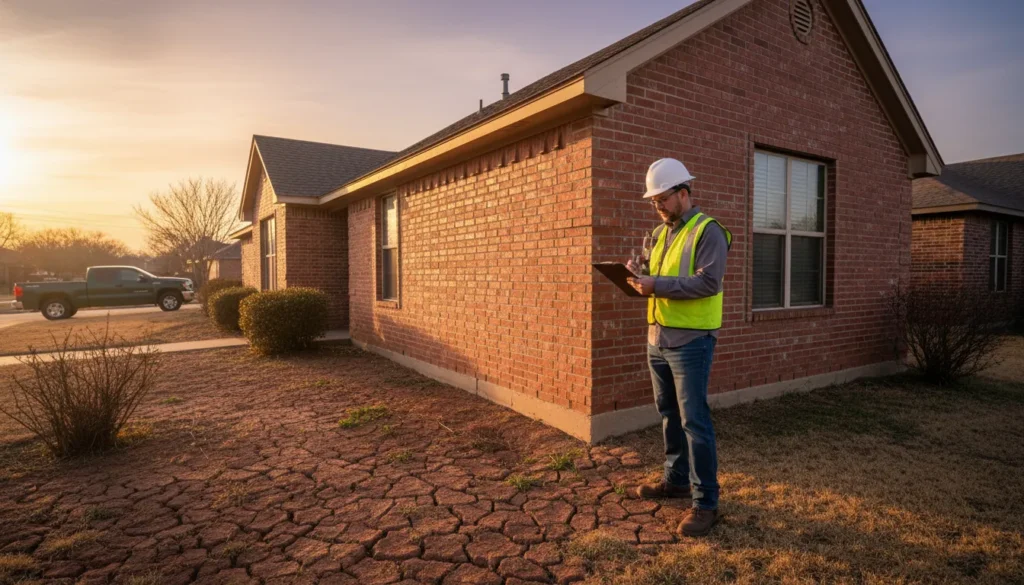
In North Texas, a shifting slab can reveal a second shock: insurance may not pay. Coverage turns on what caused the damage, not how serious the cracks look.
Does homeowners insurance cover foundation repair is a Texas homeowner’s question with a cause-based answer: sometimes, but only under policy terms and the source of damage. Coverage may apply when a sudden covered event, such as fire, vandalism, or accidental water discharge, directly damages the foundation. It usually does not apply to settlement, aging, poor drainage, drought effects, or clay soil movement, a common North Texas concern. As Progressive explains, standard policies often exclude damage from settling, expansion, or contraction of soil. Documentation matters. Photograph cracks and note recent plumbing leaks, storms, impacts, or other sudden events before repairs change conditions. Review your policy, speak with your insurance agent, and arrange a professional assessment to identify the cause.
Before you file a claim or schedule repairs, you need a clear view of the likely cause. The first section, “Does homeowners insurance cover foundation repair in Texas?”, separates typical soil movement from an event your policy may name as covered. Here’s how.
Does homeowners insurance cover foundation repair in Texas?
The short answer for homeowners
In Texas, homeowners insurance may cover foundation repair when a sudden covered event causes the damage. It usually does not pay for ongoing settling, soil movement, poor drainage, drought stress, or upkeep problems. Whether a claim qualifies depends on the cause and the terms in your policy.
If you see cracks, sticking doors, or floor changes, start with facts rather than guesses. Contact your agent to ask what your policy covers and what proof it requires. You can also request a free estimate from Solid Base Foundations, or call 940-365-4221.
Covered event versus gradual movement
The key question is not just, “Does homeowners insurance cover foundation repair?” It is, “What caused this damage?” Damage tied to a sudden event may fit policy coverage. Examples can include fire, vandalism, or a sudden water discharge, based on the policy.
By contrast, standard policies often exclude damage tied to settling or soil expansion and contraction. This difference is described in foundation coverage guidance. Poor drainage, long-term leaks, and neglected upkeep may also be treated as causes you could address over time.
Insurance terms matter because different forms of coverage address different risks. For example, research in the National Library of Medicine archive discusses insurance for defects in building construction or materials. A standard homeowners policy is not the same product. Your carrier must apply the wording in your own policy.
North Texas policy review
North Texas homes have added local context. Expansive clay soil can shrink in dry periods and swell as moisture returns. That movement can stress a foundation slowly. A claim examiner may need to tell slow soil movement apart from damage caused by a sudden reported event.
This is why an assessment is useful before repair work starts. It can document visible signs and help trace the likely source of damage. Take photos of cracks and gaps. Note when doors began to stick or floors seemed uneven. Save records of leaks, storms, plumbing work, and calls with your insurer.
Your contractor can assess the foundation, but cannot promise insurance coverage. Your insurance company reviews the policy and the claimed cause. If you notice warning signs, review the policy and speak with your agent. Then schedule an on-site assessment to learn what repair may be needed.
When foundation repair is usually covered
When homeowners ask, “does homeowners insurance cover foundation repair,” the short answer is sometimes. A sudden covered event is the usual starting point for a possible claim. It is not a promise of payment. The insurer decides coverage from the policy language and proof of cause.
Sudden water damage from plumbing
A sudden, accidental plumbing discharge may support a claim if the policy covers that cause of loss. For example, a pipe can break without warning and wash out soil near a slab. The repair need alone does not settle the coverage question.
This differs from a slow leak, poor drainage, or soil movement that builds over time. Save photos, plumber reports, and notes about when you first saw damage. Clear records can help an adjuster review the source of the problem.
Fire, explosion, vandalism, and impact
Foundation damage can also follow fire, an explosion, or vandalism. A tornado or fallen object may damage structural support through direct impact. These cases may qualify only when the event is a covered peril in your policy.
- Fire may damage the foundation or supported structural parts.
- An explosion may cause sudden cracking or displacement.
- Vandalism may cause direct structural damage during an incident.
- Tornado debris or a fallen object may cause impact damage.
Severe damage does not create automatic coverage. Research on insurance review notes that contract terms and defined risks matter. See this study of insurance policy evaluation for that core point. Your policy, endorsements, exclusions, deductible, and the adjuster’s findings will control the claim decision.
Evidence of the cause
A foundation contractor does not approve or deny an insurance claim. Solid Base Foundations can inspect the structure and document visible conditions. The team can also help assess the likely cause. Its professional foundation repair services provide a practical starting point for an insurance discussion.
Before repair begins, report possible covered damage to your insurer and follow its claim steps. Ask what records the adjuster needs. Those records might include photos, plumbing findings, fire reports, storm details, or repair estimates.
A cause assessment can show whether the damage appears tied to a sudden event. It can also point to gradual movement that needs a repair plan. In either case, review the policy or contact your agent. Only the insurer can decide if the repair is covered.
If coverage does not apply, structural damage may still need prompt attention. A clear cause assessment helps you plan the next step without confusing repair needs with insurance terms.
Common exclusions Texas homeowners should expect
If you are asking whether homeowners insurance covers foundation repair, the cause of movement usually matters more than the repair method. Insurers often separate sudden covered damage from slow changes linked to the soil, construction, or upkeep.
Policy wording controls each claim. Many standard policies exclude foundation damage tied to settling or soil expansion and contraction, as explained in this foundation coverage overview.
Soil movement and site conditions
In North Texas, soil can swell when wet and shrink when dry. That repeated movement can place stress on slabs and piers. Drought-related movement is often handled as soil movement, rather than a sudden covered event.
Water management also matters. Poor drainage can keep one area too wet, while dry conditions affect another. Tree roots may be listed as part of the cause review. Damage linked to drainage, roots, or upkeep is often disputed or excluded.
| Cause | Usually covered? | Why it matters in Texas |
|---|---|---|
| Natural settling | Usually no | Gradual movement is commonly excluded. |
| Soil expansion or contraction | Usually no | Clay soil movement can stress foundations. |
| Drought-related movement | Usually no | Dry periods can cause soil shrinkage. |
| Poor drainage or tree roots | Often no | Moisture imbalance may be viewed as preventable. |
| Faulty construction | Often no | Defect coverage may require a separate policy. |
| Wear or neglected maintenance | Usually no | Policies are not maintenance plans. |
The table shows a common starting point, not a final coverage decision. A sudden covered event, such as accidental water discharge, may create a different claim path. Ask the insurer which cause its adjuster recorded.
Construction and maintenance exclusions
Faulty design, materials, or installation can cause structural problems without a new accident. Research describes inherent defect insurance as coverage designed for building or material defects. That distinction matters because a standard homeowners policy may not serve the same role.
Normal wear and neglected maintenance create a similar issue. A long-standing crack, pooling water, or ignored warning signs may point to gradual damage. Homeowners should keep photos, inspection records, and drainage repair receipts before speaking with their insurer.
What to document before a claim
A contractor can help find whether the foundation shows soil movement, drainage effects, or another cause. That finding helps an adjuster apply the policy terms. It also helps homeowners plan repairs if the cause falls within an exclusion.
Review the policy and contact the insurance agent before assuming a repair is covered. If movement needs an on-site review, professional foundation repair services can document the visible conditions and discuss repair needs.
Why North Texas clay soil complicates insurance claims
The shrink-swell cycle
Across Dallas-Fort Worth, expansive clay soil reacts to changes in moisture. During wet periods, clay swells and can push against a slab or pier-and-beam foundation. During dry spells, it shrinks and may leave parts of the structure without steady support.
This movement may repeat over many seasons in Dallas, Plano, Frisco, Denton, and nearby communities. Damage can appear as wall cracks, sticking doors, uneven floors, or separations at trim and ceilings. Those signs describe movement, but they do not prove when it began or what caused it.
One portion of a home may settle while another remains supported. The result is stress across drywall, masonry, flooring, and openings. The pattern can grow slowly, even when a new crack seems to appear all at once.
Why the cause controls coverage
That cause matters when homeowners ask, does homeowners insurance cover foundation repair? Most standard policies exclude damage tied to settling, soil expansion, or soil contraction, according to guidance on foundation coverage. A slow clay cycle often fits that exclusion, rather than a sudden covered event.
A claim is different when records point to a sudden cause named in the policy, such as accidental water discharge. Policy language still controls the decision. Policy review depends on the written terms and risks covered in the relevant setting.
For an adjuster, the visible crack is only the symptom. The key question is what event led to the movement. Seasonal soil change points toward gradual ground behavior; a documented, sudden water discharge may point toward a policy-defined event.
Documentation and local repair costs
Clay movement rarely gives a homeowner one clear date to place on a claim form. A crack may widen after summer heat, then draw attention after rain changes soil moisture again. Insurers may treat that history as gradual movement or maintenance, unless evidence shows a covered event.
Start a file as soon as you see a change. Photograph cracks with a date and a reference item for scale. Note when doors began to stick and whether a plumbing issue, storm, or other event happened nearby in time.
Keep photographs, dates, plumbing reports, repair estimates, and notices of sudden leaks or damage. An inspection can help trace the likely cause and describe visible conditions. Homeowners seeking a local assessment can review professional foundation repair services before discussing coverage with an agent.
In the Dallas area, foundation repairs often range from $3,300 to $7,000, with an average around $5,000. That cost range helps explain why a denied claim can disrupt a household budget. It does not show whether any specific repair is covered.
Coverage turns on the cause of loss and the words in the policy, not the repair price alone. A homeowner facing clay-related movement should document the condition and obtain an assessment. The homeowner should also contact an insurance agent to discuss coverage.
What to document before you call your insurance company
When damage appears, pause before asking whether homeowners insurance covers foundation repair. A clear record helps you describe what changed, when you saw it, and what may have happened. If there is active water, gas, electrical, or structural danger, leave the area and seek emergency help first.
Evidence to collect before a claim discussion
Start with what you can see and safely gather. Do not remove damaged materials before documenting conditions. Make needed emergency repairs when they protect people or stop more harm, and keep each receipt.
-
Photograph the damage. Take wide views of each affected room and close views of cracks, gaps, uneven floors, or displaced trim. Add photos of the exterior foundation line, soil, gutters, downspouts, and standing water when safe.
-
Write a dated timeline. Record when you first noticed each sign and whether it changed after rain, drought, a freeze, or a plumbing event. Note sounds, sticking doors, floor changes, or any repairs already made.
-
Check for signs of a plumbing leak. Look for wet flooring, damp cabinets, unusual water use, pooling water, or a running meter. Do not break into walls or slabs yourself; record signs and call a plumber when needed.
-
Gather home care records. Pull invoices or photos for plumbing work, drainage changes, gutter cleaning, grading, irrigation, and prior foundation visits. These records help show the home’s condition before the current concern.
-
Read your policy and endorsements. Find sections on dwelling coverage, water discharge, earth movement, settling, exclusions, duties after loss, and claim notice. Also note your deductible and any foundation or slab-related endorsement.
-
Call your insurer or agent with facts. Describe what you observed and the dates in your timeline. Ask what documents are required, whether temporary repairs are allowed, and how an inspection or claim number is handled.
-
Schedule a foundation assessment. An inspection can document visible distress and help explore likely causes. Solid Base Foundations provides professional foundation repair services for North Texas property owners who need an assessment.
Policy questions and safe next steps
Coverage depends on policy wording and the cause assigned to the damage. One construction insurance study notes that policy review depends on covered risks and local terms. Your insurer or agent decides coverage under your policy, not a repair contractor.
Keep copies of photos, notes, receipts, policy pages, and every claim communication. Do not wait for a claim decision if a wall, floor, utility line, or active leak creates a safety risk. First protect people and limit safe, preventable damage; then preserve proof of what occurred.
When to call a foundation professional
A foundation concern does not always begin with a dramatic crack. In a North Texas home, small changes may point to movement, water trouble, or both. Call for an assessment when changes appear, spread, or return after a repair.
Signs inside and outside the home
Pay attention to cracks in interior drywall, brick, exterior walls, or the foundation itself. Doors and windows that once worked well may begin to stick or swing open. Gaps can also form where walls meet ceilings, trim, cabinets, or window frames.
- Mark new cracks with the date, then photograph any change.
- Note rooms where doors, windows, or flooring behave differently.
- Check outside for cracking, separation, pooling water, or poor drainage.
Uneven floors need timely attention, especially when a low area grows or feels less stable. The guide to identifying and repairing sinking floors explains why floor movement should be checked rather than ignored.
Water and drainage clues
Drainage trouble can show up as standing water near the slab or soil that stays wet after rain. These signs do not prove foundation damage. They do help a professional check what changed around the home.
A suspected plumbing leak also needs quick action. Watch for damp flooring, unexplained water use, warm floor areas, or water sounds when fixtures are off. A plumber may test the line. A foundation professional can check whether movement is present.
Keep photos, plumbing reports, repair invoices, and dates together. Clear records help show what happened and when. That record may help if you later ask your insurer about a sudden water event or another possible covered cause.
Assessment before an insurance decision
If warning signs appear, an assessment can help find likely causes and define the repair issue. Solid Base Foundations offers professional foundation repair services for Dallas-Fort Worth property owners with structural concerns.
An assessment may also provide records for an insurance discussion, but it does not guarantee coverage. A report describes observed conditions and possible causes. The insurer applies policy language, exclusions, endorsements, and claim evidence.
When asking, does homeowners insurance cover foundation repair, start with the cause and your policy terms. Insurance research notes that covered risks and contract terms matter in the governing jurisdiction. See the published insurance policy evaluation research for that broad principle.
Before filing a claim, contact your agent and ask which records are needed. Share the assessment, leak testing, photos, and repair notes if requested. This helps separate a repair diagnosis from a coverage decision under your policy.
What if your foundation claim is denied?
Start with the denial letter
A denied claim does not answer every repair question. Ask the insurer for the decision in writing, including the stated cause of damage and the policy terms used. Keep the letter, claim number, inspection reports, photos, and all emails in one file.
Next, read the denial beside your policy and endorsements. Look for language on settling, soil movement, plumbing leaks, sudden water damage, and limits on foundation work. Insurance review turns on covered risks and policy terms. This point is also shown in research on insurance policy evaluation.
If the decision does not match your records, ask the adjuster about the appeal process. Ask what added proof the carrier will review, such as leak findings, repair estimates, dated photos, or an inspection report. Use the carrier’s deadline and method. Keep a record of each item you submit.
Build a clear repair plan
Coverage and repair needs are separate issues. A denial may limit payment, but it does not show whether the structure is stable. A professional assessment can document visible damage, likely causes, and a repair plan suited to the home.
Ask for a written scope of work before choosing how to proceed. It should explain the issue, the proposed repair, and any monitoring needed after work is done. Solid Base Foundations provides professional foundation repair services for Dallas-Fort Worth property owners who need a clear next step.
Protect the home while you decide
Do not wait on an appeal if water is entering the home or a floor feels unsafe. Address an active leak, drainage problem, or safety risk promptly. Save photos, receipts, and service notes. The insurer may ask how further damage was limited.
If insurance will not pay, compare the repair plan with your budget. Ask whether work can be scheduled by need and which items should not wait. For costs outside available funds, review foundation repair financing options while you consider the approved repair scope.
A denial can be stressful, but the next steps are practical. Obtain the reason, check the policy, gather repair evidence, and protect the property. Your insurer decides coverage under your policy. A repair professional can help define the work the home needs.
Frequently Asked Questions
Does home insurance cover foundation water leaks?
Coverage may apply when foundation damage results from a sudden, accidental discharge of water, such as a burst plumbing line under a slab. The Progressive coverage guide identifies sudden accidental water discharge as a possible covered cause. Long-term leaks, settling, or soil movement are often treated differently. Review the policy and ask the insurer to confirm coverage.
Do home warranties cover foundation repairs?
A standard home warranty usually focuses on covered systems and appliances, not structural foundation repair. The Progressive foundation guide notes that foundation repair is rarely covered by standard home warranties. Homeowners should still check the warranty contract, because optional structural coverage or a builder warranty may have separate terms, limits, and claim procedures.
How can I prevent foundation damage in North Texas?
Prevention starts with managing water around the foundation. Keep drainage working, correct pooling near the house, monitor plumbing leaks, and watch for new cracks or sticking doors. North Texas clay soils can expand and contract as moisture changes. The Progressive foundation guide recommends attention to drainage and moisture levels. A professional assessment can help identify problems before repairs become more extensive.
Ready to get clarity on your foundation concerns?
Waiting can leave visible signs of foundation trouble undocumented while questions about possible insurance coverage remain unresolved as you decide what to do. Starting now gives you time to document concerns, review policy terms, contact your insurer, and gather information before repair choices feel urgent. A professional assessment can help you discuss the condition of your home and identify practical next steps for planning repairs responsibly.
Ready to take the next step toward a clearer repair plan for your North Texas home? Request a free no-obligation foundation estimate to schedule an on-site assessment and talk to a foundation professional about next steps for your property. Contact Solid Base Foundations today so you can move forward with clear information instead of unanswered concerns.