
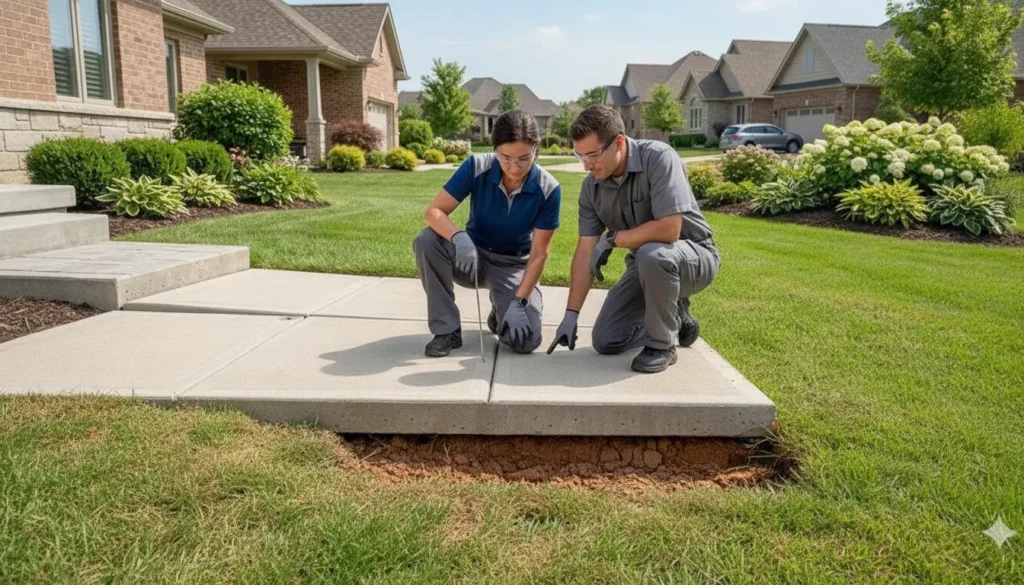
A patio that slopes, rocks underfoot. Or pulls away from the house can make outdoor space feel unsafe and leave you wondering whether a much larger foundation problem is developing. You may have noticed furniture tilting, water pooling in one corner, or a visible step-down at the edge of the slab. These changes are unsettling, especially when you are not sure whether they signal normal wear or something that will keep getting worse.
A sinking concrete patio is usually caused by soil movement, washout, or an unstable subgrade beneath the slab. In North Texas, expansive clay soil plays a central role. The soil can shrink during dry periods and swell after rain, while poor drainage or erosion creates empty space beneath the concrete. Professional PolyLevel concrete leveling fills those voids with lightweight expanding foam, then lifts and supports the patio with precise control.
The good news is that a settled patio does not automatically mean a full replacement. When the concrete itself is intact, targeted leveling can often restore a safe. Level surface in a single visit, using small injection holes instead of tearing out the slab. Because the repair ranges widely depending on the underlying cause, an inspection helps determine whether leveling is appropriate and whether drainage or nearby foundation settlement also requires attention.
Why Does a Concrete Patio Sink?
A sinking patio can make an otherwise comfortable outdoor space feel unsafe and confusing. The slab itself is usually not the original problem. It settles when the soil or supporting material beneath it changes, loses strength, or washes away. In technical terms, this is differential settlement, when one portion of the patio moves more than another. The Wisconsin Department of Transportation identifies soil shrinkage and washouts as primary causes of differential settlement in concrete pavement (WisDOT research).
Schedule a free foundation inspection in Dallas-Fort Worth before the problem spreads.
Expansive clay responds to moisture changes
North Texas presents a regional challenge because much of the area sits on expansive clay soil. This blackland prairie clay shrinks as it dries and swells when it absorbs moisture. Those repeated volume changes can leave parts of the supporting soil lower than others, especially after extended dry weather followed by heavy rain. A patio may then tilt, settle near one edge, or separate from the house.
The movement does not always happen evenly. One section may rest on soil that remains relatively stable while another sits over clay that has contracted. That difference creates stress across the slab and can produce cracks, uneven joints, or a noticeable slope. For a closer look at how soil and weather damage concrete, see our guide to why concrete cracks.
Water can erode the soil beneath the slab
Drainage problems create a second common path to settlement. A downspout that discharges beside the patio, a gutter leak, or runoff that pools along the slab can carry fine soil away and leave a void underneath. Improper drainage and leaky downspouts are known causes of these hidden gaps. Water entering through existing patio cracks can accelerate the washout, allowing the unsupported concrete to sink farther over time.
Check whether the patio slopes toward the home, holds puddles after rain, or sits below a downspout outlet. Water should move away from the foundation rather than collect against it. Correcting the drainage pattern matters because lifting the slab without addressing continued erosion may leave the same underlying problem in place.
Poor compaction leaves weak support
Construction quality can also influence how a patio performs. If the subgrade was not properly prepared and compacted before the concrete was poured, loose soil may compress gradually under the slab. The patio can settle even without a dramatic plumbing leak or storm event. A repair plan should account for the condition of the subgrade, not simply cover the visible crack or raise the lowest corner.
Identifying the cause helps determine whether the patio can be stabilized and leveled or whether related drainage or foundation concerns also require attention. An inspection gives you a clearer path forward before the uneven surface becomes a larger hazard.
What Causes a Sinking Concrete Patio in North Texas?
North Texas patios sit on soil that responds dramatically to changing moisture. Across the blackland prairie, expansive clay shrinks during dry spells and swells after rain. That repeated movement can leave a patio slab without uniform support, causing one area to settle lower than another. The result may look like a simple dip, but the underlying problem is often movement in the soil beneath the concrete.
This pattern is especially important when a patio rests near the home. Differential settlement, caused by uneven soil shrinkage or washouts, can change the patio’s slope and create stress along the edge of the structure. A professional assessment can help distinguish isolated patio settlement from movement that also affects the foundation.
How moisture changes create movement beneath the slab
During extended dry weather, clay loses moisture and contracts. If the soil beneath one portion of the patio dries more than the soil beneath another portion, the slab can settle unevenly. Heavy rain can produce the opposite problem. Saturated clay swells, while moving water may erode or wash soil out from beneath the slab. Both conditions can create voids that leave sections of concrete unsupported.
Cracks and open joints can make the cycle worse. Water that enters through those openings can reach the subgrade and accelerate soil washout. Leaking downspouts and drainage that concentrates runoff beside the patio create similar risks. When soil disappears from beneath the slab, the concrete follows the lost support instead of remaining level.
Why drainage and consistent moisture matter
Managing water around the patio is part of protecting the repair. The patio slope should direct water away from the home’s foundation rather than allowing runoff to collect along the structure. Check that downspouts discharge safely away from the slab and watch for areas where water pools after rain. These steps address the flow of water that can erode supporting soil.
Consistent soil moisture can also help moderate the shrink-and-swell cycle in expansive North Texas clay. That does not mean keeping the ground saturated. It means avoiding sharp, uneven changes in moisture around the patio and foundation. A drainage plan, appropriate grading, and attention to recurring wet or dry areas work together to reduce avoidable soil movement.
Because a sinking patio may be an early visible sign of broader foundation settlement, do not evaluate the slab in isolation. A foundation inspection can identify whether voids, drainage, and soil movement are limited to the patio or connected to the home. For related concerns, review Solid Base Foundations’ foundation repair services.
Signs Your Patio Has Settled versus Needs Repair
A patio that looks slightly uneven may seem like a cosmetic concern, especially after years of changing weather. In North Texas, however, expansive clay soil can shrink during dry conditions and swell when moisture returns. That movement can leave a slab lower on one side, create voids beneath it, or place pressure on nearby concrete. The pattern and progression of the changes can help you decide whether the patio has experienced ordinary settling or requires a closer evaluation.
Changes that deserve attention
A sinking concrete patio is often the first visible symptom of broader foundation settlement. Look for a low corner, a noticeable slope, or a section that no longer meets the surrounding grade. Fresh cracks, widening joints, and water that collects after rain can also indicate that the soil beneath the slab has shifted or washed away. In some cases, a small change remains stable. A change that continues to worsen deserves prompt attention, particularly after drought, heavy rainfall, or drainage problems.
Pay close attention to the connection between the patio and the house. When a patio pulls away from the structure, the opening can become large enough for insects and other pests to enter. A widening gap may also allow rainwater to reach the soil beside the foundation, contributing to additional erosion or moisture changes. The patio’s slope matters as well. If it directs water toward the home instead of away from it, the drainage pattern can intensify the underlying problem.
When a settled slab becomes a safety concern
Uneven concrete creates more than an eyesore. A raised edge or abrupt drop can catch a foot, stroller wheel, or outdoor furniture leg, turning the patio into a trip hazard. Movement at the patio can also strain adjacent walkways, steps, or sections connected to the home. Watch for misaligned surfaces where the patio meets a sidewalk, pool deck, or entry path. These transitions often reveal movement sooner than the middle of the slab.
Surface appearance alone cannot show whether the issue is limited to the patio or connected to a larger foundation concern. Before leveling the slab, consider a professional foundation inspection to identify the underlying cause and check nearby structures. An inspection can distinguish soil voids, drainage-related erosion, and broader settlement patterns, helping determine whether concrete leveling is appropriate. Addressing the cause first supports a more durable repair and helps protect the walkways and foundation around your patio.
Concrete Leveling versus Full Replacement
When a patio settles, the right repair depends on the condition of the slab and the soil beneath it. In many cases, concrete leveling restores the existing patio instead of removing it. A professional injects expanding foam through small openings, lifts the slab into position, and fills the voids below. This approach is typically far less costly than full replacement and can often be completed in a single day.
Full replacement takes a different path. The damaged concrete is removed, the area is prepared, and a new slab is poured. That may be the appropriate choice when the concrete has extensive damage or cannot be saved. However, replacement alone does not correct the reason the patio sank. In North Texas, expansive clay soil can shift as moisture conditions change, so the subgrade deserves as much attention as the surface.
| Consideration | Concrete leveling | Full replacement |
|---|---|---|
| What happens | Injected polyurethane foam lifts the existing slab and supports it from below. | The existing slab is removed and a new concrete patio is poured. |
| Project time | Typically a single-day project, with less disruption to your property. | Requires demolition, site preparation, forming, pouring, and curing. |
| Relative cost | Usually far less costly because the existing concrete remains in place. | Generally more costly because the old slab and the new installation are both part of the work. |
| Subgrade considerations | Fills voids beneath the slab, while drainage or soil issues may also require attention. | Requires proper subgrade compaction to help prevent the new slab from settling again. |
Early action can preserve more of the patio and reduce the chance that a manageable settlement problem turns into a full replacement project. If the slab has widespread crumbling, major breaks, or movement that cannot be corrected with lifting, replacement may make more sense. An inspection can distinguish between those conditions and a patio that still has sound concrete but lacks support beneath it.
Because drainage and expansive soil movement can continue affecting the area, a durable plan looks beyond the visible dip. A professional assessment can identify whether leveling, subgrade work, drainage improvements, or replacement offers the soundest result. Request a free estimate before choosing the more disruptive option.
How PolyLevel Lifts a Sinking Concrete Patio
PolyLevel restores support beneath a settled patio without tearing out the slab. The process targets the voids created when North Texas clay soil shrinks, swells, or washes away after drainage problems. A professional crew can often complete the work in one day, with far less disruption than full replacement.
- Inspect the patio and surrounding structure. The process starts with a professional inspection. The technician evaluates the patio’s slope, cracks, separation from the home, and the soil conditions beneath it. This step helps identify whether settlement comes from soil movement, erosion, drainage, or another underlying issue. It also confirms whether the slab is a good candidate for concrete leveling rather than replacement. A proper assessment matters in North Texas because expansive clay can move as moisture levels change. And lifting the slab alone does not correct every drainage or foundation concern.
- Mark and drill small access holes. Once the lifting plan is established, the crew marks injection points across the settled area. Small, penny-sized holes are drilled through the concrete. These openings provide access beneath the slab while preserving most of the patio surface. PolyLevel uses much smaller access points than traditional mudjacking, which helps keep the repair neat and minimally invasive.
- Inject expanding polyurethane foam. The technician injects high-density polyurethane foam through the holes and into the voids below the patio. The material expands to fill empty spaces created by soil erosion, poor support, or shifting clay. Instead of relying on a heavy fill material to force the slab upward, the foam creates a lightweight structural base beneath it. The PolyLevel concrete leveling system is designed to support the slab while limiting disturbance around the patio.
- Control the lift and restore the slope. Foam expansion allows the technician to monitor movement and make precise adjustments. The slab rises gradually until it reaches the planned elevation. This controlled lift helps close gaps, reduce uneven transitions, and restore a slope that directs water away from the home’s foundation. The crew checks the patio throughout the process rather than relying on a single final adjustment.
- Fill the holes and clean the work area. After the patio is level, the injection holes are filled and the surface is cleaned. The finished repair preserves the existing slab when its condition allows. Any drainage issue identified during the inspection should also be addressed so water does not continue washing soil from beneath the patio.
- Return the patio to service. Polyurethane foam cures quickly, so homeowners can often use the patio within hours of completion. Because concrete leveling is typically a single-day project, you can regain access to the space without the extended demolition, curing, and landscaping disruption associated with a new pour.
When a sinking concrete patio has settled because of a void beneath it, PolyLevel can address the lost support with a focused, carefully controlled repair. An inspection shows whether leveling is appropriate and whether related drainage or foundation concerns also deserve attention.
PolyLevel versus Traditional Mudjacking
When a patio settles over North Texas clay, the repair method matters as much as the lift itself. Traditional mudjacking and PolyLevel can both raise a slab, but they support the concrete in very different ways. PolyLevel uses a lightweight polyurethane foam that fills the void beneath the patio without adding the substantial load associated with a cement-based slurry.
PolyLevel foam weighs about 2 pounds per cubic foot. Traditional mudjacking slurry can weigh approximately 100 pounds per cubic foot. That difference is important when expansive clay has already shifted, shrunk, or washed away beneath a sinking concrete patio. Adding a heavy material may place unnecessary stress on unstable soil, while polyurethane provides structural support with less disturbance. Solid Base Foundations also uses PolyLevel to address the void beneath the slab, not simply mask the visible slope.
Smaller holes and more precise lifting
PolyLevel is injected through small, penny-sized holes drilled into the concrete. Mudjacking typically requires holes closer to 2 inches across so the thicker slurry can be pumped below the slab. The smaller openings reduce the visible impact of the work and make the finished repair easier to blend into the patio.
Foam expansion also gives the technician precise control during the lift. The material expands beneath the slab and fills irregular voids, allowing adjustments as the patio returns toward the intended elevation. A Wisconsin Department of Transportation study found that polyurethane foam injection can lift and stabilize concrete pavement slabs, supporting the method’s use for slab rehabilitation in its URETEK research.
Less disruption and faster return to use
Mudjacking relies on heavy pumping equipment and a wet slurry. That process can disturb the lawn and surrounding landscaping, particularly when equipment must reach a backyard patio. PolyLevel does not require the same heavy equipment, so the lawn around the work area can remain relatively undisturbed.
Polyurethane foam cures quickly, often allowing you to use the patio within hours. Traditional mudjacking may require 24 to 72 hours before the slurry fully cures. For a patio connected to a walkway, grill area, or backyard entrance, that shorter interruption can make the repair considerably easier to manage.
Why moisture resistance matters in North Texas
Water management remains part of any lasting repair. North Texas clay responds to changing moisture, and water entering cracks or moving beneath a patio can accelerate soil washout. PolyLevel foam is moisture-resistant and will not wash away or degrade under normal subsurface conditions. That stability helps preserve the support created during lifting, while proper drainage and a slope away from the foundation help address the conditions that caused the settlement.
Before choosing a repair, a professional inspection can determine whether leveling addresses the underlying problem or whether drainage and foundation work should be included. For many settled slabs, PolyLevel offers a cleaner, lighter, and more controlled alternative to traditional mudjacking.
Get a free estimate and find out whether concrete leveling can restore your patio.
Frequently Asked Questions
What causes a concrete patio to sink?
Most patios settle when the soil beneath them loses support. In North Texas, expansive clay shrinks during dry periods and swells when moisture returns. Poor compaction, drainage problems, leaking downspouts, and water washing soil away can also leave voids beneath the slab.
What is the best way to repair a sinking concrete patio?
A professional inspection can determine whether concrete leveling will restore the slab or whether replacement is more appropriate. With PolyLevel, technicians drill small access holes, inject expanding polyurethane foam beneath the patio, and raise the slab with precise control while filling the underlying voids.
Is mudjacking or polyurethane foam injection better for patio repair?
Polyurethane injection provides structural support without adding the heavy load associated with cement-based mudjacking. The foam is moisture-resistant and the process uses smaller holes, less equipment, and a lighter footprint around your home. The right method still depends on the slab and soil conditions.
Can I fix a sinking concrete patio myself?
Surface patching may hide cracks, but it does not restore missing soil support or correct drainage. Lifting a slab requires controlled pressure and an understanding of what lies beneath it. A professional assessment helps prevent further damage to the patio, nearby walkways, or foundation.
Does a sinking patio affect my home foundation?
It can. A settling patio may be an early visible sign of broader soil movement, especially when it pulls away from the house or shows widening gaps. Those gaps can also allow water and pests to reach the structure, so an inspection is wise before the problem spreads.
Ready to Schedule Your Patio Inspection?
A sinking patio can reflect changing soil conditions beneath the slab, especially in North Texas expansive clay. An on-site inspection helps clarify whether targeted concrete leveling can restore a safer, more usable surface. Schedule a free concrete patio inspection and estimate with Solid Base Foundations.
Schedule a free concrete patio inspection and estimate, or call (940) 365-4221