
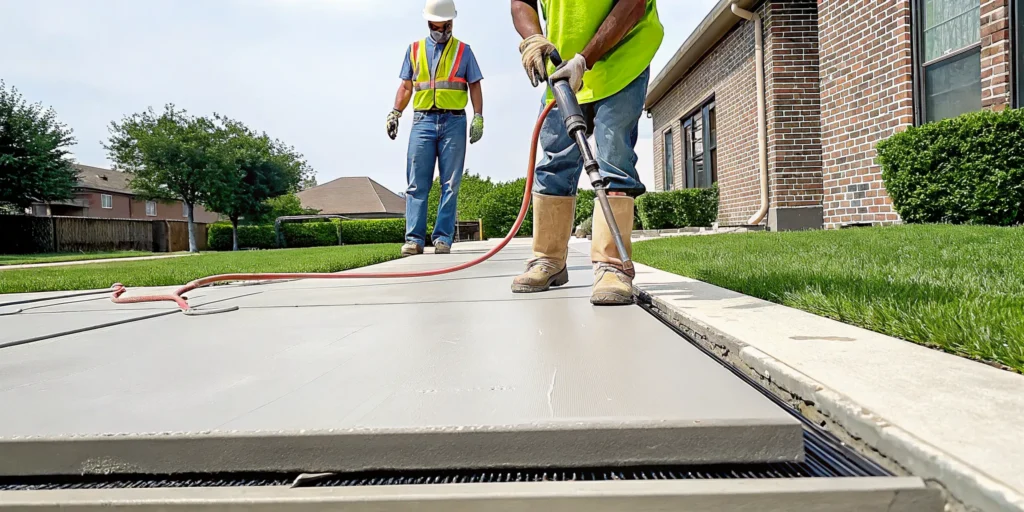
When you get a quote to tear out and replace a sunken driveway, the price can be shocking. It’s a massive project involving demolition, hauling away debris, and pouring a brand-new slab, all of which adds up quickly. What if you could fix the problem for 50% to 75% less? That’s the reality of concrete lifting. This innovative process saves your existing concrete by lifting it back into its proper position, eliminating the need for a costly replacement. It’s a targeted repair that addresses the voids and unstable soil beneath the slab without the huge expense and disruption. For homeowners seeking budget-friendly concrete lifting in Lewisville, it’s the most logical and financially sound choice for restoring safety and value to your property.
Key Takeaways
- Choose lifting over replacement for a faster, more affordable fix: For slabs that are sinking but not severely damaged, lifting saves significant money and time, often finishing in hours instead of days, without the mess of a full demolition.
- Modern foam injection offers a long-term repair: Unlike temporary patches, polyurethane foam stabilizes the soil beneath the slab. This creates a waterproof and durable base that prevents the concrete from sinking again in the future.
- Vet your contractor to guarantee quality work: Partner with a licensed, insured local expert who uses modern materials, explains their process clearly, and provides a strong warranty to protect your home and your investment.
What Is Concrete Lifting and How Does It Work?
When you notice a sunken driveway, an uneven patio, or a cracked sidewalk, your first thought might be that you have to tear it all out and start over. Fortunately, that’s often not the case. Concrete lifting is a smart and effective method of concrete repair that raises the slab back to its original position without the mess and expense of a full replacement. Think of it as giving your concrete a lift from below to correct the problem at its source, which is usually voids or unstable soil underneath.
The process works by filling these empty spaces, creating a stable new base that pushes the slab back up to a level position. This not only fixes the cosmetic issue but also addresses the underlying structural problem, preventing further sinking. It’s a targeted solution that restores both the function and safety of your concrete surfaces, from pool decks to garage floors. Instead of dealing with a loud, dusty demolition and waiting days for new concrete to cure, lifting can often be done in just a few hours. There are two main ways to get this done: a modern, high-tech foam injection and a more traditional mud-based method. Understanding the difference is key to choosing the right fix for your home.
The Polyurethane Foam Injection Method
This is the modern, high-tech approach to lifting concrete. The process uses a strong, lightweight, and environmentally safe polyurethane foam. We start by drilling a few small, dime-sized holes in the sunken slab. Then, we inject a liquid polymer foam into the voids beneath it. This foam expands rapidly, filling every gap and gently lifting the concrete back into place. It’s incredibly precise, allowing for a perfectly level surface. The foam cures in about 15 minutes, meaning you can walk or drive on the surface the very same day. It’s a clean, fast, and long-lasting solution that doesn’t add significant weight to the underlying soil.
The Mudjacking Method
Mudjacking is the traditional method and has been around for a long time. This technique involves pumping a heavy slurry, usually made of soil, sand, cement, and water, under the concrete slab to lift it. While it can be effective and is sometimes cheaper upfront, it has some notable drawbacks. The material is very heavy, which can add more stress to soil that is already struggling to support the slab. The process is also less precise than foam injection and can be much messier. Because the slurry doesn’t expand, it may not completely fill the voids, leaving your concrete vulnerable to sinking again in the future.
When Is Concrete Lifting the Right Choice?
Concrete lifting is an excellent option when your concrete slab is sinking or uneven but is still in relatively good condition. If the slab is mostly intact without extensive, crumbling cracks, it’s likely a great candidate for lifting. This approach saves you a significant amount of money, often costing less than half the price of a full replacement. It also saves you time and hassle. Instead of dealing with a demolition crew and waiting for new concrete to cure, lifting is typically completed in just a few hours. It’s a less disruptive, more affordable way to restore the safety and appearance of your property, as you can see in some of our successful projects.
Why Lift Your Concrete Instead of Replacing It?
When you see a sunken driveway or a cracked patio, it’s easy to assume the only solution is to tear it all out and start over. That sounds like a massive, expensive headache, right? The good news is that a full replacement is often unnecessary. Concrete lifting offers a smarter, more efficient way to fix uneven slabs. Instead of a major demolition project, you get a targeted repair that restores your concrete’s stability and appearance. Let’s walk through why lifting is often the better choice for Lewisville homeowners.
It Costs Significantly Less
Let’s be direct: concrete lifting saves you a lot of money. In most cases, lifting a slab costs 50% to 75% less than a full replacement. Think about what a replacement involves: you have to pay for demolition, for hauling away tons of heavy, broken concrete, and then for the materials and labor to pour a brand-new slab. With lifting, you skip all of that. We’re simply restoring the concrete you already own. This makes it a much more budget-friendly solution for fixing trip hazards on your sidewalk or leveling your pool deck. We know any home repair is an investment, which is why we also provide flexible financing options to make the process even more manageable.
It’s a Same-Day Fix
One of the biggest advantages of concrete lifting is how incredibly fast it is. A full concrete replacement can take days, or even weeks, leaving your driveway, patio, or walkway completely out of commission. In contrast, most concrete lifting jobs are finished in just a few hours. When we use modern polyurethane foam, the material cures so quickly that your surface is often ready for normal use within an hour. That means you can have your sunken driveway fixed in the morning and be able to park on it by the afternoon. You can see the kind of transformations we complete in a single day by looking at our work with other homeowners right here in the Dallas area.
It Causes Less Disruption to Your Property
A concrete replacement is a messy, loud, and disruptive process. It often involves heavy equipment that can tear up your lawn and damage your landscaping. Concrete lifting, on the other hand, is a much cleaner and quieter affair. The process is minimally invasive; we drill a few small, dime-sized holes to inject the lifting material, and that’s it. There’s no excavation, no concrete dust cloud, and no risk to your surrounding flower beds or sprinkler systems. Our modern concrete repair techniques are designed to solve the problem without creating a new one, leaving your property looking neat and tidy once we’re done.
How Much Does Concrete Lifting Cost in Lewisville?
Let’s talk numbers. When you see a crack in your driveway or a sinking patio, one of the first questions that comes to mind is, “How much will this cost to fix?” The price for concrete lifting can range quite a bit, typically from around $750 to over $6,000. That’s a wide spectrum, I know, but it’s because every single job is different. The good news is that lifting your existing concrete is almost always more affordable than a full tear-out and replacement. In fact, you can expect it to be 50% to 75% cheaper, which is a huge relief for your budget.
The final price tag depends on the specifics of your property. Think of it like this: a small, simple repair on an easily accessible sidewalk will be on the lower end of the scale. A large, sunken pool deck that requires more material and careful work will naturally cost more. The key is to understand what goes into the price so you can feel confident in the quote you receive. We’ll break down the main factors that influence the cost, so you know exactly what to expect.
What Factors Influence the Cost?
Several key things determine the final cost of a concrete lifting project. First is the size of the job. This includes not just the square footage of the concrete slabs that need lifting, but also the size of the empty space, or void, underneath them. A larger area or a deeper void requires more material and more time to fill and lift properly. Another factor is accessibility. If the damaged concrete is in a tight spot, like a narrow walkway between your house and a fence, it can take our team more time and specialized equipment to get the job done, which can affect the price.
Finally, the material used for the lifting process plays a role. While older methods like mudjacking use a simple slurry, we use a modern, high-density polyurethane foam. This advanced material is lightweight, incredibly strong, and cures quickly, providing a more durable and long-lasting solution for your concrete repair needs. While the initial material cost might differ from traditional methods, its longevity and effectiveness offer superior value over time, preventing you from needing another fix in a few years.
How to Get an Accurate Estimate
The best way to find out exactly what your project will cost is to get a detailed, on-site estimate. I always recommend getting quotes from a couple of different reputable companies. This helps you compare not only the prices but also the proposed methods and the quality of the materials they plan to use. A professional contractor should be able to walk you through their process, explain why they’re recommending a certain approach, and give you a clear, itemized quote. This transparency is crucial for making an informed decision.
We believe you should have all the information you need without any pressure. That’s why we offer a completely free estimate for homeowners in Lewisville and the surrounding areas. One of our specialists will come to your property, assess the damage firsthand, and provide you with a precise quote tailored to your specific situation. This gives you a solid number to work with and a chance to ask any questions you have.
Explore Your Financing Options
We understand that even an affordable repair can be an unexpected expense that you haven’t budgeted for. You shouldn’t have to put off a necessary repair and risk further damage simply because of the upfront cost. Sinking concrete often gets worse over time, leading to bigger problems and a more expensive fix down the road. To help homeowners manage the expense, many contractors provide ways to pay for the work over time.
At Solid Base, we want to make sure you can get the repairs you need, when you need them. We offer flexible financing options to help fit the cost into your budget comfortably. Taking care of your home’s foundation and concrete is an important investment, and our financing plans are designed to make that investment more manageable. You can protect your property now without having to handle the entire cost all at once.
Common Myths About Concrete Lifting, Debunked
If you’re considering concrete lifting, you’ve probably heard a few things that give you pause. It’s easy for misinformation to spread, especially when it comes to home repairs. Let’s clear the air and look at some of the most common myths about concrete lifting, so you can make a decision with confidence.
Myth #1: It’s Only a Temporary Fix
A lot of people think concrete lifting is just a quick patch that won’t hold up. The truth is, modern concrete lifting is designed to be a long-term solution because it addresses the real problem: the unstable soil underneath your slab. Instead of just covering up the issue, polyurethane foam injection stabilizes the ground, creating a solid, reliable base. This prevents the concrete from sinking again in the future. It’s a proactive repair that stops further damage, unlike simply patching over cracks, which really is just a temporary cosmetic fix for your concrete repair needs.
Myth #2: The Repair Won’t Last
This myth often goes hand-in-hand with the first one. Homeowners worry that even if the concrete is lifted, it won’t stay that way for long. The durability of the repair really comes down to the material used. The high-density polyurethane foam we use is an inert, waterproof material. It won’t wash away, break down, or degrade over time like the soil or older mudjacking slurries can. This structural-grade polymer is incredibly strong yet lightweight, ensuring your concrete slab stays level for years to come. You can see examples of how effective and lasting these repairs are in photos of our work on local properties.
Myth #3: The Process Is Complicated and Messy
The thought of a major repair project can be stressful. Many people picture heavy equipment, a torn-up yard, and a huge mess. Thankfully, that’s not what modern concrete lifting looks like. The process is surprisingly clean and minimally invasive. We drill a few small, dime-sized holes in the concrete slab, inject the foam, and then patch the holes when we’re done. There’s no need for large-scale excavation or concrete demolition. Your landscaping stays intact, and you can often use your driveway, patio, or walkway the very same day. It’s a far cry from the disruption of a full replacement and a core part of our foundation repair philosophy.
How Does Lewisville’s Soil Affect Your Concrete?
Have you ever wondered why so many driveways, sidewalks, and patios in the Lewisville area seem to develop cracks and uneven spots? The answer is often right under your feet. The unique soil composition in North Texas plays a huge role in the stability of your concrete surfaces. Understanding how the ground behaves is the first step in finding a lasting solution for sinking or cracked concrete. It’s not just about fixing the surface; it’s about addressing the root cause of the problem.
The Problem with Our Clay Soil
Much of the ground in and around Lewisville is made of expansive clay soil. Think of this soil like a sponge: it swells up when it absorbs water and shrinks dramatically as it dries out. This constant cycle of expansion and contraction creates unstable ground beneath your heavy concrete slabs. Concrete sinks because this underlying soil weakens or shifts. This can happen due to soil erosion from water, poor compaction when the slab was first poured, or the natural shrink-swell cycle of our local clay. This movement is what ultimately leads to voids forming under the concrete, causing it to settle and crack.
How Weather and Drainage Play a Role
Our local weather, with its intense rainstorms and long, dry periods, puts this clay soil to the test. When heavy rain soaks the ground, the clay expands, pushing slabs upward. During a drought, the soil shrinks, leaving gaps that cause the concrete to sink. Poor drainage makes this problem even worse. If water from your gutters or sprinklers pools near your concrete, it can wash away the soil underneath, creating voids and leading to significant settling. This is why you might see one section of your driveway sink while the rest stays put. These uneven surfaces aren’t just an eyesore; they can become serious trip hazards that require professional concrete repair.
Why You Need a Local Expert
Because soil is the primary culprit, a simple patch job won’t solve the problem for good. A reliable concrete repair contractor will figure out exactly why your concrete is sinking and recommend the right fix for the damage. A local professional understands the specific challenges of Lewisville’s soil and climate. Instead of just treating the symptom (the crack), an expert diagnoses the underlying cause to provide a stable, long-term solution. By addressing the soil issue, you can ensure your concrete stays level and secure for years to come. The best way to start is to get a free estimate from a team that knows how to handle our tricky Texas soil.
How to Choose the Right Concrete Lifting Contractor
Finding the right contractor is just as important as choosing the right repair method for your sunken concrete. You’re not just hiring someone to do a job; you’re trusting them with the safety and value of your home. A great contractor will do more than just lift a slab. They’ll accurately diagnose why it sank in the first place, whether it’s due to soil erosion, poor drainage, or the tricky clay soil we have here in Lewisville. This ensures the solution they provide is a lasting one, not a temporary patch.
Taking the time to vet your options helps you avoid subpar work that can lead to bigger, more expensive problems down the road. A professional team will be transparent, knowledgeable, and ready to answer your questions. Think of it as a partnership. You want someone who is committed to restoring your property correctly. To help you find that partner, focus on a few key areas: their professional standing, their technical experience, and the quality of their materials and guarantees.
Look for Proper Credentials and Insurance
Before you let any team start working on your property, make sure they are properly licensed and insured. This is a non-negotiable step that protects you, your home, and the workers. A reliable concrete repair contractor will have no problem providing you with proof of general liability insurance and workers’ compensation. This protects you from any liability in the rare event of an accident on your property.
Think of these credentials as your first quality filter. Any company that hesitates to share this information should be a red flag. A professional operation understands that trust is built on transparency. Asking for these documents is a standard part of the process and shows you’re a serious and informed homeowner.
Ask About Their Experience with Modern Methods
The world of concrete repair has changed a lot over the years. While older methods like mudjacking still exist, modern techniques often provide a cleaner, more effective, and longer-lasting fix. It’s important to ask potential contractors about their experience with modern concrete lifting methods, like polyurethane foam injection. A contractor’s expertise with these advanced solutions shows they are committed to providing the best results.
Don’t be shy about asking direct questions. Inquire about the specific techniques they use and why they recommend them for your situation. A team that is well-versed in the latest technology will be able to clearly explain the benefits, such as less disruption to your property and a faster cure time. This conversation will give you a good sense of their expertise and whether they are the right local expert for the job.
Verify Their Materials and Warranties
The quality of the materials used in your concrete lifting project will directly impact how long the repair lasts. A reputable contractor should be open about the products they use and confident in their performance. For example, high-density polyurethane foam is engineered to be lightweight but incredibly strong, waterproof, and environmentally stable, ensuring it won’t break down over time.
Equally important is the warranty they offer. A strong warranty is a clear sign that a company stands behind the quality of its work and materials. Ask for the details in writing. What does the warranty cover, and for how long? This guarantee provides you with peace of mind and protects your investment for years to come. Seeing examples of their past projects can also give you confidence in the durability of their repairs.
What to Expect During the Concrete Lifting Process
If you’ve decided that concrete lifting is the right solution for your property, you might be wondering what the repair day will actually look like. The good news is that the entire process is designed to be quick, clean, and minimally disruptive. Unlike a full concrete replacement that can take days and leave your yard a mess, lifting is a streamlined procedure that gets you back to using your space in no time. Knowing the steps involved can help you feel confident and prepared for the project.
We believe in transparency, so we want to walk you through exactly what to expect from start to finish. Our process is built around precision, efficiency, and respect for your home. We handle everything from the initial assessment to the final cleanup, ensuring a smooth experience. You won’t have to deal with heavy equipment tearing up your lawn or a long, drawn-out construction project. Instead, you get a targeted repair that addresses the problem at its source. This modern approach is not only more convenient but also highly effective for driveways, patios, sidewalks, and pool decks. From the moment our team arrives, our focus is on restoring your concrete and your peace of mind. Here’s a simple breakdown of what happens.
Step 1: The Initial Assessment and Prep Work
Everything starts with a thorough, on-site evaluation. One of our specialists will visit your property to inspect the sunken concrete, determine the underlying cause of the problem, and map out the most effective repair plan. This is the perfect time for you to ask any questions you have. We’ll walk you through the proposed solution and provide a clear, detailed cost breakdown. Our goal is to make sure you understand exactly what work will be done before we begin. Once you approve the plan, we’ll schedule the repair and get everything ready for the big day. You can schedule a free estimate with us to get this process started.
Step 2: Lifting the Concrete
This is where the magic happens. Our crew begins by drilling a few small, dime-sized holes in the affected concrete slab. These holes are strategically placed to ensure a precise lift. Next, we inject our high-density PolyLevel® polyurethane foam through the holes. This specialized material flows into the empty spaces beneath the slab and undergoes a chemical reaction, causing it to expand. This expansion gently and powerfully lifts the concrete back to its original, level position. Our technicians carefully control the injection process to prevent over-lifting and ensure a perfectly even surface. This modern concrete repair method is both incredibly effective and efficient.
Step 3: Cleanup and the Final Inspection
Once the concrete is perfectly level, we put on the finishing touches. Our team will patch the small injection holes with a durable grout that blends seamlessly with your existing concrete. We take great care to clean up the entire work area, leaving your property just as we found it, if not better. One of the best parts of this process is how fast it is. The foam cures quickly, and your concrete slab is typically ready for normal use, like walking or even driving on it, within about an hour. Before we leave, we’ll do a final walk-through with you to ensure you’re completely happy with the results of our work.
How Long Does Concrete Lifting Last?
It’s a fair question. If you’re investing in a repair for your driveway, patio, or pool deck, you want to know it’s going to hold up for years to come. The good news is that modern concrete lifting isn’t a temporary patch. When done correctly with high-quality materials, it’s a durable, long-term solution that addresses the root cause of the problem: unstable soil.
Unlike a full replacement, which can be disruptive and expensive, concrete lifting is a targeted fix that restores your existing slab. The longevity of the repair depends on a few key things: the method used, how well you maintain the area afterward, and the quality of the contractor you hire. Let’s break down what you can expect.
The Durability of Different Methods
Modern concrete lifting methods, especially polyurethane foam injection, are designed for longevity. The high-density structural foam we use is waterproof, so it won’t wash away or erode like the materials used in older mudjacking techniques. It cures into a solid, stable base that supports the concrete slab for the long haul. When the job is done right, a lifted slab can remain stable for the life of the concrete itself. The key is to ensure the underlying soil issues are properly addressed, which is why a professional assessment is so important. A quality concrete repair will last for many years, giving you peace of mind.
How to Maintain the Repair
Once your concrete is level again, a little maintenance goes a long way in keeping it that way. The biggest threat to your concrete is water. Poor drainage can wash away the soil underneath your slab, causing it to sink again. To protect your investment, make sure your downspouts direct water away from concrete slabs and that the ground slopes away from your foundation. It’s also a great idea to seal any cracks or control joints in the concrete. This simple step prevents water from seeping under the slab and causing future problems. These proactive measures help keep your concrete stable and extend the life of the repair indefinitely.
How a Good Warranty Protects You
A reputable contractor will always stand behind their work with a solid warranty. This isn’t just a piece of paper; it’s a promise that the company has confidence in its materials, techniques, and team. When you’re comparing contractors, always ask about their warranty. A long-term warranty shows that the company is committed to providing a lasting solution, not a quick fix. At Solid Base, we believe in the quality of our work and the advanced products we use. Choosing an experienced team of skilled professionals ensures that if any complications arise, they have the expertise to handle them and deliver a repair that lasts.
Is Concrete Lifting the Right Solution for You?
Deciding between lifting and replacing your concrete can feel like a big decision, but it often comes down to a few key factors. While lifting is a fantastic, cost-effective solution for many issues, it’s important to know when it’s the right fit and when you might need to consider a different approach. Understanding the signs of sinking concrete and the limitations of the repair process will help you make a confident choice for your home.
Signs It’s Time for Concrete Lifting
Wondering if that sinking spot on your patio is a big deal? It might be. Knowing what to look for helps you catch problems early. Pay attention to sidewalks or driveways that are no longer level. If you see water pooling after it rains, that’s a red flag for sinking concrete and poor drainage. Cracks are a classic sign, but also check for doors or windows near concrete slabs that have started to stick. This can happen when shifting concrete affects your home’s structure. If you spot these issues, it’s time to consider a professional concrete repair solution.
When Replacement Is the Better Option
Concrete lifting is an amazing fix, but it’s not for every situation. Sometimes, a full replacement is the smarter move. If you’re planning a total redesign of your patio or driveway, you’ll need to start fresh. Replacement is also the better choice if the slab is severely broken into many small pieces; there simply isn’t enough solid material to lift. The same goes for extreme ground damage or erosion underneath. An honest contractor will assess the slab and soil to let you know which path makes sense. Getting a professional opinion is the best way to make the right choice for your property.
Common Problems Concrete Lifting Can Fix
So, what can concrete lifting actually solve? That uneven slab on your walkway is a dangerous trip hazard that lifting can easily correct. It’s also the perfect fix for poor drainage that causes water to pool against your house, which can lead to bigger issues with your foundation. We use this method to restore driveways, pool decks, garage floors, and steps. By bringing the concrete back to its original position, we fix the underlying problem, improving your home’s safety and curb appeal. It’s a straightforward solution for some of the most common concrete issues homeowners face.
Why Lewisville Homeowners Choose Solid Base
Choosing the right contractor is a big decision. You need a team you can trust to do the job right and stand by their work. Here in Lewisville, homeowners consistently turn to Solid Base because we combine proven solutions with a genuine commitment to our customers. From the technology we use to the people on our team, our process is designed to give you peace of mind.
We Use Advanced PolyLevel® Technology
When it comes to lifting concrete, we use a state-of-the-art method called PolyLevel®. Instead of messy mudjacking, our approach uses a high-density polyurethane foam injected through small, discreet holes. This foam expands beneath the slab, filling voids and precisely lifting it back into place. The process is faster and less invasive than traditional methods, and your concrete is typically ready for use the same day. This advanced concrete repair technique ensures a durable, waterproof, and stable solution for your sunken driveway, sidewalk, or patio.
Our Local Expertise and Free Estimates
As your neighbors, we have firsthand experience with the tricky clay soil in the Greater Dallas area. This local knowledge is crucial because it allows us to diagnose the root cause of your concrete issues, not just treat the symptoms. To make the process straightforward, we always start with a free, no-pressure estimate. A specialist from our team will visit your home, assess the situation, and explain your options clearly so you can make an informed decision. You can learn more about our team and our commitment to the community.
You Get Comprehensive Service and Support
We believe a successful project goes beyond the technical work; it’s about the entire experience. Our team is made up of skilled professionals who are not only experts but also friendly, respectful, and passionate about helping homeowners. We keep our work area tidy and answer any questions you have along the way. Because we handle everything from foundation repair to concrete lifting, you can count on us for a complete solution. We’re proud of the results we deliver, and you can see the quality for yourself in our work.
Related Articles
- PolyLevel – Solid Base
- Concrete Repair – Solid Base
- Polyurethane Slab Jacking: A Homeowner’s Guide
- Our Work – Solid Base
Frequently Asked Questions
Is the polyurethane foam used for lifting safe for my family and landscaping? Yes, absolutely. The polyurethane foam we use is an inert and stable material once it cures, which happens very quickly. It doesn’t break down or leach any chemicals into the surrounding soil. This means it’s completely safe for your lawn, garden, pets, and family. It’s a clean and environmentally responsible way to restore your concrete.
How long will I have to stay off my driveway or patio after it’s lifted? One of the best parts of modern concrete lifting is how fast you can get back to your routine. The foam cures in about 15 minutes, so you can typically walk on the surface almost immediately after we finish. For heavier loads, like parking your car on a lifted driveway, we usually recommend waiting just an hour or so. It’s a true same-day solution.
My concrete has some cracks. Can it still be lifted or does it need to be replaced? This is a great question, and the answer is usually yes, it can still be lifted. Most concrete slabs with common cracks are excellent candidates for lifting. The key is whether the slab is still largely in one piece. If your concrete is completely shattered into many small, crumbling pieces, a replacement might be the better option. During your free estimate, we can tell you for sure.
Will the patched holes be very noticeable afterward? We take great care to make the repair as discreet as possible. The injection holes we drill are quite small, only about the size of a dime. After we lift the slab, we patch these holes with a durable grout that is carefully blended to match the color and texture of your existing concrete. While you might be able to find them if you look very closely, they are not obvious and blend in well.
What if the problem is with my house’s foundation and not just the driveway? It’s smart to consider the source of the problem. Concrete lifting is the perfect solution for separate slabs like sidewalks, patios, and driveways. However, if you’re seeing issues like cracks in your interior walls or doors that stick, that often points to a problem with your home’s actual foundation. This requires a different type of repair, which we also specialize in. We can help you figure out exactly what’s going on and recommend the right solution for your entire property.