
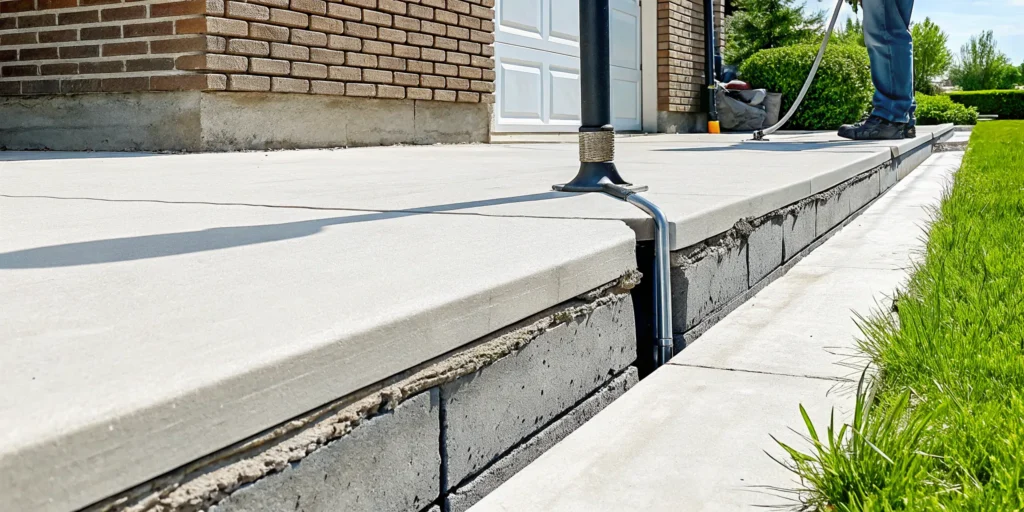
The idea of lifting a multi-ton concrete slab with foam might sound a little unbelievable, but the science behind it is solid. Polyurethane slab jacking is a precise engineering process that offers a powerful solution to sunken concrete. It all starts by injecting a two-part polymer through small, dime-sized holes in the slab. This liquid quickly expands, filling every void and creating immense pressure that lifts the concrete back into place. We’ll explain each step of this clean and efficient process, from the initial drilling to the final, seamless patch, so you can see exactly how we restore your concrete in a matter of hours, not days.
Key Takeaways
- Choose Foam for a Lasting Fix: Polyurethane foam is a modern alternative to mudjacking that lifts and stabilizes concrete without adding heavy, stressful weight to the soil, resulting in a cleaner, faster, and more permanent repair.
- Get a Fast, Clean Repair: The entire process is designed for convenience. Small holes are drilled, foam is injected, and your concrete is often ready to use in under an hour, meaning you get a lasting solution without a major disruption to your life.
- Focus on Value, Not Just Price: Polyurethane foam is a long-term investment in your property’s stability. Its durability saves you money over time, so it’s crucial to select an experienced, local contractor who offers a clear warranty to ensure your repair is done right.
What Is Polyurethane Slab Jacking?
If you’ve noticed a sunken or uneven concrete slab on your property, like a tilted patio or a cracked driveway, you might be picturing a messy, disruptive repair process. Polyurethane slab jacking is a modern solution that changes that picture entirely. It’s a clean and efficient method we use to lift and level concrete back to its original position. The technique involves injecting a high-density polyurethane foam through small, discreet holes drilled into the slab. This foam expands beneath the concrete, filling any empty spaces and gently raising the slab. It’s an ideal fix for settled surfaces caused by common Dallas-area soil issues, like erosion or compaction, and a key part of our concrete repair services.
How Does High-Density Foam Lift Concrete?
It might sound a bit like magic, but the science is straightforward. Once we inject the two-part polymer foam into the voids under your concrete, it undergoes a chemical reaction and expands rapidly. Think of it like a powerful, fast-acting cushion. This expansion fills every gap and compresses the loose soil underneath, creating a solid, stable base. The force of the expanding foam is what lifts the heavy concrete slab back into place, often in just a matter of minutes. Not only does this level the surface, but it also stabilizes the ground beneath it, preventing future sinking and providing a durable, long-lasting solution.
How Is It Different From Mudjacking?
Polyurethane slab jacking is often compared to mudjacking, an older method, but the two are quite different. The most noticeable difference is the size of the injection holes. We drill small, 5/8-inch holes for polyurethane foam, which are barely visible after the repair. Mudjacking requires much larger holes, around 2 inches in diameter. The materials also differ significantly. Mudjacking uses a heavy slurry of mud, cement, and sand, which adds a lot of weight and can sometimes cause the slab to sink again. Our polyurethane foam is incredibly lightweight yet strong. It’s also waterproof and won’t wash away, making it a more permanent fix for your home’s foundation repair needs.
How Polyurethane Slab Jacking Works
You might picture concrete repair as a huge, messy demolition project, but polyurethane slab jacking is surprisingly clean and efficient. The entire process is designed to be minimally invasive, getting your concrete back to its proper level without turning your property into a construction zone. It’s a precise, controlled method that solves the root of the problem: unstable soil beneath the slab. We follow a simple, three-step process to lift and stabilize your concrete, and you can often walk or drive on the surface the very same day. It’s a modern solution that delivers powerful results with very little disruption to your daily life.
Step 1: We Drill Small, Discreet Holes
First, our team drills a series of small, strategically placed holes through the sunken concrete slab. Don’t worry, these aren’t large, gaping holes. They are typically about the size of a dime (5/8 of an inch), making them easy to patch and virtually invisible once the job is done. We determine the exact pattern for these holes based on the specific needs of your slab to ensure a controlled and even lift. These small openings act as injection ports, giving us direct access to the voids and unstable soil underneath your concrete. This careful preparation is the key to a successful and lasting concrete repair.
Step 2: We Inject the High-Density Foam
Next, we inject a two-part polyurethane foam through the holes. This material starts as a liquid, allowing it to flow easily into every empty space and crevice beneath the slab. Within seconds, a chemical reaction causes the foam to expand, much like rising dough, but with incredible force. This expansion fills any voids, compacts the loose soil, and exerts a powerful, even pressure that lifts the concrete back to its original position. Because this process also stabilizes the underlying soil, it helps prevent future settling and provides a solid base for your concrete for years to come.
Step 3: Your Concrete Is Ready in Minutes
One of the best parts of polyurethane slab jacking is how quickly the foam cures. In about 15 minutes, the material hardens completely and becomes fully supportive and waterproof. Once we’ve patched the small injection holes, the job is done. You can walk, drive, or place furniture back on the surface almost immediately. There’s no waiting around for days like you would with freshly poured concrete. You get a fast, effective solution that lets you get back to your routine right away. You can see the seamless results of this process in some of the projects featured in our work.
Why Choose Polyurethane Over Mudjacking?
When you discover a sunken or uneven concrete slab, you’ll find two common repair methods: mudjacking and polyurethane slab jacking. While mudjacking has been around for decades, polyurethane foam injection is a modern solution that offers significant advantages. It’s not just a different material; it’s a completely different approach to lifting and stabilizing concrete. The choice between the two often comes down to long-term stability, convenience, and precision.
For most homeowners, polyurethane provides a more durable and less disruptive fix. It addresses the root of the problem by filling voids and strengthening the soil without adding significant weight. Let’s break down exactly why this advanced method is often the superior choice for repairing everything from driveways and sidewalks to patios and pool decks.
Strength and Longevity
One of the biggest concerns with any home repair is whether the fix will last. Polyurethane foam offers a permanent solution because the material itself is incredibly durable. Unlike the slurry of mud, sand, and cement used in mudjacking, high-density polyurethane does not wash away, break down, or shrink over time. It’s waterproof and chemically inert, so it won’t be affected by soil moisture or erosion. This means your concrete slab gets stable, long-lasting support that you can count on for years, making it a reliable investment in your property’s safety and value.
Installation Speed and Cleanliness
If you’re picturing a messy, drawn-out construction project, you can relax. Polyurethane concrete repair is a remarkably clean and fast process. We drill a few small, dime-sized holes (about 5/8-inch) into the slab, which are barely noticeable once patched. The foam is injected through these tiny holes and expands, lifting the concrete in minutes. The foam cures quickly, and you can typically walk on the surface in about 30 minutes. This is a stark contrast to mudjacking, which requires larger holes, a heavier slurry, and a much longer curing time before you can use the area again.
Better Support for High-Traffic Areas
For areas like driveways, walkways, or patios that see a lot of use, stability is key. Polyurethane foam is extremely lightweight, yet incredibly strong. This is a huge advantage because it doesn’t add much extra weight to the soil beneath your slab. Often, the soil is already weak or poorly compacted, which is why the concrete sank in the first place. Adding the heavy weight of a mudjacking slurry can sometimes worsen the problem over time. Polyurethane provides the necessary lift and support without burdening the ground, helping prevent the concrete from sinking again in the future.
Precision and Void Filling
Getting a perfectly level surface is both an art and a science. Polyurethane foam allows for incredible precision, lifting the slab in small, controlled increments. The foam expands like a gentle cushion, filling every tiny gap and void beneath the concrete to create a solid, stable base. This complete void-filling action ensures the slab is evenly supported, reducing the risk of future cracks or settling. This level of control is much harder to achieve with mudjacking, which involves pumping a heavy, less-manageable slurry under the slab.
The Pros and Cons of Polyurethane Lifting
Polyurethane slab jacking is an incredible technology, but like any home repair method, it has its own set of pros and cons. Understanding both sides helps you make an informed decision for your property. We believe in being transparent, so let’s walk through what you can expect when you choose high-density foam for your concrete repair. This will help you weigh the initial investment against the long-term benefits for your Dallas-area home.
Pro: Superior Performance and Durability
One of the biggest advantages of polyurethane foam is its impressive durability. Unlike the heavy slurry used in mudjacking, this high-density foam is incredibly lightweight. This means it won’t add extra stress to the already unstable soil beneath your concrete, which is a major plus for the shifting clay soils here in Texas. The foam is also waterproof and chemically stable, so it won’t wash away or break down over time. It creates a strong, resilient base that supports your concrete for years to come, making it a reliable solution for your concrete repair needs.
Con: The Upfront Investment
Let’s talk about cost. The initial price for polyurethane slab jacking is typically higher than traditional mudjacking. This upfront investment can be a point of hesitation for some homeowners. However, it’s important to view this as a long-term investment in your property’s stability and value. Because the foam is a permanent solution that addresses the underlying soil issues, you avoid the recurring costs of temporary fixes. We provide free, no-obligation estimates so you can get a clear picture of the costs for your specific project and understand the value you’re receiving.
Environmental and Safety Factors
If you’re concerned about the environmental impact of home repairs, you’ll be glad to know that modern polyurethane foam is a great choice. The material we use is environmentally inert, meaning it won’t leach harmful chemicals into your soil or groundwater. This keeps your lawn, garden, and local ecosystem safe. The installation process is also much cleaner than mudjacking, with no messy slurry to clean up afterward. The small injection holes are barely noticeable, preserving the look of your property while we make it safer and more stable.
Addressing the Myth: Is It a Temporary Fix?
A common misconception about polyurethane lifting is that it’s just a temporary patch. This couldn’t be further from the truth. When performed by experienced professionals, polyurethane foam provides a permanent solution. It does more than just lift the slab; it fills voids and compacts the weak soil underneath, addressing the root cause of the settlement. This process creates a solid, stable base that can last for the life of the concrete itself. It’s a true foundation repair method that offers lasting peace of mind, not a quick fix that will need to be redone in a few years.
How Much Does Polyurethane Slab Jacking Cost?
When you’re dealing with sunken or uneven concrete, one of the first questions you probably have is about the cost. The price of polyurethane slab jacking isn’t a simple, flat rate because every project is unique. Think of it as a custom solution tailored to your property’s specific needs. The final cost depends on the scope of the problem, the amount of material needed, and the complexity of the job.
While it’s tempting to look for the cheapest fix, it’s more helpful to view this as an investment in your home’s safety, function, and curb appeal. A professional repair restores your property and prevents small issues from turning into larger, more expensive problems down the line. The best way to get an accurate number for your project is to have a professional assess the damage. We offer get a quote for concrete leveling guidance to give you a clear understanding of the investment required for a lasting solution.
What Factors Influence the Cost?
Several key factors determine the final price of a polyurethane concrete lifting project. The most significant is the size of the area that needs to be lifted. Repairing a single section of a sidewalk will naturally cost less than leveling an entire two-car driveway. Another major factor is the volume of the void beneath the concrete. A slab that has only sunk an inch will require far less high-density foam than one that has dropped several inches and created a large, empty space.
The complexity of the job also plays a role. Hard-to-reach areas or multiple, separate slabs can add to the labor time. While polyurethane concrete raising has a different upfront cost than traditional mudjacking, it’s important to consider the overall value. Polyurethane offers a longer-lasting and quicker repair, making it a more durable and effective choice for your home.
Long-Term Value vs. Upfront Cost
It’s easy to focus on the initial price tag, but the true value of a concrete repair lies in its longevity. While older methods like mudjacking might seem less expensive at first, they often don’t last as long. Polyurethane foam injection is widely considered a more cost-effective solution over time because it requires fewer follow-up repairs. The material is waterproof, so it won’t wash away, and it’s incredibly lightweight, so it doesn’t add extra stress to the soil underneath.
A polyurethane repair can last for 20 years or more, whereas a mudjacking fix may only last five to ten years, depending on soil and water conditions. Choosing polyurethane means you’re likely paying once for a permanent solution instead of revisiting the same problem every few years. This durability provides peace of mind and protects your investment for decades. If you’re concerned about the upfront cost, we offer financing options to help make the repair more manageable for your budget.
What to Look for in a Warranty
A strong warranty is a direct reflection of a contractor’s confidence in their work and the materials they use. When you’re comparing quotes, don’t just look at the price; look closely at the warranty that comes with it. Most slab lifting services offer warranties that range from two to ten years. A reputable company will be transparent about what their warranty covers and for how long.
For example, some of the best contractors provide a five or even a 10-year residential warranty on their polyurethane installations. Before signing a contract, ask specific questions: What exactly is covered? Are there any exclusions? Is the warranty transferable if you sell your home? A clear, comprehensive warranty ensures your investment is protected. It’s a key indicator that you’re working with a trustworthy team that stands behind their concrete repair services.
Is Polyurethane Slab Jacking Right for Your Property?
Polyurethane slab jacking is an impressive technology, but it’s not a one-size-fits-all fix. The right repair method always depends on the specific problem you’re facing, from the type of concrete that has settled to the condition of the soil underneath it. Understanding when this high-density foam is the perfect tool for the job, and when another approach might be better, is key to a lasting repair.
Think of it like this: you wouldn’t use a hammer to fix a leaky pipe. Similarly, we want to match the best solution to your unique situation. For many Dallas homeowners, polyurethane foam offers a fast, durable, and minimally invasive way to restore their concrete. But for some issues, a different technique might provide better long-term stability. The goal is to find the most effective and permanent solution for your home. Let’s walk through the ideal scenarios for polyurethane lifting and the situations where you might need to consider other options.
When Polyurethane Lifting Is the Best Solution
Polyurethane slab jacking shines in situations where you need a quick and clean fix with minimal disruption. If your driveway, sidewalk, patio, or pool deck has sunken or become uneven, this method is often the perfect answer. The process is incredibly efficient. We drill tiny, dime-sized holes, inject the foam, and the concrete is lifted and ready for use in about 30 minutes. This means you can get back to your daily routine almost immediately. Because it’s so precise and tidy, it’s an excellent choice for visible, high-traffic areas where you want to avoid a messy, drawn-out concrete repair project.
Understanding Weight and Structural Needs
One of the biggest advantages of polyurethane foam is that it’s incredibly strong yet surprisingly lightweight. Traditional mudjacking uses a heavy slurry of cement, soil, and water, which adds a significant amount of weight to already unstable soil. This extra load can sometimes cause the slab to sink again over time. In contrast, our high-density foam provides powerful lift and support without burdening the ground beneath it. This makes it a smarter, more durable solution for the clay soils common in the Dallas area. By stabilizing the soil without adding extra weight, we address the root of the problem, contributing to the long-term health of your home’s foundation.
When to Consider Other Repair Methods
While polyurethane foam is a fantastic solution for most concrete leveling needs, there are a few instances where another method might be more appropriate. If the soil beneath your slab is extremely weak or if there are very large, deep voids, the foam might follow the path of least resistance instead of filling the entire space evenly. In these complex cases, a different stabilization technique could be necessary to ensure a solid, lasting result. The only way to know for sure is with a professional assessment. Our experts can evaluate your property’s specific conditions and recommend the best path forward. If you’re unsure what your property needs, we’re here to help you find the right answer with a free estimate.
How to Choose the Right Concrete Lifting Contractor
Finding the right person for the job is the most important step in any home repair project, and concrete lifting is no exception. The contractor you choose determines the quality of the materials, the precision of the work, and how long the repair will last. A great contractor provides a durable solution and peace of mind, while the wrong one can lead to more problems down the road. To make a confident choice, you’ll want to look at their experience, understand their process, and feel good about their reputation.
What to Look for in a Contractor’s Experience
A contractor’s experience is your best indicator of future results. Look for a company with a proven track record of successful concrete repair projects, especially within the Dallas area. Local expertise is critical because they’ll understand the specific soil conditions that affect your property. Don’t hesitate to ask about their warranty. Most reputable companies offer warranties between two and ten years, which shows they stand behind their work. A confident contractor will also be happy to show you examples of their work and share customer reviews. Seeing is believing, so a portfolio of completed jobs can tell you a lot about the quality you can expect.
Questions to Ask About Their Materials and Process
Feeling overwhelmed by the options is normal, but asking a few key questions can make your decision much clearer. When you get an estimate, have a list of questions ready. Start with the basics: What materials do you use and why? What does your installation process look like from start to finish? How long will the job take, and how soon can I use my driveway or patio again? It’s also smart to ask for a detailed explanation of their warranty. A clear, straightforward warranty that outlines exactly what’s covered is a sign of a trustworthy company. The goal is to find a contractor who is transparent and happy to help you understand the process.
Why Dallas Homeowners Trust Solid Base
Here at Solid Base, we focus on providing a solution that lasts. We exclusively use high-density polyurethane foam because it’s stronger, more durable, and less invasive than traditional mudjacking. Our team has years of experience working with the unique clay soils in the Dallas-Fort Worth area, so we know how to create a stable, long-term fix for your sunken concrete. We believe in clear communication from the first call to the final inspection. From our free, no-obligation estimates to our professional installation, we make sure you feel confident and informed every step of the way. You can learn more about our team’s experience and our commitment to quality.
Related Articles
Frequently Asked Questions
How long will the polyurethane foam actually last? This is a permanent fix, not a temporary patch. The high-density polyurethane foam we use is an inert, waterproof material that doesn’t break down or wash away in the soil. Because it stabilizes the ground beneath the slab and doesn’t add significant weight, it addresses the root cause of the sinking. You can expect the repair to last for the life of your concrete.
Will the drill holes be noticeable after the repair is done? We take great care to make the repair as discreet as possible. The injection holes are only about the size of a dime (5/8 of an inch), which is much smaller than those required for traditional mudjacking. After we lift the slab, we patch these small holes with a cement grout that is carefully blended to match your existing concrete, making them very difficult to spot once the job is complete.
How long does the entire repair process take from start to finish? Most residential projects, like a driveway, sidewalk, or patio, are completed in just a few hours. One of the biggest benefits of this method is the speed. The foam expands and cures very quickly, so your concrete is ready for normal use, including walking or driving on it, about 30 minutes after we finish the injection process.
Is polyurethane foam safe for my family, pets, and lawn? Absolutely. Once the two parts of the polymer are mixed and injected, the foam cures and becomes completely inert. This means it is environmentally stable and will not leach any chemicals into the surrounding soil or groundwater. It’s a safe and responsible choice for properties with kids, pets, and gardens.
Can this method fix any sunken concrete, or are there limitations? Polyurethane slab jacking is incredibly versatile and works perfectly for lifting and leveling most concrete slabs, including driveways, patios, pool decks, and interior floors. However, it is designed to lift whole sections of concrete. If a slab is severely damaged and broken into many small, shattered pieces, replacement might be a more practical option. We can determine the best solution for your specific situation during our free assessment.