
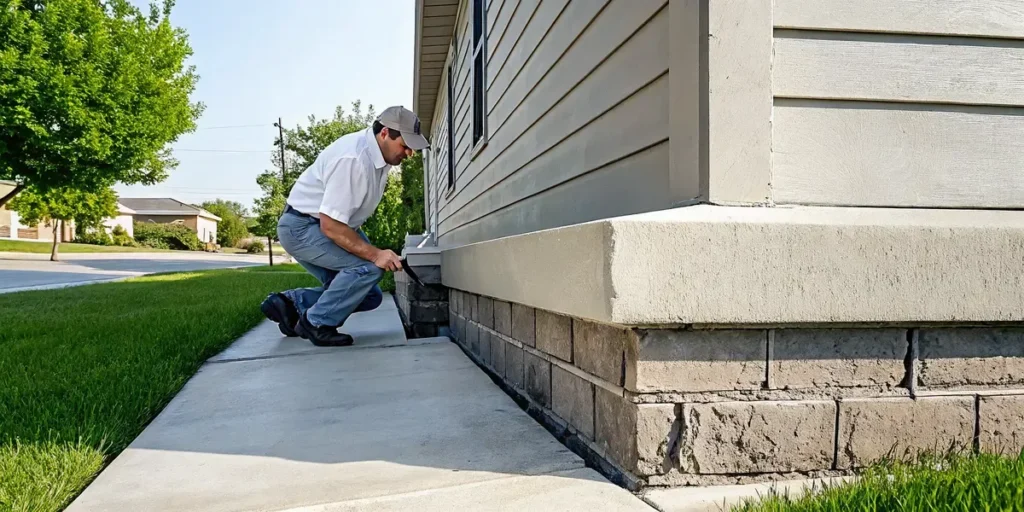
If you are seeing cracks, uneven floors, or doors that suddenly stick, it is understandable to wonder what repairs may involve. In Dallas-Fort Worth, no two foundation projects are identical. The home’s foundation type, the extent of movement, site access, and the soil beneath it all shape the recommended solution.
Call Today for a Free Quote
The professionals at Solid Base Foundations have been providing expert foundation repair services in the Dallas-Fort Worth area since 1993. Call (940) 365-4221 for your free estimate today!
There is no reliable one-size-fits-all price for foundation repair costs Dallas homeowners can use without an on-site evaluation. North Texas sits on expansive clay soil that shrinks and swells as moisture levels change. So a repair estimate must account for both the visible damage and the conditions driving it. A qualified professional can assess those factors and provide a written estimate rather than guess from a generic range.
Understanding the local soil is the right place to start, because its seasonal movement can affect how your foundation shifts. How deeply repairs must reach, and which repair approach offers lasting support.
The Role of Expansive Clay Soil in Dallas Foundation Repair Costs
If your home has developed cracks, sloping floors, or doors that suddenly stick, it is understandable to wonder whether the soil beneath it is part of the problem. In North Texas, the answer is often connected to expansive clay soil, a defining feature of the Blackland Prairie. This clay changes volume as moisture levels rise and fall, placing repeated stress on the foundation.
During wet periods, clay absorbs water and swells. During hot, dry weather, it loses moisture and shrinks. That movement can create uneven support beneath a slab or pier-and-beam foundation. Foundation repair costs Dallas homeowners face can therefore differ from costs in regions with more stable, granular soils. The repair must address not only visible damage, but also how the structure is responding to its underlying soil.
For a home in the area, foundation repair services in Dallas should begin with an evaluation of movement patterns, drainage, and soil conditions rather than a generic repair recommendation.
Why soil depth matters
Expansive clay may extend well below the surface, and the depth of unstable or moisture-sensitive soil can influence how a repair is planned. If stronger bearing material is deeper, a contractor may need a support method that reaches farther below the affected area. Access, foundation type, and the location of movement also shape the final scope. A reliable estimate should explain these conditions instead of assigning a repair based only on the size of a crack.
How previous soil treatment affects the assessment
Previous soil treatment, drainage work, or other stabilization measures can change how moisture moves around your foundation. Those measures may help in one area while movement continues elsewhere, particularly if water is still collecting near the structure. Tell the evaluator about prior work and provide any warranties or engineering records you have. The goal is to understand whether the soil is still active, whether the movement is stable, and which repair addresses the underlying condition.
Because North Texas clay can produce both normal settling and structural damage, separating those conditions is essential before discussing a repair plan. That distinction is a central part of responsible homeowner education in this region, not an optional detail.
Cosmetic vs. Structural Damage: How Severity Determines Cost
Seeing a crack in your wall or slab can be unsettling, especially in North Texas, where expansive clay soil shrinks and swells as moisture levels change. The key question is whether the crack reflects a stable surface issue or active movement that affects the foundation’s ability to support your home. That distinction usually has a greater effect on foundation repair costs Dallas homeowners face than the crack’s appearance alone.
Cosmetic cracks usually require limited repair
Hairline cracks, minor concrete separations, and small areas of surface spalling may remain cosmetic when surrounding walls, floors, doors, and windows show no signs of movement. In those cases, a contractor may recommend crack injection, sealing, or a localized patch. These repairs generally cost far less than structural underpinning because they require fewer materials, less labor, and no system of piers.
For practical guidance on warning signs and next steps, review this foundation crack repair guide for DFW homeowners. It can help you document changes while you arrange an evaluation.
Structural movement increases the scope of work
Structural damage often appears alongside wider or diagonal wall cracks, visible wall movement, floor separation, uneven slabs, sticking doors, or gaps around windows and trim. When several walls or corners are affected, the repair plan must address the underlying load path rather than simply close the visible crack. That may involve interior or exterior work, soil assessment, drainage corrections, and structural piers to stabilize the affected area.
The foundation type also shapes the repair approach. A slab-on-grade home and a pier-and-beam home distribute loads differently, so the same visible symptom can call for different access requirements, materials, and repair methods.
Severity can also change over time. A crack that widens after a wet season or prolonged drought may indicate that clay-soil movement remains active. Track its width, location, and nearby symptoms, then have a qualified professional assess the pattern.
Pier Type and Quantity: One of the Biggest Cost Variables
When a foundation requires structural support, the repair method can change the estimate more than almost any other line item. Steel push piers, helical piers, and concrete leveling systems each solve a different problem. The right choice depends on how the load is moving through your home, how much support the structure requires, and what the soil beneath it can reliably bear.
| Repair Method | Typical Use Case | Cost Position |
|---|---|---|
| Steel push piers | Heavy structural settlement; transfers load to stable soil | Higher upfront investment |
| Helical piers | Lighter structures; site-specific load capacity | Moderate, varies by size and depth |
| PolyLevel injection | Slab lifting and void filling; less invasive | Lower, but not a substitute for structural piers |
Push piers and helical piers serve different loads
Hydraulically driven steel push piers transfer a foundation’s weight through weaker soil to deeper, more stable bearing layers. They are often considered when a slab or footing has settled and requires substantial structural support. Helical piers use steel shafts with helical plates that are advanced into the ground. Their installation and capacity are selected for the site’s soil conditions and the load each pier must carry.
A professional estimate should explain why a specific pier type fits your foundation rather than recommending a method based only on a generic price per pier. This method-specific distinction is also why published pricing ranges can vary widely from one Dallas-area project to another.
Why pier quantity changes the scope
The number of piers depends on more than the size of one crack. Larger homes, longer affected walls, concentrated loads, and lower soil bearing capacity can all increase the number of supports required. North Texas expansive clay adds another variable because the soil shrinks and swells as moisture levels change.
Property size is one useful cost indicator. Industry cost data has reported a broad range of approximately $1.50 to $13 per square foot for foundation repairs. But that figure is not a quote for your home. It does not replace an assessment of soil behavior, structural loads, access, or the number and depth of piers the project requires.
PolyLevel is a different type of correction
Not every uneven slab requires deep piers. Where the issue is suitable for void filling or slab lifting, PolyLevel injection can provide a less invasive alternative. The polymer material cures 96 times faster than traditional mudjacking, which can reduce disruption and allow the repaired area to return to service sooner.
Ask for an itemized explanation of the recommended method, pier count, load requirements, and soil conditions. For expert foundation repair solutions, a site-specific evaluation is more useful than comparing generic numbers online.
How Accessibility and Site Conditions Affect Your Foundation Repair Estimate
Even when the underlying foundation problem is clear, the work area can change how a repair is planned. Landscaping, decks, patios, retaining walls, irrigation lines, and other hardscaping may sit directly over the access path. Crews may need to protect, remove, or restore these features before reaching the foundation, which adds labor and coordination to the project.
Why access for equipment matters
Foundation repair often requires more than hand tools. Depending on the repair method and soil conditions, crews may need to position lifting equipment, pier-installation equipment, concrete pumps, or materials close to the affected area. A narrow side yard, fence, mature tree, or adjacent structure can limit where equipment fits.
North Texas expansive clay also makes site conditions important. The soil shrinks and swells as moisture levels change, so drainage features, landscaping, and hard surfaces near the foundation can affect how water moves around the home.
Slab-on-grade and crawl space repairs follow different paths
Foundation type influences both the repair approach and the amount of work required. A slab-on-grade repair may involve access through the exterior or, when interior slab piers are appropriate, removing and resetting flooring. A crawl space or pier-and-beam home may provide a different route to the structure. But tight clearance, limited ventilation, plumbing, ductwork, or obstructed joists can make the work more difficult.
A free on-site estimate reveals the actual access challenges, foundation depth, surrounding features, and repair requirements before work begins.
Permits, Engineering Reports, and Warranty Considerations
The repair method is only one part of the final scope. In Dallas, expansive clay soil can affect plumbing, drainage, and structural movement at the same time, so a responsible estimate may include several supporting services. Understanding these line items helps you compare proposals based on total value rather than the lowest starting price.
Ask what permits and testing are included
Depending on the project and local requirements, city permits may be necessary before work begins. An engineering report may also be recommended or required when the repair involves significant structural movement, complex loading, or a specific pier design. After the work, a plumbing test can help identify whether foundation movement affected sewer lines. These items can add several hundred to a few thousand dollars to the final invoice, so ask for each one to be listed separately. Review our foundation repair cost guide for more context on how estimates are assembled.
Compare warranty coverage, not just the price
A manufacturer-backed warranty can change the long-term cost of ownership. For example, a 25-year transferable warranty may provide meaningful protection after the repair and can make the work easier to explain to a future buyer. Transferability matters because a warranty tied only to the original homeowner may offer less value when you sell.
Before signing, confirm what the warranty covers, whether it applies to the full repair or only specific products, and whether a future owner can assume it. Request at least three written, itemized estimates and confirm that any structural warranty is transferable before choosing a contractor.
Why a Free On-Site Estimate Is the Only Accurate Foundation Repair Quote
When foundation movement affects your home, a quick phone quote may sound convenient, but it cannot account for the conditions beneath and around your property. North Texas homes sit on expansive clay soil that shrinks and swells as moisture levels change. That movement affects each foundation differently, so an accurate recommendation starts with an in-person evaluation.
What an on-site evaluation reveals
A qualified professional can assess the foundation type, the location and severity of visible damage, soil behavior, drainage conditions, and access around the structure. They can also determine whether movement appears active, identify areas that require monitoring, and evaluate how repair work will affect landscaping, patios, flooring, or crawl-space access.
Why a written estimate matters
Solid Base Foundations prepares detailed written estimates using a standard price sheet rather than presenting a vague range or pressuring you into an immediate decision. The estimate can clarify the recommended work, materials, and project scope so you can compare proposals on more than a headline number.
If you are researching foundation repair costs Dallas homeowners may face, the most useful next step is a property-specific assessment, not online speculation. Schedule your free on-site estimate to receive clear guidance based on your home’s actual soil, foundation, access, and damage conditions.
Frequently Asked Questions
How much does foundation repair cost in Dallas?
There is no reliable flat rate because expansive clay soil, foundation type, damage severity, repair method, and site access all affect the estimate. A professional inspection can determine whether movement is active, identify the appropriate solution, and provide a written quote for your home.
How much does a 2,000-square-foot foundation cost to repair?
Square footage alone does not determine the repair price. A 2,000-square-foot home may require different work depending on the number of affected walls or corners. Soil conditions, foundation design, and the quantity of piers or injection material required. An on-site assessment gives you a more useful answer than a generic online calculator.
Is it worth fixing foundation issues?
Addressing structural movement early can help protect your home from worsening damage, water intrusion, uneven floors, and complications when you sell. In North Texas, moisture-driven shrink-and-swell cycles in expansive clay soil can keep stressing a foundation. An inspection helps you distinguish stable cosmetic cracking from movement that warrants repair.
How long does foundation repair typically take?
Many residential projects are completed in a single day, although the schedule depends on the repair method, project size, access, and any engineering or permit requirements. PolyLevel injection cures 96 times faster than traditional mudjacking, which can reduce disruption when that method fits the site and repair conditions.
Ready to Plan Your Foundation Repair Estimate?
Every Dallas-Fort Worth home responds differently to expansive clay soil, so an on-site assessment can clarify which factors affect your repair plan. Schedule your free foundation repair estimate with Solid Base Foundations by calling (940) 365-4221. You will have a clearer understanding of the recommended next step without relying on a generic price range.