
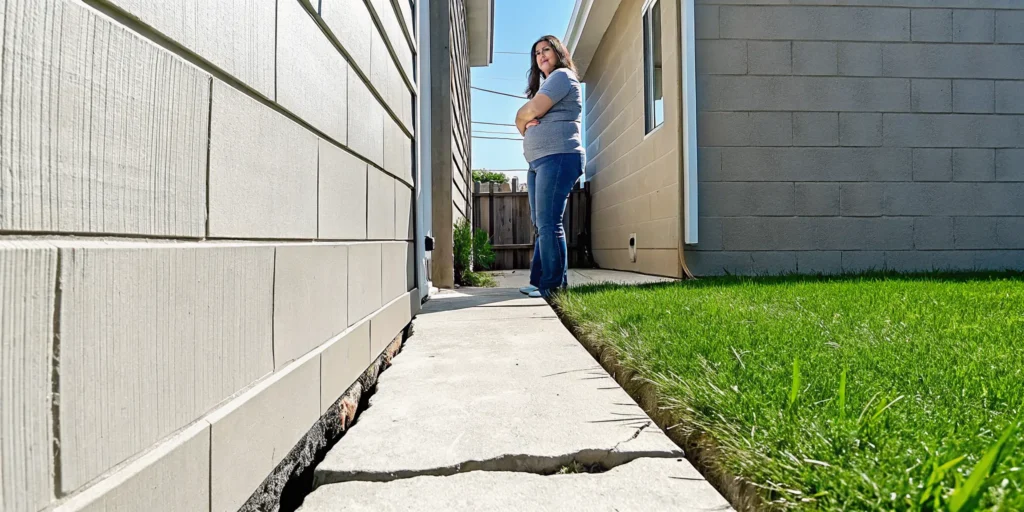
A crack in your driveway may be harmless, while a similar-looking line through a foundation wall can signal movement below your home. That uncertainty is understandably stressful, especially when you cannot tell whether the concrete is simply drying or your house is responding to changing soil conditions.
The clearest way to evaluate a concrete crack vs foundation crack is to look at its location, width, direction, depth, and whether one side has shifted. Hairline surface cracks can result from curing shrinkage, but zigzag or diagonal cracks, cracks wider than 1/8 inch, and visible vertical displacement deserve professional attention.
In North Texas, expansive blackland prairie clay is the primary cause of much foundation movement. The soil expands with moisture and contracts as it dries, placing uneven pressure on slabs and structural supports. Understanding that local pattern makes it easier to interpret what you see. It also helps you decide when monitoring is reasonable versus when an assessment is important.
Why North Texas Homes Are Prone to Cracking
If you have noticed a crack in a wall, slab, or walkway, it is understandable to wonder whether it signals a larger problem. In North Texas, the answer often begins beneath your home. Much of the Dallas-Fort Worth area sits on expansive clay soil, including the clay-rich Blackland Prairie. This soil responds to changes in moisture rather than remaining stable throughout the year.
How expansive clay affects your home
During wet periods, expansive clay absorbs water and swells. During hot, dry conditions, it releases moisture and shrinks. That repeated movement changes the support beneath a foundation and can cause parts of a structure to rise, settle, or shift at different rates. As the home responds to that movement, stress can appear as cracking in drywall, brick, concrete, mortar, or the foundation itself.
This does not mean every crack represents structural damage. Concrete can develop small surface cracks as it cures, and independent features such as a driveway or walkway may settle separately from the house. The location, direction, width, and progression of a crack provide more useful context than its appearance alone.
Why local conditions matter
A crack assessment for a Dallas home should account for North Texas soil behavior, drainage, grading, and the age and construction of the property. Moisture collecting beside one part of a foundation can create uneven soil movement, while prolonged drought can cause broader shrinkage around the home. These conditions help explain why cracking occurs, but they do not determine its severity by themselves.
Tracking whether a crack changes over time can help you describe the issue accurately during an inspection. A qualified professional can then distinguish ordinary surface movement from signs that the foundation or surrounding concrete requires closer evaluation.
Cosmetic Concrete Cracks vs. Structural Foundation Damage: A Visual Guide
Seeing a crack in a slab or foundation can be unsettling, especially in North Texas, where expansive clay soil responds to changing moisture levels. The location and appearance of the crack provide useful clues, but one isolated line does not always tell the whole story. Use this comparison to distinguish a surface-level issue from a pattern worth professional evaluation.
| Feature | Cosmetic concrete crack | Structural foundation damage |
|---|---|---|
| Crack width | Usually a small hairline or narrow surface crack caused by shrinkage as concrete cures and dries. | Often wider than 1/8 inch, with larger openings requiring closer assessment. A crack wider than the edge of a credit card deserves professional attention. |
| Pattern or direction | Short, relatively straight lines that remain shallow and limited to the surface. | Zig-zag, diagonal, or stepped patterns can indicate movement. Vertical displacement, where one side sits higher than the other, is another important warning sign. |
| Location | Common in independent slabs such as walkways, patios, and driveways. These areas may settle separately from the home’s main foundation. | May appear in the foundation, structural walls, masonry, or across multiple connected concrete areas. |
| Accompanying symptoms | Often has no related changes beyond the visible line. Monitor it for changes in width, depth, or pattern. | May occur with uneven surfaces, displacement, or cracks spreading across multiple slabs. Related symptoms increase the importance of an inspection. |
| Severity | Usually a finish or maintenance concern. Sealing may help limit water entry, although it does not correct movement beneath the slab. | Potentially a sign of settlement or ongoing structural movement. The repair approach depends on what is moving and why. |
The distinction between a foundation crack vs concrete crack is not based on width alone. Consider the full pattern, whether one side is higher, and whether the crack is changing over time. For isolated damage in a walkway or driveway, concrete repair services may address the slab itself. If the crack appears in the foundation or is spreading across connected areas, an evaluation can clarify whether expansive clay soil movement is contributing to the problem.
How to Tell a Concrete Crack From a Serious Foundation Crack
Not every crack calls for alarm, but its width, direction, and movement can reveal whether you are looking at a surface-level concrete issue or a foundation concern. North Texas homes also face expansive clay soil, which can shift as moisture levels change. Use this quick inspection to document what you see, then arrange a professional assessment if the warning signs add up.
-
Measure the width with a credit card. Hold a standard credit card against the widest part of the crack as a simple reference. A hairline opening may reflect normal curing shrinkage, particularly in an independent walkway or driveway slab. If the gap appears wider than the card’s edge, or approaches or exceeds 1/8 inch, treat it as a reason to request an inspection. The American Concrete Institute guidance commonly cited in the industry identifies cracks exceeding 1/8 inch, about 3 mm, as a threshold that warrants professional review. This measurement does not diagnose the cause by itself, but it helps you track whether the crack changes over time.
-
Examine the pattern and direction. Vertical, hairline cracks that remain narrow are often less concerning than cracks that run horizontally, diagonally, or in a stair-step pattern. Zig-zag or stepped lines through masonry and mortar can follow the path of uneven movement. A diagonal crack that travels through brickwork or continues from a wall toward the floor deserves closer attention. For more guidance on identifying structural concrete cracks, compare the crack’s location with the surrounding slab, wall, or foundation line rather than judging its appearance alone.
-
Check for vertical displacement. Run your fingertips across the crack, or place a straightedge over it. If one side sits higher than the other, the concrete has shifted vertically. That displacement can indicate significant settlement, especially when it appears alongside a diagonal or zig-zag pattern. A flat, narrow surface crack is a different condition from two sections that no longer align. Photograph the area from several angles and note the date so an inspector can evaluate movement accurately.
-
Look for related changes inside the home. A concerning crack may occur with sticking doors, windows that no longer open smoothly, uneven floors, gaps around trim, or additional cracks in walls and ceilings. These signs do not prove that the foundation caused the problem, but several changes appearing together deserve attention. Also note whether cracks are spreading across more than one concrete slab. Monitor width, depth, and pattern, and request a professional assessment if they worsen or if the crack is wider than a credit card.
Other Signs That a Crack Is More Than Cosmetic
A crack deserves closer attention when it appears alongside changes elsewhere in the home. A single surface mark may come from ordinary curing or shrinkage, but several symptoms together can point to movement beneath the structure. In North Texas, expansive clay soil can shift as moisture levels change, placing stress on foundations and the connected parts of a home.
Doors and windows begin to stick
Doors that suddenly drag, jam, or fail to latch can reflect changes in the alignment of the frame. Windows may become difficult to open or close for the same reason. These problems do not automatically confirm foundation movement. But they are more concerning when they develop near a diagonal or stepped crack, or when several openings are affected at once.
Floors feel uneven or slopes become noticeable
Walk across the room and pay attention to areas that feel sloped, uneven, or different from before. A change in floor level can accompany settlement or shifting support below the home. Look for related gaps where baseboards no longer meet the floor evenly. One symptom alone may have another explanation, while an uneven floor paired with widening or displaced cracking warrants a professional assessment.
Gaps appear around walls and ceilings
Separation between a wall and ceiling, or between a wall and floor, can indicate that connected building components are no longer moving together. Gaps around trim, cabinets, or door frames add useful context, especially when they appear after a crack has changed in width, depth, or pattern.
Water seeps through the crack
Moisture coming through a foundation crack is a red flag. Sealing a crack can help prevent water penetration, which may undermine the soil, but it does not correct the structural movement causing the opening. If water returns after sealing, treat the repair as a temporary cosmetic measure rather than a complete solution. A leaking crack combined with sticking openings, uneven floors. Or separation at the walls and ceiling calls for an evaluation of the underlying movement, not just another layer of sealant.
What to Do If You Find a Crack That Worries You
Finding a new crack can make you wonder whether a concrete crack vs foundation crack is developing into a larger problem. Start by documenting what you see rather than covering it immediately. Place a crack gauge over the opening, or measure it with a tape measure, then record the width, location, date, and direction of the crack. Take a clear photo with a ruler beside it for scale. Recheck the area about once a month and note any change in width, depth, length, or pattern.
Watch for changes beyond the crack itself
A crack deserves closer attention when it changes or appears alongside other signs of movement. Check whether nearby doors stick, floors feel uneven, windows become difficult to open, or gaps appear around trim. Also note whether similar cracks are spreading across more than one slab or wall. In North Texas, expansive clay soil responds to changing moisture conditions, so a pattern that progresses over time is more useful than a single snapshot.
Arrange an assessment before choosing a repair
If the opening is wider than the edge of a credit card, or if the crack is spreading across multiple concrete slabs, schedule a professional assessment. A free estimate lets a qualified professional evaluate the crack, surrounding surfaces, and signs of movement without requiring you to commit to a repair. The assessment can distinguish a surface-level issue from a structural concern and help determine whether the appropriate response is sealing, leveling, or structural support.
For a non-structural foundation crack, epoxy injection can seal the fissure and help limit water intrusion. It does not correct structural movement or level a settled foundation, so sealing alone may be incomplete when the underlying problem continues. Read more about repairing foundation cracks before selecting an approach.
When movement is structural, solutions may include helical piers to stabilize the foundation or polyurethane foam leveling to stabilize soil and lift settled concrete where appropriate. Learn more about available foundation repair services during your evaluation.
Frequently Asked Questions
How do I know if a crack in my concrete is serious?
Look for a crack that is wider than 1/8 inch, follows a zig-zag or stepped pattern, or shows vertical displacement with one side higher than the other. Cracks that spread across multiple slabs or become wider than a credit card also warrant a professional assessment. In North Texas, expansive clay soil can shift with moisture changes, so the surrounding pattern matters as much as the crack itself.
Are small hairline cracks in a driveway or walkway normal?
Small hairline cracks can result from shrinkage as concrete cures and dries, particularly when they remain shallow and stable. A crack in an independent walkway or driveway does not automatically mean the home’s foundation has moved. Mark the ends of the crack and monitor its width, depth, and pattern over time. Changes suggest that an assessment would be useful.
What is the difference between a foundation crack and a concrete crack?
A concrete crack may affect a surface slab, patio, walkway, or driveway that settles independently. A foundation crack affects a structural wall, footing, or connected floor area and may reflect deeper settlement. Diagonal or stepped cracks through brick or mortar, especially when they continue from a wall into the floor slab, deserve closer evaluation.
Should I seal a crack before having it inspected?
Sealing can reduce water penetration, which helps limit moisture-related soil problems, but it does not correct structural movement. If movement caused the crack, a sealant or DIY patch may only provide a temporary cosmetic fix. Photograph the area, note any changes, and arrange an assessment before relying on a repair product as the final solution.
Ready to Schedule a Free Foundation Inspection?
If a concrete crack has changed, widened, or raised questions about your home’s stability. A professional inspection can help clarify what you are seeing and what steps may make sense. Schedule a free foundation inspection with Solid Base Foundations by calling (940) 365-4221. Share where the crack appears and any changes you have noticed so the team can better understand your concern and guide the next step.