
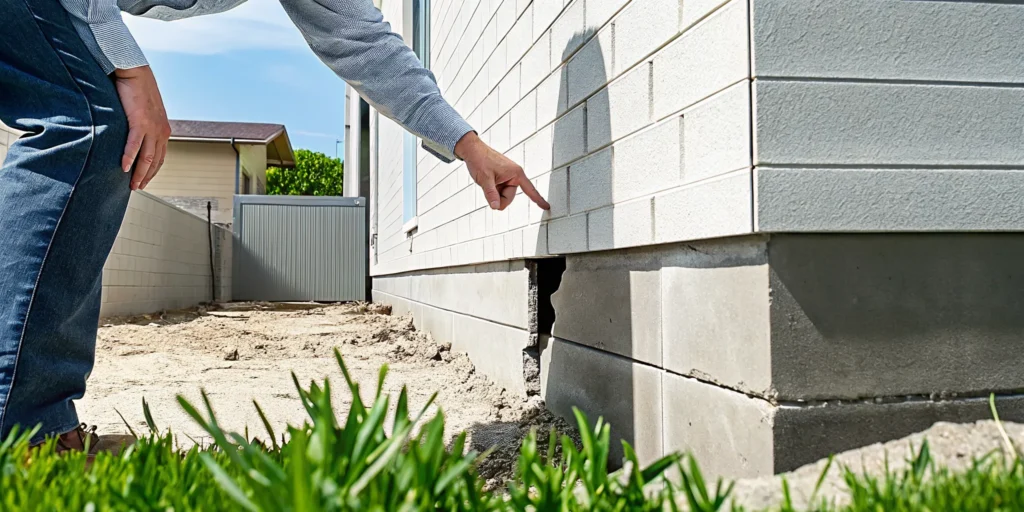
A crack in your foundation can raise an immediate question: is it a minor repair, or evidence of movement beneath your home? In North Texas, expansive clay soil shrinks and swells as moisture conditions change, so the visible crack may not reveal the full cause.
Call Today for a Free Quote
The professionals at Solid Base Foundations have been providing expert foundation inspection and repair services in the Dallas-Fort Worth area since 2008. North Texas expansive clay soil is exactly what they understand best. Call (940) 365-4221 for your free estimate today!
Foundation crack repair cost Texas can range from a few hundred dollars for a localized. Non-structural repair to $30,000 or more when extensive stabilization and multiple piers are required. The right figure depends on crack type, foundation movement, access, and the repair plan confirmed during a professional assessment.
That range is why a generic price sheet cannot replace an on-site evaluation. Understanding how crack severity and repair methods affect the scope gives you a clearer starting point before you consider the next step.
Understanding Foundation Crack Repair Cost in Texas
Seeing a crack in your foundation can make you worry about both your home and your budget. The repair method matters more than the crack alone. A localized, non-structural crack may require a relatively small repair, while movement caused by North Texas expansive clay soil can call for stabilization that reaches much deeper.
Use the ranges below as general planning information, not as a quote. A site-specific assessment is the only reliable way to determine the scope of work for your property.
Typical ranges by repair severity
- Minor hairline cracks: Repairs using epoxy injection or similar localized methods commonly fall around $300 to $800. This range generally applies when the crack is non-structural and the surrounding foundation remains stable.
- Moderate repairs: Multiple cracks or settled sections may fall in the $3,300 to $7,000 range. The exact scope depends on whether the repair addresses the visible crack only or also corrects movement beneath the slab.
- Major structural repairs: Multiple piers or whole-house lifting can cost $15,000 to $30,000 or more. Helical piers alone are commonly reported at approximately $1,000 to $3,000 per pier, before considering the complete project scope.
For broader Dallas data, Angi reports an average foundation repair cost of $5,223. With a range of $3,338 to $7,118 and an estimated $1.50 to $13 per square foot across repair types: Angi’s Dallas cost data. Those figures show why a simple square-foot calculation cannot replace an inspection.
Why North Texas homes can fall anywhere in the range
North Texas sits on expansive clay soil that shrinks during dry periods and swells when moisture returns. That repeated movement can create differential settlement, which may turn a small-looking crack into a symptom of a larger structural issue. The American Society of Civil Engineers notes that nearly one-quarter of U.S. homes have foundation damage related to expansive soils: ASCE.
Access, foundation type, the number of affected areas, and the stabilization method also influence the final scope. For a detailed breakdown of factors and regional ranges, review this 2026 foundation repair cost guide, then arrange a professional evaluation before comparing proposals.
Why Foundation Crack Repair Costs Vary Across Texas
Seeing a crack in your home can be unsettling, especially when online price ranges make the repair seem impossible to predict. In North Texas, the underlying cause often matters as much as the visible crack. Expansive clay soil shrinks during dry conditions and swells when moisture returns. That repeated movement can create differential settlement, so a repair must address the behavior of the soil and the way your foundation is responding to it.
Foundation type and crack severity
A pier-and-beam foundation and a slab-on-grade foundation distribute weight differently. A pier-and-beam repair may involve work beneath the structure in a limited crawlspace, while a slab repair may require access through concrete or stabilization at specific load-bearing points. The foundation type affects the assessment, equipment, labor, and repair plan.
The crack itself also provides only part of the story. A narrow, stable crack caused by concrete curing or minor settling may require a localized seal. A wider, horizontal, diagonal, or stair-step crack can point to continuing movement, particularly when doors stick, floors slope, or gaps appear around frames. Structural repairs require more investigation than cosmetic crack sealing because the goal is to stabilize the foundation, not simply conceal the opening.
Repair method and the scope of work
The selected method depends on the diagnosis. Epoxy injection can seal some non-structural concrete cracks, while polyurethane foam may suit cracks where flexibility and moisture resistance matter. Carbon fiber reinforcement can help address certain wall movement patterns. If expansive soil has shifted part of the foundation. Steel piers or helical piers may be used to transfer the load to more stable soil and support a broader stabilization plan.
That difference explains why a localized repair and a structural stabilization project should not be compared as though they were the same service. The number of cracks, their location, the amount of movement, and the number of piers or other supports required all change the scope. A single accessible crack is a different project from multiple cracks spread across a settled section.
Access and site conditions
Crews also evaluate how safely and efficiently they can reach the affected area. Narrow working spaces, crawlspace limitations, landscaping, plumbing, retaining features, and other site conditions can increase complexity. Removing or protecting landscaping may be necessary, and equipment access can influence the sequence of work. These details are why a visual estimate based on a generic price sheet cannot replace an on-site assessment.
For a closer look at warning signs and repair approaches, review this foundation crack repair guide. A professional evaluation can connect the crack pattern to North Texas soil movement and outline a site-specific solution, rather than treating the visible symptom alone.
Hairline Cracks vs. Structural Cracks: Knowing the Difference
Seeing a crack in your foundation can be unsettling, but its appearance does not automatically mean your home has a structural problem. North Texas homes sit on expansive clay soil that shrinks and swells as moisture levels change. So some movement and concrete curing shrinkage can produce cracks that are primarily aesthetic. The pattern, width, location, and accompanying symptoms provide a better starting point for deciding what deserves prompt attention.
| Hairline cracks | Structural warning signs |
|---|---|
|
|
Why width alone does not tell the whole story
A narrow crack can still warrant attention if it changes, reappears after sealing, or appears alongside other signs of movement. Conversely, not every wider-looking surface crack indicates a failing foundation. Concrete curing and normal settling can leave cosmetic marks that do not compromise structural performance. A professional assessment considers the crack’s direction and location, changes over time, drainage conditions, soil movement, and the foundation type.
Look for movement beyond the foundation wall
Doors that suddenly stick, windows that bind, sloping floors, and gaps around frames can strengthen the case for a broader foundation evaluation. In expansive North Texas clay, uneven moisture around the home can contribute to differential settlement. Sealing the visible crack without addressing the movement or drainage conditions may leave the underlying issue unresolved.
For a closer look at how professionals diagnose crack severity, review the related guide before deciding which repair approach fits your property. A site-specific inspection is the reliable way to distinguish a cosmetic crack from movement that calls for engineered stabilization. And to establish an accurate foundation crack repair cost Texas homeowners can use for planning.
What to Expect During a Professional Foundation Inspection
-
Schedule an on-site assessment
Start by schedule a free foundation inspection with a trained technician. A professional visit gives you a clearer answer than a photograph or a generic price range. Especially in North Texas, where expansive clay soil can shrink and swell as moisture conditions change. Foundation repair is rarely a DIY project because the visible crack may not reveal the movement or soil condition causing it.
-
Document cracks and related movement
The technician examines foundation and wall cracks, noting their location, direction, width, and pattern. The assessment also looks for related signs such as sticking doors, gaps around frames, or sloping floors. Level measurements help identify whether one area has settled or lifted relative to the rest of the structure. This distinction matters: a small curing or settling crack may call for a different response than a wider, diagonal, or stepped crack associated with structural movement.
-
Evaluate moisture and drainage conditions
Because clay responds to water loss and excess moisture, the inspection considers drainage, grading, plumbing concerns, and the soil moisture conditions around the home. Effective repair addresses more than the symptom in the wall or slab. A plan that includes practical moisture management can help support long-term foundation health through drought and heavy rainfall. Rather than leaving the same soil conditions to drive continued movement.
-
Receive a site-specific repair plan
After reviewing the findings, the technician explains the recommended scope and whether an engineered assessment or additional design work is appropriate. Solid Base Foundations can outline specific recommendations instead of guessing at a foundation crack repair cost Texas homeowners may see online. The estimate should connect the proposed method, materials, access requirements, and stabilization work to the conditions documented at your property. Explore the company’s foundation repair services to understand the types of solutions available.
-
Confirm permits before work begins
Permit requirements vary by municipality and project scope. For example, Coppell states that residential foundation repair requires a building permit and may require a Texas registered structural engineer’s assessment, design, and specifications. San Antonio guidance also warns that starting covered work before obtaining a permit can result in additional fees. Your contractor should clarify the local process, required documents, and any inspections before construction starts.
Review Coppell’s foundation repair permit guidance and confirm requirements with your city or county building department.
Frequently Asked Questions
How much does foundation crack repair cost in Texas?
A simple, non-structural crack may cost a few hundred dollars to seal, while repairs involving stabilization can reach several thousand dollars. The final scope depends on movement, soil displacement, foundation type, access, and the number of piers or other supports required. A site-specific inspection provides a more useful estimate than a generic price range.
What factors influence the cost of foundation repair?
Severity and location matter first, followed by the repair method, foundation type, site access, and the number of cracks. In North Texas, expansive clay shrinks and swells as moisture changes, so drainage conditions and soil movement can affect the repair plan. Proper evaluation addresses the cause of movement, not only the visible crack.
Are foundation cracks always structural?
No. Hairline cracks can result from concrete curing or normal settling, particularly in newer construction. Wider cracks, horizontal cracks, stair-step cracks in brick, or cracks paired with sticking doors. Gaps around frames, or sloping floors deserve professional evaluation because they may indicate ongoing movement.
Why does soil type matter for foundation repair in Texas?
North Texas expansive clay absorbs moisture, expands, dries, and contracts. Those repeated changes can place uneven pressure on a slab or pier-and-beam foundation. A repair plan that ignores drainage and soil behavior may address the symptom without reducing the conditions that contribute to future movement.
What happens during a professional foundation inspection?
An inspector reviews visible cracks and related symptoms, examines the foundation and surrounding drainage, and evaluates the likely source of movement. The findings help define whether a localized repair or structural stabilization is appropriate. The resulting scope and estimate should reflect your property rather than a one-size-fits-all price sheet.
Ready to schedule your foundation inspection?
A professional assessment can help clarify whether a crack is cosmetic or connected to movement in North Texas expansive clay soil. Solid Base Foundations can review the visible signs, explain the appropriate next step, and prepare a clear estimate for your property. Call (940) 365-4221 to schedule a free foundation inspection and estimate.