

Pier and Beam Foundation Repair in Dallas-Fort Worth
Pier and beam foundation repair becomes urgent when an older Dallas-Fort Worth home starts feeling uneven underfoot, doors stop fitting their frames, or crawl space moisture begins weakening the system that carries the house. These foundations are common in older North Texas neighborhoods because the elevated structure creates accessible space for plumbing and airflow. That access is useful, but it also means soil movement, humidity, wood deterioration, and shifting supports can show up as visible symptoms inside the home.
Concerned about movement beneath your home? Request a free, no-obligation estimate or call 940-365-4221 to schedule an evaluation with Solid Base Foundations.
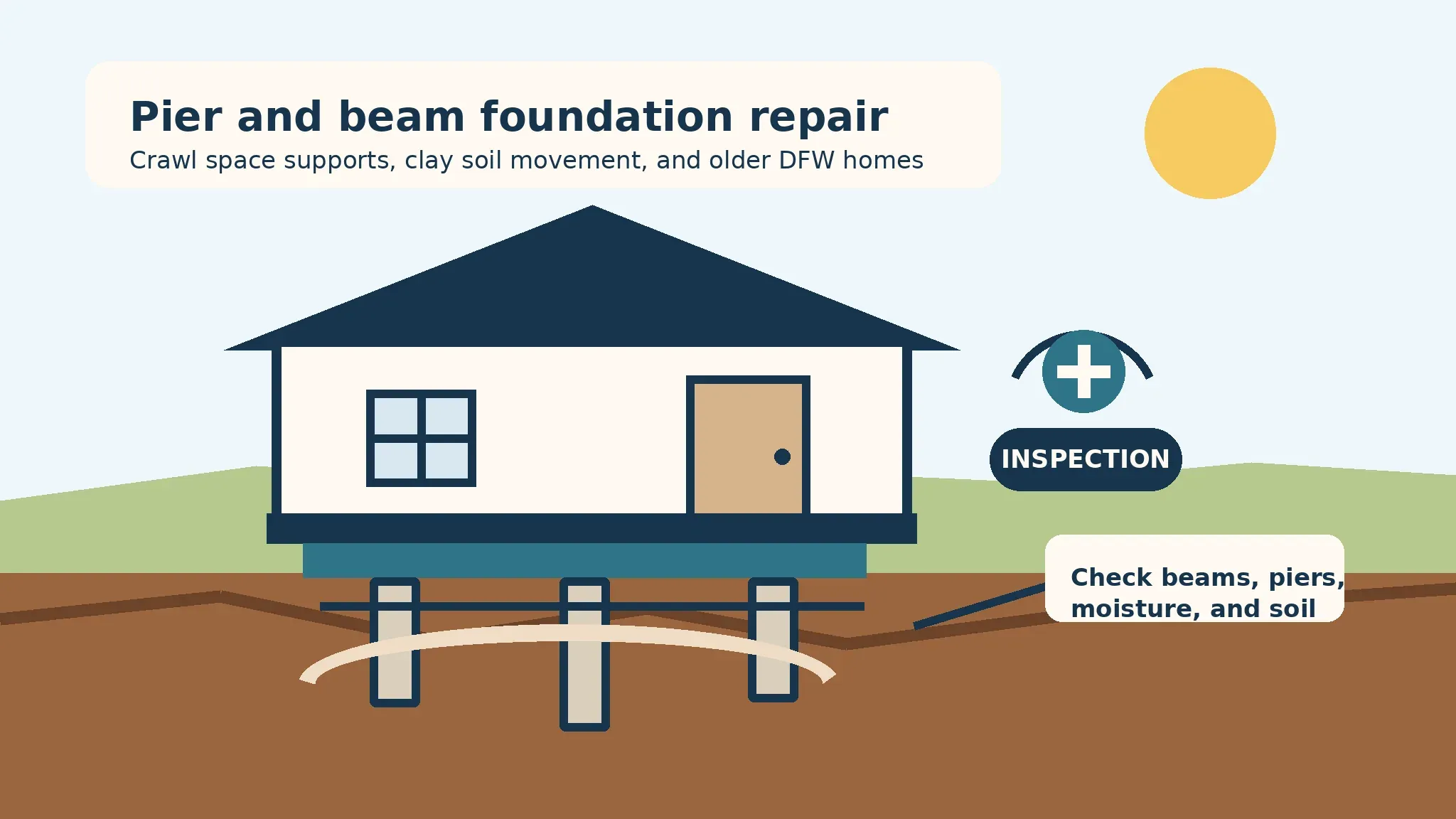
What is a pier and beam foundation?
A pier and beam foundation lifts the floor system above the soil. Vertical piers support horizontal beams, and those beams carry floor joists and the weight of the home. The open area beneath the floor is commonly called a crawl space. Compared with a slab-on-grade foundation, a pier and beam system can make some utility access easier and can allow a repair specialist to inspect support elements directly.
That does not make the foundation immune to movement. The system depends on each pier, beam, joist, shim, and soil-bearing point doing its job. If a pier settles, a wood member decays, or moisture changes the soil conditions below one section of the home, the floor plane can drift out of level. Homeowners often notice the effect upstairs before they know what changed underneath.
Solid Base Foundations evaluates structural movement throughout Greater Dallas-Fort Worth. For homeowners comparing repair paths, the company’s foundation repair services page explains how professional stabilization starts with identifying the cause, not treating a symptom in isolation.
Why pier and beam foundations move in North Texas
Dallas-Fort Worth soils can create repeated stress on foundations. Expansive clay swells when it takes on moisture and shrinks during dry periods. A pier and beam home may respond differently from a slab home, but the pressure cycle still matters. Supports can settle unevenly, crawl space humidity can linger after heavy rain, and drainage problems can keep some areas wetter than others.
Clay soil expansion and shrinkage
When clay-rich soil loses moisture in a hot, dry stretch, it can contract around support locations. After rain or irrigation changes, the same soil can swell again. Uneven moisture exposure around the footprint of a home makes the movement less uniform. One side may stay relatively stable while another section shifts enough to create sloped floors or drywall stress.
Poor exterior drainage
Water that collects near the foundation can change the soil beneath piers and add humidity in the crawl space. Downspouts that discharge beside the home, negative grading, low spots in planting beds, and chronic runoff all deserve attention during an evaluation. Drainage correction may be part of the long-term strategy when moisture is contributing to foundation symptoms.
Crawl space moisture and damaged wood
An elevated foundation exposes structural wood to crawl space conditions. If the space stays damp, beams, joists, sill components, or subfloor materials can suffer. Musty odors, soft areas in the floor, condensation, standing water, and visible fungal growth are warning signs that the crawl space needs closer review. Structural repair may require separating soil-related movement from wood-related deterioration so the recommended work fits the actual cause.
Common signs you may need pier and beam foundation repair
One symptom does not automatically prove a foundation failure. Seasonal humidity can affect a door, and older homes may have small cosmetic imperfections. A pattern of symptoms, especially when it worsens, is more meaningful. Watch for these changes:
- Floors that slope, dip, bounce, or feel spongy in a specific room or traffic path.
- Interior doors that rub, latch poorly, or swing open on their own.
- Cracks at wall corners, above door openings, or where ceilings meet walls.
- Trim gaps, separated baseboards, or cabinets pulling slightly out of alignment.
- Musty odors, visible moisture, standing water, or damaged insulation in the crawl space.
- Cracked, leaning, or shifted supports beneath the home.
- Exterior brick or siding gaps that appear alongside interior floor changes.
If the issue is isolated to concrete flatwork, a different solution may be more appropriate. Solid Base also explains its PolyLevel concrete leveling approach for settled sidewalks, driveways, patios, and other concrete surfaces. A crawl space support problem and a sunken driveway can appear at the same property, but they should be diagnosed separately.
What crawl space problems matter most?
The crawl space gives a repair professional a clearer look at the underside of many pier and beam homes. That does not mean every concern is easy to see without experience. A meaningful inspection connects visible symptoms above the floor with conditions below it.
Support alignment
Piers and beams should transfer loads in a stable, consistent path. If temporary materials, poor shimming, cracked supports, or misaligned contact points are present, parts of the floor system may carry stress differently from neighboring areas. That can create localized dips or a rolling sensation when walking through a room.
Moisture sources
An evaluation should look for water entry, plumbing leaks, drainage patterns, and soil dampness. Moisture can contribute to wood damage and soil instability at the same time. Treating only the floor elevation while ignoring recurring water exposure risks leaving a driver of the problem in place.
Beam and joist condition
Wood components may crack, deflect, deteriorate, or lose reliable bearing. In an older home, a technician should look for signs of prior repairs, unusual spans, damaged framing, and changes made during renovations. The right repair scope depends on whether the concern is primarily support settlement, framing deterioration, or both.
A good repair plan starts under the home, not with guesswork. Schedule a free estimate if you see crawl space moisture, floor movement, or several warning signs together.
How a professional evaluates an older DFW home
Solid Base Foundations has served Greater Dallas homeowners for more than 18 years and approaches each home as its own structural system. Pier and beam foundation repair should not be reduced to a single generic fix. The evaluation should document what is happening, where it is happening, and which conditions appear to be driving the change.
- Discuss the homeowner’s observations. A technician should ask when floor movement, sticking doors, cracks, odors, or drainage changes became noticeable.
- Review visible interior and exterior signs. Alignment concerns, cracks, trim separations, and surface water paths help narrow the diagnostic focus.
- Inspect the crawl space where access allows. Piers, beams, joists, shims, moisture, soil exposure, and prior repairs all matter.
- Connect symptoms with causes. A floor that dips near a deteriorated beam may call for a different plan than broad settlement tied to soil support.
- Explain repair options and next steps. Homeowners should understand the recommended scope before approving work.
The company’s broader about page outlines its local experience, Foundation Supportworks network connection, and focus on trained repair specialists. Those trust signals matter when an older home needs a careful diagnosis instead of a rushed recommendation.
Which pier and beam repair options may be recommended?
The best repair method depends on the cause of movement and the condition of the supporting materials. A professional plan may combine support correction, structural member work, and moisture-related recommendations rather than relying on one blanket solution.
Adjusting or improving supports
When supports no longer transfer weight evenly, the plan may involve correcting bearing points, improving shimming practices, or addressing unstable support locations. The objective is controlled, durable load transfer. A trained evaluator should explain what will be adjusted and why that specific section of the foundation needs attention.
Repairing or replacing compromised beams and joists
If wood deterioration or structural damage is part of the problem, support leveling alone may not solve it. The affected framing may need repair or replacement as part of the system-level solution. This is especially important when moisture or older modifications have changed how the floor assembly behaves.
Stabilizing settlement with engineered pier systems when appropriate
Solid Base offers foundation pier systems through its repair portfolio, including push piers and helical piers for applicable foundation stabilization needs. The company notes a 25-year manufacturer’s warranty on its pier systems. Whether that path applies to a specific pier and beam home depends on the structure, support conditions, and findings from the evaluation. Homeowners can review the company’s foundation repair overview before the appointment to understand the stabilization conversation.
Addressing water management
When drainage, recurring wet soil, or crawl space moisture contributes to the damage pattern, a repair conversation should include water management. That may mean discussing exterior runoff, gutters, grading, leaks, or moisture observations discovered during inspection. Stabilization holds more value when the environment around the foundation is not ignored.
When should you call a foundation repair professional?
Call for an evaluation when symptoms are worsening, when multiple signs appear at once, or when the crawl space shows moisture or visible support concerns. Waiting is especially risky if the home has sloped floors plus interior cracks, recurring door misalignment, or a musty crawl space odor that suggests conditions below the floor are changing.
A prompt inspection is also sensible before a major renovation in an older house. New flooring, cabinets, or finish work can hide symptoms temporarily, but they do not correct a structural support issue. Understanding foundation conditions first can help homeowners make better sequencing decisions.
| What you notice | Why it matters | Reason to schedule an evaluation |
|---|---|---|
| Sloped or bouncy floor | May indicate support or framing movement | Helps identify whether beams, joists, or piers need review |
| Musty crawl space odor | Can signal persistent moisture below the home | Moisture and structural symptoms should be assessed together |
| Doors sticking with new wall cracks | Pattern may reflect shifting alignment | Multiple symptoms are more meaningful than one isolated sign |
| Visible cracked or shifted support | Load transfer may be compromised | A professional can determine scope and urgency |
Need a clear answer for your home? Call Solid Base Foundations at 940-365-4221 or request a free estimate online.
Frequently asked questions
How do I know if my pier and beam foundation needs repair?
Look for a cluster of signs: uneven or springy floors, recurring door alignment problems, wall or trim separation, crawl space moisture, and visible changes beneath the home. A professional evaluation is the most reliable way to connect those signs to the actual cause.
Are crawl space moisture problems related to foundation movement?
They can be. Moisture may affect soil stability and can damage wood framing or support conditions over time. An inspection should review water entry, drainage, structural components, and soil conditions rather than treating each symptom as unrelated.
Can every pier and beam foundation be repaired the same way?
No. Repair scope depends on the home, the condition of piers, beams, joists, and crawl space, and the movement pattern. Some homes need support correction, some need framing work, and others may require broader stabilization recommendations.
Does North Texas clay soil affect pier and beam homes?
Yes. Expansive clay can shrink and swell as moisture changes. That uneven movement may affect support conditions below an elevated foundation, especially when drainage varies around the property.
What happens during a Solid Base estimate?
The team reviews your concerns, looks at visible symptoms, inspects relevant foundation conditions where accessible, and discusses a repair plan based on the findings. Solid Base offers free, no-obligation estimates for homeowners who need professional guidance.
Related DFW pier and beam resources: For homes with broader structural movement, review Solid Base foundation repair services, Dallas foundation repair, and Fort Worth foundation repair options.
Get a local assessment before small signs become larger repairs
Pier and beam homes have strengths, but their crawl spaces and support systems need informed attention when warning signs appear. A clear diagnosis should separate soil movement, drainage issues, framing concerns, and localized support problems. That is how homeowners get a recommendation that fits the home instead of a generic answer.
Solid Base Foundations brings 18+ years of Greater Dallas experience, Foundation Supportworks network training, and repair options built for structural problems across North Texas. If your older home shows floor movement, crawl space concerns, or a combination of foundation warning signs, call 940-365-4221 or request a free, no-obligation estimate.