
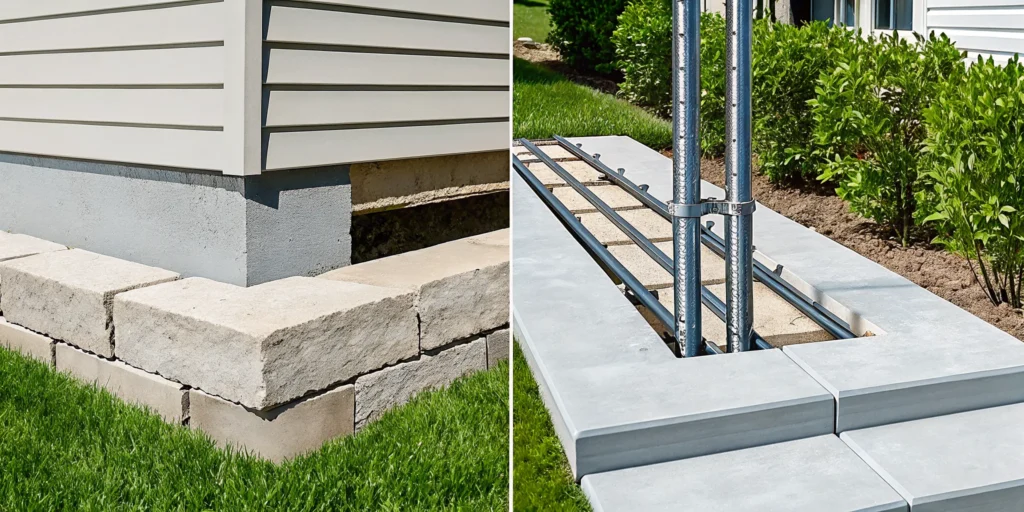
Think of foundation piers as underground stilts for your house, transferring its weight from unstable soil to solid ground deep below. Now, what if you had two types of stilts? One type is a super-strong steel pipe that’s pushed straight down until it hits bedrock. The other is a giant steel screw that’s twisted deep into the earth for stability. These are push piers and helical piers, respectively. Both are excellent at what they do, but they are not interchangeable. The right choice depends on your home’s weight and the ground it sits on. This is why homeowners often ask, do I need push piers or helical piers for foundation repair? Let’s dig into the details.
Key Takeaways
- Match the Pier to Your Home’s Weight: Push piers are designed for heavy homes, using the structure’s weight to anchor into stable earth, while helical piers are screwed in, making them a versatile solution for lighter structures and additions.
- The “Best” Pier Depends on Your Situation: There is no single best option; the right choice is determined by factors like your home’s structure and the expansive clay soil common in the Dallas area, not by a universal standard.
- An Expert Evaluation Is Non-Negotiable: Guesswork won’t solve foundation issues, so a professional assessment is required to analyze your property’s specific conditions and recommend the most effective, long-lasting repair.
Push Piers vs. Helical Piers: Which Is Right for Your Home?
If you’re noticing cracks in your walls or floors that seem to be getting worse, you might be dealing with a foundation issue. When you start looking for solutions, you’ll likely hear about foundation piers. Think of them as underground stilts for your house, designed to transfer its weight from shifting, unstable soil down to solid, stable ground. They are a core part of modern foundation repair.
Two of the most trusted and effective solutions are push piers and helical piers. While both are excellent at stabilizing your home, they work in different ways and are suited for different situations. Choosing between them isn’t about picking a “better” option, but about finding the perfect match for your home’s specific needs, its weight, and the unique soil conditions on your property. Understanding the difference is the first step toward making an informed decision for your home’s long-term health. Let’s break down what each of these piers are so you can feel more confident in the conversation about your home’s repair.
What Are Push Piers?
Imagine long, incredibly strong steel pipes. That’s the basic idea behind push piers. During installation, these pipe sections are hydraulically driven through heavy-duty steel brackets attached to your foundation. They rely on the weight of your house to push them deep into the ground, one section at a time, until they hit solid, load-bearing soil or bedrock. This process effectively transfers your home’s weight off the unstable soil that’s causing the problem and onto a stable layer far below. Because they use the structure’s own weight for installation, push piers are an excellent solution for heavier, larger homes that need serious support. They provide a lasting fix for settling foundations, ensuring your home is secure for years to come.
What Are Helical Piers?
Helical piers are like giant steel screws. They consist of a central shaft with one or more helix-shaped plates welded to it. Instead of being pushed, these piers are screwed deep into the ground using powerful hydraulic equipment. This corkscrew design gives them incredible stability and holding power, making them perfect for a wide range of soil conditions, including the tricky loose or wet soils we sometimes see in the Dallas area. Helical piers are extremely versatile and can be used for both new construction and for repairing existing foundations on lighter structures like porches, additions, or even entire homes. You can see examples of how we use them in our work. Once installed, they are immediately ready to bear weight, providing instant stabilization for your property.
Spotting the Signs of Foundation Trouble
Your home has a way of telling you when something isn’t right. Small changes, like a door that suddenly sticks or a new crack in the drywall, can feel like minor annoyances. But often, they’re subtle clues pointing to a bigger issue with your foundation. Paying attention to these signs is the first step in protecting your home’s structural integrity and value. The sooner you identify a potential problem, the easier (and less expensive) it is to fix. Think of it as a health checkup for your house. Knowing what to look for can help you catch issues early before they become major headaches. Let’s walk through the most common red flags.
Common Foundation Warning Signs
It’s easy to dismiss a small crack or a sticky window, but these are often the earliest signs of structural stress. Keep an eye out for these telltale indicators around your property. You might notice walls that have started to bow or lean inward, or new cracks spreading across your interior plaster or drywall. Do your doors or windows suddenly refuse to close properly? That friction can be caused by the frame shifting. Other clues include gaps appearing around window frames, a chimney pulling away from the house, or floors that feel sloped or uneven underfoot. Any of these symptoms suggest your foundation may be settling or moving, and it’s time to take a closer look.
Matching the Symptom to the Solution
Once you’ve spotted a few warning signs, the next question is, “What now?” The key is to find the right fix for the specific problem your home is facing. Every foundation issue has an appropriate repair solution, and the choice often comes down to your home’s weight and the soil beneath it. For example, push piers are incredibly effective for heavier homes that have settled, using the structure’s own weight to drive steel piers deep into stable soil. On the other hand, helical piers are more like giant screws and offer great versatility. They work well for lighter structures or in the tricky, water-saturated soils we sometimes see in the Dallas area. An expert can help you connect the dots between the symptom and the solution.
Push Piers vs. Helical Piers: A Head-to-Head Comparison
When your home’s foundation needs support, push piers and helical piers are two of the most trusted solutions available. Both are designed to transfer your home’s weight to more stable soil deep underground, providing a long-term fix for settlement issues. While they share a common goal, their design, installation, and ideal applications are quite different. Understanding these distinctions is the key to choosing the best method for your property. Let’s compare them side-by-side to see how they stack up.
The Installation Process
The main difference between these two piers lies in how they get into the ground. Push piers are hydraulically driven, or “pushed,” into the soil using the weight of your house as resistance. This process continues until the piers hit solid, load-bearing bedrock or a similarly stable soil layer. This method provides a permanent foundation repair by anchoring your home to unshakeable ground.
Helical piers, on the other hand, are screwed into the earth much like a corkscrew. Their helical plates (the screw-like blades) help pull the pier into the ground with minimal disruption. This installation method makes them incredibly versatile, as they can be installed in various soil conditions, including looser or water-saturated soils where other methods might not work as well.
Which Pier Works Best in Dallas Soil?
Here in the Dallas area, we deal with a lot of expansive clay soil, which shrinks and swells dramatically with moisture changes. This constant movement is a major cause of foundation problems. Push piers are an excellent choice for heavier homes built on this type of soil. The structure’s weight is a key part of the installation, helping to drive the piers deep past the unstable clay and onto a solid stratum.
Helical piers are also a great option, especially for lighter structures like porches, additions, or even new construction projects. Because their installation doesn’t rely on the building’s weight, they offer more flexibility. Their design provides excellent stability in the tricky soil conditions found throughout our service area, making them a reliable choice for a wide range of foundation issues.
Load-Bearing Capacity
Both pier types are engineered to support significant weight, but they achieve it differently. Push piers are ideal for heavy structures because the home’s weight is what drives them to the point of refusal, ensuring they can support the load. Once they reach stable ground, they can effectively stabilize and even lift a settled foundation back toward its original position.
Helical piers are immediately load-bearing as soon as they are installed. The torque required to screw them into the ground correlates directly to their load-bearing capacity, which is monitored during installation. This allows for precise placement and predictable support. This feature makes them a go-to for stabilizing foundations quickly and effectively, regardless of the structure’s weight.
Comparing the Costs
The cost of foundation repair depends on several factors, including the number of piers needed, the depth they must be installed, and your home’s specific conditions. Generally, push piers can sometimes have a higher upfront cost because they may need to be driven deeper to reach bedrock, but they provide incredible support for severe settlement.
Helical piers can be a more cost-effective solution for lighter structures or when bedrock is extremely deep. Ultimately, the most important factor isn’t just the price tag but the long-term value. Choosing the right pier for your home’s needs ensures a lasting solution that protects your investment. We can help you explore financing options to make the right repair for your home more accessible.
The Pros and Cons of Each Pier
Okay, let’s break down the good and the not-so-good for each pier type. Think of this like choosing the right tool for a job. You wouldn’t use a hammer to turn a screw, right? Both push piers and helical piers are fantastic at what they do, but they shine in different scenarios. The best choice for your home depends entirely on factors like your foundation’s weight, the type of soil on your property, and the specific structural issues you’re facing. Understanding the advantages and limitations of each will help you feel confident when you discuss your foundation repair options with a professional. Let’s look at each one more closely.
Push Pier Pros and Cons
Push piers are the heavy lifters of foundation repair. Their biggest advantage is their ability to use your home’s own weight to anchor the foundation to solid ground. We drive galvanized steel pipes deep into the earth until they hit stable, load-bearing bedrock or a similarly strong soil layer. This process effectively transfers the weight of your house off the unstable soil and onto a solid base, providing a permanent solution. Because they rely on structural weight for installation, push piers are an excellent and reliable choice for stabilizing heavier, existing homes that have already settled.
The main limitation of push piers is also their greatest strength: they require significant weight to work. For lighter structures, like a porch or a single-story addition, there might not be enough downward force to drive the piers to the necessary depth. This makes them less suitable for new construction projects before the full weight of the building is in place. Essentially, if the structure is too light, push piers can’t get the leverage they need to provide that rock-solid support.
Helical Pier Pros and Cons
Think of helical piers as the all-terrain vehicle of foundation support. Their main pro is their incredible versatility. Because they are screwed into the ground (like a corkscrew), they don’t rely on the structure’s weight for installation. This makes them perfect for a wide range of soil conditions, including loose or water-saturated soils where other methods might struggle. They are also ideal for lighter structures and new construction. Once installed, helical piers are immediately ready to bear weight, allowing for stabilization and lifting right away. You can see examples of these versatile solutions in our work.
The primary consideration with helical piers can be the cost. The installation process is sometimes more involved, and the materials can lead to a higher price tag compared to push piers. However, it’s important to view this in context. In situations where soil conditions are poor or the structure is too light for push piers, helical piers aren’t just a “better” option; they are the correct one. Investing in the right solution from the start saves you from bigger headaches and costs down the road. We offer financing options to help make the right repair accessible for your budget.
How to Choose the Right Pier for Your Foundation
Deciding between push piers and helical piers isn’t a simple choice; it’s about finding the perfect match for your home’s specific needs. The right solution depends on a few key factors: the ground beneath your house, the weight of your home, your budget, and the quality of the materials used. Think of it like a puzzle. Each piece of information helps a foundation expert determine the most effective and long-lasting repair strategy. By looking at your property from all angles, we can confidently recommend the pier system that will provide stable, reliable support for years to come. Let’s walk through the most important considerations one by one.
Analyzing Your Property’s Soil
The type of soil around your foundation is one of the biggest factors in choosing the right pier. Here in the Dallas area, we often deal with expansive clay soils that shrink and swell dramatically with moisture changes. Helical piers are often a fantastic choice for these variable conditions. Because they are screwed into the ground like a corkscrew, they can be installed in diverse soil types, including looser or water-saturated soils where other methods might not work as well. Push piers, on the other hand, rely on being driven down to a solid, load-bearing layer of soil or bedrock. A professional soil analysis is the first step in identifying which pier will perform best for your property.
Considering Your Home’s Weight and Structure
The overall weight of your house plays a crucial role, especially when considering push piers. Push piers are ideal for heavy structures because they use the building’s own weight to help drive the steel piers deep into the ground until they reach stable soil. This method provides incredible support for substantial, multi-story homes. However, if you have a lighter structure, like a sunroom, porch, or a small single-story home, there may not be enough weight to drive the push piers to the necessary depth. In these cases, helical piers are the better option because they are mechanically twisted into the ground, independent of the structure’s weight, ensuring a stable foundation repair for lighter loads.
Factoring in Your Budget and Timeline
Of course, budget and timing are practical concerns for any homeowner. The final cost of your foundation repair depends on several things, not just the type of pier. Factors like the number of piers needed, the required depth, and your property’s specific soil conditions all influence the price. Because of these variables, a professional evaluation is the only way to get a truly accurate estimate for your project. While costs can differ, both push and helical pier installations are generally efficient, minimizing disruption to your home life. Understanding the financing options available can also help you plan with confidence and choose the best solution without compromising on quality.
Why Steel Quality Matters
When you’re investing in a permanent fix for your foundation, the quality of the materials is non-negotiable. Not all steel piers are created equal, and the difference can have a huge impact on the longevity of your repair. It’s critical to ensure the piers are made from strong, “primary” steel. Some companies may use cheaper, “secondary” steel, which is often recycled and can contain impurities that make it prone to failure and rapid rusting. At Solid Base, our commitment to quality means we only use patented, proven products made from high-strength steel. This ensures your foundation is supported by durable materials designed to stand the test of time, giving you peace of mind that the job is done right.
Common Foundation Pier Myths, Busted
When you’re dealing with foundation issues, you’ll hear a lot of opinions. It can be tough to sort through the noise and figure out what’s true. Misinformation about foundation piers can lead to confusion and anxiety about the repair process. Let’s clear the air and tackle some of the most common myths head-on so you can feel confident about choosing the right solution for your home.
Myth: “Push piers work in any soil.”
This is a common misconception. Push piers are incredibly effective, but they aren’t a one-size-fits-all solution. This method relies on the weight of your house to hydraulically drive steel piers deep into the soil until they hit bedrock or a stable, load-bearing layer. If your home is too light, like a single-story structure or a porch, there isn’t enough resistance to drive the piers properly. The success of a push pier system is directly tied to your home’s structure having enough weight to anchor the process, making a professional evaluation essential before starting any foundation repair.
Myth: “Helical piers are only for heavy buildings.”
It’s actually the opposite in many cases. Helical piers are fantastic for lighter structures and tricky soil conditions. Unlike push piers that are driven by weight, helical piers are screwed into the ground like a corkscrew. This installation method gives them great stability without needing a heavy structure above them. They are an ideal choice for porches, additions, and homes built on less stable or water-saturated soils where other methods might not work. This versatility is why understanding foundation piers and their specific applications is so important for a lasting repair.
Myth: “Pier installation will ruin my yard.”
I hear this concern all the time, and it’s completely understandable. You’ve put a lot of work into your home’s landscaping, and the thought of it being destroyed is stressful. The good news is that modern pier installation is designed to be as minimally invasive as possible. Professional crews take great care to protect your property. Small, targeted areas are excavated where the piers will be installed, and these are carefully backfilled afterward. While any construction has some impact, the goal is always to leave your yard looking as neat as we found it. You can see examples of our tidy work on completed projects in the Dallas area.
Myth: “All steel piers are created equal.”
This is one of the most dangerous myths out there. The quality of the steel used in your foundation repair is critical to its long-term success. Lower-quality steel or piers with inadequate protective coatings are susceptible to rust and corrosion, especially in the damp soil beneath your home. If the protective coating gets scraped off during installation, the pier can degrade over time, compromising the entire repair. That’s why we only use patented, proven products with superior galvanization. Ensuring the materials are top-notch is just as important as the installation itself, as some experts have warned against steel push piers when quality is not guaranteed.
Find the Right Foundation Solution for Your Dallas Home
Choosing between push piers and helical piers isn’t a decision you have to make alone. When it comes to your home’s stability, the right answer depends entirely on your property’s specific situation. Both systems are excellent, proven solutions for foundation repair, but they are engineered for different challenges. The key is matching the right tool to the right job, and that starts with a professional assessment.
Think of it this way: push piers are often the perfect fit for heavier homes built on soil that can provide enough resistance. They work by using the structure’s own weight to drive steel piers deep into the ground until they hit solid, stable soil or bedrock, effectively transferring the load and securing your foundation. On the other hand, helical piers are incredibly versatile. Shaped like giant screws, they are twisted into the ground and can be installed in a wide range of soil conditions, which is a major advantage in the diverse geology of the Dallas area. They provide immediate support and are suitable for both heavy and lighter structures.
Ultimately, factors like your local soil composition, the specific weight of your home, and the type of foundation settlement you’re seeing will determine the best path forward. An expert evaluation is the only way to know for sure which pier system will provide a lasting solution for your home. Our team of skilled professionals can analyze your property’s unique needs and recommend the most effective and permanent repair.
Getting a clear, expert opinion removes the guesswork and gives you confidence that you’re making the best investment in your home’s safety and value. If you’re seeing signs of trouble, the next step is to schedule a free estimate to get a clear diagnosis and a straightforward plan tailored to your home.
Related Articles
- What Are Helical Piles? The Ultimate Guide
- Pier & Beam Foundation Repair: Signs, Costs & Fixes
- Ultimate Guide to Foundation Repair Options
- Foundation Repair Cost: The Ultimate 2026 Guide
Frequently Asked Questions
How do I know which pier is right for my house? The best way to know for sure is with a professional evaluation. Generally, the choice comes down to two main things: your home’s weight and the soil it sits on. Push piers are typically best for heavier homes because they use the house’s weight to drive steel posts down to solid bedrock. Helical piers are more versatile and work well for lighter structures, like porches or additions, or in the tricky clay soils we often see around Dallas, since they are screwed into the ground mechanically.
Is one type of pier stronger than the other? It’s less about one being stronger and more about which one is the correct tool for the job. Both systems are engineered to be incredibly strong and provide a permanent solution when installed correctly. A push pier’s strength comes from being anchored to solid bedrock, while a helical pier’s strength comes from its screw-like design and the torque used during installation. The “strongest” solution is the one that is properly matched to your home’s specific needs.
Will getting foundation piers installed tear up my landscaping? This is a very common worry, but the process is much less disruptive than you might think. We don’t need to excavate your entire foundation. Instead, we dig small, strategic holes only in the areas where the piers will be installed. Our crews are very careful to protect your property and will backfill these areas neatly once the job is done, minimizing the impact on your yard.
How long does a typical foundation pier installation take? The timeline depends on the size of the project and how many piers are needed, but most residential jobs are completed in just a few days. Our goal is always to secure your home’s foundation efficiently so we can minimize the disruption to your daily life. We can give you a much more precise timeline after we evaluate your home’s specific situation.
Can these piers actually lift my house back to its original position? In many cases, yes. After the piers are installed and the foundation is stabilized, we can often attempt a lift. The goal is to carefully raise the settled portions of your foundation back toward their original elevation. This process can help close up wall cracks, fix sticking doors and windows, and level out sloping floors, addressing many of the cosmetic issues caused by the settlement.