
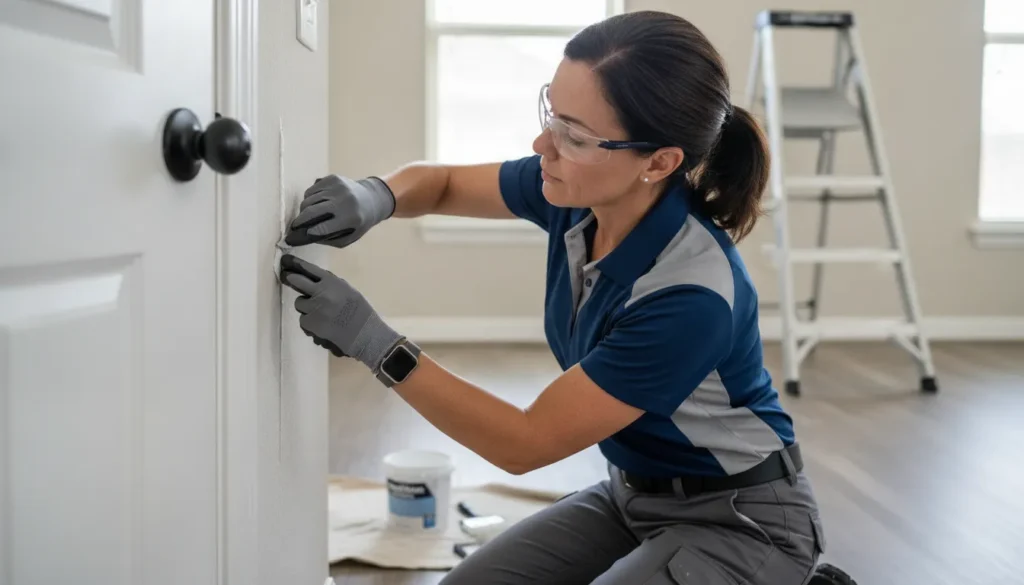
Fresh cracks, separated trim, or a door that suddenly sticks can feel unsettling after your foundation has been stabilized. Those changes do not automatically mean the structural work failed. Foundation stabilization is designed to stop damaging movement and protect the structure, while drywall, paint, trim, and door adjustments address cosmetic effects left behind by earlier movement. The U.S. Department of Housing and Urban Development distinguishes these two phases of work.
Most repairs after foundation repair involve patching drywall cracks, closing small gaps at trim and baseboards. Touching up paint, and adjusting doors or windows that shifted out of square. In North Texas, expansive clay soil can shrink and swell as moisture changes, so it is wise to let the home settle before completing final finishes.
Approaching the work in the right order helps prevent premature touch-ups from reopening. The type and location of each mark can also show whether it is a routine finishing issue or worth bringing back to your foundation professional for review.
Schedule a free foundation inspection in the Dallas-Fort Worth area, or call (940) 365-4221.
What Interior Repairs Are Typically Needed After Foundation Repair?
Seeing fresh cracks or a door that still sticks after foundation work can feel discouraging. The structural repair may be complete, yet your home’s interior can still show evidence of the movement that happened before stabilization. That does not automatically mean the repair failed. Foundation stabilization is intended to stop further movement and protect the structure. It does not instantly reverse cosmetic damage that already developed in the drywall, trim, or door frames.
In North Texas, expansive clay soil can shrink and swell as moisture conditions change. That movement is one reason interior finishes may require attention even after the foundation has been stabilized. The foundation repair process addresses the structural problem first. Interior finishing is a separate phase that should be planned with the repair scope and timing in mind.
Drywall cracks at doors, windows, and wall joints
Drywall cracks are among the most visible repairs after foundation repair. Pay particular attention to cracks that extend diagonally from the corners of door and window openings. These areas concentrate stress when a home moves, so they commonly show damage first. Smaller cracks can also appear along drywall seams or where walls meet ceilings.
Repair typically involves removing loose material, filling the opening with joint compound, and using flexible mesh tape when appropriate. A drywall primer before painting helps prevent the repaired area from showing a different texture or sheen. Allow the structure and interior finishes time to settle before completing final cosmetic work, since repairing too early can allow cracks to reappear.
Gaps around trim and baseboards
Movement can leave narrow gaps between baseboards, door casing, crown molding, and the wall. A finishing professional may use flexible caulk to close these spaces rather than forcing the trim back into a position that no longer fits naturally. Larger gaps, split molding, or trim that has pulled away from fasteners may call for removal and reinstallation.
Sticking doors and uneven reveals
A door that rubs, catches, or no longer latches smoothly may have a frame that shifted out of square during earlier foundation movement. After stabilization, the door may still require hinge adjustment, hardware alignment, or careful planing. Check the surrounding reveal as well. Uneven spacing can help distinguish a frame-alignment issue from a simple latch adjustment.
These cosmetic repairs are commonly treated as a secondary phase, often scheduled about 30 to 90 days after stabilization so the home has time to settle. Standard foundation repair quotes often cover structural work, not drywall, painting, trim, or door adjustments. Confirm what your contractor includes before work begins, then coordinate the finishing phase with the appropriate trade.
How Long Should You Wait Before Repairing Cracks?
Seeing a fresh crack after foundation work can be unsettling, especially when you expected the repair to make every interior surface look finished. A stabilized foundation is an important first step, but the home may still be adjusting to its corrected support. Give that process time before completing cosmetic repairs.
A practical rule of thumb is to wait about four to six weeks after major stabilization before repairing significant drywall cracks, trim gaps, or related finish damage. Some homes require longer, depending on the repair method, the extent of movement, and how the structure responds. Guidance on post-repair settling emphasizes allowing time for stresses to redistribute, since cosmetic work completed too early can crack again. See the HUD foundation repair guidance and discuss the expected settling period with your contractor.
North Texas adds another consideration. Expansive clay soil shrinks when it loses moisture and swells when moisture returns. Those seasonal changes can create minor movement even after the structure has been stabilized. The goal is not to treat every small mark as a failed repair. Instead, observe the pattern over time while maintaining consistent drainage and soil moisture around the home.
What should you watch during the settling period?
Keep a simple record of new or changing cracks. Note the location, approximate length, and date, then take occasional photos from the same angle. Small hairline cracks may reflect ordinary adjustment or changes in indoor humidity and temperature. A crack that repeatedly widens, extends, or appears alongside noticeably sticking doors or sloping floors deserves a prompt review rather than a quick patch.
During this waiting period, avoid filling and repainting every new crack as soon as it appears. That approach can hide the pattern and make it harder to tell whether the finish is still moving. Once the settling window has passed and the affected areas remain stable. A drywall or finishing professional can complete the cosmetic work with a better chance of a lasting result. If your contractor gave you a different schedule based on the stabilization plan, follow that project-specific guidance and ask what signs should trigger a follow-up inspection.
Repairing Drywall Cracks the Right Way
Seeing a crack reopen after foundation work can feel discouraging, especially when the structural repair itself has been completed. Drywall finishing is a separate step from stabilizing the foundation, so the repair should address both the visible damage and the possibility of minor future movement. In North Texas, changing moisture levels in expansive clay soil can still place small seasonal stresses on a home, which makes the preparation and materials especially important.
Before patching, confirm that the crack is appropriate for cosmetic repair. A narrow, stable drywall crack is generally handled differently from a widening crack, a crack accompanied by significant separation, or a pattern that continues to spread. Photograph the area and contact your foundation professional if the damage changes noticeably. For additional guidance on distinguishing cosmetic damage from a larger concern, review this foundation crack repair guide.
Prepare the crack before applying compound
Start by removing loose paint, paper, and crumbly drywall from the crack. Clean debris from the opening so the patching material can bond to a firm surface. Avoid covering unstable edges with compound, since loose material can pull away and leave a visible ridge as the patch dries.
For a shallow, stable crack, widen the surface slightly with a utility knife if needed, then apply a high-strength joint compound formulated for drywall patching. Use several thin applications rather than one heavy layer. Allow each coat to dry according to the product directions, then sand lightly until the transition feels smooth. Keep the surrounding wall intact, and use a dust-control approach when sanding near occupied rooms.
Use reinforcement where minor movement is possible
Cracks that have reopened after stabilization may benefit from flexible mesh tape beneath the compound. The tape reinforces the repair while allowing a small amount of movement, which can reduce the chance of an immediate repeat crack. Press it firmly over the prepared area, cover it evenly with compound, and feather the edges into the surrounding wall.
Do not rush the final finish. Once the patch is dry and smooth, apply a drywall primer over the repaired area. Primer helps equalize porosity and prevents the patched section from showing through the paint as a dull or uneven spot. After the primer dries, apply matching paint with a clean roller or brush, blending beyond the patch as needed.
If a repaired crack repeatedly returns, grows, or appears alongside sloping floors, sticking doors, or new exterior cracking, pause cosmetic work and request an evaluation. A durable finish starts with a stable structure and careful attention to the conditions that caused the original damage.
Closing Gaps Around Trim and Baseboards
After foundation stabilization, a narrow gap between a baseboard and the wall can feel surprisingly noticeable. You may see daylight along a hallway, a separation at a corner, or a molding joint that no longer sits tightly against the drywall. This change does not automatically mean the structural repair failed. Foundation work addresses movement in the structure, while trim is part of the home’s interior finish and may require its own follow-up work.
In North Texas, expansive clay soil can shrink and swell as moisture conditions change. That regional movement is one reason cosmetic finishes should be repaired thoughtfully rather than forced into a position they may not hold. Before closing a gap, inspect the area for active movement, loose fasteners, moisture damage, or a trim board that has warped. If the gap is widening, appears with new wall cracks, or accompanies sticking doors, mention it to your foundation professional before making a cosmetic repair.
Why flexible caulk is often the better choice
For a small, stable gap between trim and a finished wall, flexible paintable caulk is usually less invasive than removing the baseboard or forcing it back into place. A rigid repair can transfer pressure to the drywall, damage the trim, or reopen when the home experiences minor seasonal movement. Flexible caulk bridges the separation while allowing a small amount of movement. This approach follows the guidance that flexible caulk can be a better option than trying to reposition or reattach baseboards after stabilization. HUD guidance on foundation-related interior repairs supports treating this work as a separate finishing step.
Clean dust and loose paint from the joint first, then apply a narrow, even bead of paintable flexible caulk. Smooth it with a damp tool or fingertip according to the product instructions, keeping the profile neat rather than overfilling the gap. Allow it to cure fully before painting. A matching coat of trim or wall paint can make the repair blend into the surrounding finish and hide the gap without locking the materials together.
When caulk is not enough
Caulk is not a substitute for correcting a loose, damaged, or badly displaced piece of trim. Consider professional finishing help if the baseboard has pulled away across a long span, the wall surface is crumbling, the gap returns quickly, or moisture is present. Document the location and take a dated photo before repairing it. That record can help you distinguish a one-time cosmetic adjustment from a pattern that deserves another structural review.
Fixing Sticking Doors and Windows After Stabilization
A door that suddenly rubs, or a window that no longer opens smoothly, can be unsettling after foundation work. In many North Texas homes, these problems began when expansive clay soil shrank or swelled and shifted the foundation. That movement can rack a door frame out of square, changing the way the door meets its hinges and latch. The same change in alignment can make a window bind against its frame.
Foundation stabilization addresses the structural movement, but it does not automatically restore every interior frame or opening. The U.S. Department of Housing and Urban Development identifies sticking doors as a common post-movement issue and notes that planing the door or adjusting the hinges is often part of the finishing work. See the HUD foundation repair guidance for additional context on stabilization and cosmetic repairs.
Start with alignment, not force
Before sanding, planing, or replacing hardware, inspect where the door or window contacts the frame. Look for rubbing along one edge, uneven gaps, loose hinge screws, or a latch that sits above or below the strike plate. A finish carpenter can make small, controlled adjustments that restore movement without removing more material than necessary. For a door, that may mean tightening or repositioning hinges, adjusting the strike plate, or carefully planing the rubbing edge. Windows may require frame or hardware adjustments rather than pressure on the sash.
Avoid forcing a stuck opening. Excessive pressure can damage the hinges, latch, sash, or surrounding trim, turning a small alignment issue into a more involved repair. If the opening changed immediately after stabilization, document the location and tell your foundation professional or finishing contractor. Photos and a short note about when the problem occurs can help separate a post-repair adjustment from a continuing structural concern.
When the problem persists
Sticking that continues for months does not automatically mean the foundation is still moving. Warped frames, seasonal humidity, swelling wood, and temperature changes can all affect clearances. HUD notes that persistent sticking long after stabilization may point to warped door frames or local humidity rather than ongoing foundation settlement. In a Dallas-Fort Worth home, continue watching drainage and soil moisture around the foundation while evaluating the interior opening. Consistent moisture management matters because North Texas clay responds strongly to changes in water content.
Have the opening reassessed if sticking worsens, several doors or windows change at once, or new structural symptoms appear elsewhere. Otherwise, treat the adjustment as a normal part of repairs after foundation repair. The foundation work stabilizes the home’s structure, while a qualified finish professional brings individual doors, windows, and frames back into reliable daily use.
Should You Hire a Pro for Finishing Work?
It is understandable to expect the interior to look finished when the structural work is complete. Foundation stabilization addresses movement and protects the home’s structure, but it does not automatically restore drywall, trim, doors, or paint damaged before or during that process. The U.S. Department of Housing and Urban Development explains that cosmetic finishing is a separate phase from structural stabilization. Standard foundation repair quotes generally do not include interior drywall work because it belongs to a different trade. Review the source guidance on post-repair finishing before deciding who should handle each item.
| Work area | DIY approach | Professional approach |
|---|---|---|
| Drywall cracks | Suitable for small, stable cracks if you can remove loose material, apply compound, and blend the texture. | Helpful when cracks are wide, recurring, numerous, or difficult to match to the existing wall finish. |
| Trim gaps | Flexible caulk can close a modest gap without forcing the trim back into position. | A finish carpenter can correct damaged, loose, or visibly displaced trim and baseboards. |
| Sticking doors | Minor hinge adjustments or careful planing may resolve a localized problem. | A carpenter can assess the frame, hinges, and door together when sticking persists. |
| Painting finish | Possible for small patches when you have matching paint and can prime repaired drywall first. | Best for broad areas, texture matching, color blending, or a consistent finish across a room. |
| Warranty | Cosmetic work remains your responsibility whether you complete it yourself or hire a finisher. | A professional finisher’s workmanship terms are separate from the foundation contractor’s structural warranty. |
DIY work makes sense when the damage is minor, stable, and within your skill level. For larger repairs, recurring cracks, extensive repainting, or doors that remain out of square, consider hiring the appropriate finishing trade. Do not assume a footing or structural warranty covers cosmetic repairs. Structural warranties generally address the foundation’s continued stability, not drywall, trim, or paint. Ask for the repair scope and warranty terms in writing. And contact the foundation contractor if new or worsening structural symptoms appear rather than covering them with fresh paint.
Keep Your Foundation Stable: Manage Soil Moisture
Completing structural work can bring real relief, but long-term stability also depends on what happens around the home afterward. In North Texas, much of the soil is expansive clay associated with the Blackland Prairie. This soil can shrink as it dries and swell as it absorbs water. Those seasonal changes can create cyclical movement even after a foundation has been stabilized.
That makes moisture management a cornerstone of maintenance, not an optional finishing step. Keep drainage working as intended, watch for areas where water collects near the foundation, and address changes that create repeated wet and dry cycles beside the structure. The goal is not to eliminate every natural soil change. It is to limit abrupt, uneven moisture shifts that can place unnecessary stress on the foundation. Research on expansive soils identifies moisture content as a primary driver of their volume changes and related foundation movement, and the HUD foundation repair guidance ties consistent soil and water management to long-term stability.
Continue observing the home after the repair, especially through periods of heavy rain and extended dry weather. Keep an eye on drainage paths, exterior foundation areas, doors, and previously repaired interior surfaces. A small cosmetic crack does not automatically mean the structural repair failed. But a pattern of new or widening symptoms deserves professional review before you cover it with paint or patching compound.
It is also important to separate structural stabilization from cosmetic restoration. Foundation repair is intended to stabilize the structure and help protect the property’s value. It does not automatically restore drywall, trim, paint, or other finishes affected by earlier movement. Those repairs are a separate phase and may involve different trades. Your structural warranty typically addresses continued foundation stability, while interior finishing remains outside that scope. If you are preparing for a sale, this guide to selling a house after foundation repair can help you organize the documentation and finishing work.
With consistent drainage and moisture habits, realistic expectations, and periodic observation. You give the repaired foundation its best chance to remain stable while handling the ordinary seasonal behavior of North Texas soil.
Schedule a free foundation inspection in the Dallas-Fort Worth area, or call (940) 365-4221.
Frequently Asked Questions
How long should I wait to fix cracks after foundation repair?
Consider waiting at least four to six weeks after major stabilization before completing significant drywall, trim, or paint work. This settling period gives the structure time to adjust and helps reduce the chance that a finished patch will crack again. Your foundation professional can recommend a more specific timeline based on the repair method and the home’s condition.
How should drywall cracks be repaired after foundation stabilization?
Start by removing loose material and cleaning the crack. Fill it with a quality joint compound, reinforce wider or recurring cracks with flexible mesh tape, and allow the repair to dry fully. Prime the patched area before painting so the texture and finish blend more evenly. If cracks continue to widen or reappear after the settling period, have them evaluated before applying another cosmetic patch.
Is it normal for doors and windows to stick after foundation repair?
Sticking can occur because foundation movement may rack a frame out of square. After stabilization, a door may respond to a hinge adjustment or careful planing. If the problem continues for months, humidity, a warped frame, or another local condition may be responsible rather than ongoing foundation movement. Persistent changes deserve a professional review.
What cosmetic repairs are usually needed after foundation work?
Common finishing work includes patching drywall cracks, repainting, closing small gaps around baseboards or trim with flexible caulk, and adjusting doors or windows. Foundation stabilization addresses structural movement, but these interior repairs are typically a separate phase and may fall outside the foundation contractor’s standard scope. Confirm the written scope and warranty before scheduling finishing work.
Schedule Your Next Step With Confidence
Cosmetic finishing often looks more predictable once the foundation has been stabilized and the home has had time to settle. A professional inspection can help you distinguish expected settling from movement that deserves another look, then plan the appropriate repairs for your drywall, trim, doors, or windows.
Schedule a free foundation inspection in the Dallas-Fort Worth area, or call (940) 365-4221.