
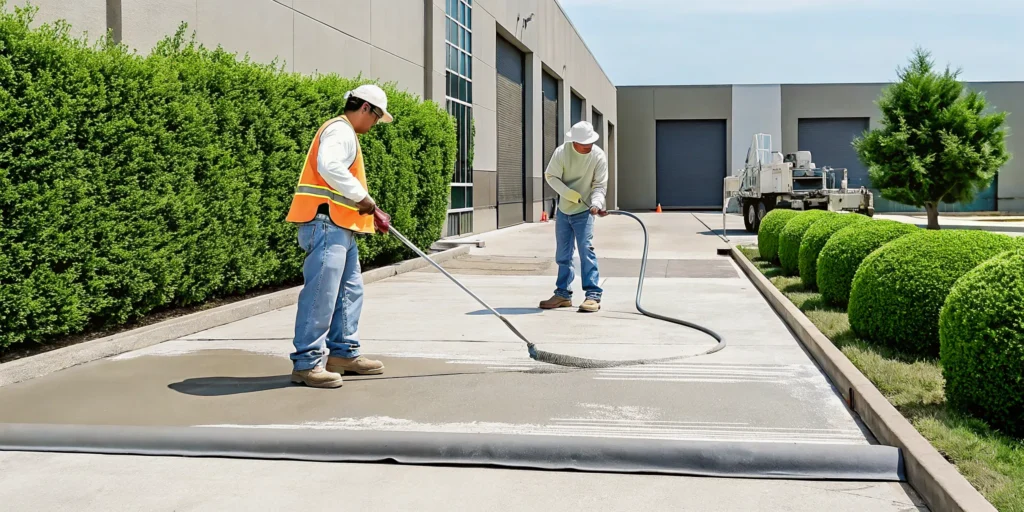
One uneven warehouse joint can slow forklifts, damage loads, and expose a DFW property to avoidable risk. Replacing the slab can create an even bigger operational problem.
Need commercial concrete leveling for an active property? Request a free no-obligation estimate from Solid Base Foundations.
Commercial concrete leveling lifts settled warehouse floors, loading docks, sidewalks, and parking lots toward a safe, even position without full slab replacement. Technicians inject high-density polyurethane foam through small holes, then it expands below the slab, fills voids, compacts weak soil, and raises the concrete. This approach limits demolition, debris, and closure time around an active DFW property while addressing both the slab and the supporting ground. Solid Base Foundations’ PolyLevel material is waterproof, supports heavy commercial loads, and cures in 15 minutes, helping crews reopen treated areas quickly. Research on polyurethane grouting also shows that expansion can compact surrounding soil and lift sunken structures, which explains how the process works.
Property managers need to know whether repairs can handle daily traffic without forcing a long closure or costly replacement around active work zones. The first issue is clear: commercial concrete leveling solves slab problems without shutting down the property. Here is how.
Commercial concrete leveling solves slab problems without shutting down the property
What commercial concrete leveling does
Commercial concrete leveling raises settled concrete slabs so their surfaces meet nearby sections again. Instead of removing the full slab, crews make small injection holes and place material beneath the low areas. This approach can repair active commercial spaces with less disruption than demolition and replacement.
The process starts with an on-site review of the slab, soil conditions, and planned loads. Technicians then inject high-density polyurethane foam through the holes at points chosen for a controlled lift. As the material expands, it fills gaps, compacts nearby soil, and raises the slab toward the needed height. A published engineering study explains how expanding grout can compact surrounding soil and lift a sunken structure.
Where settled slabs disrupt a property
A level slab matters wherever people, equipment, and goods move through a commercial site. Inside a warehouse, uneven joints can interrupt forklift traffic and make loaded carts harder to control. At loading docks, settlement may leave rough transitions where trucks, pallet jacks, and workers cross throughout the day.
Outside, commercial concrete leveling can address settled sidewalks, parking lots, drive lanes, and concrete near building entrances. A low spot may hold water or send runoff toward an area that should stay dry. Bridge approaches and other busy transitions also need smooth grades that can handle repeated traffic.
These slab issues affect more than appearance because they can change how a facility works. Uneven walkways can create trip hazards and accessibility concerns along routes used by staff, tenants, customers, and visitors. Correcting the slab can restore a safer path while avoiding the waste and open excavation tied to full replacement. Property managers can learn more about the basic repair method in this guide to commercial concrete leveling.
Why repair speed matters for DFW operations
For a DFW business, the repair schedule can matter as much as the finished surface. Closing a dock, aisle, parking area, or main walkway may slow deliveries and daily work. Full slab replacement also brings demolition, debris removal, new concrete placement, and a longer wait before normal use.
Polyurethane leveling limits that disruption by treating the settled areas rather than replacing every slab. Solid Base Foundations uses PolyLevel concrete leveling, a high-density foam that cures in 15 minutes and supports heavy commercial loads. The small injection points also keep the work area more contained than methods that need larger holes.
That speed lets crews plan repairs around shifts, tenant traffic, deliveries, and other site demands. Managers can reopen treated areas sooner and reduce the need for long detours across the property. Because every site has different loads and settlement patterns, an on-site assessment should guide the repair plan and work schedule.
Why commercial concrete slabs settle in North Texas
Expansive clay and moisture swings
Commercial slabs depend on steady support from the soil below them. North Texas clay can swell when it absorbs water, then shrink as it dries. This repeated movement can leave gaps beneath warehouse floors, parking lots, sidewalks, and loading areas. Once support becomes uneven, part of the slab may sink or rock under use.
Water does not always spread evenly across a large site. Irrigation, roof runoff, plumbing leaks, and shaded areas can keep one zone wet while nearby soil dries. That uneven moisture pattern creates different soil movement across the same slab. Good drainage helps limit the cycle, but it cannot repair a void that already exists.
Weak fill and washed-out support
Commercial sites often include areas built over placed fill. If that fill was not packed well during construction, it can compress after the slab is poured. Trenches for utilities may also settle at a different rate than nearby soil. The result may appear as a low aisle, an uneven sidewalk panel, or a dip near a loading dock.
Moving water can also carry soil away from beneath concrete. Poor grading, failed drains, leaking lines, or open joints may direct water under a slab instead of away from it. The loss of support can spread beyond the first visible low spot. A site assessment should trace the water source before commercial concrete leveling begins.
Loads, traffic, and damaged joints
Heavy racks, forklifts, trucks, and stored goods place repeated stress on commercial concrete. A sound slab can carry planned loads, but weak soil below changes how that weight is shared. Loading areas and traffic lanes often show trouble first because the same paths take frequent pressure. Settlement can then affect drainage, door clearance, and smooth equipment travel.
Joints also help slabs move without uncontrolled cracking. When joint material breaks down, water can enter and erode support near slab edges. Those edges may settle or crack under traffic, creating trip hazards and rough transitions. These issues can affect exterior pavement as well as interior warehouse floors.
The cause matters because lifting a slab without fixing active drainage or soil loss may leave the site exposed to more movement. A full review should consider loads, water flow, voids, and operating needs. Research on ground repair notes that time, cost, quality, and practicality all shape the right plan. It also explains how expanding grout can compact nearby soil while lifting sunken concrete through polyurethane foam injection.
How PolyLevel commercial concrete leveling works
A controlled lift from below
PolyLevel raises settled concrete by placing high-density polyurethane foam beneath the slab. As the foam expands, it fills gaps and applies controlled upward pressure. Research on polyurethane grouting also shows that expansion can compact nearby soil and lift a sunken structure.
This approach lets a crew correct low areas without removing the full slab. PolyLevel uses small injection points and lightweight material, which helps limit disruption around busy commercial spaces. The process can serve warehouse floors, loading docks, industrial buildings, and bridge approaches.
The PolyLevel injection process
Each job starts with an on-site review and a lift plan based on the slab’s condition. The crew then completes commercial concrete leveling in a clear sequence:
- The crew checks the settled area, marks injection points, and plans how to raise the slab in controlled stages.
- Technicians drill 5/8-inch holes through the concrete. These holes are much smaller than the 1-inch to 2-inch holes used for traditional mudjacking.
- The crew injects high-density polyurethane foam through the holes. The liquid flows into open spaces beneath the slab before it expands.
- As the foam expands, it fills voids and raises the concrete. Technicians watch the slab during the lift and add material where needed.
- After the slab reaches the planned position, the crew stops the injection and closes the small holes. The foam cures in about 15 minutes.
The gradual injection gives technicians control over the lift. They can target specific low spots instead of adding material across the entire slab. This matters near doorways, loading areas, equipment paths, and other places where slab height affects daily use.
The 5/8-inch access holes also limit the amount of drilling needed across the repair area. Once patched, these points leave a smaller surface mark than traditional mudjacking holes. Less drilling can also help crews work around active parts of a commercial property.
Material suited to commercial loads
PolyLevel foam weighs about two pounds per cubic foot, so it adds little weight beneath the slab. Despite that low weight, it is suitable for heavy commercial loads. The material is also waterproof, which helps it hold its form when moisture is present below the concrete.
The short cure time can reduce how long an area stays out of service. That benefit is useful in facilities where repair timing must account for staff, equipment, and deliveries. More details about the material and its uses are available on the PolyLevel concrete leveling page.
PolyLevel vs mudjacking vs concrete replacement for commercial properties
Commercial property managers must weigh more than the repair price. Downtime, site access, added slab weight, and the expected service life can affect the right choice. An engineering study notes that ground repair plans should consider time, cost, quality, and practicality. It also stresses the need for a long service life to reduce repeated maintenance. These points matter when forklifts, tenants, or customers depend on safe access.
Side-by-side method comparison
PolyLevel and traditional mudjacking both lift existing concrete by injecting material beneath the slab. PolyLevel uses high-density polyurethane foam, while mudjacking uses a heavier cement-based slurry. Full replacement removes the old slab, prepares the base, and pours new concrete. The table compares common planning factors for commercial sites.
| Planning factor. | PolyLevel. | Traditional mudjacking. | Full replacement. |
|---|---|---|---|
| Downtime and cure time. | Foam cures in 15 minutes. | Longer cure period before normal use. | Longest closure for removal, pouring, and curing. |
| Injection holes. | 5/8-inch holes. | 1- to 2-inch holes. | No injection holes; slab is removed. |
| Added slab weight. | Lightweight foam, 2 pounds per cubic foot. | Heavy slurry adds more weight. | New concrete replaces the old slab. |
| Site disruption. | Small work area and limited interruption. | Larger holes and more material handling. | Demolition, hauling, forming, and pouring. |
| Durability factors. | Waterproof foam supports the lifted slab. | Performance depends on soil and slurry conditions. | New slab performance depends on base and drainage. |
| Best fit. | Settled slabs that remain sound. | Liftable slabs where added weight is acceptable. | Badly cracked or failed concrete. |
Downtime and operational impact
PolyLevel can cure in 15 minutes and uses 5/8-inch injection holes. Traditional mudjacking needs 1- to 2-inch holes and places a heavier material below the slab. Those differences can shape access plans for loading docks, warehouse aisles, sidewalks, and parking areas. Solid Base Foundations explains more about commercial concrete leveling with polyurethane foam.
Foam injection also expands within the soil, which can compact the surrounding ground as it lifts the slab. This process is described in published ground rehabilitation research. Property managers should still plan traffic control around the work zone. Repair crews need safe access to drill, inject, monitor the lift, and seal each hole.
When full replacement makes sense
Leveling is designed to lift concrete that remains sound enough to serve its intended use. Replacement may be the better path when a slab has broad cracking, severe surface loss, or damage that prevents a safe lift. It may also be needed when the base requires major rebuilding. A site assessment should review slab condition, drainage, soil movement, loads, and access limits.
The choice can also involve more than the slab itself. Settlement near a building may point to a wider structural concern that needs commercial foundation and concrete repair planning. Property managers can compare repair scope, shutdown needs, and long-term maintenance before approving work. This helps match the method to the actual failure instead of choosing by speed alone.
What affects the cost of commercial concrete leveling?
Commercial concrete leveling costs depend on the work found during an on-site assessment. There is no useful one-size-fits-all price for a warehouse, loading dock, walkway, or parking area. A contractor must inspect the slabs, soil, water flow, access, and daily operations before building a custom repair plan.
Size, settlement, and repair scope
Square footage matters, but it does not tell the whole story. The number of separate slabs, their thickness, and the amount of lift needed also shape the scope. One broad slab with mild settlement may need a different plan than several smaller slabs at varied heights.
Settlement severity affects the amount of lifting material and the time needed to place it with care. Soil gaps beneath the concrete may also change the plan. Research on polyurethane grouting shows that its expansion can compact nearby soil and lift a sunken structure.
- Total area and number of slabs.
- Slab thickness, weight, and required lift.
- Voids or weak soil beneath the concrete.
- Cracks, joints, and edges that need added repair.
Site access and operating limits
Access can affect labor, equipment placement, and the repair sequence. Tight indoor areas, fenced yards, active loading docks, and stored goods may limit where a crew can work. The estimate should also account for any steps needed to protect staff, customers, vehicles, and equipment.
Business-hour limits can change the schedule. Some properties can close a small area during normal hours, while others need phased work or service outside busy periods. These details help explain why two sites with similar square footage may receive different plans for commercial concrete leveling.
Water, joints, and structural concerns
Drainage and soil conditions can point to the cause of settlement. Poor water flow, erosion, or unstable soil may require added work before or during leveling. Joint sealing may also be part of the plan when open joints let water reach the soil below.
An inspection should also check whether the issue extends beyond the slab. Wall cracks, uneven floors, or movement near the building may call for commercial foundation and concrete repair. Addressing both concerns can change the scope and prevent an incomplete fix.
Solid Base Foundations provides a free, no-obligation on-site estimate for commercial properties in Greater DFW. The visit documents the site conditions, operating needs, and repair areas. The resulting custom plan explains the recommended work instead of relying on a broad price range.
How should facility teams prepare for a concrete leveling estimate?
A useful estimate starts with a clear view of the problem and the site’s operating needs. Before the visit, facility teams should map damaged slabs, gather records, and decide which areas must stay open. This preparation helps the contractor assess warehouses, loading docks, parking lots, and sidewalks without disrupting more work than needed.
Site review before the visit
Time, cost, quality, and practical site needs all shape a sound repair plan. These factors are also key when choosing a ground repair approach for an operating facility. Use this short process to give the estimator the details needed for a clear plan.
-
Mark affected concrete. Walk the property and mark each low, tilted, cracked, or rocking slab. Note where forklifts, carts, trucks, staff, and visitors cross the area.
-
Record safety and access concerns. List trip hazards, rough transitions, blocked doors, and loading dock gaps. Flag any route that emergency crews or delivery teams must use.
-
Document water problems. Take photos after rain when possible. Note standing water, soil washout, failed drains, roof runoff, and areas where water flows toward the building.
-
Rank areas by uptime needs. Separate zones that can close from those that must remain active. Share shift times, delivery windows, tenant schedules, and planned shutdowns.
-
Gather useful records. Bring current photos, site plans, repair history, utility maps, and known load limits. Include notes about buried lines or systems near the damaged slabs.
-
Plan safe contractor access. Identify parking, equipment entry points, escorts, permits, and required safety gear. Clear stored items while keeping workers away from active hazards.
Questions for the on-site assessment
Ask the estimator to explain which slabs can be lifted and which may need another repair. A review of commercial concrete leveling can help teams prepare questions about foam injection, access, and expected site disruption.
Discuss how the team will protect walls, racks, dock equipment, doors, and nearby pavement during the work. Ask how they will manage traffic and confirm the repaired elevation. The estimate should also state any limits caused by slab damage, poor soil, or blocked access.
Joint sealing and long-term protection
Leveling addresses uneven slabs, but the assessment should also cover joints and water entry. Ask whether open joints or cracks need sealing after the lift. The contractor should explain where joint sealing may help reduce future water movement below the slab.
Request a written scope that separates lifting, sealing, surface protection, and any follow-up work. Confirm which areas need monitoring and who will handle drainage issues outside the leveling scope. These details help facility teams compare estimates based on the same work and site conditions.
Frequently Asked Questions
How much does commercial concrete leveling cost?
Commercial concrete leveling costs vary by slab size, settlement depth, site access, underlying voids, and the repair material required. Loading docks and warehouse floors may need a different plan than sidewalks or parking lots because loads and operating schedules differ. A contractor should inspect the site before providing a project-specific estimate rather than quoting a one-size-fits-all price.
Can concrete leveling be used for loading docks and warehouses?
Yes. Commercial concrete leveling can correct settled warehouse floors, loading docks, sidewalks, parking lots, and other industrial slabs when the concrete remains suitable for lifting. PolyLevel concrete leveling is designed for commercial applications and heavy loads. An on-site inspection determines whether lifting is appropriate or whether severe slab damage requires another repair approach.
What causes a commercial concrete slab to sink?
Commercial slabs often sink after supporting soil loses strength, washes away, shrinks, or was poorly compacted before construction. Water movement and DFW’s expansive clay soils can create voids beneath the concrete. Heavy traffic may worsen movement where support is already weak. An on-site assessment should identify the cause before repair so the selected method addresses both slab elevation and support.
How does mudjacking compare to polyurethane foam injection?
Polyurethane foam uses small injection holes and expands beneath a slab to fill voids, compact soil, and lift concrete with controlled pressure. Traditional mudjacking pumps a heavier cement-based mixture through larger holes. Polyurethane often suits busy commercial sites because it is lightweight and cures quickly. According to Solid Base Foundations, PolyLevel uses 5/8-inch holes and cures in 15 minutes.
Ready to Address Uneven Commercial Concrete?
Uneven concrete across warehouses, loading docks, sidewalks, and parking lots can create safety concerns and disrupt daily operations when left unaddressed. Delaying an assessment may allow settlement and surface damage to spread, making future repairs harder to plan around tenants, workers, and delivery schedules. Starting now gives your team time to review affected areas, choose an appropriate repair plan, and reduce avoidable disruption across your DFW property.
Ready to protect your property and plan repairs around operations? Contact Solid Base Foundations before uneven areas cause more costly disruption for tenants, workers, customers, or delivery crews. Request a free no-obligation estimate to schedule an on-site assessment and get clear next steps for your commercial concrete.