
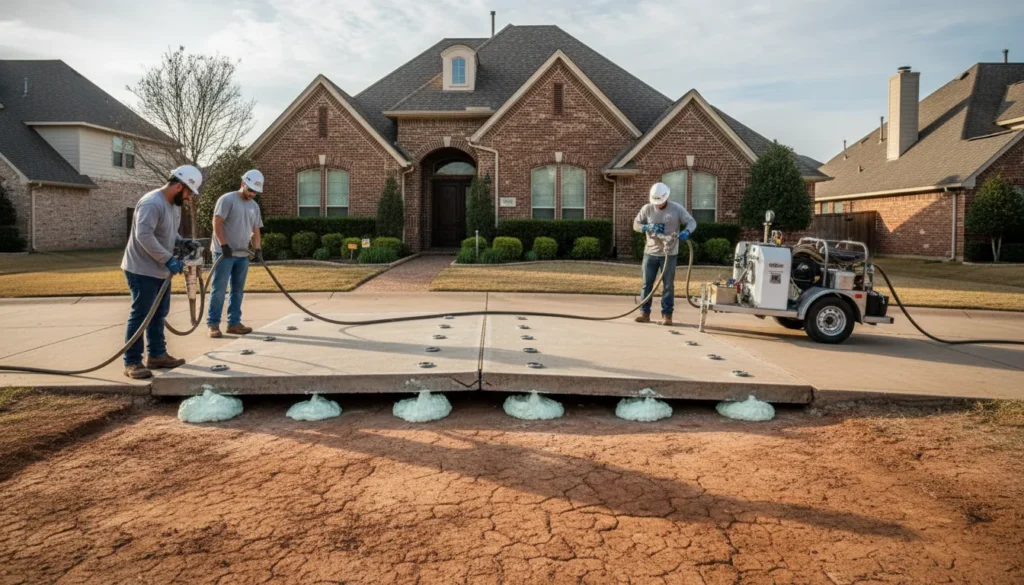
Sunken concrete is more than a surface problem. A dipped driveway, uneven sidewalk, or settling patio can hold water, create trip hazards, and make a home look older than it is. In North Texas, clay soil makes the problem even more common. Soil swells when wet, shrinks when dry, and leaves gaps under slabs.
Call 940-365-4221 or request a free no-obligation estimate if a sunken slab is creating a trip hazard or drainage problem around your home.
Concrete lifting foam is a repair method that uses expanding polyurethane to fill voids beneath settled concrete and raise the slab back toward level. Solid Base Foundations uses PolyLevel, a lightweight foam system made for fast concrete repair with limited disruption. In many cases, the slab can be used again about 15 minutes after installation.
This guide explains how polyurethane foam lifting works, which slabs are good candidates, how it compares with mudjacking and replacement, and when a full replacement may still be the better choice.
What is concrete lifting foam?
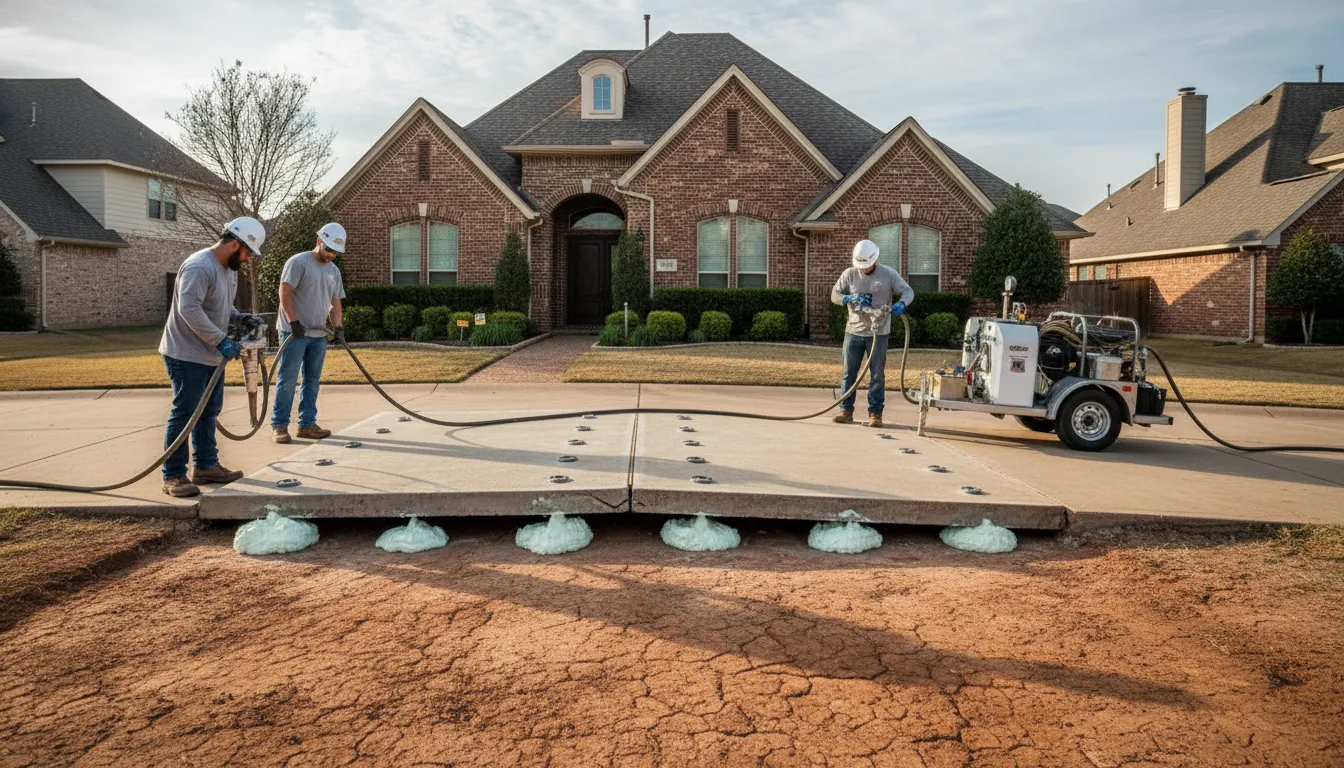
Concrete lifting foam is a high-density polyurethane material injected beneath a settled concrete slab. The foam starts as a liquid, then expands below the concrete. As it grows, it fills empty spaces, supports weak areas, and can lift the slab in controlled stages.
The problem below the slab
Most sunken concrete starts with a soil problem. Water can wash away loose fill. Poor compaction can leave weak pockets below a driveway or patio. In the Greater Dallas area, expansive clay adds another layer of movement. The ground can swell during wet weather and shrink during dry spells. That movement can leave small voids that grow over time.
Once the slab loses even support, part of it can settle. The result may look like a simple dip, but the real issue is under the concrete. That is why a surface patch does not fix settlement. The repair has to address the space below the slab.
Why polyurethane foam is used
Polyurethane foam is much lighter than the cement slurry used in traditional mudjacking. That matters because adding heavy material under already weak soil can make future settlement more likely. Foam can also spread through small voids and harden quickly, which helps reduce downtime around the home.
Solid Base Foundations uses PolyLevel as part of its concrete repair services. Homeowners comparing broader leveling options can also review the company’s concrete leveling in Dallas, TX service page. The system is built to lift and stabilize settled slabs without tearing out concrete that still has useful life left.
What the repair can and cannot do
Foam lifting can improve slab height, fill voids, and reduce trip hazards. It can also help water drain away from low spots when the slab can be lifted to the right pitch. It does not make old concrete new again. If the surface is badly crumbling, broken into many pieces, or too thin to support lifting, replacement may be better.
How PolyLevel lifts and stabilizes sunken slabs
PolyLevel lifts sunken concrete by filling empty space below the slab first, then raising the concrete in measured increments. The goal is controlled stabilization, not forcing the slab upward too quickly. That approach helps protect the concrete and leaves the area clean enough for normal use soon after the work is done.
- Inspection and repair plan: A specialist looks at the sunken slab, nearby soil, water flow, cracks, joints, and the areas where the slab meets the home or garage. This confirms whether lifting is a smart repair or whether another solution is needed first.
- Small injection holes: Small holes are drilled through the concrete at planned points. These holes give the crew access to the voids below the slab, and the pattern depends on slab size, low areas, and how the concrete needs to move.
- Foam injection and controlled lift: The polyurethane material is injected through the holes. It expands below the slab, fills empty spaces, and begins to raise the concrete while the crew monitors the lift in small stages.
- Patching and cleanup: After the slab is lifted, the injection holes are patched. The crew cleans the work area and checks the final height before the area returns to use.
PolyLevel cures fast, so most slabs can return to normal use soon after the repair. The parent brief for this project notes a 15-minute cure time, which is a major advantage for busy driveways, walks, and patios.
Fast cure time does not mean the inspection should be rushed. Good results depend on knowing why the slab sank and whether drainage, soil loss, or nearby structural movement also needs attention.
Which concrete slabs can be lifted with foam?
Many residential slabs can be lifted with concrete lifting foam, but not every slab is a good fit. The best candidates are concrete sections that have settled as a unit, still have enough strength to move, and are sitting above voids that can be filled.
Common slab types
Polyurethane foam lifting is often used for driveways, sidewalks, patios, pool decks, porches, steps, garage floors, and some interior slabs. These areas often sink when water moves below them or when fill soil was not packed tightly enough during construction.
Driveways and sidewalks are common because they get a lot of use. A small height difference can catch a shoe, collect water, or scrape the bottom of a vehicle. Pool decks and patios can also become safety concerns when slabs tilt toward the wrong direction.
Signs the slab may be a good candidate
A slab may be liftable if it has clean settlement, limited cracking, and enough intact concrete to hold together during the lift. Wide gaps at joints, water pooling near one edge, and a clear low corner often point to voids below the surface.
- One side of a driveway, walk, patio, or pool deck sits lower than the other.
- Water collects along a joint, edge, or low corner after rain.
- The slab has settled, but the concrete is not broken into many loose pieces.
- A trip hazard has formed where two concrete sections meet.
- Gaps are visible below the edge of the slab or along nearby soil.
Foam lifting may also make sense when the slab looks worn but still performs its job. If the main issue is height, support, or drainage, lifting may save time compared with removal and replacement.
Why inspection still matters
The same visible symptom can have different causes. A sunken sidewalk may come from washed-out soil. A garage slab may point to drainage problems. Concrete near a foundation may overlap with structural movement, which should be reviewed through a broader foundation repair lens.
That is why Solid Base Foundations starts with a free no-obligation estimate. The right repair depends on the slab, the soil, the water path, and the long-term goal for the property.
Concrete lifting foam vs mudjacking vs replacement
Homeowners often compare three options: polyurethane foam lifting, mudjacking, and full concrete replacement. Each can solve a different problem. The right choice depends on slab condition, soil support, timeline, and budget.
| Option | How it works | Best fit | Limitations |
|---|---|---|---|
| Concrete lifting foam | Expanding polyurethane is injected below the slab to fill voids and lift concrete. | Settled slabs that are still intact and need fast use after repair. | Not ideal for concrete that is severely broken or badly deteriorated. |
| Mudjacking | A cement-based slurry is pumped below the slab to raise it. | Some heavy-duty slabs where added weight is not a concern. | The material is heavy and can add load to weak soil. |
| Replacement | Old concrete is removed, base is prepared, and a new slab is poured. | Severely damaged, thin, crumbling, or poorly designed slabs. | More disruptive, slower, and often more costly than lifting. |
Weight and soil support
Foam is lightweight, which is one reason it is often preferred for settled residential concrete. Weak or shrinking soil has already failed to support the slab. Adding a heavy slurry can place more load on that same soil.
Speed and disruption
Concrete replacement can take days before the area is ready for use. Mudjacking may also require more cleanup and larger access points. PolyLevel uses small injection points and cures quickly, making it practical for high-use areas like driveways and entry walks.
Final appearance
Lifting does not erase old stains, surface wear, or every crack. It focuses on height and support. If appearance is the main issue and the slab is heavily worn, replacement may provide a cleaner finished look.
If the slab is close to the home and settlement signs also show inside the house, review Solid Base Foundations’ pier and beam foundation repair resources as part of the larger evaluation.
How long does polyurethane concrete lifting last?
Polyurethane concrete lifting is designed as a long-term repair, but its life depends on the conditions around the slab. The foam itself is not the only factor. Soil movement, drainage, nearby tree roots, and the original base all affect how the concrete performs after repair.
Foam stability
PolyLevel foam hardens below the concrete and helps support the slab. It is made to resist water and stay light. Because it fills voids, it can reduce the empty space that allowed the slab to move in the first place.
North Texas soil movement
Dallas-area clay soil still moves with moisture. A lifted slab can settle again if water keeps washing soil away or if drainage continues to push runoff below the concrete. The best repair plan looks at both the slab and the source of the void.
That may include sealing joints, improving grading, extending downspouts, or addressing drainage problems near the concrete. The repair should not ignore the water path that caused the settlement.
Network and product support
Solid Base Foundations is part of the Foundation Supportworks network and uses proven repair products. The company also brings more than 18 years of Greater Dallas repair experience to concrete and foundation problems. That local experience matters because soil behavior is not the same in every market.
For homeowners, the key question is not only how long the foam lasts. It is whether the full repair plan controls the reason the slab sank. A good inspection should explain both.
When is concrete replacement the better choice?
Concrete lifting foam is useful, but it is not a cure for every slab. Sometimes replacement is the safer and more durable choice. A trustworthy contractor should say that clearly when the concrete is too damaged to lift well.
Severe cracking or breakup
If a slab has broken into many loose pieces, lifting may not create a stable surface. The foam can raise sections, but it cannot reconnect concrete that has lost its structure. Replacement may be better when the slab acts like rubble instead of one panel.
Surface failure
Foam works below the slab. It does not fix deep scaling, heavy spalling, or widespread surface decay. If the top layer is crumbling, the slab may keep shedding even after it is level. In that case, new concrete may give a better long-term result.
Drainage or design problems
A slab that sends water toward the home may need more than lifting. If the slope is wrong by design, replacement can allow a new base and a better pitch. If poor drainage is washing out the soil, that water problem should be fixed before or during any concrete repair.
Tree-root damage can also complicate lifting. Roots may have pushed sections upward while nearby areas settled. The repair may require root management, removal, or replacement instead of a simple lift.
What should Dallas homeowners expect during an estimate?
A free estimate should give you more than a price. It should explain what happened, what repair is recommended, and what result you can expect. Solid Base Foundations offers free no-obligation estimates for homeowners across the Greater Dallas service area.
Ready to find out whether PolyLevel is a fit? Call 940-365-4221 or contact Solid Base Foundations to schedule a free estimate.
What the specialist checks
The specialist will look at slab height, cracks, joints, soil gaps, drainage, and nearby structures. For concrete close to the home, the inspection may also consider whether the issue connects to foundation movement. That matters because lifting a walkway is different from addressing settlement near load-bearing parts of a house.
Questions to ask
Ask whether the slab is a good foam lifting candidate, where the voids appear to be, how much lift is realistic, and whether drainage repairs are needed. You can also ask how soon the area can be used after the repair and what the patched injection points will look like.
Local service and next steps
Solid Base Foundations serves homeowners in the Greater Dallas area, including communities listed on its service area page. If you are comparing repair options, the contact page is the direct path to request a free estimate.
Before the appointment, take photos of the sunken slab, note when water collects, and mark any trip hazards you want reviewed. Clear information helps the specialist connect the visible settlement with the likely cause below the concrete.
Frequently asked questions about concrete lifting foam
How long does concrete lifting foam take to cure?
PolyLevel cures quickly. The project brief notes a 15-minute cure time, which means many slabs can return to normal use soon after installation. The exact timing depends on the slab, access, and final site conditions.
Is foam concrete lifting better than mudjacking?
Foam is often better for residential slabs because it is lightweight, uses small injection holes, and cures fast. Mudjacking can still work in some cases, but the cement slurry is heavier and may add stress to weak soil.
Can all sunken slabs be lifted?
No. Many settled slabs can be lifted, but severely broken, crumbling, thin, or poorly designed slabs may need replacement. An inspection confirms whether lifting can produce a safe and stable result.
Does concrete lifting foam fix cracks?
Foam lifting addresses support and height below the slab. It may reduce stress at cracks by leveling the concrete, but it does not make cracks disappear. Crack sealing or replacement may still be needed for appearance or water control.
How do I know if my slab sank because of Dallas clay soil?
Clay soil movement is common in North Texas, but it is not the only cause. Water washout, poor compaction, drainage issues, and tree roots can also lead to settlement. A local inspection is the best way to identify the cause.
Request a free concrete lifting foam estimate
If your driveway, sidewalk, patio, pool deck, or garage slab has sunk, do not guess from the surface. Solid Base Foundations can inspect the concrete, explain whether PolyLevel is a fit, and recommend the right repair for your home.
Call 940-365-4221 or request a free no-obligation estimate from Solid Base Foundations today.