
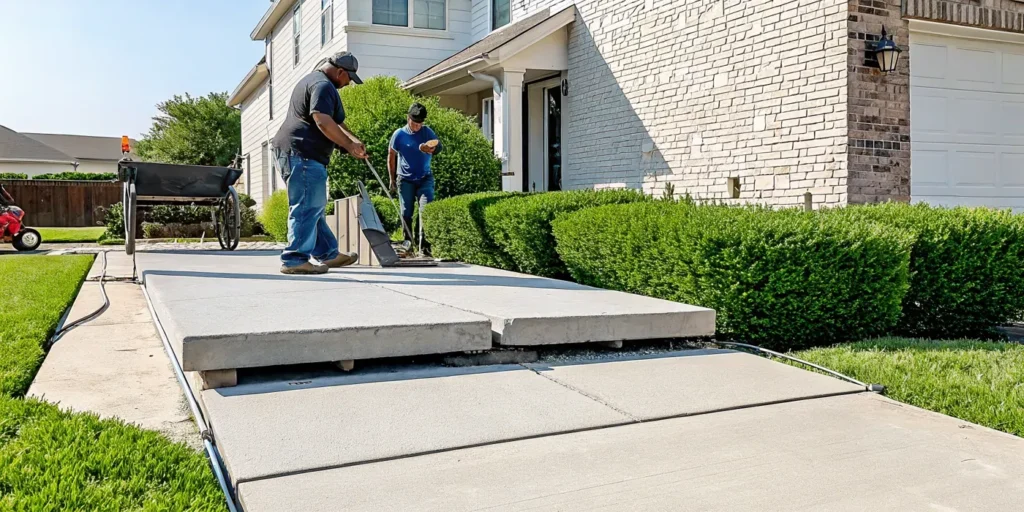
That sharp lip between driveway slabs is more than a rough entrance. In Dallas-Fort Worth, moving clay and hidden voids can turn it into a trip hazard.
Request a free driveway leveling estimate in DFW or call 940-365-4221.
Driveway leveling raises settled concrete slabs back toward an even surface instead of tearing out a driveway that may still be structurally sound. Expansive clay soils swell when wet and shrink when dry in Dallas-Fort Worth, while poor drainage can erode support below driveway panels. Those shifts can leave raised edges, rocking slabs and gaps that create trip hazards, collect water, and hurt curb appeal at the garage entry. Solid Base Foundations uses PolyLevel foam, placed through small injection holes, to fill voids and lift the existing slab with minimal disruption. The foam cures in about 15 minutes, and a free estimate identifies whether lifting is right for your sunken driveway.
Homeowners usually want to know why a driveway slab dropped before deciding how to repair it. The first step is Driveway leveling in DFW starts with the soil, because local ground movement decides what failed and why. Here is how:
Driveway leveling in DFW starts with the soil
Expansive clay below the slab
In Dallas-Fort Worth, a driveway does not rest on still ground. North Texas clay changes as water comes and goes. When clay gets wet, it swells; when it dries, it shrinks. This repeated movement can leave a concrete slab with less even support.
Hot, dry weeks can pull moisture from soil near an exposed driveway edge. A later storm may wet the soil again, but not at the same rate everywhere. The slab may settle at a joint, garage approach, or curb edge first. That is why sunken driveway repair often begins with finding where support changed.
Water, erosion, and empty space
Soil movement is not the only cause of a low slab. Water that runs beside or under concrete can wash soil out and leave a void. Once an open space forms, the slab may drop into it. This pattern is described in a source on clay movement and water washout.
Watch where runoff travels after a hard rain. Downspouts, low lawn areas, and gaps along the driveway can direct water beside a slab. Clay and silt are fine sediment particles, as the U.S. Environmental Protection Agency explains. Their small size helps show why flowing water near concrete deserves attention.
Early signs of settlement
A sunken driveway rarely appears all at once. Look for a raised lip between slabs, a dip that holds water, or a gap below an edge. New cracks can also appear where one panel has lost support. A car may cross the change easily, while a person can catch a foot on it.
Check the driveway from the street, then from the garage door. A low view makes small height changes easier to spot. Note whether the change grows after dry weather or after strong rain. This gives a repair professional useful clues about soil movement and runoff.
Do not assume a small uneven spot will stay small. If a panel has a void below it, regular use can place more stress on that unsupported area. An inspection can sort out surface wear from settlement. It can also show whether driveway leveling fits the slab’s condition.
What problems does a sunken driveway create?
Everyday safety and vehicle wear
A sunken slab changes a driveway from a flat work surface into an uneven path. A raised edge can catch a shoe, bicycle tire, stroller wheel, trash cart, or dolly. That same lip creates a jolt when a car enters or backs out. It can also scrape low trim or make parking feel rough.
Cracks often form near a settled edge or between slabs that no longer meet cleanly. The gap can collect grit and weeds, while the uneven line remains easy to trip over. Homeowners planning a driveway repair in DFW should note each offset, crack, and bump before it affects daily use.
Standing water and drainage paths
A low section may hold water after rain or direct it toward the garage apron. Water near a garage door can wet stored items or create a slick walking path. If it reaches joints and gaps, it can also point to areas that need a closer inspection.
Look at the driveway during and after rain. Water that runs into a gap may not stay at the surface. An industry explanation of driveway settlement states that water can wash soil from beneath a slab and leave a hollow space. A low spot is not just a nuisance when the drainage path keeps feeding it.
Also watch where pooled water drains. Soil stains or fine residue along the edge may show the route it takes. The U.S. Environmental Protection Agency describes suspended sediment as mainly fine clay and silt particles. That context matters when soil movement and drainage problems appear together.
Curb appeal and timely inspection
Sunken panels and broken lines can lower curb appeal because they are easy to see from the street. Puddles, weeds in gaps, and a rough transition at the garage can make maintained concrete appear neglected. Buyers or inspectors may ask how far settlement extends when visible uneven areas appear during a home sale.
Small offsets matter because they show where the driveway has lost a smooth plane. Inspect the area early if water lingers, cracks lengthen, or a vehicle begins hitting the edge. Record the location and drainage direction. A concrete repair assessment can then focus on the cause and needed lift.
An inspection can help sort a surface flaw from a settling slab or drainage concern. That is useful before a small uneven patch becomes a regular trip point or deeper puddle. It can also become a concern during a home sale.
How PolyLevel driveway leveling works
Inspection and lift plan
PolyLevel driveway leveling starts with a close look at each settled slab. A Solid Base technician checks uneven joints, cracks, trip edges, drainage, and signs of an open space below the concrete. This step helps show where lifting may help and where broken concrete may need a different repair plan.
Inspection also looks for soil movement and water paths near the driveway. The EPA describes fine inorganic sediment as clay and silt, so moved soil can offer a useful clue during a site review. The technician maps target lift points before any drilling begins.
The PolyLevel lift sequence
Solid Base provides the PolyLevel concrete lifting process as an exclusive dealer in the Foundation Supportworks network. The approach uses foam that expands below the slab. It is made to fill open space and guide settled concrete upward with control. The same local team also installs foundation pier systems backed by a 25-year manufacturer warranty. That matters when deeper structural settlement is found during an inspection.
- The technician confirms the lift plan, protects the work area, and marks injection points on affected driveway slabs.
- Small holes are drilled through the concrete at planned points. These openings let material reach empty areas below the slab.
- PolyLevel foam is injected through the holes. As the foam expands, it spreads into open space and helps support the slab.
- The technician watches the concrete rise and adjusts injections in stages. This careful lift helps align uneven edges without removing the full driveway.
- Once the lift is set, the access holes are patched. The crew clears the area and checks the corrected surface.
Cure time and next use
PolyLevel is meant to address the space below a sunken slab, not hide a raised edge on top. This focus is why the process starts with inspection and ends with a surface check. Homeowners can read more about causes and repair choices in this guide to lifting a sinking driveway.
Solid Base states that PolyLevel cures in 15 minutes, so normal driveway use can return soon after the crew finishes. The technician will give site-specific guidance before vehicles use the repaired area. This matters when a lift covers several slabs, a garage approach, or cracks that need separate care.
PolyLevel vs. replacement for DFW driveways
A repair-first decision
A sunken driveway does not always need to be torn out. When slabs remain sound but have dropped, driveway leveling can lift them without demolition. PolyLevel uses expanding foam under the slab to fill open space and raise the concrete. This keeps the driveway in place and limits the work area around your home.
Movement below a driveway often starts with changing soil or lost support. Clay and silt are fine inorganic sediment. Their particle size affects movement, according to the U.S. Environmental Protection Agency. In DFW, an inspection should check the slab, joints, voids, drainage, and soil before selecting a repair method.
Options for settled slabs
PolyLevel and older heavy fill methods both aim to lift concrete instead of removing it. The difference is the lifting material and the effect of the repair. PolyLevel injects lightweight, waterproof foam through small holes. Older fill systems pump heavier slurry below the slab, adding weight to soil that may already be weak.
| Repair option. | Best fit. | Downtime. |
|---|---|---|
| PolyLevel. | Settled usable slabs. | Fast same-day use. |
| Replacement. | Severely broken concrete. | Longer cure time. |
For many settled slabs, PolyLevel keeps repair focused below the concrete. There is no broken slab to load out and no new pour across the driveway. Homeowners comparing PolyLevel vs. mudjacking with heavy fill can consider hole size, added weight, water exposure, and downtime.
When replacement is the sound choice
Leveling can raise a stable slab. It cannot restore concrete that is badly broken or failing through its depth. Replacement may make more sense with severe cracks, crumbling surfaces, or damage that leaves no solid slab to lift. A contractor should inspect the concrete itself, not only the height change at a joint.
If the slab is fit for lifting, PolyLevel can address the uneven area with less disruption than removal. If damage is widespread, a new pour may provide the sound surface the site needs. A local evaluation can match the repair to the driveway condition, drainage concerns, and DFW soil movement.
How long does driveway leveling take?
Driveway leveling is often a same-day repair, but there is no set clock for every driveway. A contractor must first inspect the slabs, find the settled areas, and check what lies beneath them. The repair plan depends on slab size and site access. It also depends on how much open space is in the soil.
The inspection and repair plan
The visit starts with a close look at uneven concrete and nearby drainage. A crew marks slabs that need lifting and notes joints, cracks, and edges that may affect the work. This step helps avoid treating only the visible dip while missing the cause below it.
Water runoff can remove soil from beneath a slab and leave space for concrete to sink. The U.S. Environmental Protection Agency explains sediment and its movement, including fine clay and silt particles. In North Texas, inspection also matters because local clay soil can shift as moisture changes.
The lifting and cleanup steps
During the repair, the crew drills small access holes through the affected slab. Polyurethane is placed below the concrete to fill voids and raise low sections with care. The foam lifting comparison offers more detail for homeowners who want to compare lifting methods.
The number of slabs changes how long the active repair takes. A single low panel is different from a long drive with several settled sections. Tight access, deep voids, or areas that need careful lifting can also add time to the visit.
After lifting, the crew seals the access points and clears the work area. The driveway is checked again at joints and where it meets the garage or sidewalk. This review confirms that the repaired surface is ready for the cure period.
When can you use the driveway again?
Once repairs finish, PolyLevel cures in 15 minutes, so homeowners can use the driveway again the same day. That short cure period is separate from the total visit time. Inspection, setup, lifting, sealing, and cleanup all happen before return to use.
Plan for an on-site review before relying on a timeline from photos alone. A crew can explain how many slabs need work and whether soil voids change the repair scope. Solid Base Foundations can review these details through a free estimate contact form.
When should you schedule a driveway inspection?
A driveway rarely settles all at once. Small shifts may first show up as a rough ride, a catching toe, or water that stays after rain. Schedule an inspection when those changes repeat or grow. Do not wait for a large height difference.
Changes in the concrete surface
Start at the joints between driveway slabs. If one edge sits higher than the next, that change can become a trip point. A settled slab may also leave a visible step near the sidewalk or front walk. For an overview of repair options, read our guide to sunken driveway warning signs.
Cracks also need a closer look when they widen, branch, or keep reopening after patching. A thin surface mark may not call for repair by itself. A crack paired with an uneven slab, gap, or low spot is a sound reason to have the area checked.
- Uneven slab joints that catch shoes, wheels, or a shovel.
- Cracks that spread across a sunken or raised section.
- A low slab next to a stable sidewalk or curb.
- A trip point that returns after a temporary patch.
Water and garage entry warning signs
Walk the driveway after rain or lawn watering. Water that pools in a new low spot can show that the slab no longer drains as it did before. The U.S. Environmental Protection Agency notes that sediment includes fine clay and silt in its sediment guidance. Mud or fine soil at slab edges is worth noting during an inspection.
Check the point where the driveway meets the garage apron. A slab that pulls away may leave a gap, lip, or bump when you drive into the garage. Watch for change over time. Movement can affect safe walking and smooth vehicle access.
When to request a local inspection
One small mark may only need monitoring. Several signs together make a stronger case for an inspection: a widening crack, pooled water, and a growing trip point. The same is true when a raised joint affects guests, children, deliveries, or someone using a walker.
Solid Base Foundations inspects driveways across Dallas-Fort Worth, including Dallas, Collin, and Denton counties. If you see movement or repeated hazards, request a free estimate. An inspection can show whether driveway leveling fits the slab and its drainage issues.
Frequently Asked Questions
What causes a driveway to sink in Dallas-Fort Worth?
Sunken driveways in Dallas-Fort Worth often develop when soil beneath the concrete loses support. North Texas clay moves as moisture changes. Water runoff can also wash soil away and leave voids beneath a slab. As the base shifts, individual panels may settle at different heights. An explanation of driveway settlement causes identifies erosion and soil movement as common reasons a slab sinks.
How does PolyLevel driveway leveling work?
PolyLevel driveway leveling uses small drilled access holes and an injected polyurethane material below the sunken concrete. The material expands into gaps below the slab. It then applies a controlled lift. A technician monitors the slab position, then seals the holes and cleans the work area. The goal is to raise supported concrete without tearing out and pouring an entirely new driveway.
How long before I can use my driveway after leveling?
The return-to-use time depends on the leveling material, repair extent, and any added sealing work. PolyLevel is intended for a short cure period after foam injection, but follow the technician’s instruction before parking a vehicle on the repaired slab. Ask about driveway access when scheduling, especially if the driveway is your only garage entrance.
Is driveway leveling better than replacing the concrete?
Driveway leveling may be appropriate when existing concrete panels remain usable but have settled because support below them changed. Replacement is generally considered when slabs are badly cracked, deteriorated, or no longer suitable to lift. A site inspection is needed because surface appearance alone does not show every void, crack, or load concern.
Can driveway leveling fix trip hazards and curb appeal problems?
Yes. Raising settled panels can reduce abrupt height differences that people may trip over and can create a more even driveway appearance. It also addresses the sunken position rather than disguising it. Leveling does not repair every crack or surface stain, so an inspection should identify whether lifting alone addresses the driveway’s safety and appearance concerns.
Ready to Level Your DFW Driveway Before It Gets Worse?
A driveway that keeps sinking can leave uneven edges, rough transitions, and a daily reminder that the problem remains unresolved at your home each day. Waiting leaves that disruption in your routine and the worn appearance in view whenever family, guests, or deliveries reach your property. Starting now gives you a repair plan sooner, helping you decide on a practical path to a smooth, usable driveway.
Ready to address your sunken driveway in Dallas-Fort Worth? Call 940-365-4221 or request an estimate online. A timely estimate gives you the information needed to plan around your budget and household routine. Request a free driveway leveling estimate to talk with Solid Base Foundations about your concerns and next steps. Choose a repair schedule that fits your home and get the process started without further delays or uncertainty.