
.
Uneven sidewalk slabs are easy to ignore until someone catches a toe, a tenant files a complaint, or an HOA notice shows up. In North Texas, shifting clay soil, drainage problems, tree roots, and seasonal moisture changes can leave walkways uneven even when the concrete itself still looks sound.
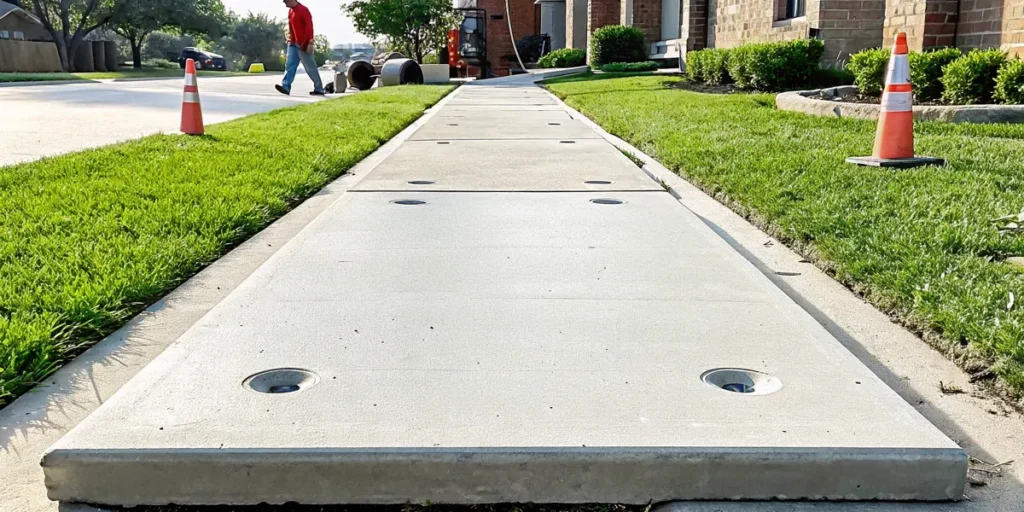
Sidewalk leveling is the process of lifting and stabilizing settled concrete so the walking surface is safer, smoother, and more usable without tearing out every slab. For homeowners and property managers, the goal is not just a better-looking walkway. It is trip hazard repair, better access, less disruption, and a clear plan before the problem spreads.
Solid Base Foundations serves the Greater Dallas-Fort Worth area with PolyLevel concrete lifting. A modern foam-injection approach designed to raise sunken slabs with small injection holes and fast cure time. This guide explains what causes sidewalk settlement, how PolyLevel works, when other repair options make sense, and what to know before requesting a free estimate.
Sidewalk leveling in North Texas: what problem does it solve?
What sidewalk leveling means
Sidewalk leveling is a repair for concrete walkway slabs that no longer sit at the same height. One slab may sink while the next stays in place. The raised edge can catch a shoe, wheel, stroller, or mobility aid. The goal is a smoother walking surface, not a cosmetic cover-up.
The repair approach depends on why the slab moved and whether the concrete is still sound. Some methods raise a settled slab by filling the space below it. Solid Base Foundations explains the broader options in its guide to sidewalk leveling methods. Cracked or badly damaged concrete may call for a different plan.
Why uneven slabs need attention
A small height change can become a trip point along a route people use each day. Homeowners may notice it near the front walk or driveway. Property managers may find it along a storefront, office path, or shared walkway. Early attention helps keep the issue from becoming another item on a growing repair list.
For property managers, the concern goes beyond appearance. An uneven walking route can create safety, access, and liability concerns. Check the full path instead of looking at one slab alone. Note each raised edge, low spot, crack, and place where water collects. HOA rules and city duties may differ by property, so confirm who handles the repair.
The North Texas soil factor
Sidewalks rest on the ground below them, so the visible edge is often only part of the problem. Near-surface soil and rock layers can shape how ground movement affects surface structures. A CDC-hosted subsidence study examines that link between soil conditions and surface damage. This matters in North Texas, where clay soil can move as moisture conditions change.
That is why this guide stays focused on sidewalk hazards. A sidewalk has its own use pattern: people walk, roll, and move equipment across connected slabs. The right assessment looks for the settled area and the condition below it. It should not treat every uneven edge as the same repair.
For sound slabs with space below them, foam injection may be one option. The company’s page on PolyLevel concrete leveling explains how that process lifts and supports settled concrete. The first step is still a site review, since the cause and slab condition guide the repair plan.
- Look for raised edges along the full walking route.
- Watch for low spots where water can collect.
- Record cracks, nearby roots, and repeat movement.
- Confirm whether the owner, HOA, or city handles the walkway.
What causes sidewalk slabs to sink or lift?
Soil and moisture movement
Sidewalk slabs rest on soil, so changes below the concrete can show up at the surface. In North Texas, expansive clay can swell as it takes in moisture and shrink as it dries. The soil and shallow rock layers can shape how ground movement affects surface structures, as this CDC-hosted subsidence study explains.
Moisture swings can leave a slab with uneven support. Poor drainage may send water along a sidewalk edge or beneath a joint. As soil washes away or settles, a void can form below the concrete. One part of the slab may then sink while the nearby section stays in place.
Roots, erosion, and nearby movement
Tree roots can create a different pattern. As roots grow beneath a walkway, they may push one section upward. Erosion, runoff, and voids can cause low spots instead. These issues can overlap, which is why the cause is not always clear from the surface.
Nearby movement also matters. A shifting patio, driveway, curb, or foundation can affect the walkway beside it. Studies of ground displacement show that subsidence can affect surface structures. A sidewalk may need more than a surface patch when the support below it has changed.
Warning signs to watch
Check the joints between sidewalk slabs after dry periods and heavy rain. Look for a raised edge, a sunken panel, a widening gap, or cracks that keep changing. Also note standing water, washed-out soil along the edge, or a slab that slopes toward a building.
- One panel sits higher or lower than the next panel.
- Water pools near a joint or runs beneath an edge.
- Soil has pulled away from the slab or washed out.
- Nearby steps, patios, or driveway panels show new movement.
- A root appears to be lifting a section from below.
If the height difference is growing, or the source is unclear, schedule an inspection. A contractor can check whether voids, roots, drainage, or nearby hardscape movement are involved. That review helps match the repair to the cause before choosing among sidewalk leveling methods.
Property managers should also inspect paths used by residents, customers, and staff. A small uneven edge can become an avoidable trip point. If several slabs have moved, request a free estimate so the full walkway can be reviewed together.
How does PolyLevel repair sidewalk trip hazards?
A repair below the slab
PolyLevel sidewalk leveling is designed to correct a settled slab from below, not hide the raised edge at the surface. A technician injects high-density polyurethane foam beneath the concrete. The foam fills gaps and helps lift and stabilize the slab with a controlled approach.
The inspection comes first because each walkway has its own conditions. Soil and near-surface rock can affect ground movement and surface structures, as described in this CDC-hosted subsidence study. The technician checks the trip hazard, slab condition, and nearby areas before planning the lift.
The PolyLevel sidewalk leveling process
Solid Base Foundations uses the following sequence for a typical sidewalk repair. The exact injection points and amount of foam depend on the slab and the space below it.
- Inspect the walkway. The technician reviews the uneven slabs, checks the trip hazard, and looks for signs of settlement around the repair area.
- Plan the injection points. The technician chooses spots that allow a careful lift while keeping disruption to the walkway limited.
- Drill small holes. Small injection holes are drilled through the settled concrete so the foam can reach the open space below the slab.
- Inject the foam. High-density polyurethane foam is placed beneath the concrete. As it expands, it fills gaps and begins the lifting process.
- Lift and stabilize the slab. The technician watches the slab during injection and adjusts the lift to reduce the uneven edge.
- Patch the holes. Once the lift is complete, the injection holes are patched to leave a neat finished surface.
This process targets the space beneath the walkway while preserving the existing concrete when the slab is a good repair candidate. For more detail on the material and approach, see Solid Base Foundations’ PolyLevel concrete leveling page.
The repair does not require crews to remove and replace the full slab. Instead, the technician works through the planned injection holes and patches them after the lift. The goal is a stable, even walking surface with limited mess around the path.
Return to use after curing
PolyLevel foam cures in about 15 minutes, so the walkway can return to use soon after the work is complete. That short cure time can limit disruption near an entry, driveway, storefront, or shared path. It is useful for homes and managed properties where people still need a clear route.
Solid Base Foundations is an exclusive PolyLevel dealer in the Greater Dallas-Fort Worth area. That gives property owners access to a defined PolyLevel system and a team that can assess whether it fits the slab. If a settled sidewalk needs review, owners can request a free estimate for the repair area.
Sidewalk leveling vs. grinding, patching, mudjacking, and replacement
An uneven sidewalk does not always need to be torn out. The right repair depends on the slab condition and the reason it moved. Soil and near-surface rock can shape how ground movement affects surface structures, according to a CDC-hosted subsidence study. That is why the visible lip is only part of the problem.
Surface fixes versus slab support
Grinding trims a raised edge. Patching fills or bridges a low area. Both can reduce a trip point in some cases, but neither fills an open space beneath a settled slab. If the ground keeps moving, the surface issue may return.
Sidewalk leveling takes a different approach. It raises a settled slab by placing material below it and filling the void. This can make leveling a better fit when the concrete is still sound. A review of common sidewalk leveling methods can help owners understand the main choices.
. . . . . .
| Repair option | What it does | Best fit | Main limit |
|---|---|---|---|
| Grinding | Shaves a raised edge | Small surface mismatch | Does not support the slab |
| Patching | Adds material at the surface | Minor surface repair | May not address a void |
| Mudjacking | Places leveling material below the slab | Settled concrete | Uses a traditional leveling approach |
| PolyLevel | Injects polyurethane foam below the slab | Sound but sunken slabs | Needs an on-site assessment |
| Replacement | Removes and pours new concrete | Broken or badly damaged slabs | More disruption around the walkway |
.
Mudjacking and PolyLevel
Mudjacking and PolyLevel both work below a settled slab. The key difference is the material placed under the concrete. Mudjacking is the traditional approach. PolyLevel uses polyurethane foam to fill subsurface voids and lift the slab with a more modern method.
Foam injection can target the space beneath the concrete without removing the sidewalk. Solid Base Foundations uses PolyLevel concrete leveling for a minimally invasive repair when slab conditions allow it. An inspection should confirm whether lifting is suitable or damage calls for replacement.
When replacement makes sense
Replacement remains useful when a slab is badly cracked, crumbling, or too damaged to lift as one piece. It removes the old section and starts again with a new pour. That also means more work around the walkway than a lift through small injection points.
For sound slabs, start with the cause rather than the visible edge. Grinding and patching may address the symptom. Sidewalk leveling aims to support the slab from below. The final choice should match the concrete condition, the void beneath it, and the surrounding soil.
What should homeowners, HOAs, and property managers know?
Sidewalk leveling is more than a repair choice. It can affect safe access, maintenance planning, and records for a property. In North Texas, the right next step depends on the site and the party responsible for the walkway.
Homeowners and HOA rules
A homeowner should first confirm who maintains the affected sidewalk. The answer may depend on the city, the neighborhood, and any HOA rules. Review city guidance and HOA documents before approving work near a public path or common area.
Soil and near-surface rock layers can shape how ground movement affects surface structures. A CDC-hosted study of subsidence-related ground movement explains why local ground conditions matter. In North Texas, an inspection can help show whether a settled slab needs leveling or another repair approach.
Keep a simple file for the issue. Include dated photos, the location, slab edges, drainage observations, and any HOA or city messages. If you request bids, ask each contractor to state the repair area and the proposed method.
Property managers and shared walkways
For apartments, retail centers, offices, and other commercial properties, start with a site walk. Note routes from parking areas to entrances, curb ramps, common paths, and spots with visible height changes. A clear list helps teams plan repairs without losing track of smaller trouble spots.
Accessibility and liability questions deserve careful review. This article is not legal advice, and it cannot decide responsibility for a specific sidewalk. Ask the property owner, HOA, city contact, or legal adviser which rules apply before work starts.
- Mark the exact slab and nearby route on a property map.
- Take dated photos from more than one angle.
- Record resident, tenant, or visitor reports in one file.
- Check whether the walkway is private, shared, or tied to a public path.
- Save the estimate, scope, invoice, and completion photos.
Repair scope and documentation
A good scope should separate the visible trip concern from the likely cause below the slab. It should also state whether leveling is suitable for the damaged area. Solid Base Foundations explains its PolyLevel concrete leveling process for slabs that may be candidates for lifting and stabilization.
After the repair, update the property record and inspect the route again. For a large site, use the same checklist across each building or storefront. Consistent records make it easier to answer questions and plan future maintenance.
How much does sidewalk leveling cost?
Sidewalk leveling cost depends on the repair, so an on-site estimate is more useful than a generic price range. A contractor needs to inspect the slabs and the ground beneath them. Soil and near-surface rock can affect movement in surface structures, according to CDC-hosted research on subsidence-related ground movement.
An estimate should explain the scope in plain terms. It should identify the affected panels, likely causes, and proposed repair method. That gives you a clearer basis for planning than a single price pulled from a broad online range.
What affects the estimate?
The slab count is a key factor. Raising one settled panel is different from correcting several trip hazards along a walkway. The size of each void also matters because it affects the repair plan and the amount of material needed.
Access can change the scope as well. A clear residential walkway may be easier to inspect than a crowded commercial entrance. Tight landscaping, gates, and nearby structures can shape the approach. Solid Base Foundations reviews these site details before recommending PolyLevel concrete leveling.
The walkway layout deserves attention. Steps, curbs, porch edges, and adjoining driveways may limit how a slab can move. A contractor should note these features during the visit and explain how they affect the work.
Underlying causes and added work
A useful estimate should look beyond the raised edge of the slab. Drainage trouble, erosion, and tree roots may need attention before or alongside sidewalk leveling. These conditions can affect the plan and whether another trade should help.
The condition of the concrete matters too. Leveling may suit a settled slab that is still sound. A panel with severe cracks or broken sections may need a different repair plan. The goal is to address the cause where possible, not just smooth the surface.
Ask whether the estimate covers only lifting or also related site work. For example, a drainage concern may need a separate fix. Clear expectations help prevent confusion once the sidewalk repair begins.
Planning several repairs together
Ask the contractor to inspect the full walkway, not only the most obvious trip hazard. Grouping several affected slabs into one project may make the scope clearer. It also helps owners and property managers plan around entrances, paths, and shared outdoor areas.
For a larger property, mark each uneven panel before the visit. Note high-traffic paths and any spots where water tends to collect. These details can help the contractor review the full scope and discuss priorities.
Solid Base Foundations offers a free estimate with no obligation for North Texas properties. The visit can clarify which slabs need work, what may have caused the settlement, and whether leveling fits the site. If the scope is larger than expected, ask whether financing is appropriate for the project.
How to prepare for a sidewalk leveling estimate
A sidewalk leveling estimate is more useful when the contractor can see the full pattern of movement. Before the visit, gather a few simple notes about each uneven slab. This helps the contractor review likely causes, access needs, and the repair area without guesswork.
Document the hazard areas
Start with a walk around the property in daylight. Look at each sidewalk, curb approach, walkway, and path that leads to an entrance. Soil and near-surface rock can affect how ground movement shows up in surface structures, according to this CDC-hosted subsidence study. The same walk can reveal whether a low slab sits near a downspout, tree, or soggy area.
-
Mark each raised edge or low slab with chalk or a small cone. Keep the marker visible without blocking the path.
-
Take wide photos of the walkway and close photos of each trip edge. Add a note when a slab rocks, cracks, or holds water.
-
Note nearby tree roots, sprinklers, downspouts, drains, and low spots. Mention any recent drainage work or changes in water flow.
-
Collect HOA letters, city notices, and property maintenance records. Property managers should also note the building name and exact sidewalk location.
-
Keep pedestrians away from marked hazards until the area is reviewed. Use cones, signs, or another safe route when needed.
-
Prepare questions about the PolyLevel process, site access, repair timing, and next steps. Ask when the walkway can return to normal use.
Gather notices and access details
City or HOA notices can help define the area that needs review. Bring the full notice, not just a photo of one line. If the property has gates, tenant schedules, or busy delivery windows, share those details before the visit.
Keep the sidewalk clear so the contractor can inspect slab edges and nearby soil. Move planters, parked bikes, hoses, and loose yard items out of the way. For a larger property, provide a simple map with each marked hazard.
Ask focused questions during the visit
An estimate is also the right time to ask how the repair plan fits the site. Review which slabs may be lifted, how access will work, and what could affect the schedule. Solid Base Foundations explains PolyLevel concrete leveling for homeowners who want to understand the process before the appointment.
Photos and notes do not replace an on-site review. They give the contractor a clearer starting point and help you compare the written scope with the hazards you marked. When you are ready, request a free estimate and share your notes when the visit is scheduled.
Frequently Asked Questions
How much does it cost to level a sidewalk?
Sidewalk leveling cost depends on the number of slabs, the amount of lift, subsurface voids, access, and the selected repair method. A site inspection is the most reliable way to price a specific North Texas project. Homeowners and property managers can request a free estimate before deciding how to proceed.
What is the cheapest way to level a sidewalk?
The lowest upfront option depends on the cause and condition of the slab. Grinding may reduce a small raised edge, but it does not fill a void beneath sinking concrete. Patching can also be temporary. An overview of sidewalk repair options explains why the underlying cause matters when comparing methods.
Does sidewalk leveling work for sinking concrete?
Yes, sidewalk leveling can work when a concrete slab is intact but has settled over an empty space. PolyLevel uses injected polyurethane foam to fill subsurface voids and carefully raise the slab. In North Texas, expansive clay soil, drainage issues, erosion, and tree roots can affect the repair plan. Broken or severely damaged slabs may require replacement instead.
Can you put self-leveling concrete over an existing sidewalk?
A compatible overlay may address minor surface irregularities after proper preparation, but it does not lift a settled sidewalk slab. It also does not fill the empty space beneath the concrete. Outdoor sidewalks need a repair plan that accounts for drainage, weather exposure, and the source of movement. A professional inspection can identify whether leveling, grinding, patching, or replacement fits the condition.
Do homeowners need HOA or city approval before sidewalk leveling?
Requirements vary by property and municipality, so homeowners should check local city rules and HOA documents before scheduling sidewalk leveling. Property managers should also confirm who maintains the walkway and document visible trip hazards. Prompt review helps address accessibility and liability concerns without assuming responsibility. If the sidewalk is in a public right-of-way, ask the city which repair steps apply.
Ready to address sidewalk trip hazards now?
An uneven sidewalk does not become easier to manage when it stays on the maintenance list for another month. Waiting leaves homeowners, tenants, visitors, and property managers dealing with the same avoidable trip hazard while repair planning remains unfinished. Starting now gives you time to review the affected areas, set priorities, and arrange the work before the issue causes more disruption.
Ready to take the next step? Request a free estimate to schedule a sidewalk leveling review and get a clear plan for addressing uneven concrete at your North Texas property. Contact Solid Base Foundations now so your repair decision can move from an open concern to a practical plan. You can then plan the next step with fewer unknowns.