
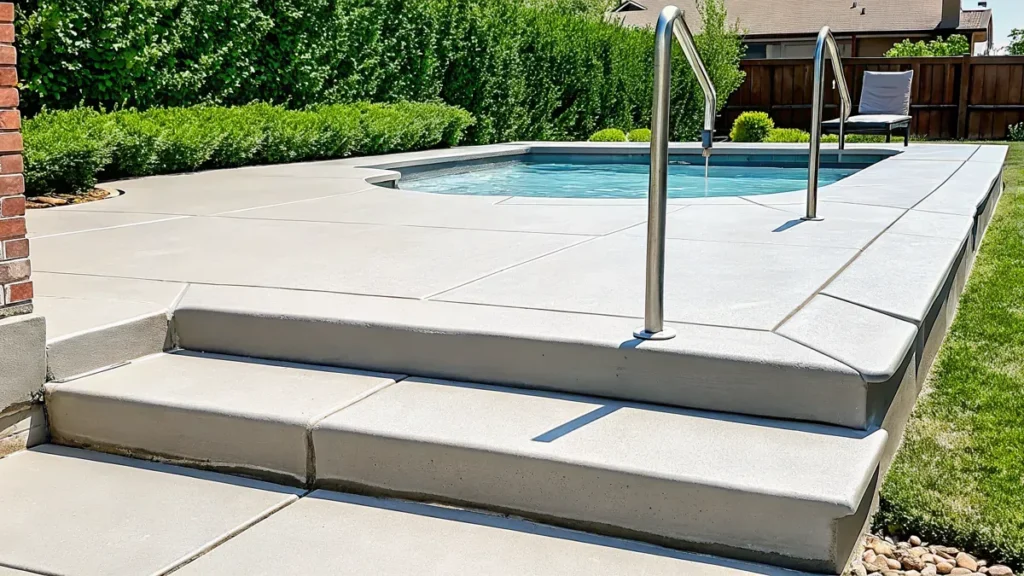
Pool deck repair in Dallas-Fort Worth is not just about making concrete look better. Around a pool, settled slabs, open cracks, poor drainage, and uneven edges can create trip hazards and make a backyard feel worn down. In North Texas, those problems often start below the concrete, where clay soil, water movement, and backfill settlement leave the slab without steady support.
Need a safer, level pool deck? Call 940-365-4221 or request a free no-obligation estimate from Solid Base Foundations.
Solid Base Foundations helps DFW homeowners repair settled pool deck concrete with PolyLevel. A high-density polyurethane foam that lifts and stabilizes slabs with small injection holes and a fast cure time. The goal is simple: restore safer walking surfaces, reduce pool downtime, and address the conditions that caused the concrete to sink in the first place.
Pool deck repair in DFW starts with the soil beneath the slab
A cracked or uneven pool deck may look like a surface problem, but the cause is often underground. Pool construction usually requires excavation, backfill, and new concrete around the pool shell. If that backfill compresses over time, the concrete above it can settle. The result may be a low spot, a trip edge, or a crack that keeps opening after patching.
North Texas clay soil moves with moisture
Dallas-Fort Worth soil is known for clay that expands when wet and shrinks during dry weather. That movement can leave voids beneath concrete. Once a slab loses support, it can drop toward the empty space below it. Pool decks see extra stress because water is always nearby, and small drainage issues can feed soil washout.
That is why durable concrete repair services should look at more than the visible crack. A contractor should check how water moves, where the slab has settled, and whether the concrete is still sound enough to lift. If the deck is intact but low, lifting may be a better choice than tearing out usable concrete.
Backfill settlement is common around pools
Backfill soil around a pool can compress for years after installation. Heavy rain, splash-out, and irrigation can make the soil settle faster. When the soil drops, the pool deck may no longer have full contact with the ground. This is when a section can dip, tilt, or pull away from nearby concrete.
Repair that only covers the crack may not solve that problem. The patch can fail because the slab is still moving. A better plan starts with finding the unsupported area, filling voids, and lifting the settled section back toward its original position.
Warning signs your pool deck needs repair
Pool deck problems are easiest to fix when they are caught early. A small lip between slabs may seem minor, but wet feet, pool toys, and low light can turn that edge into a real hazard. If the concrete keeps moving, the repair usually becomes more involved.
Uneven slabs and trip edges
The clearest sign is a slab that sits higher or lower than the section next to it. Even a small height change can catch a foot. Around a pool, that matters more because people are often barefoot, distracted, or walking on a wet surface. Uneven concrete can also make patio furniture wobble and make the pool area look neglected.
Cracks that spread or collect water
Hairline cracks can be cosmetic, but widening cracks deserve attention. Cracks that collect water, grow across control joints, or appear next to a sunken slab may point to movement below the surface. If water can enter the crack, it can reach the soil and add to erosion under the slab.
Drainage problems near the pool
Standing water is another warning sign. Pool decks should move water away from the pool and nearby structures. If water sits in a low area after rain or cleaning, the slab may have settled out of pitch. Over time, that water can worsen soil movement and make cracks more likely.
Other signs include gaps at coping, separations along patio edges, flaking concrete, and sections that feel hollow when tapped. If you see several of these issues together, schedule an inspection before the next heavy rain season.
How PolyLevel lifts settled pool deck concrete
PolyLevel is designed for settled concrete that is still in liftable condition. Instead of removing the slab, a technician injects high-density polyurethane foam below it. The foam expands into voids, helps stabilize loose areas, and raises the concrete with controlled pressure.
The repair process
- Inspect the pool deck. The technician checks slab condition, settlement, drainage, cracks, and access around the pool.
- Plan the lift. The repair team maps injection points and decides how much lift is realistic for each section.
- Drill small holes. PolyLevel uses small 5/8 inch injection holes, which helps keep the finished repair cleaner.
- Inject the foam. The polyurethane foam expands under the slab, fills voids, and lifts the concrete toward level.
- Patch and clean up. The holes are patched, the deck is cleaned, and the surface is ready for normal use after the foam cures.
Why fast cure time matters near a pool
PolyLevel cures in about 15 minutes. That speed can reduce backyard disruption and pool downtime compared with slower repair methods. It also avoids the mess of demolition when the existing slab can be saved. For many homeowners, that means the pool area can return to normal much sooner.
Because the foam is lightweight and waterproof, it is a strong fit for many pool deck repairs. It does not add the heavy load of traditional mudjacking material, and it will not wash out when water reaches the repaired area. Learn more about leveling sunken pool decks with PolyLevel.
PolyLevel vs replacement, resurfacing, and mudjacking
Not every pool deck needs the same fix. Some decks need lifting. Others need crack sealing, surface restoration, drainage correction, or full replacement. The right choice depends on why the concrete failed and how much of the slab is still sound.
| Repair option. | Best fit. | Limits. | Pool area disruption. |
|---|---|---|---|
| PolyLevel lifting. | Settled but mostly intact concrete slabs. | Not meant for fully shattered concrete. | Low disruption, small holes, fast cure. |
| Resurfacing or coatings. | Cosmetic wear, texture updates, minor surface flaws. | Does not lift settled slabs or fill deep voids. | Moderate, depends on prep and cure time. |
| Mudjacking. | Some sunken concrete applications. | Heavier material, larger holes, longer cure time. | More mess and more weight under the slab. |
| Replacement. | Broken, crumbling, or badly damaged concrete. | Higher disruption and longer downtime. | Highest disruption, demolition and new pour. |
When resurfacing is not enough
Resurfacing can improve appearance, texture, and color. It may be a good step after the slab is stable. But a coating will not raise a sunken section or fill a void under the concrete. If the surface is low because the soil moved, the movement should be addressed first.
When replacement makes sense
Replacement may be the right call if the slab is broken into many loose pieces or the concrete has lost its structure. A professional inspection can separate liftable settlement from concrete that is too damaged to save. That distinction matters because replacement can disturb landscaping and keep the pool area out of use longer.
For settled pool decks that are still structurally sound, repairing settled pool concrete with foam can be a practical middle path. It targets the void beneath the slab without starting over from scratch.
What affects pool deck repair cost and timeline?
Pool deck repair cost depends on the condition of the concrete and the cause of the movement. Online square-foot prices rarely tell the full story. Two pool decks can look similar from above, but one may have shallow settlement while the other has deep voids, drainage problems, and multiple cracked sections.
Key cost factors
The main factors include the number of slabs involved, the amount of lift needed, the size of the voids. Access around the pool, crack and joint sealing needs, and whether drainage corrections are needed. Surface protection may also be recommended if water, UV exposure, and wear have damaged the concrete.
Because every pool deck is different, Solid Base Foundations uses a free on-site assessment model. A technician can inspect the slab, explain what caused the problem, and build a custom repair plan. That keeps the estimate tied to the actual site instead of a generic price range.
Why timeline matters for pool owners
A pool deck repair plan should account for how long the pool area will be disrupted. PolyLevel’s fast cure time is a major advantage here. The foam reaches full strength quickly, so many repaired areas can return to normal use the same day. Crack sealants, coatings, or drainage work may add time depending on the scope.
Ready for a clear answer? Call 940-365-4221 to schedule a free estimate and find out whether your pool deck is a good fit for PolyLevel lifting.
When cracks, drainage, and settling need separate fixes
A good repair plan does not treat every pool deck problem the same way. Settlement, cracks, open joints, and drainage can be connected, but each may need a different repair. The best result often comes from combining the right products in the right order.
Cracks and joints
Cracks and control joints can let water reach the soil below the slab. Solid Base Foundations uses NexusPro for many crack and joint sealing needs. It is made to stay flexible and stand up to weather, which helps keep water out after the slab is stable.
Drainage and water movement
If water keeps flowing under the pool deck, settlement can return. The repair plan should look at low spots, downspouts, landscape grade, and the way water moves after rain. Sometimes the concrete lift solves the pitch problem. Other times, drainage changes are needed to protect the repair.
Surface protection
Once the slab is level and cracks are sealed, surface protection may help the concrete last longer. SealantPro can help protect concrete from water, dirt, and surface wear. It is not a substitute for lifting settled concrete, but it can be part of a complete plan for a cleaner, longer-lasting pool deck.
The takeaway is simple: patching is not always repair. A lasting result starts with the cause, then works back to the surface. That is the difference between hiding the symptom and improving the pool deck.
Why a level pool deck matters for safety and value
A level pool deck changes how the whole backyard feels. It gives family, guests, and service crews a safer path around the water. It also helps the pool area look cared for, which matters when the deck is one of the first things people notice outside.
Safety around wet concrete
Pool decks have a higher safety bar than many patios. People walk barefoot. Kids move fast. Water can make a small uneven edge harder to see. Lifting a settled slab helps remove the edge that catches toes and sandals.
Crack sealing and drainage work support that goal. Sealed joints help block water from reaching the soil below. Better drainage helps keep low spots from holding water after storms or pool use.
Appearance without needless demolition
Many homeowners delay repair because they picture a torn-up backyard. PolyLevel can often lift usable concrete without removing the slab. That helps preserve the existing deck, landscaping, and pool area layout when the concrete is still a good candidate for lifting.
After the slab is stable, the homeowner can decide whether surface upgrades make sense. That order matters. Stabilize first, then improve appearance. It keeps cosmetic work from hiding movement that still needs attention.
Frequently asked questions about pool deck repair
How do you fix cracks in a pool deck?
Small cracks may be cleaned, prepared, and sealed with a flexible concrete crack sealant. If cracks are caused by settlement, the settled slab should be lifted or stabilized first. Otherwise, the crack may open again after the surface repair.
Can settled concrete pool decks be leveled without replacement?
Yes, many settled concrete pool decks can be lifted without full replacement if the slab is still sound. PolyLevel fills voids below the concrete and raises the slab back toward level with high-density polyurethane foam.
Why is proper drainage important for pool deck repair?
Poor drainage can send water under the slab, erode soil, and create voids. If that water problem is ignored, a repaired slab may keep moving. A pool deck inspection should include drainage, pitch, cracks, and nearby soil conditions.
How much does pool deck repair cost?
Cost depends on slab size, settlement depth, access, cracking, voids, and whether drainage or sealing is needed. Solid Base Foundations provides free no-obligation estimates so homeowners get a site-specific quote instead of a generic price.
What is the cheapest way to redo a pool deck?
The cheapest option is not always the best long-term repair. A surface patch or coating may cost less upfront, but it will not lift settled concrete. If the slab has dropped, lifting it first can protect the finished surface.
Schedule pool deck repair in Dallas-Fort Worth
If your pool deck has settled concrete, cracks, drainage issues, or trip hazards, Solid Base Foundations can help you find the right repair path. Our team brings 18+ years of Greater Dallas experience, Foundation Supportworks-backed products, and exclusive PolyLevel concrete lifting for many settled slab problems.
Call 940-365-4221 or request your free no-obligation estimate. We will inspect the pool deck, explain what is happening below the slab, and recommend a repair plan that fits your home.