
.
North Texas clay can pull away in drought, then push upward after heavy rain. That repeated movement can turn a small seasonal shift into cracks, sloping floors, and sticking doors.
Expansive soil foundation problems occur when North Texas clay beneath a home shrinks during dry weather and swells as it absorbs rainwater. During drought, contracting soil can pull away and remove support, causing settlement; after heavy rain, expanding clay can push sections upward in heave. Repeated, uneven movement strains the foundation and may appear as widening cracks, sloping floors, or doors and windows that suddenly jam. Leaking pipes, poor drainage, large trees, and downspouts can worsen moisture swings, according to Virginia’s geology agency. Consistent soil moisture and sound drainage can reduce severe movement, but growing cracks or changes that return with the seasons call for a professional inspection.
The key question is not whether North Texas clay moves, but whether moisture changes are making movement uneven beneath your home. To understand the cycle, start with why expansive soil foundation problems are so common in North Texas. Here’s how.
Why expansive soil foundation problems are so common in North Texas
Expansive soil foundation problems are common in North Texas because much of the region sits on moisture-sensitive clay. In Dallas and nearby cities, Blackland Prairie soils can change volume as their water content rises and falls. That movement puts repeated stress on homes, even when the foundation was sound when built.
What expansive clay soil does
Expansive clay soil contains fine mineral particles that take in water and swell. When the ground loses moisture, the same soil shrinks, hardens, and can pull away from a foundation. The result is a moving support layer that changes with weather and site drainage.
Some clay minerals can swell to many times their dry volume, according to the Virginia Department of Energy. That force is not always spread evenly below a home. One area may rise while another stays still or settles, creating uneven stress across the structure.
North Texas wet-dry cycles
A long dry stretch can remove moisture from the clay and cause it to contract. Heavy rain can then soak the ground and make it swell again. This pattern raises risk because drought followed by soil-saturating rain can make expansive soil hazards worse.
Moisture also varies from one side of a property to another. Roof runoff, poor drainage, leaking pipes, and large trees can change how much water reaches the soil. As a result, the ground may push up near one wall while pulling away near another.
The risk extends across the Greater Dallas-Fort Worth area, including Plano, Frisco, Allen, and McKinney. Local owners can learn more about expansive clay soil problems and the Blackland Prairie conditions found around Dallas. The shared soil type helps explain why similar damage patterns appear across many nearby communities.
Different stress on slabs and piers
A slab foundation depends on broad, steady soil support. When clay shrinks, gaps can form beneath parts of the slab. When the soil swells again, it can lift some sections more than others. This uneven movement may bend the slab and send stress into walls, floors, doors, and windows.
Pier-supported homes respond differently. Deep piers can carry loads below the most active soil, but grade beams and nearby flatwork still cross moving ground. If parts of a system bear at different depths, changing soil can create uneven support. The foundation may then shift as wet and dry conditions repeat.
How seasonal moisture changes make clay soil move
North Texas clay does not stay at one size through the year. It loses volume as it dries, then gains volume when water returns. This repeated movement can create expansive soil foundation problems when the ground beneath a home changes unevenly.
Dry weather and soil shrinkage
During a long dry spell, heat and plant roots pull water from the soil. Clay particles move closer together as moisture leaves, so the soil shrinks. Gaps may open near the foundation, while the ground under part of the slab can settle.
Large trees can make this drying more intense because their roots draw water from a wide area. The soil near a tree may shrink faster than soil on the other side of the house. That uneven support can place stress on the slab and walls.
Inconsistent watering can create a similar pattern. Soaking one flower bed while another side stays dry produces different moisture levels around the home. Homeowners can learn more about foundation settlement and soil movement before deciding whether a visible change needs an inspection.
Rainfall and clay heave
Heavy rain reverses the drying process. Water enters the clay, and the soil swells as its particles absorb moisture. This upward movement is called heave, and it can push against a slab from below.
The largest changes often follow a long drought and then soil-soaking rain. A state geology resource on expansive soils explains that this weather pattern makes expansive soil hazards worse. It also notes that clay minerals control how much the ground can shrink and swell.
Heave is rarely equal across the full foundation. Rain may soak an exposed corner while covered or well-drained areas stay drier. As one area rises and another stays in place, floors can slope and cracks can form.
Why moisture varies around a home
Water does not spread evenly just because rain falls across the whole yard. Roof runoff may collect beside one wall. A steep grade may move water away from another wall.
These local differences help explain why expansive clay soil problems often affect only part of a Dallas-area home. Several common conditions can change how much water reaches the soil:
- Downspouts: Short or disconnected extensions can release roof water beside the foundation.
- Drainage changes: New landscaping, paving, or grading can redirect runoff toward one part of the slab.
- Leaking plumbing: A hidden leak can keep nearby clay wet even during dry weather.
- Trees and watering: Roots and uneven irrigation can leave some areas much drier than others.
Each factor changes the moisture balance beneath or beside the home. The foundation then rests on soil that may shrink, swell, or stay stable at the same time.
What foundation damage can expansive clay soil cause?
Expansive clay changes volume as its moisture level rises and falls. Wet clay can push parts of a foundation upward, while dry clay can leave weak spots beneath it. This uneven support causes many expansive soil foundation problems, from small finish cracks to major slab movement.
Settlement and heave
Settlement happens when part of the foundation sinks after the soil shrinks, erodes, or loses support. Heave is the opposite movement: swollen soil pushes a slab or footing upward. A home may face both movements at once because soil moisture is rarely even around the full foundation.
Uneven movement places stress on a structure because one area shifts while another stays in place. Heavy features, such as chimneys, may resist uplift more than lighter patios. This can lead to differential settlement, according to the Virginia Department of Energy.
| Soil condition. | Foundation movement. | Common homeowner signs. |
|---|---|---|
| Clay dries and shrinks. | Settlement or sinking. | Sloping floors, gaps, sticking doors. |
| Clay absorbs water and swells. | Heave or upward lift. | Raised floors, slab cracks, jammed windows. |
| Moisture varies around the home. | Uneven or twisting movement. | Drywall cracks, brick cracks, trim separation. |
| Soil washes out beneath concrete. | Slab drops into a void. | Sunken concrete, uneven joints, widening cracks. |
Cracks and interior warning signs
Foundation movement often appears first in the home’s finishes. Drywall may crack near doors, windows, or ceiling corners. Trim can pull away from walls, and doors or windows may jam because their frames are no longer square.
Floors can slope, feel uneven, or develop cracks as the slab shifts beneath them. One sign alone does not prove structural damage. A group of signs, or damage that grows through wet and dry seasons, deserves closer attention. Our guide to signs of foundation settlement explains what Dallas homeowners can check.
Movement can also create gaps where walls meet ceilings, cabinets, or baseboards. Some gaps may close as soil moisture changes again. Recurring gaps and cracks can show a pattern that a one-time check may miss. Note the date and location when each sign appears.
Exterior walls and concrete slabs
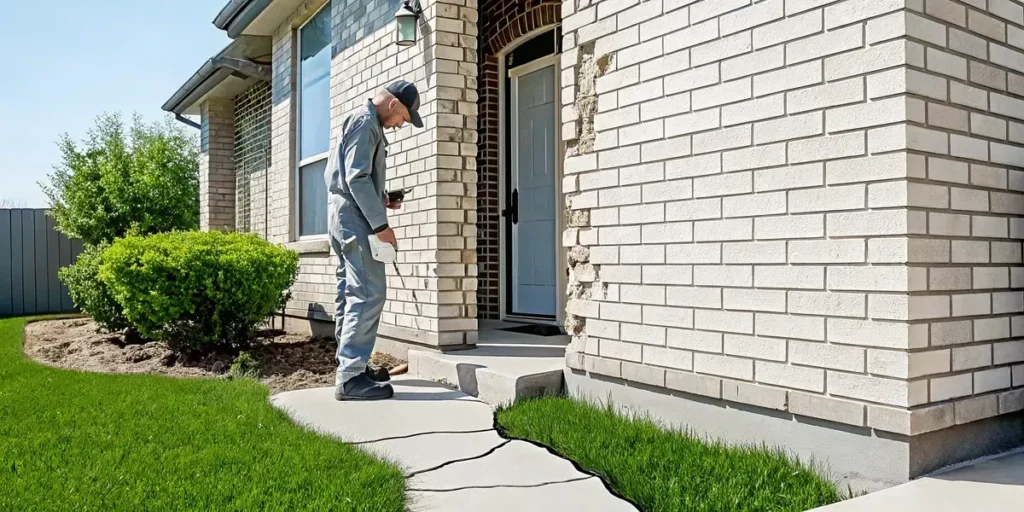
Outside, soil movement can show as stair-step cracks through brick mortar or gaps around windows, doors, and trim. Brick cracks may also widen as one side of the foundation moves farther than the other. These patterns can help show where movement is taking place.
Driveways, patios, walkways, garage floors, and other concrete slabs can also sink, lift, or separate at joints. Water that moves through cracks can wash out soil and create voids beneath concrete. That loss of support lets slabs settle and can leave uneven edges or trip hazards.
Watch how each sign changes over time instead of judging a single crack by its size. Photos and simple notes can show whether movement is stable or active. If several signs appear together, read about foundation settlement and soil movement before arranging an assessment.
Warning signs you should not ignore
Expansive soil foundation problems often show up as a group of small changes, not one dramatic failure. Walk through your home after a long drought and again after heavy rain. Note each change, take dated photos, and check whether it grows over time.
Interior warning signs
Start with doors, windows, walls, and floors. A sticky door may only need an adjustment, but several doors that begin sticking together can point to movement. A Virginia government resource lists jammed doors, windows, warped floors, and damaged foundations among signs linked to problem soils.
- New diagonal cracks above doors or windows.
- Drywall cracks that reopen after repair.
- Gaps between walls, ceilings, or trim.
- Floors that slope, dip, or feel uneven.
- Doors or windows that no longer close squarely.
Monitor a single thin crack that stays the same size. Mark its ends with pencil and record its width beside a ruler. Seek an inspection when cracks widen, several rooms show changes, or floors become uneven. Our guide to signs of foundation settlement can help you compare common symptoms.
Exterior warning signs
Walk the full edge of the house and look from several angles. Watch for stair-step cracks in brick, gaps near windows, or trim pulling away from walls. Also note soil that has opened away from the foundation during dry weather.
- Cracks in visible foundation walls or the slab edge.
- Brick cracks that grow beyond one mortar joint.
- Separating exterior trim, siding, or window frames.
- Standing water beside the house after rain.
- Low spots that send runoff toward the foundation.
Water patterns matter because drought followed by soaking rain can make expansive soil hazards worse. Drainage changes, leaking pipes, downspouts, and large trees can also affect local soil moisture. Schedule an inspection when exterior cracks grow after weather shifts or appear with indoor damage.
Concrete warning signs
Check the driveway, walkways, patio, pool deck, and garage floor. One stable surface crack may be cosmetic. Sunken slabs, widening joints, or repeated cracking deserve closer attention, especially near the house.
- Concrete sections that tilt toward the foundation.
- Raised or sunken slab edges that create trip points.
- Gaps beneath steps, patios, or walkways.
- Cracks that widen after dry or wet periods.
- Water collecting in low concrete areas.
Compare concrete changes with interior and exterior symptoms before deciding what to do. Multiple signs, fast changes, or damage after drought and heavy rain justify a professional assessment. A foundation expert can separate isolated slab settlement from broader foundation settlement and soil movement.
How to reduce expansive soil movement around your home
Home maintenance cannot stop expansive clay from shrinking and swelling. It can help limit sharp moisture changes near the foundation, which may reduce uneven movement. This matters across North Texas, where homeowners often face expansive clay soil problems.
Water flow around the home
Start by looking at where rainwater goes during and after a storm. Water should move away from the house instead of pooling beside the slab. The goal is steady site conditions, not soil that shifts between soaked and dry.
A seven-step maintenance routine
Use these steps as a routine for reducing expansive soil foundation problems. Recheck the property after heavy rain, drought, plumbing work, or major landscape changes.
- Check the grade. Soil near the house should guide surface water away from the foundation. Fill low spots that hold water, but do not pile soil against siding, brick weep holes, or vents.
- Clean gutters and inspect downspouts. Clear leaves and repair loose joints so roof runoff reaches each downspout. Direct discharge away from the foundation and confirm it does not collect near a corner.
- Maintain drainage paths. Keep swales, surface drains, and discharge points open. Watch for erosion or standing water after storms. Rerouted drainage and downspouts can affect local soil moisture and increase shrink-swell behavior, according to the Virginia Department of Energy.
- Keep soil moisture consistent. During dry periods, avoid letting soil beside the slab become deeply cracked and parched. If you water, use a steady approach that does not soak one area or send water against the house.
- Repair plumbing leaks promptly. Check outdoor faucets, irrigation lines, supply pipes, and drain lines when you notice unexplained wet soil. A leak can create a concentrated wet zone while nearby clay stays dry.
- Watch trees and roots. Large trees can change soil moisture near a home. Before planting, consider the mature canopy and root area. Ask a qualified arborist before cutting major roots near the foundation.
- Perform regular visual checks. Walk the interior and exterior every few months. Note new cracks, sticking doors, uneven floors, and gaps near trim. Compare changes over time using dated photos and review these signs of foundation settlement.
Limits of preventive maintenance
These steps can reduce avoidable moisture swings, but they cannot remove all soil or foundation risk. Expansive clay can still move during long droughts and heavy rainfall. If cracks grow, floors shift, or doors begin sticking, arrange a professional assessment before the damage becomes harder to track.
When foundation repair becomes the right next step
Signs that call for an inspection
Prevention helps manage soil moisture, but it cannot reverse damage that has already changed the structure. Request an inspection when cracks keep widening, floors slope, or doors and windows repeatedly stick. These changes matter more when they grow after wet or dry seasons.
Expansive soil foundation problems often develop as clay gains and loses moisture. Rerouted drainage, leaking pipes, downspouts, and large trees can increase local soil movement, according to the Virginia Department of Energy. An inspection can show whether drainage work is enough or structural support is needed.
Also request help when a crack returns after a surface repair or when several warning signs appear together. Solid Base Foundations has served Greater Dallas for more than 18 years. Its team provides free, no-obligation estimates, so homeowners can learn the cause before choosing a repair.
Matching the repair to the problem
There is no single repair for every form of soil movement. A contractor should first map settlement, inspect drainage, and check the affected parts of the home. The findings guide the repair plan and help avoid treating a symptom while the cause remains.
- Pier systems: Piers can support sections of a foundation that have settled and need stable structural support.
- Drainage corrections: Grading, drains, or downspout changes may help when water collects near the foundation or washes soil away.
- PolyLevel concrete leveling: PolyLevel can fill voids and lift sunken slabs, including driveways, patios, sidewalks, and pool decks.
For a closer look at local conditions, review how expansive clay soil problems affect Dallas homes. A slab problem may need PolyLevel, while movement beneath the home may call for piers. Some properties need drainage work along with structural repair.
What to ask before approving repairs
A clear estimate should state what moved, why it moved, and which areas need work. It should also explain the repair method, expected site impact, warranty terms, and any drainage steps. Ask how the proposed pier system fits the Foundation Supportworks network standards.
Solid Base Foundations offers a 25-year manufacturer warranty on its pier systems. Homeowners should review the written terms and ask what is covered before work starts. They should also confirm whether follow-up checks or upkeep are part of the plan.
If monitoring no longer gives peace of mind, request a free estimate or call 940-365-4221. The inspection can separate normal surface wear from movement that needs repair. It also gives you a practical next step based on the home, soil, and drainage.
Frequently Asked Questions
How do you fix expansive soil foundation problems?
The right repair depends on whether the structure has settled, heaved, or lost support in isolated areas. Common options include structural piers, soil stabilization, and drainage improvements. A foundation professional should first measure movement and identify the moisture source. Repairs should address both the structural damage and the soil conditions that caused it.
What is the best foundation for expansive soil?
There is no single best foundation for every expansive soil site. Engineers may specify a stiffened slab, concrete or helical piers, or micropiles based on soil tests and building loads. These systems are designed to limit uneven movement or transfer loads to more stable material. New construction should have a site-specific design from a qualified engineer.
Should you buy a house on expansive soil?
A house on expansive soil can still be a sound purchase, but the foundation needs careful review. Before buying, request a professional inspection and examine repair records, drainage, grading, and changes in cracks or floors. Also review insurance terms because standard homeowner policies typically exclude expansive-soil damage. Use the findings to estimate risk and possible repair costs.
When should you worry about foundation settlement?
Request an inspection when cracks grow, doors or windows begin sticking, floors slope, or movement returns with seasonal weather. A single small crack may not indicate structural damage, but several changing symptoms deserve attention. Act sooner if plumbing leaks, poor drainage, or large trees may be changing soil moisture near the foundation.
Ready to protect your foundation from soil movement?
Waiting on possible foundation movement can allow small warning signs to become harder and more costly to address. Starting now gives you time to understand what is happening before another stretch of dry or wet weather changes the soil again. A timely inspection can clarify the next step, help you plan repairs if needed, and reduce uncertainty about your home’s foundation.
You do not need to diagnose the cause alone. Early action also gives you more control over the repair timeline. Bring your concerns to a local team that understands North Texas soil conditions. Request a free, no-obligation foundation estimate to talk with Solid Base Foundations about what you have noticed and schedule an on-site assessment.