
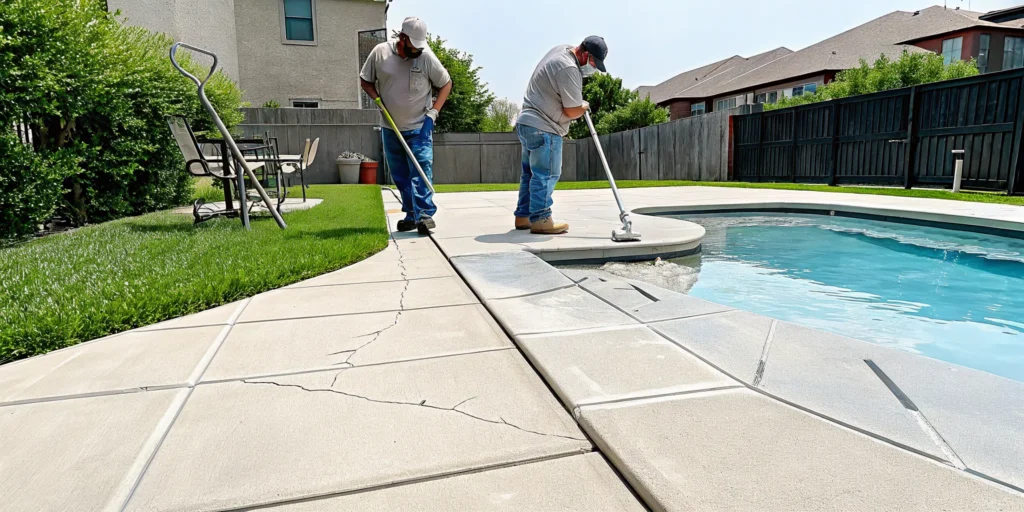
The ground in North Texas is constantly moving. Between our infamous expansive clay soil and dramatic weather swings, concrete slabs don’t stand much of a chance without the right support. This is especially true for your pool deck, where constant exposure to water adds another layer of stress. When you see your deck becoming uneven, it’s a direct result of these powerful local forces. That’s why a generic fix won’t cut it. You need a solution designed specifically for our environment. This guide focuses on the specifics of uneven pool deck repair Dallas Fort Worth homeowners need to know, explaining why polyjacking is often the superior choice for stabilizing our soil and providing a permanent fix.
Key Takeaways
- Spot Problems Early to Prevent Hazards: Pay attention to the first signs of trouble, like small cracks or sinking slabs. Addressing these issues quickly stops water damage and soil erosion, saving you from more expensive repairs and keeping your pool area safe.
- Choose a Modern, Long-Term Fix: For sinking concrete in DFW, polyjacking is an ideal solution. This lightweight foam injection stabilizes the ground without stressing the clay soil, offering a faster, cleaner, and more permanent repair than traditional mudjacking.
- Hire a Local Expert You Can Trust: A lasting repair depends on the right contractor. Ensure they have proven experience with North Texas soil, provide a strong warranty, and offer a free, detailed estimate before you commit to any work.
What Causes Uneven Pool Decks in DFW?
An uneven pool deck is more than just an eyesore; it’s a sign that something is wrong with the ground beneath it. Here in the Dallas-Fort Worth area, our unique environment presents several challenges that can cause concrete slabs to shift, crack, and settle. Understanding what’s causing the damage is the first step toward a lasting fix. From the soil under your feet to the summer heat, several factors are likely at play. Let’s look at the most common culprits behind a failing pool deck.
Expansive Clay Soil
The biggest challenge for any concrete structure in North Texas is our infamous expansive clay soil. Think of this soil as a sponge. When it gets wet from rain or splashes from the pool, it swells up and expands, pushing your concrete deck upward. Then, during our long, hot summers, the clay dries out and shrinks, leaving empty spaces or voids beneath the slabs. This constant cycle of swelling and shrinking creates instability, causing the heavy concrete to crack and settle into the gaps. This is the same force that can damage a home’s foundation, and it’s relentless on your pool deck.
Erosion and Poor Drainage
Water is essential for your pool, but it can be your deck’s worst enemy. If your pool deck and the surrounding yard weren’t graded properly during installation, water won’t drain away as it should. Instead, it can pool on the surface or flow back toward your pool or home. This persistent water flow slowly erodes the soil supporting the concrete slabs. Over time, enough soil can wash away to create significant voids. Without solid ground to rest on, the concrete will eventually sink and crack under its own weight, leading to uneven surfaces and potential trip hazards that require professional concrete repair.
North Texas Temperature Swings
Our weather is anything but predictable, and those dramatic temperature swings take a toll on your pool deck. Concrete naturally expands in the scorching summer heat and contracts during cold winter snaps. While a well-installed deck is designed to handle some movement, the extreme shifts we see in DFW put it under constant stress. This cycle of expansion and contraction weakens the concrete over time, making it more brittle and susceptible to cracking. When you combine this thermal stress with the unstable clay soil beneath, it’s a perfect recipe for a damaged and uneven pool deck.
Intrusive Tree Roots
The beautiful, mature trees that provide much-needed shade for your backyard can also be a source of serious pool deck damage. Tree roots are naturally drawn to sources of moisture, and the area around your pool is an ideal target. As these roots grow and spread out beneath your deck, they can exert incredible force from below. This pressure is strong enough to lift heavy concrete slabs, causing them to tilt and crack. This not only ruins the look of your pool area but also creates dangerous, uneven edges that pose a significant trip hazard for your family and guests.
Flaws in the Original Installation
Sometimes, the problem with your pool deck dates back to the day it was built. A contractor who cut corners during the initial installation can leave you with a deck that’s destined to fail. This could mean they didn’t properly compact the soil base, used a low-quality concrete mix, or failed to add adequate steel reinforcement. These shortcuts create a weak foundation that simply can’t withstand the pressures of our local soil and climate. While a cheaper installation might seem appealing at first, it often leads to more expensive repairs down the road, which is why working with an experienced team from the start is so important.
Signs Your Pool Deck Needs Repair
It’s easy to overlook the early warning signs of a failing pool deck, but catching them can save you from bigger, more expensive problems down the road. An uneven pool deck isn’t just an eyesore; it’s a signal that the ground underneath is shifting. Paying attention to these clues will help you know when it’s time to call in a professional for a concrete repair assessment. From small cracks to noticeable dips, your deck is telling you what it needs. Here are the key signs to watch for around your pool.
Visible Cracks on the Surface
Small, hairline cracks might not seem like a big deal, but they are often the first sign of a deeper issue. These fractures are usually caused by the concrete slab settling or the soil underneath it moving. While fixing minor cracks can be relatively inexpensive, ignoring them is a mistake. Water can seep into these openings, washing away the soil beneath the slab and making the problem worse. What starts as a small crack can quickly expand, leading to more significant damage and higher repair costs. Addressing them early is the best way to protect your investment.
Sinking or Shifting Concrete Slabs
If you notice one section of your pool deck is lower than the others, you’re looking at a sinking or shifting slab. This is a common issue in North Texas, where expansive clay soil, water exposure, and erosion cause the ground to move. A sinking slab doesn’t just create an uneven surface; it puts stress on the entire pool deck and can even affect the pool’s structure. This is a clear indication that the soil supporting your deck is no longer stable, and a professional foundation repair solution is needed to lift and stabilize the concrete.
Gaps in the Pool Coping
The coping is the border around your pool’s edge, where the deck meets the shell. When you see a gap forming between the coping and the deck, it’s a serious red flag. This separation happens when the deck slab sinks or pulls away from the pool, breaking the waterproof seal. Once that seal is broken, pool water and rain can flow directly under the deck, accelerating soil erosion and causing the slab to sink even further. It’s a destructive cycle that will only get worse without intervention. You can see examples of how we fix these issues by looking at our work on similar projects.
Puddles and Poor Water Drainage
Your pool deck was designed to slope away from the pool and your house, directing water toward drains or your yard. If you start seeing puddles forming on the deck after it rains or after a swim, it means the slab is no longer level. Water might even start flowing toward your home’s foundation or expensive pool equipment, creating a whole new set of problems. Standing water also promotes mold and mildew growth and can weaken the concrete over time, making the surface slippery and unsafe. If you notice drainage issues, it’s time to contact us for an evaluation.
Obvious Trip Hazards
The most immediate danger of an uneven pool deck is the risk of someone getting hurt. A raised edge between two concrete slabs can easily cause a trip, slip, or fall, which is the last thing you want in a high-traffic area where people are often barefoot and distracted by fun. As a homeowner, ensuring your pool area is safe for family and guests is a top priority. Even a slight height difference can be a serious liability. If you can see uneven sections on your deck, you have a trip hazard that needs to be fixed right away.
Is an Uneven Pool Deck Dangerous?
The short answer is yes. An uneven pool deck is much more than a cosmetic issue; it’s a serious safety hazard waiting to cause problems. When you have friends and family over, the last thing you want to worry about is someone tripping and getting hurt. Unfortunately, sunken or shifted concrete slabs create exactly that risk, especially in a wet environment where slips and falls are already a concern. For children running around the pool, these uneven edges can be particularly dangerous.
Beyond the immediate trip hazard, an uneven surface is often a sign of a deeper issue. Those low spots and cracks don’t just look bad; they collect water. Puddles create slipping risks and can become breeding grounds for mosquitoes. More importantly, that pooling water can worsen the soil erosion underneath the slab, causing the deck to sink even further over time. What starts as a small, uneven spot can quickly become a major structural problem that requires more extensive concrete repair.
Ultimately, an unsafe and unattractive pool deck keeps you from fully enjoying your own backyard. It detracts from your home’s appearance and can even impact its value. Ignoring the problem won’t make it go away; it will only lead to more significant damage and higher repair costs down the road. Taking action now protects both your family and your investment. If you’ve noticed these issues, it’s a clear signal that your property needs a professional assessment from experts who understand DFW’s unique soil conditions.
How to Fix an Uneven Pool Deck: Your Repair Options
Seeing your beautiful pool deck sink, crack, or become uneven can be disheartening, but don’t panic. You have several effective repair options that don’t all involve a messy, full-scale demolition. The right solution depends on what’s causing the problem and how severe the damage is. Some methods fix the issue from below by lifting the concrete, while others focus on improving the surface or replacing the slab entirely.
Understanding these choices is the first step toward getting your pool area back to being a safe and enjoyable space for your family. We’ll walk through the most common repair methods, from modern injection techniques to a complete replacement, so you can make an informed decision. For many Dallas-Fort Worth homeowners, a professional concrete repair can save the existing slab, saving you significant time, money, and disruption. It’s about finding a permanent fix that addresses the unstable soil beneath, not just a temporary patch. Choosing the right approach will restore both the safety and the beauty of your backyard oasis.
Polyurethane Foam Injection (Polyjacking)
Polyjacking is a modern and highly effective way to lift and level sunken concrete. The process is surprisingly simple. Our technicians drill a few small, dime-sized holes in the affected slabs and inject a high-density polyurethane foam underneath. This foam expands, filling voids in the soil and gently lifting the concrete back to its original position.
This method is known for being incredibly clean and fast. The foam cures in minutes, meaning you can use your pool deck almost immediately after the job is done. It’s also lightweight, which prevents adding extra stress to the already unstable DFW soil. Polyjacking is a long-term solution that stabilizes the ground beneath your deck, addressing the root of the problem instead of just the symptoms.
Mudjacking
Mudjacking is a more traditional method of concrete lifting. It works on a similar principle to polyjacking but uses a different material. Instead of foam, a slurry made of cement, soil, and water is pumped under the concrete slab through larger holes, typically about two inches in diameter. The pressure from this mixture lifts the slab back into place.
While mudjacking can be effective, the material is much heavier than polyurethane foam and can sometimes add too much weight to weak soil. The process can also be messier, and the slurry takes longer to cure, so you’ll have to wait before using your pool deck again. For moderate structural work, this method can be a viable option, but it comes with more downtime and disruption to your yard.
Concrete Resurfacing
If your pool deck is structurally sound but looks worn, stained, or has minor surface cracks, resurfacing might be a good choice. This process involves applying a thin cement-based overlay, a decorative coating, or another material directly on top of your existing concrete. It’s a cosmetic fix that can dramatically improve the appearance of your pool area.
However, it’s important to remember that resurfacing does not fix underlying structural problems. If your deck is sinking or unstable, applying a new surface is like putting a bandage on a broken bone. The new surface will just crack and fail again as the slab continues to move. Always address any sinking or stability issues with a proper foundation repair before investing in resurfacing.
Complete Concrete Replacement
In cases of extreme damage or when the concrete is shattered beyond repair, a complete replacement may be the only answer. This is the most disruptive and expensive option, as it involves demolishing and hauling away the old pool deck before preparing the area and pouring a brand-new slab.
This method is typically a last resort. It provides a fresh start and allows for proper installation from the ground up, but the cost and time commitment are significant. Before you decide on a full replacement, it’s always worth getting a professional opinion to see if a less invasive repair like polyjacking could save your existing concrete. If you suspect your deck is beyond repair, you can contact us for a thorough evaluation.
Polyjacking vs. Mudjacking: What’s Best for DFW Homes?
When your concrete pool deck starts to sink or crack, two common repair methods you’ll hear about are polyjacking and mudjacking. Both are designed to lift and level sunken concrete slabs, but they go about it in very different ways. Mudjacking involves pumping a slurry of mud, sand, and cement beneath the slab to raise it. Polyjacking, a more modern technique, uses an expanding polyurethane foam to achieve the same goal.
While both can be effective, the unique challenges of living in the Dallas-Fort Worth area, especially our soil, make one a clear winner for a long-lasting repair. Choosing the right method isn’t just about fixing the problem you see today; it’s about preventing it from happening again tomorrow. Let’s break down how these two methods compare on the factors that matter most to DFW homeowners.
Performance on Local Clay Soil
The expansive clay soil in North Texas is the primary culprit behind most concrete problems. This soil swells dramatically when it gets wet and shrinks when it dries out, creating voids and unstable ground beneath your pool deck. When considering a repair, you have to think about how the solution will interact with this soil. Mudjacking pumps a heavy, cement-based slurry under the slab. This not only adds significant weight to already unstable soil but also introduces more moisture, which can worsen the shrink-swell cycle over time.
Polyjacking, on the other hand, uses a high-density polyurethane foam that is incredibly lightweight and waterproof. It fills voids without adding stress to the soil below. Once cured, the foam creates a strong, stable, and water-resistant barrier, protecting your slab from future soil movement and erosion. For a durable concrete repair that stands up to our local conditions, polyjacking is the superior choice.
A Look at the Costs
At first glance, mudjacking often appears to be the more budget-friendly option. The materials are less expensive, and the initial quote might be lower. However, it’s important to think about the long-term value. Because mudjacking material can break down, wash away, or add to the soil’s instability, you may find yourself paying for the same repair again in a few years. It can be a temporary fix for a permanent problem.
Polyjacking may have a higher upfront cost, but it’s an investment in a more permanent solution. The polyurethane foam is inert, waterproof, and doesn’t degrade over time, meaning it provides a lasting fix. By addressing the root of the problem and providing durable support, you avoid the cycle of repeated repairs. We believe in providing solutions that last, which is why we also offer flexible financing options to make the best repair accessible for your home.
Downtime and Disruption to Your Yard
Getting your pool back in action quickly is a top priority, especially during a hot Texas summer. The mudjacking process can be disruptive. It requires drilling large holes (typically 1-2 inches in diameter) into your concrete and can be a messy job. The slurry also needs time to cure, meaning you’ll have to wait a day or more before you can walk on the deck or move your patio furniture back.
Polyjacking is a much faster and cleaner process. We drill small, dime-sized holes that are barely noticeable. The foam is injected cleanly and expands to lift the concrete in a controlled manner. It cures and hardens in about 15-30 minutes, meaning your pool deck is ready for use almost immediately after we finish the job. You can see examples of our efficient process in our work. Most projects are completed in just a few hours, allowing your family to get back to enjoying your pool the very same day.
What Does Pool Deck Repair Cost in Dallas-Fort Worth?
Figuring out the budget for a pool deck repair in the Dallas-Fort Worth area can feel a little overwhelming because the final price depends on a few key things. The cost is directly tied to the extent of the damage, the specific repair method needed, and the total size of your deck. Think of it this way: patching a small crack is a simple fix, but lifting a sunken slab is a more involved process. Understanding the different levels of repair will help you get a clearer picture of the potential costs and make an informed decision for your home.
Fixing Minor Cracks
If you’re just dealing with a few small, hairline cracks on the surface, you’re in luck. This is the most affordable type of repair. You can generally expect to pay between $150 and $375 to have minor cracks professionally sealed. On a square-foot basis, basic concrete crack repair costs about $3 to $8. This process involves cleaning out the crack and filling it with a durable sealant, which stops water from seeping in and causing bigger problems. It’s a quick, preventative measure that keeps your pool deck looking good and structurally sound.
Addressing Moderate Structural Issues
When your pool deck has visibly started to sink or shift, you’re dealing with a moderate structural issue that goes beyond a simple surface fix. For most Dallas homeowners, repairs for these issues range from $1,500 to $4,500. This type of work typically involves lifting the concrete slab back to its original position using methods like polyjacking. This is more than a cosmetic fix; this kind of concrete repair addresses the unstable soil beneath the slab, which is the root cause of the problem. It stabilizes your deck and gets rid of dangerous trip hazards around your pool.
The Cost of a Full Replacement
In some cases, the concrete is too damaged for a repair to be effective. If your deck has extensive, deep cracks, is crumbling, or has failed structurally, a complete replacement may be the best path forward. Tearing out the old concrete and pouring a new deck is the most significant investment, typically costing between $8 and $21 or more per square foot. This price covers the entire process, from demolition and hauling away debris to building the framework and pouring fresh concrete. While it’s a major project, it gives you a brand-new, solid foundation for your pool area.
What Affects the Final Price?
Several variables influence the final quote for your pool deck repair. The size of your deck and the severity of the damage are the primary cost drivers. Beyond that, the specific finish you choose can also affect the price. A basic, single-color textured surface will cost less than more decorative options. If you’re interested in custom designs like stamped overlays or multi-toned coloring to create a unique look, you can expect the cost to be higher. The complexity of the job and how easily the crew can access the area can also play a part in the final price.
Why Waiting to Repair Costs You More
It’s easy to put off fixing a small crack or a slightly uneven section of your pool deck, but delaying repairs often leads to more expensive problems. In North Texas, pool decks are constantly exposed to water, and our expansive clay soil is notorious for shifting. An unsealed crack allows water to get under the slab, which can erode the soil and cause the deck to sink. That small issue you ignored can quickly become a major trip hazard. Addressing problems early with a professional foundation repair company stops this cycle of damage and saves you from a much larger bill down the road.
How to Choose the Right Pool Deck Repair Contractor
Finding the right person for the job is just as important as choosing the correct repair method. A great contractor will not only fix the visible problem but also provide a lasting solution that protects your investment and your family’s safety. But with so many options out there, how do you find a team you can trust? It comes down to asking the right questions and knowing what to look for. A little bit of homework upfront can save you from major headaches, extra costs, and repeat repairs down the road. The stability of your pool deck and the safety of everyone who uses it depend on making a smart choice. From their specific techniques to their understanding of our local soil, every detail matters. A qualified professional will be transparent about their process, confident in their experience, and clear about the costs. Let’s walk through the key things to verify before you sign any contract.
Ask About Their Methods, Materials, and Warranties
Before you hire anyone, you need to understand exactly how they plan to fix your pool deck. Ask them to walk you through their process step-by-step. Do they use polyurethane foam injection, mudjacking, or another method? A reputable contractor will be happy to explain their technique and why it’s the best fit for your specific situation. You should also inquire about the quality of the materials they use and, most importantly, the warranty they offer. A strong warranty is a clear sign that a company stands behind its work and is confident in the durability of its repair. Don’t be shy about getting these details in writing.
Confirm Their Experience with DFW Soil
This might be the most important question you ask. The expansive clay soil in the Dallas-Fort Worth area is notoriously tricky, swelling up with moisture and shrinking as it dries. This constant movement is a primary cause of concrete damage. A contractor without direct experience in North Texas might offer a fix that simply won’t last. You need a team that understands local soil behavior and how to counteract it. Ask potential contractors about their experience working in the DFW area and how their repair methods account for our unique geological challenges. Local expertise is not a bonus; it’s a necessity for a successful pool deck repair.
Always Get a Free, Detailed Estimate
Never pay for an estimate. A professional and trustworthy company will offer a free, no-obligation assessment of your pool deck. This is a standard part of the process. However, don’t just settle for a number scribbled on a business card. Request a detailed, written estimate that breaks down the scope of the project, the materials to be used, labor costs, and a projected timeline. This document protects you and ensures there are no surprises when the final bill arrives. It also allows you to accurately compare quotes from different companies. If a contractor is hesitant to provide a detailed estimate, consider it a red flag and move on. You can contact us for your free, transparent estimate today.
Why Choose Solid Base for Your Pool Deck Repair?
When you notice your pool deck is cracked or uneven, finding the right contractor can feel like a job in itself. You need a team that not only understands the problem but also has the right tools and experience to fix it for good. At Solid Base, we specialize in providing lasting solutions for Dallas-Fort Worth homeowners. We combine the strength and patented products of a national network with the dedicated service of a local business. Our focus is on addressing the root cause of your pool deck issues, not just patching over the symptoms, so you can get back to enjoying your backyard with confidence.
Patented Products and Proven Repair Methods
A lasting repair starts with the right technique. We don’t rely on guesswork or one-size-fits-all solutions. Instead, we use patented products and proven methods tailored to your pool deck’s specific condition. While generic online prices rarely tell the full story, our approach begins with a thorough diagnosis to understand what’s causing the concrete to shift. We specialize in advanced concrete repair techniques like polyurethane foam injection, which lifts and stabilizes slabs with minimal disruption. This method is cleaner, faster, and more durable than traditional mudjacking, ensuring your pool deck is secure for years to come. Our goal is to provide a precise, reliable fix that protects your investment.
Serving Dallas, Plano, and the Greater DFW Area
Living in North Texas means dealing with unique environmental challenges, especially our infamous expansive clay soil. As a local company, we have years of firsthand experience with the ground beneath your home. We know exactly how the DFW climate affects concrete and foundations, which allows us to implement solutions that stand up to the test of time. Our team proudly serves homeowners throughout the greater Dallas area, including Plano, Allen, Lewisville, and Denton. When you work with us, you’re partnering with neighbors who are committed to maintaining the safety and value of properties in our service area.
Get Your Free, No-Obligation Estimate
Seeing a problem with your pool deck is stressful enough; getting answers shouldn’t be. We make the first step simple with a free, no-obligation estimate. When you reach out, one of our specialists will visit your home to conduct a detailed inspection of the area. We’ll explain what we’ve found in clear, simple terms and walk you through the best repair options for your situation. You’ll receive a straightforward proposal with no pressure and no hidden fees. If you see an issue developing, don’t wait for it to get worse. Contact us today to schedule your free inspection, and let our team work quickly to make your pool area safe and beautiful again.
Related Articles
- Concrete Repair – Solid Base
- How to Fill Large Cracks in Concrete Like a Pro
- PolyLevel – Solid Base
- Foundation Repair – Solid Base
- Polyurethane Slab Jacking: A Homeowner’s Guide
Frequently Asked Questions
How long will a pool deck repair take? The timeline really depends on the method, but one of the main benefits of polyjacking is its speed. Most projects are completed in just a few hours, not days. The polyurethane foam we use cures in about 15 to 30 minutes, so your pool deck is ready to use almost as soon as we pack up our truck. This means you can get back to enjoying your backyard the very same day.
Will the repair be noticeable when you’re finished? Our goal is to make the repair as invisible as possible. With polyjacking, we drill very small, dime-sized holes to inject the foam. After lifting the slab, we patch these small holes with a concrete mixture that blends in with your existing deck. Once the slab is level again, the only thing you should notice is that the dangerous trip hazard is gone.
Can I just seal a small crack myself and call it a day? While sealing a small crack might seem like a quick fix, it usually doesn’t solve the real problem. A crack is often a symptom of unstable soil shifting beneath the concrete. By only sealing the surface, you are ignoring the root cause. That unstable ground will continue to move, likely causing the old crack to reopen or new ones to form nearby. A professional assessment identifies and fixes the underlying issue for a permanent solution.
If my pool deck is sinking, is my actual pool at risk? Yes, a sinking pool deck can definitely put your pool’s structure at risk. As the deck slab sinks or pulls away, it can break the seal around the pool’s coping. This allows water to get behind the pool wall, which can erode the soil supporting the pool shell itself. Addressing a sinking deck promptly is a critical step in protecting your entire pool investment from more serious damage.
Why should I choose polyjacking instead of just replacing the whole deck? A full replacement should always be a last resort. It is a messy, time-consuming, and expensive process that involves demolition and weeks of waiting for new concrete to be poured and cured. Polyjacking, in contrast, saves your existing concrete. It is significantly less expensive, is completed in a fraction of the time, and causes minimal disruption to your yard. Unless your concrete is completely shattered, lifting and stabilizing it is a smarter, more efficient solution.