
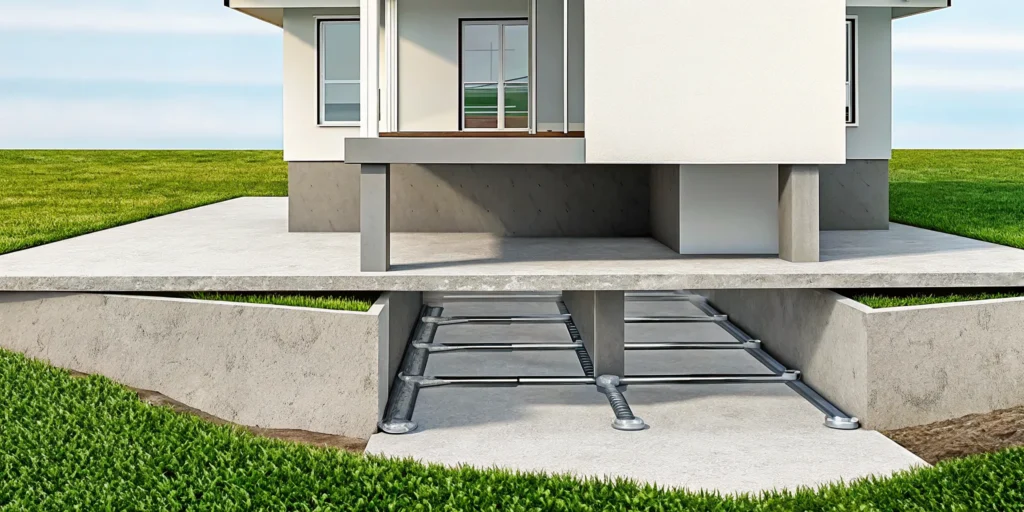
If you own a home in the Dallas area, you know our soil has a mind of its own. The expansive clay beneath our feet shrinks and swells with the seasons, putting constant stress on our foundations. This unique environment makes it critical to ask, what is the best foundation repair method for slab homes in North Texas? A solution that works in another part of the country might be a temporary fix here. This article will explain how our local soil impacts your home and compare the most common repair techniques, showing you why anchoring your foundation deep into stable ground is the most reliable way to achieve lasting peace of mind.
Key Takeaways
- Identify problems early: Be your home’s first line of defense by looking for common warning signs like cracks around doors, jamming windows, and sloping floors, which signal that your foundation may be shifting.
- Focus on a permanent fix: Prioritize repair methods like helical or push piers, as they provide a lasting solution by anchoring your foundation to stable ground, unlike temporary fixes that only address surface-level symptoms.
- Invest in a long-term solution: Select a reputable repair company that can diagnose the root cause of the problem, because choosing a permanent solution is an investment that protects your home’s value and prevents more costly repairs later.
Is Your Slab Foundation Failing? Key Warning Signs
Noticing changes around your home can be unsettling, especially when you suspect the problem lies with your foundation. Your home’s foundation is its bedrock, and even small shifts can cause noticeable issues throughout the structure. The good news is that your house will almost always give you clues that something is amiss. Learning to spot these early warning signs is the first step toward protecting your home’s value and your peace of mind.
Instead of panicking, think of yourself as a detective. The clues are often hiding in plain sight, from the way your doors close to the small cracks in your drywall. Below are the most common signs of a failing slab foundation. If you recognize any of these in your home, it’s a signal to call in a professional for a closer look.
Cracks in Your Walls, Floors, or Ceilings
While tiny hairline cracks can be a normal part of a house settling, certain types of cracks are a direct call for attention. Look for cracks in your walls, ceilings, or floors, especially those that appear suddenly. On the inside, you might see diagonal cracks extending from the corners of doors and windows or long cracks across the ceiling. On your home’s exterior, zigzag cracks in the brick or block are a classic sign of foundation movement. These patterns indicate that your foundation is shifting unevenly, putting stress on your home’s frame. If you notice cracks that are wider at the top than the bottom, it’s time to investigate a foundation repair solution.
Doors and Windows That Stick or Won’t Close
Do you have a door that always seems to jam, or a window that you can no longer lock? When doors and windows are hard to open or close, it’s often because the foundation has moved, warping their frames. This isn’t about the wood swelling from humidity; it’s a persistent problem that doesn’t go away when the weather changes. You might also notice that your doors don’t hang straight in their frames anymore, or you can see uneven gaps around them. This misalignment is a direct result of the foundation settling or heaving, which twists the structure of your home. You can see examples of how we fix the underlying causes of these issues in our work gallery.
Floors That Slope or Feel Uneven
That feeling of walking slightly downhill in your own hallway isn’t just in your head. Pay attention to floors that are not level, sag, or feel bouncy underfoot. You can test a suspicious area by placing a ball or marble on the floor to see if it rolls on its own. A sloping floor is a strong indicator that a portion of your slab foundation has sunk lower than the rest. You might also notice tiles cracking or hardwood floors starting to separate. These are signs that the concrete slab itself is compromised, which is a core issue that needs a professional concrete repair assessment to determine the extent of the problem.
Gaps Forming Between Walls and Floors
One of the most straightforward signs of foundation settlement is seeing new gaps form inside your home. Look down at your baseboards. If you see them pulling away from the floor, it means the floor is sinking. Similarly, look up. Gaps forming between walls and floors or between the wall and the ceiling are clear indicators that parts of your home are separating due to foundation movement. You might also spot this on the exterior, where the brick wall may pull away from a window or door frame. These gaps show that the structural frame is being pulled apart, a problem that will only worsen without intervention. If you see these signs, it’s best to contact us for an evaluation.
What Causes Foundation Problems in the Dallas Area?
If you’re seeing signs of foundation trouble, it’s easy to assume the worst about your home’s construction. But more often than not, the real culprit is the ground beneath your feet. Foundation problems in the Dallas area are incredibly common, and they are frequently the result of shifting soil and environmental changes that are unique to North Texas. Understanding what’s causing the issue is the first step toward finding a permanent solution. Knowing the root cause helps you and your foundation specialist choose the right repair method, ensuring your home gets the stable support it needs for the long haul.
Shifting and Expansive Clay Soil
The number one cause of foundation problems in our area is the soil itself. Much of North Texas sits on a type of earth called expansive clay soil. Think of this soil like a dense sponge. During rainy seasons, it absorbs a massive amount of water and swells up, pushing against your foundation. Then, during our hot, dry summers, it loses that moisture and shrinks, pulling away from the foundation. This constant cycle of swelling and shrinking puts incredible stress on a concrete slab, causing it to shift, settle unevenly, and eventually crack. This isn’t a sign of a poorly built home; it’s a geological reality that requires a specific approach to foundation repair.
Poor Drainage Around Your Home
Where water flows around your property has a huge impact on your foundation’s stability, especially with our clay soil. If your yard doesn’t have proper drainage, water can pool against one side of your house while another side stays dry. This creates uneven moisture levels in the soil, causing one part of your foundation to heave upward while another part settles. Common culprits include clogged gutters, downspouts that release water too close to the house, or landscaping that slopes toward your home instead of away from it. A professional can help you spot these drainage issues during a foundation assessment and recommend solutions to protect your home.
Plumbing Leaks Beneath the Slab
A hidden but serious threat to your foundation is a plumbing leak under the slab. Your home has water and sewer lines running beneath the concrete, and even a small, slow leak can release a steady stream of water into the soil. Over months or years, this constant moisture source erodes and softens the soil, creating a void where the ground can no longer support the weight of the slab above it. The foundation then sinks into this weak spot, leading to significant cracks and uneven floors. Because these leaks are out of sight, they often go unnoticed until major foundation damage appears, making professional concrete repair essential.
Flaws in the Original Construction
While soil and water are the most frequent causes, sometimes the issue does trace back to the original construction. This can happen if the ground wasn’t properly compacted and prepared before the concrete was poured, or if the concrete mix itself was poor quality. Another potential flaw is an insufficient amount of steel rebar used to reinforce the slab, making it less able to withstand the pressures from shifting soil. Identifying these issues requires a trained eye. An experienced team can determine if a construction flaw is contributing to your problems and ensure the repair plan addresses every underlying factor, giving you confidence in the solution.
Comparing Common Slab Foundation Repair Methods
When you start getting quotes for foundation work, you’ll quickly learn there isn’t just one way to fix a failing slab. Different companies might propose different solutions, and it can be confusing to figure out which one is right for your home. The three most common methods you’ll hear about are slab jacking, helical piers, and push piers. Each one works differently and is suited for specific types of problems. Understanding the basics of each will help you make an informed decision and choose a solution that truly lasts, especially with the challenging soil conditions we have here in the Dallas area.
Slab Jacking (or Mudjacking)
Slab jacking, sometimes called mudjacking, is a method used to lift and level uneven concrete. It involves drilling small holes into the slab and pumping a slurry mixture or polyurethane foam underneath to raise it back into place. This approach can be effective for minor adjustments, like a tilted patio or a sunken sidewalk, and it’s generally less messy than more intensive repairs. However, it’s important to know that slab jacking is often a temporary fix for foundation issues. It doesn’t address the underlying soil problems that caused the sinking in the first place. Over time, the soil can settle again, causing your slab to sink right along with it.
Helical Piers
Helical piers are a fantastic, long-term solution for foundations struggling with unstable soil. Think of them as giant steel screws. We drill them deep into the ground, past the shifting clay soil near the surface, until they hit a solid, stable soil layer. Brackets are then attached to these piers and your foundation, transferring the weight of your home onto this reliable base. This method provides permanent support and is especially effective in areas with the kind of expansive soil we see around Dallas. Because they are screwed into the ground, they cause minimal disruption to your property and provide a reliable fix for settling foundations. This is a core part of our foundation repair services.
Push Piers
Push piers are another excellent permanent solution for stabilizing homes with significant settling issues. These are strong steel pipes that are hydraulically driven through brackets attached to your foundation. We push them deep into the earth, section by section, using the weight of your home as resistance until they hit bedrock or a dense, load-bearing soil layer. This process effectively transfers the weight of your house off the unstable soil and onto solid ground. Because they can support very heavy loads, push piers are an incredibly reliable method for stopping settlement in its tracks and providing lasting peace of mind. You can see examples of this type of project in our work.
How Each Foundation Repair Method Works
When a professional comes to your home, they’ll recommend a specific repair plan. Understanding how each method works can help you feel more confident in your decision. The three most common methods for slab foundation repair are slab jacking, helical piers, and push piers. Each one uses a different technique to address the root cause of the problem and restore stability to your home. Let’s break down what you can expect from each process.
The Slab Jacking Process
Slab jacking, sometimes called mudjacking, is a method used to lift a sunken concrete slab. The process is fairly straightforward. A crew drills small, strategic holes through the concrete. Then, they inject a specialized grout or polyurethane foam into the holes. This material flows underneath the slab, fills the empty space, and expands, pushing the slab back up toward its original level. It’s a relatively fast and less disruptive process, often used for smaller jobs like uneven patios or driveways. While it can provide a quick fix, it doesn’t address deeper soil issues, which is something to consider for a home’s primary foundation.
The Helical Pier Process
Helical piers are like giant steel screws designed to support your foundation. To install them, a crew uses hydraulic equipment to twist the piers deep into the ground, past the unstable soil near the surface. They keep drilling until the pier reaches a solid, load-bearing soil layer that won’t shift. Once the pier is secure, a steel bracket is attached to it and placed under your foundation’s footing. This allows the weight of your home to transfer from the weak soil to the stable piers. This method is excellent for the expansive clay soils we see in the Dallas area and provides a long-lasting foundation repair solution.
The Push Pier Process
Push piers, also known as resistance piers, are another deep-foundation solution. Instead of being screwed into the ground, these are strong steel pipes that are hydraulically driven straight down through the unstable soil. A crew pushes sections of the pier into the ground one by one until they hit solid bedrock or a dense, stable soil layer that refuses to budge. Just like with helical piers, brackets are then used to connect the piers to your foundation. The weight of the house itself helps drive the piers to the point of maximum resistance, ensuring a solid base. This process provides powerful support for lifting and stabilizing heavy structures.
Which Repair Method Offers a Permanent Solution?
When you’re dealing with foundation problems, you want a solution that lasts. The goal isn’t just to patch up the cracks for a little while; it’s to secure your home for the long haul. Some repair methods offer a quick fix, while others provide a truly permanent solution by addressing the root cause of the problem. Understanding the difference is key to protecting your home and your investment. Let’s look at why some methods fall short and which one provides the stability your home needs.
Why Slab Jacking Is Often a Temporary Fix
Slab jacking, also known as mudjacking, might seem like a straightforward fix. The process involves pumping a slurry material under your foundation to lift it back into place. While this can level your slab, it’s often a temporary solution. The problem is that the slurry is injected into the same unstable soil that caused your foundation to shift in the first place. It doesn’t solve the underlying issue of poor soil conditions. Over time, as the soil continues to move, your foundation will likely sink again, putting you right back where you started.
The Hidden Costs of Choosing the Wrong Method
Opting for a seemingly cheaper repair like slab jacking can cost you more in the long run. When a temporary fix fails, you’ll have to pay for repairs all over again. Plus, recurring foundation movement can cause even more damage to your home’s structure, from drywall cracks to plumbing issues. A professional, permanent foundation repair is an investment that preserves your home’s value and gives you peace of mind. While the upfront cost is a factor, we offer straightforward financing options to help you secure a lasting solution without breaking your budget.
Why Piers Provide a Lasting Foundation Solution
Unlike slab jacking, steel piering systems offer a permanent solution because they address the core problem: unstable soil. Both helical piers and push piers are designed to bypass the weak, shifting soil near the surface. These piers are driven deep into the ground until they reach solid, load-bearing soil or bedrock. By anchoring your foundation to this stable stratum, piers transfer the weight of your home onto solid ground. This process provides long-term support and prevents future settlement, making it the most reliable way to secure your foundation.
Why Load-Bearing Capacity and Depth Matter
The effectiveness of piers comes down to simple physics. Push piers are strong steel poles that are hydraulically driven through the unstable soil until they hit a layer of rock or dense, stable soil that can support the weight of your home. Once they reach the required depth and capacity, brackets are attached to the piers and your foundation, allowing your home to be lifted and stabilized. This method essentially gives your house new, deeper footings that won’t be affected by surface-level soil movement. You can see examples of how we use this technology in our work across the Dallas area.
How Dallas Clay Soil Impacts Your Repair Options
Here in the Dallas-Fort Worth area, our homes sit on expansive clay soil. This type of soil is notorious for shrinking dramatically during dry spells and swelling when it rains. This constant cycle of expansion and contraction is the number one cause of foundation problems in our region. Because the soil itself is the problem, any repair method that relies on that soil for support is destined to be a short-term fix. This is why piers are the best solution for our local conditions. They bypass the volatile clay soil entirely, ensuring your foundation remains stable no matter the weather.
How to Choose the Right Foundation Repair for Your Home
Making a decision about foundation repair can feel overwhelming, but it doesn’t have to be. Think of it as a process of gathering the right information to protect your biggest investment. The best repair method isn’t a one-size-fits-all solution; it depends entirely on your home’s specific situation, the soil underneath it, and your long-term goals. By breaking down the decision into a few manageable steps, you can feel confident that you’re choosing a lasting solution, not just a temporary patch.
This guide will walk you through exactly what to consider, from understanding the damage to finding a trustworthy partner for the job. Your home’s stability is what’s at stake, so taking the time to make an informed choice is one of the smartest things you can do as a homeowner. Let’s get started.
Assess the Type and Severity of Damage
The first step is to get a clear picture of what you’re dealing with. A few hairline cracks in the drywall have a different cause than a door that suddenly won’t latch. The right repair method always targets the root of the problem. For example, the expansive clay soil common in the Dallas area requires a different approach than sandy soil. A professional inspection is the best way to diagnose the issue accurately. An expert can determine if the problem is caused by soil movement, water issues, or something else entirely. This assessment is critical because the foundation repair solution for minor settling is very different from one needed for significant structural distress.
Weigh Your Budget Against Long-Term Value
It’s natural to want the most affordable option, but when it comes to your home’s foundation, the cheapest fix can be the most expensive one in the long run. Methods like slab jacking might have a lower upfront cost, but they often act as a temporary bandage rather than a permanent cure. On the other hand, solutions like steel piers are designed to provide a stable, lasting solution by anchoring your foundation to solid ground. Think of it as an investment in your home’s future value and your own peace of mind. Many companies offer financing options to make these more permanent solutions accessible, so you don’t have to compromise on safety.
Understand the Real Cost of Foundation Repair
When you get a quote, it’s important to know what’s behind the numbers. The final cost of a foundation repair project can vary widely based on the extent of the damage, the chosen method, and how many piers or support points are needed to stabilize your home. A quote that seems too good to be true probably is. A reputable company will provide a detailed, transparent estimate that explains every part of the process. Don’t hesitate to ask questions. A trustworthy contractor will be happy to walk you through the costs and help you understand exactly what you’re paying for. Getting a free, no-obligation estimate is the best way to start.
Find a Reputable Foundation Repair Company
Your choice of contractor is just as important as your choice of repair method. Look for a company with a proven track record, deep experience in the Dallas area, and a team that stands behind its work. Check for reviews, ask for references, and confirm they are properly insured. A professional company won’t just sell you a service; they will act as a partner in securing your home. The right team will help you understand your options and feel confident in your decision. You can learn a lot about a company’s commitment to quality by exploring their history and the team of professionals doing the work.
Learn How to Prevent Future Problems
Once your foundation is repaired, the work isn’t completely over. Taking a few proactive steps can help you protect your investment and prevent new issues from developing. Simple maintenance habits make a huge difference. Ensure your gutters are clean and that water drains away from your foundation. Be mindful of large trees planted too close to the house, as their roots can affect the soil. And finally, conduct regular visual inspections of your home’s interior and exterior. Catching small changes early is the best way to avoid another major repair down the road.
Related Articles
- Ultimate Guide to Foundation Repair Options
- A Homeowner’s Guide to Foundation Repair Services
- Foundation Repair Cost: The Ultimate 2026 Guide
- Pier & Beam Foundation Repair: Signs, Costs & Fixes
- How to Fill Large Cracks in Concrete Like a Pro
Frequently Asked Questions
Are all cracks in my walls a sign of a major foundation problem? Not necessarily. It’s normal for a house to settle a bit, which can cause tiny, hairline cracks. The ones you need to pay attention to are the more dramatic cracks, like those running diagonally from the corners of doors and windows, or zigzag patterns in your exterior brick. If you see a crack that is getting wider or longer, it’s a clear signal that your foundation is actively moving and needs a professional evaluation.
Why are foundation issues so common in the Dallas area? The main reason is our soil. Much of North Texas is built on expansive clay soil, which acts like a sponge. It swells up with water when it rains and shrinks dramatically during our hot, dry summers. This constant cycle of expanding and contracting puts a huge amount of stress on your home’s concrete slab, causing it to shift, settle, and crack over time. It’s less about your home’s construction and more about the ground it sits on.
What’s the real difference between slab jacking and using piers? Think of it this way: slab jacking lifts your foundation by pumping material into the unstable soil that caused the problem in the first place. It’s often a temporary patch. Steel piers, on the other hand, are a permanent solution. They are driven deep into the ground, past the shifting clay soil, until they hit a solid, stable layer of earth. This transfers the weight of your home onto solid ground, fixing the root cause of the issue.
How disruptive is the foundation repair process to my home and yard? It’s a significant home repair, but a professional crew works hard to minimize the mess. The work is typically focused on specific areas around the perimeter of your home where the piers need to be installed. While some landscaping may need to be temporarily moved, the goal is always to be as neat as possible and leave your property looking great. It’s usually less invasive than homeowners expect.
How much should I expect foundation repair to cost? The cost can vary quite a bit because every home and every foundation problem is unique. The final price depends on the specific repair method used, the extent of the damage, and how many support piers are needed to properly stabilize your home. The best way to get an accurate number is to have a professional conduct a thorough inspection and provide a detailed estimate. This will give you a clear understanding of the work required and the total investment.