
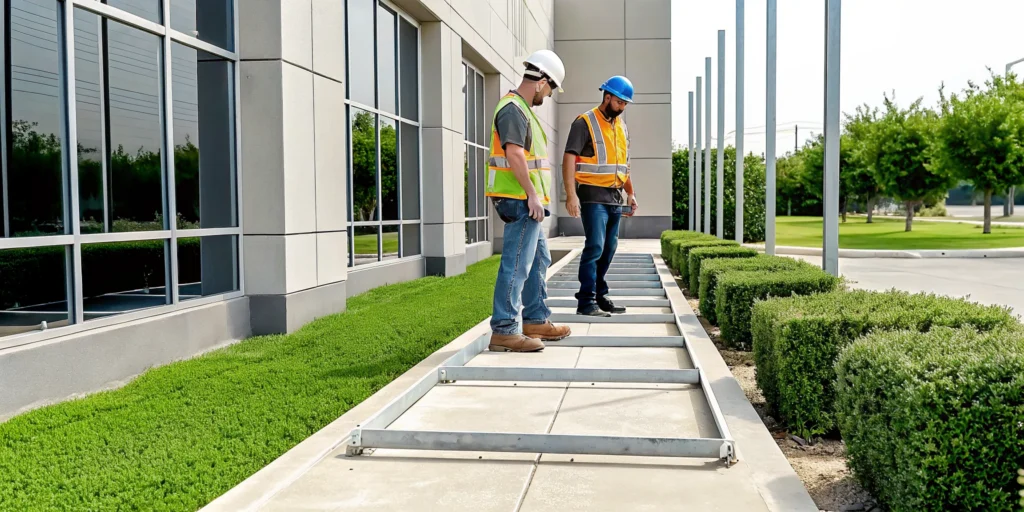
Commercial Foundation Repair Dallas for DFW Properties
Commercial foundation repair Dallas property owners need is different from a typical home repair. A slab problem at a retail center, industrial facility, municipal building, office property, or multifamily community can affect tenants, customers, safety plans, drainage, access, and operating schedules. The right repair plan starts with a careful assessment, clear documentation, and a contractor that understands North Texas clay soil and commercial site logistics.
Request a free commercial foundation repair estimate or call 940-365-4221 to schedule an assessment with Solid Base Foundations.
Solid Base Foundations brings 18+ years of hands-on experience in Greater Dallas foundation repair, concrete repair, and drainage-related structural solutions. The team is affiliated with the Foundation Supportworks network, which gives commercial property owners access to proven products, engineering-backed systems, and manufacturer warranty support. This guide explains how to recognize risk, plan the inspection, compare repair options, reduce disruption, and protect your property after the work is complete.
How does commercial foundation repair Dallas service begin?
Solid Base Foundations begins commercial foundation repair Dallas projects with a property-specific assessment that connects visible damage to soil movement, drainage, slab behavior, and operational needs. The goal is not only to identify movement, but to build a workable plan for occupied commercial properties.
Commercial buildings in Dallas-Fort Worth sit on clay-heavy soils that expand when wet and shrink when dry. That cycle can stress slabs, grade beams, piers, sidewalks, parking approaches, loading areas, and utility penetrations. A property manager may first notice the issue as a tenant complaint, a recurring maintenance item, or a door that no longer closes correctly. An industrial facility may see problems through rack alignment, warehouse floor settlement, or water moving toward the building after storms.
A useful assessment should document the symptoms, the likely drivers, and the business constraints around the repair. For example, a retail property may need work staged outside customer traffic hours. A municipal building may require public access planning. A warehouse may need coordination around docks, forklifts, and shift schedules. These factors do not change the physics of foundation movement, but they do change how the repair is planned.
What to prepare before the inspection
- Photos and dates: Document cracks, settlement, water intrusion, or doors that stick, especially if the symptoms are changing.
- Tenant or staff reports: Note where people experience uneven floors, trip hazards, or recurring access issues.
- Drainage history: Identify downspout discharge, ponding, irrigation, grading, or plumbing events near the problem area.
- Access limits: Share loading dock schedules, security requirements, parking constraints, and areas that cannot be shut down.
- Previous repairs: Provide past reports, warranty records, structural notes, or concrete repair history if available.
These details help the inspection focus on the areas that matter most. They also help the repair proposal reflect the realities of your building, not just the square footage of the problem area.
What warning signs should property managers document?
Solid Base Foundations recommends documenting commercial warning signs as soon as they appear, including cracks, uneven slabs, drainage problems, sticking doors, separated masonry, and recurring concrete settlement. Early documentation helps property teams compare changes over time and request the right repair scope.
The most important warning signs are the ones that repeat, grow, or appear in clusters. A single hairline crack may not mean a structural repair is needed, but cracks combined with door movement, slab settlement, water issues, and exterior separation deserve a closer look. In commercial properties, small symptoms can also carry larger operational consequences because the building supports employees, visitors, tenants, inventory, equipment, and public access.
Interior and structural indicators
- Cracks in drywall, block, brick, tile, or concrete floors
- Doors and windows that stick, drag, or no longer latch
- Uneven floors, soft transitions, or sloping slab areas
- Gaps around frames, trim, storefront systems, or exterior walls
- Repeated patch failures in the same area
Exterior and site indicators
- Sidewalks, ramps, or entries that have settled into trip hazards
- Loading areas or approaches that hold water or shift
- Soil pulling away from the foundation during dry periods
- Ponding water near the building after rainfall
- Concrete panels or flatwork that continue to sink after patching
Commercial teams should avoid treating every symptom as a cosmetic issue. Repeated concrete settlement, poor drainage, and slab movement can create liability concerns and tenant frustration. If the property is in Dallas, Denton, Lewisville, Plano, Allen, or another DFW-area market, North Texas soil movement should be part of the evaluation.
Commercial needs versus residential foundation repair
Solid Base Foundations approaches commercial repair with the same structural discipline as residential work, but the planning must account for tenants, traffic, safety, documentation, warranties, and phased access. Commercial repairs succeed when the repair method and operating plan are designed together.
A commercial property may need more coordination before repair begins. The owner or manager may need to notify tenants, protect public paths, maintain fire access, schedule work around deliveries, or coordinate with facility staff. That is why the best commercial foundation repair plans include both technical recommendations and a practical sequence for getting the work done.
The assessment also needs to distinguish between foundation movement, sunken concrete, drainage pressure, and surface-level deterioration. These conditions can look similar to a busy property team, but they may require different solutions. Foundation support may be appropriate when structural elements have moved. Concrete lifting may be appropriate for settled flatwork. Drainage improvements may be needed when water is contributing to soil movement.
| Commercial concern | Why it matters | Planning response |
|---|---|---|
| Tenant disruption | Repairs can affect access, parking, noise, or business hours. | Phase work by building area and communicate timing early. |
| Public safety | Uneven slabs and entry settlement can create trip hazards. | Prioritize walkways, ramps, doors, and high-traffic areas. |
| Operational access | Loading docks, equipment routes, and parking areas may need to stay open. | Plan staging, barriers, and work windows before crews arrive. |
| Documentation | Owners may need records for leases, capital planning, or warranty files. | Keep inspection findings, proposals, product information, and warranty terms together. |
For broader structural context, property teams can review Solid Base Foundations’ foundation repair services guide and then request a commercial assessment for site-specific recommendations.
Which repair options fit commercial foundations and slabs?
Solid Base Foundations matches repair options to the cause and location of movement. Commercial properties may need pier systems for foundation support, PolyLevel for settled concrete, drainage improvements, or a combined plan that addresses both structural movement and surface hazards.
There is no responsible one-size-fits-all recommendation for commercial foundation repair. A building with structural settlement needs a different approach than a sidewalk with voids below the slab. A warehouse floor with localized settlement needs different planning than an office building with exterior wall separation. The inspection should explain what is moving, why it appears to be moving, and which system is designed for that condition.
Foundation support
When the foundation itself needs stabilization, engineered pier systems may be part of the repair design. Solid Base Foundations works through the Foundation Supportworks network, giving property owners access to proven foundation repair products, training, and manufacturer-backed systems. Qualifying pier systems include a 25-year manufacturer warranty, which is important for commercial owners who need long-term documentation.
Commercial concrete lifting
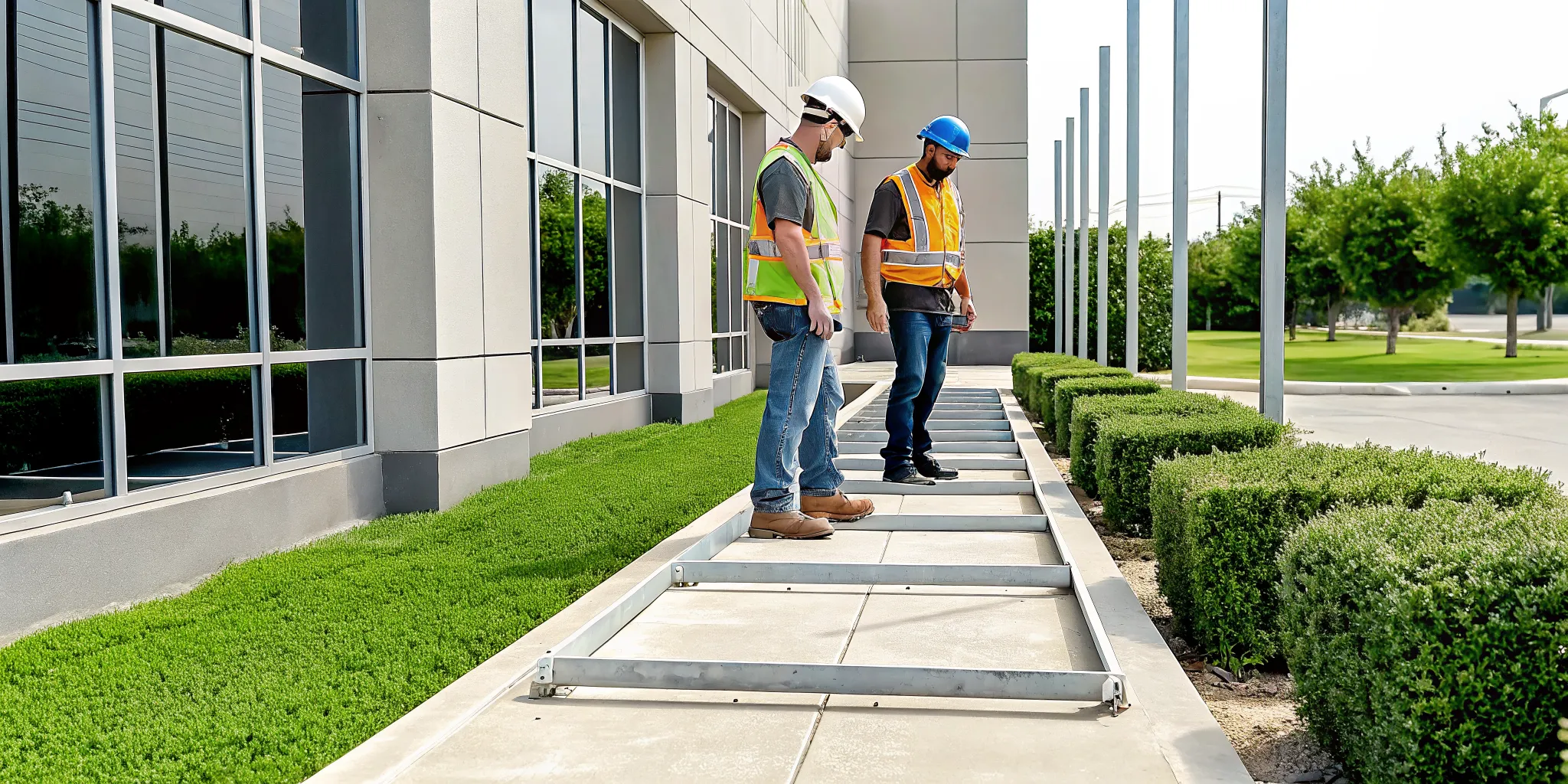
Settled concrete can create access problems around sidewalks, entries, warehouse slabs, parking areas, and exterior approaches. PolyLevel is a polyurethane concrete lifting solution that can fill voids and raise settled concrete in many applications. It is especially useful for commercial sites because it cures in about 15 minutes, helping reduce downtime compared with methods that require longer closures. Learn more about PolyLevel concrete lifting and how it may apply to sunken commercial concrete.
Drainage and soil support
Because DFW clay soil responds strongly to moisture changes, drainage cannot be ignored. Water collecting near the foundation can contribute to soil expansion, erosion, and repeated movement. A repair plan may include recommendations around grading, discharge, surface water control, or related improvements when drainage is part of the problem.
Need help comparing options? Call 940-365-4221 or request a free no-obligation estimate from Solid Base Foundations.
How can repairs reduce tenant and business disruption?
Solid Base Foundations reduces disruption by planning commercial repair around access, safety, sequencing, communication, and the repair method itself. A phased plan can help property teams keep tenants, customers, employees, and equipment moving while the foundation or concrete work is completed.
Disruption is often the difference between a technically correct repair and a successful commercial project. Property teams need to know which entrances, parking areas, suites, sidewalks, or operating zones may be affected. They also need enough notice to communicate with tenants, adjust traffic flow, and protect high-use areas.
A good work plan identifies where crews will enter, where materials will be staged, what areas require barriers, and which activities create noise or temporary access limits. It should also identify work that can be completed quickly. For example, PolyLevel’s short cure time can be a major advantage when the issue is settled concrete in a walkway, drive, or slab area that needs to reopen quickly.
Disruption-reduction checklist
- Confirm priority zones: Identify entrances, tenant suites, loading areas, and customer paths that must stay open when possible.
- Set communication points: Decide who receives updates and who can approve changes if conditions shift.
- Phase the repair: Divide work by area so the whole property is not affected at once.
- Plan safety controls: Use barriers, signage, and clear routes around work areas.
- Keep records: Save the repair proposal, product information, warranty details, and completion notes for future reference.
Solid Base Foundations serves Greater Dallas-area properties and understands that commercial repairs must respect schedules as well as structures. The earlier the team can assess the property, the easier it is to plan before damage becomes more disruptive.
What affects commercial foundation repair cost and timelines?
Solid Base Foundations estimates commercial foundation repair after reviewing site conditions, building movement, repair access, product needs, and scheduling constraints. Cost and timelines depend on the scope, not a generic square-foot price, so a free site-specific estimate is the reliable next step.
Commercial foundation repair cost can vary widely because buildings, soils, access, and repair goals vary widely. A small entry slab that needs lifting is not the same as a structural foundation repair under an occupied building. A site with open access is different from a site with limited parking, tenant restrictions, or active industrial operations. The estimate should reflect the actual condition and the plan required to complete the work safely.
Several factors commonly influence the final recommendation. Soil movement and drainage can affect how much stabilization is needed. The repair method affects labor, materials, and cure time. Access affects staging and crew movement. Occupancy affects work hours and phasing. Warranty requirements may also matter for owners who need long-term protection and documentation for capital planning.
Key cost and timeline factors
- Repair type: Foundation support, concrete lifting, drainage improvements, or a combined scope.
- Damage extent: Localized movement usually differs from building-wide settlement.
- Access: Tight sites, interior work areas, security controls, and parking limits can affect production.
- Operating schedule: Tenant hours, delivery windows, and public access can require phased work.
- Warranty and documentation: Product selection and manufacturer-backed warranty terms may influence the final plan.
For owners comparing structural and concrete repair needs, Solid Base Foundations also provides concrete repair solutions for sinking or uneven slabs. A combined inspection can help determine whether the property needs foundation support, concrete lifting, drainage correction, or more than one solution.
Why choose Solid Base Foundations for DFW commercial properties?
Solid Base Foundations combines 18+ years of Greater Dallas experience, Foundation Supportworks network resources, PolyLevel concrete lifting, and free estimates for commercial property owners. The team focuses on practical repairs that fit DFW soil conditions and real operating schedules.
Commercial property owners need more than a quick opinion. They need a contractor who understands the local market, can explain the source of movement, and can provide options that fit the building’s use. Solid Base Foundations serves homeowners and property owners across the Greater Dallas area, including Dallas, Denton, Lewisville, Plano, Allen, and surrounding communities.
The company’s Foundation Supportworks affiliation is a meaningful advantage for commercial projects because it supports access to patented products, training, and engineering-backed repair methods. The exclusive PolyLevel dealer advantage is also important when a property has sunken concrete around entries, slabs, sidewalks, or other high-use areas where quick return to service matters.
Solid Base Foundations also emphasizes a free, no-obligation estimate. That matters for property managers and owners who need to evaluate scope, timing, and budget before submitting recommendations to stakeholders. Instead of guessing from photos or applying a generic fix, the team can inspect the property and explain a plan tied to the building’s conditions.
To see where Solid Base Foundations works, review the service area or contact the team for a commercial assessment.
Frequently Asked Questions
What is the average cost of commercial foundation repair in Dallas?
Commercial foundation repair cost depends on the building size, movement pattern, soil conditions, repair method, and access requirements. A small concrete-lifting project is very different from structural stabilization under an occupied building. Solid Base Foundations provides free estimates so property owners can make decisions from site-specific findings.
How do I know if my commercial property needs foundation repair?
Warning signs include cracks, uneven floors, sticking doors, exterior separation, drainage problems, settled sidewalks, and repeated slab movement. If several symptoms appear together or continue to change, schedule an assessment. Solid Base Foundations can evaluate whether the issue points to foundation movement, concrete settlement, drainage pressure, or another cause.
Does commercial foundation repair include concrete lifting?
It can, depending on the problem. Foundation repair addresses structural movement, while concrete lifting addresses settled slabs, sidewalks, approaches, or other flatwork. Solid Base Foundations offers PolyLevel, which can lift and stabilize many concrete areas and cures in about 15 minutes.
How long does commercial foundation repair typically take?
The timeline depends on scope, access, occupancy, and repair method. Some concrete-lifting work can return to service quickly because of PolyLevel’s short cure time. Foundation support projects require a plan based on inspection findings, repair access, and the need to phase work around tenants or operations.
Does commercial foundation repair come with a warranty?
Warranty terms depend on the repair design and products used. Solid Base Foundations uses proven systems through the Foundation Supportworks network, and qualifying pier systems carry a 25-year manufacturer warranty. Ask for warranty details during the estimate so your records are complete.
Ready to schedule commercial foundation repair in Dallas?
Solid Base Foundations is ready to inspect your DFW commercial property, explain the repair options, and help you plan work around tenants, customers, and operations. Call 940-365-4221 or request a free commercial foundation repair estimate today. You will get a clear assessment, practical next steps, and guidance from a local team with 18+ years of Greater Dallas foundation repair experience.