
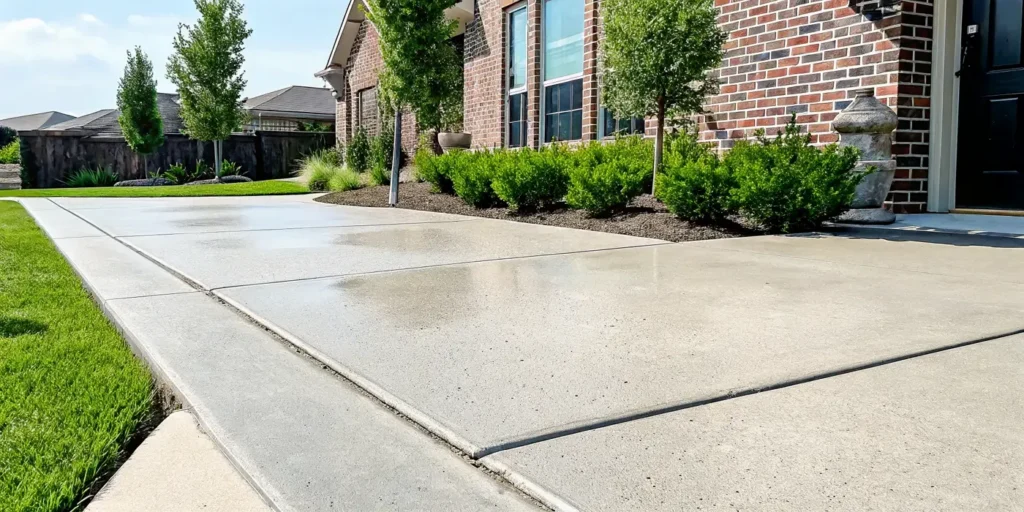
A Dallas driveway can look sound from the curb while water, dirt, and contaminants are already entering its porous surface. Over time, that exposure can contribute to pitting, flaking, staining, and cracking. Professional concrete sealing Dallas TX homeowners can rely on adds a durable layer of protection, but only after existing cracks, settlement, and drainage concerns have been evaluated.
Concerned about a driveway, patio, sidewalk, or pool deck? Request a free concrete repair estimate from Solid Base Foundations before surface damage becomes more difficult to address.
Concrete sealing protects a slab against moisture, dirt, and contaminants. It does not lift sunken concrete, close structural cracks, or correct poor drainage. The best plan is repair first, then professional sealing with a product suited to the surface and its condition.
This guide explains where sealing helps, how to tell when concrete needs attention, what professional preparation involves, and where SealantPro fits into a complete repair-first plan for Dallas-area homes.
Concrete sealing Dallas TX: What does it protect?
Concrete looks solid, but its surface contains pores that can admit moisture and contaminants. A quality penetrating sealer reduces that exposure. It can help preserve the surface, make routine cleaning easier, and slow the damage that leaves concrete looking worn before its time.
Sealing is preventive protection rather than a structural repair. It works best on sound concrete or after a professional has corrected damage that a coating cannot solve. If a slab rocks, slopes toward the house, has wide cracks, or sits lower than an adjoining section, start with an evaluation instead of covering the symptoms.
Moisture and surface deterioration
Repeated moisture exposure can contribute to pitting, flaking, and cracking at the surface. Dallas weather adds long periods of heat plus occasional hard freezes and heavy rain. Keeping moisture from entering the top of a slab reduces one source of stress without changing the soil or support beneath it.
Dirt, spills, and everyday contaminants
Driveways encounter vehicle fluids, tire residue, soil, and leaf stains. Patios and pool decks see food, drinks, sunscreen, and chlorinated water. Sealing gives those contaminants less opportunity to soak into the concrete. Prompt cleanup still matters, but a protected surface is generally easier to maintain.
UV exposure and appearance
Some coatings can yellow or discolor under sunlight. SealantPro is UV resistant and designed not to discolor over time. That makes it suitable for exposed outdoor concrete where Dallas sun is a constant concern. It protects without turning a natural-looking slab into a glossy decorative coating.
Which concrete surfaces benefit from sealing?
Any exterior concrete exposed to weather and routine use may benefit from sealing. The right approach depends on surface condition, traction needs, drainage, and the type of wear the slab receives. A professional should evaluate those details rather than applying the same treatment everywhere.
| Surface | Common concern | What to check before sealing |
|---|---|---|
| Driveway | Vehicle stains, pitting, and cracks | Settlement, joints, and active cracks |
| Patio | Food stains, weathering, and drainage | Pooling water and surface condition |
| Sidewalk | Uneven sections and edge deterioration | Trip hazards and slab movement |
| Pool deck | Frequent moisture and contaminants | Traction, cracks, and drainage |
Driveways and garage approaches
A driveway carries repeated vehicle loads and often shows the first obvious signs of wear. Dark staining and small surface pits are reasons to inspect it. Uneven sections or widening cracks require more than sealer. Solid Base Foundations can determine whether lifting, crack repair, joint sealing, or surface protection should come first.
Patios and pool decks
These gathering spaces receive frequent foot traffic and moisture. Before sealing, a professional should check for low spots where water collects and evaluate any cracks. Around a pool, surface traction must also remain appropriate. Protective treatment should never create an avoidable slip concern.
Sidewalks and walkways
Walkways are easy to overlook until one section becomes a trip hazard. Sealing can protect a stable surface, but it cannot make uneven sections level. If one panel has settled, learn how professional concrete repair and leveling can restore support before protection is applied.
When should Dallas homeowners seal concrete?
The best time to consider sealing is before surface deterioration becomes severe. An annual visual check can reveal early changes and help you decide whether the slab needs cleaning, repair, or professional protection. Do not wait for a large crack or a major height difference to appear.
Signs that call for an evaluation
- Water quickly darkens the concrete instead of remaining on the surface.
- The surface shows pitting, flaking, or a dusty texture.
- Stains have become harder to remove through normal cleaning.
- Cracks are appearing, widening, or collecting debris.
- Water pools on the slab or near its edges after rain.
- One section sits higher or lower than an adjoining section.
The last three signs may point to concerns that sealing alone cannot address. Review this guide to cracked concrete to understand why identifying the cause matters before choosing a fix.
A simple water absorption check
Place a small amount of clean water on several representative areas. If it quickly soaks in and darkens the surface, the concrete may no longer have effective protection. If it beads, an existing treatment may still be working. This check is only a starting point. It does not reveal hidden settlement, drainage problems, or the cause of a crack.
New concrete and previously treated slabs
New concrete must be ready for the selected product before application. Previously sealed slabs may also require special preparation or compatibility checks. Because products differ, follow product-specific requirements rather than relying on a universal waiting period or reapplication schedule.
If you are unsure whether the slab needs repair or protection, schedule a free estimate. A repair-first evaluation can prevent a cosmetic treatment from hiding a larger concern.
What happens before professional concrete sealing?
Preparation determines whether a sealing project protects the slab as intended. Applying sealer over dirt, active damage, or unresolved movement can produce a disappointing result. A professional plan begins with the concrete itself, not the container of product.
- Inspect the slab. Identify surface deterioration, cracks, settled areas, joints, drainage, and previous coatings.
- Choose the needed repairs. Lift or stabilize sunken sections and address cracks or joints where appropriate.
- Clean the surface. Remove dirt and contaminants that could interfere with penetration or bonding.
- Allow proper conditions. Confirm the slab and weather meet the selected product’s application requirements.
- Apply protection evenly. Treat the prepared concrete according to the product specification.
- Respect cure time. Keep traffic off the area until the product is ready for use.
Repair and level before sealing
A sealer cannot raise a settled panel or reconnect a moving crack. Solid Base Foundations uses PolyLevel to lift and level suitable sunken concrete. Cracks and joints may then be treated with NexusPro where appropriate. These steps address physical gaps and unevenness before SealantPro protects the surface.
Clean without damaging the concrete
The surface needs to be free of loose debris and contaminants. Aggressive pressure washing or harsh chemicals can damage concrete when used incorrectly. Professional preparation accounts for the slab’s condition and the protective product that will follow.
Check drainage around the slab
Sealing the top surface does not correct water that repeatedly pools beside or beneath concrete. Downspouts, grading, and low spots should be considered during the evaluation. If water management is a concern around the home, review Solid Base Foundations’ guidance on larger concrete cracks and the conditions that can worsen them.
How SealantPro fits into a concrete repair plan
SealantPro is a professional concrete protection product offered as part of Solid Base Foundations’ concrete repair services. It penetrates the concrete and bonds with it at a molecular level. One application is designed to permanently protect against water, dirt, and other contaminants.
A repair-first system
A complete plan may use more than one product because different problems require different solutions. PolyLevel is used to lift and level suitable sunken slabs. NexusPro seals cracks and control joints. SealantPro protects the prepared concrete surface. The evaluation determines which steps a property actually needs.
Verified SealantPro benefits
- Permanently bonds with the concrete in one application.
- Helps protect against moisture damage that causes pitting, flaking, and cracking.
- Protects against water, dirt, and other contaminants.
- Is UV resistant and will not discolor over time.
- Reduces ice bonding, which can make ice easier to remove.
- Can extend concrete life by three to five times.
SealantPro dries in minutes and fully cures in about six hours, allowing the concrete to be used the same day. Actual project timing depends on site and weather conditions, so follow the instructions provided for your installation.
What SealantPro does not do
SealantPro does not lift a sunken slab, close a structural crack, or fix poor drainage. It also does not remove the need to clean spills or inspect the concrete. Clear expectations are important: sealing protects a properly prepared surface, while repair and water management address other parts of the problem.
How to care for sealed concrete
Professional protection reduces maintenance demands, but basic care still helps the surface look its best. Treat new damage as a reason to investigate rather than assuming the seal has failed. Slab movement and impact damage can occur independently of surface protection.
Keep the surface clean
Remove leaves, soil, and spills promptly with a soft broom, water, and a concrete-safe cleaner when needed. Avoid metal scrapers and unnecessarily harsh chemicals. If you use a pressure washer, choose a suitable setting and technique so you do not etch or pit the surface.
Watch for movement and drainage changes
Inspect the area after heavy rain. New pooling, widening cracks, or a change in slab height deserves attention. Surface sealer can reduce moisture entry through the concrete, but it cannot stop soil movement or redirect runoff. Early evaluation often gives you more repair options.
Know when to call a professional
Call when a crack grows, a slab becomes uneven, water repeatedly collects, or the surface begins to deteriorate. A professional can distinguish cosmetic wear from a condition that needs lifting, joint treatment, drainage work, or another repair. For more detail, see this overview of concrete crack repair options.
Frequently asked questions about concrete sealing in Dallas
Does sealing fix cracked or uneven concrete?
No. Sealing protects the surface against moisture and contaminants. Cracked, uneven, or sunken concrete should be evaluated and repaired as needed before sealing.
Can SealantPro be applied to new concrete?
Yes, SealantPro can be applied to new concrete when the surface is ready under the product’s application requirements. A professional should confirm timing and preparation for the specific slab.
How long does SealantPro take to cure?
SealantPro dries in minutes and fully cures in about six hours. The concrete can be used the same day, subject to the conditions and instructions provided for the project.
How often does SealantPro need to be reapplied?
SealantPro penetrates and permanently bonds with concrete in one application. Unlike products that require routine reapplication, it is designed to provide lasting protection.
Should I seal concrete that has drainage problems?
Have the drainage concern evaluated first. Sealing may protect the surface, but it will not redirect pooling water or correct conditions beneath the slab.
Protect your Dallas concrete with a repair-first plan
A durable result starts with an honest assessment of the slab. If the concrete is stable and properly prepared, SealantPro can provide lasting protection against moisture, dirt, and contaminants. If the slab has settlement, cracks, or drainage concerns, Solid Base Foundations can recommend the right repair steps before sealing.
Solid Base Foundations serves homeowners across the Greater Dallas area with concrete repair and protection solutions for driveways, patios, sidewalks, and pool decks. Request your free concrete repair estimate or call (940) 465-1662 to discuss your property.