
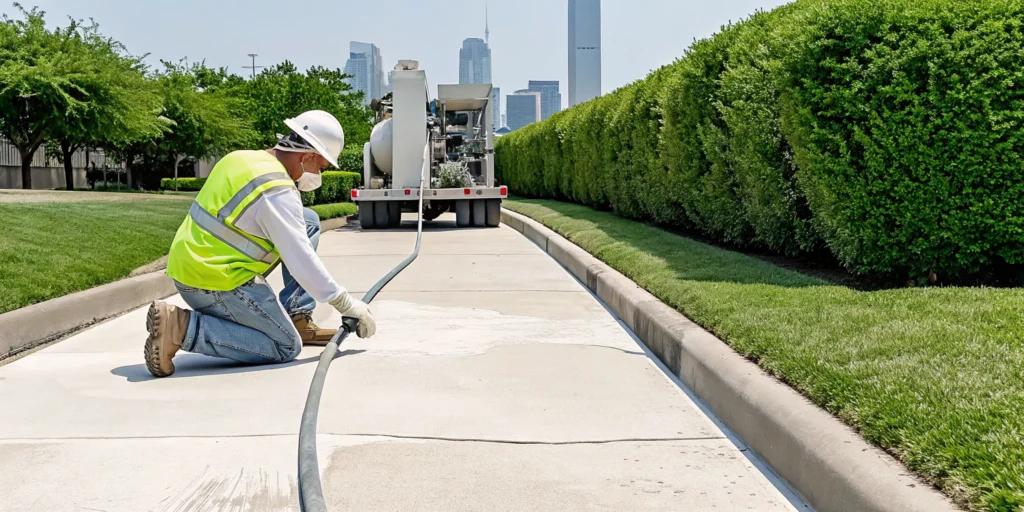
That sinking feeling you get when you see a new crack in your patio or a trip hazard on your sidewalk is a familiar one for many homeowners. Your first thought might be about the massive cost and disruption of tearing it all out and starting over. The good news is you likely don’t have to. Concrete leveling is a smart, effective repair process that lifts sunken slabs back into place. It’s faster, cleaner, and much more affordable than a full replacement. But the big question is always about the budget. Understanding how much does concrete leveling cost in Dallas is the first step to making a confident decision. This guide will walk you through everything you need to know, from the factors that influence price to why this type of concrete repair is a wise investment for your home.
Key Takeaways
- Leveling is your most cost-effective fix: This repair method is significantly more affordable, saving you 50% to 70% compared to the cost and disruption of a full concrete replacement.
- Know what determines your project’s cost: The final price is based on specific variables, including the size of the repair area, the severity of the damage, and the amount of material needed to stabilize the slab.
- Choose your contractor carefully: A lasting repair requires a reputable professional, so look for a licensed and insured team that provides on-site estimates, a written contract, and a clear warranty.
What Is Concrete Leveling and Why Should You Care?
If you’ve noticed your driveway, patio, or sidewalk starting to sink or look uneven, you’ve probably wondered what your options are. The good news is you don’t have to jump straight to a full, expensive replacement. Concrete leveling is a repair process that fixes sunken concrete slabs by lifting them back to their original position. Think of it as a targeted fix for your home’s concrete surfaces. We inject a specialized material beneath the slab, which fills any voids and gently raises the concrete until it’s level again.
The biggest reason you should care about this process is the cost savings. Concrete leveling is a smart, effective solution that is significantly more affordable than tearing out and pouring new concrete. In fact, this type of concrete repair can save you a substantial amount of money, sometimes up to 70% compared to a full replacement. It’s also much faster and less disruptive. Instead of turning your yard into a construction zone for days, we can often complete a leveling project in just a few hours, letting you get back to using your driveway or patio the very same day. It’s a practical fix that protects your property and your wallet.
Signs Your Concrete Needs Leveling
Spotting the need for concrete leveling is usually straightforward. Take a walk around your property and look for a few key indicators. The most obvious sign is a visible slope or dip in your concrete where there wasn’t one before. You might notice your driveway has settled where it meets the garage, or one section of your sidewalk is higher than the next, creating a tripping hazard. Many Dallas homeowners see this with their patios, which can sink and cause rainwater to pool near their home’s foundation. Other common signs include cracked driveways, bumpy entryways, or a hollow sound when you tap on the concrete. If you see any of these issues, it’s a good sign that the soil underneath has shifted, and your concrete could use a lift. You can see examples of these problems in some of our past projects.
The Risks of Ignoring Uneven Concrete
Putting off a concrete repair might seem harmless, but ignoring uneven slabs can lead to bigger, more expensive problems down the road. First and foremost, uneven concrete is a major trip hazard. A raised sidewalk edge or a sunken patio step can easily cause a fall, creating a safety risk for your family and visitors, and a potential liability issue for you as a homeowner. Beyond safety, sinking concrete can also cause structural problems. As the slab settles, it can crack and break apart, worsening the damage over time. This not only looks bad and can lower your property value, but it can also direct water toward your house. Improper drainage is a leading cause of serious foundation issues, and letting water pool against your home is a risk you don’t want to take.
How Much Does Concrete Leveling Cost in Dallas?
Let’s talk numbers. When you see a sunken slab of concrete on your property, one of the first questions that comes to mind is, “How much is this going to cost me?” The answer depends on several factors, which we’ll get into later, but I can give you a solid idea of what to expect for concrete leveling costs here in Dallas.
It’s important to remember that these are just estimates. The only way to get a precise number for your specific situation is to have a professional take a look. Most residential projects, like a driveway or patio repair, will fall into a general price range. For many homeowners, the total cost lands somewhere between $800 and $2,500. More extensive projects using polyurethane foam can average around $2,850.
While that might sound like a lot, here’s the good news: choosing a concrete repair solution like leveling is almost always more affordable than the alternative. In fact, it can save you between 50% and 75% compared to the cost of tearing out and replacing the entire concrete slab. When you think about it that way, leveling isn’t just a repair; it’s a smart investment in your property. The best first step is always to get a free estimate to understand the exact scope and cost for your home.
Typical Costs for Driveways, Patios, and Sidewalks
When you’re budgeting for a repair, it helps to have a starting point. For most common residential projects in the Dallas area, like a tilted patio, a sunken sidewalk section, or an uneven driveway, you can expect the cost to be somewhere in the range of $800 to $2,500. Of course, a very small and simple job could be less, while a larger, more complex one might be more. This range covers the typical scenarios we see every day. Think of it as a reliable ballpark figure that helps you plan financially and avoid any major surprises when you start getting quotes for your project.
Breaking Down the Cost Per Square Foot
Another way to look at the cost is by the square foot. This can be helpful for getting a rough estimate, especially if you know the approximate size of the area that needs attention. For polyurethane foam leveling, a common price point is between $5 and $10 per square foot. So, if you have a 100-square-foot section of a patio that has sunk, you could estimate a cost between $500 and $1,000. Remember, this is just one piece of the puzzle. The final price will also depend on the severity of the sinking and how much material is needed to lift the slab back into place, but it’s a great way to get a preliminary idea.
Cost Comparison: Mudjacking vs. Polyurethane Foam
You have two main options for concrete leveling: mudjacking and polyurethane foam. Generally, mudjacking is the less expensive method upfront, with projects ranging from about $585 to over $5,400. Polyurethane foam leveling, a more modern and durable solution, typically costs a bit more, with prices ranging from around $875 to over $8,100. While foam might have a higher initial price tag, it offers long-term benefits that often make it the better value. The most important takeaway is that both methods are significantly more cost-effective than a full replacement, saving you from 50% to 75% of what you would spend to tear out and pour new concrete.
6 Factors That Affect Your Concrete Leveling Cost
When you get a quote for concrete leveling, the price isn’t pulled out of thin air. Several key factors determine the final cost of your project. Understanding these variables will help you make sense of your estimate and see why a one-size-fits-all price just doesn’t work for this kind of repair. From the size of the slab to the soil underneath it, a professional contractor assesses every detail to create an accurate plan.
Each project is unique, especially here in the Dallas area where our soil adds an extra layer of complexity. A thorough evaluation ensures the repair is not only effective but also long-lasting. Let’s walk through the six main factors that influence the cost of lifting and leveling your concrete, so you know exactly what to expect.
1. The Size of the Repair Area
It might seem obvious, but the bigger the problem area, the more the project will cost. A single sunken sidewalk square is a much smaller job than an entire two-car driveway that has settled. The total square footage directly impacts the amount of material needed to lift the slab and the amount of labor required to do the job right.
However, it’s not just about the surface area. Our team also assesses the size of the void underneath the concrete. A large slab with a small void might cost less to repair than a smaller slab with a massive, deep void beneath it. We measure both the length and width of the slab and the depth of the empty space to calculate the precise amount of leveling material needed.
2. How Severe the Damage Is
The condition of your concrete plays a huge role in determining the cost and even the viability of a repair. A slab that is still in one piece, even if it has sunk several inches, is a straightforward candidate for leveling. However, if the concrete is severely cracked or broken into many small pieces, the project becomes more complex.
If a slab has shattered into sections smaller than about three feet wide, it may have lost its structural integrity. In these cases, lifting the pieces without causing more damage is difficult, and the leveled surface won’t be stable. When the damage is too extensive, a full concrete repair or replacement becomes the more practical and lasting solution. An honest contractor will assess the damage and tell you when leveling is no longer the best option.
3. Our Unique Dallas Clay Soil
Living in the Dallas area means dealing with our infamous “black gumbo” clay soil. This type of soil is highly expansive, meaning it swells up like a sponge when it gets wet and shrinks dramatically when it dries out. This constant cycle of expansion and contraction puts immense stress on the concrete slabs sitting on top of it, causing them to shift, settle, and crack over time.
This soil is a primary reason so many homes in our service area experience concrete and foundation issues. When we prepare a quote, we consider the impact of this soil. A successful repair involves not only lifting the concrete but also ensuring the base is stabilized against future soil movement, which is a key part of our professional approach to foundation repair.
4. How Easy It Is to Access the Site
Logistics matter when it comes to construction and repair work. The accessibility of the sunken concrete can directly influence the time and labor needed for the job. A sunken front walkway is typically easy to get to with our equipment. However, a pool deck in a fenced-in backyard with no direct entry point presents a challenge.
If our team has to manually carry equipment through tight spaces or navigate around landscaping and other obstacles, it adds time to the project. This extra labor and specialized setup will be reflected in the final cost. During your free estimate, we’ll evaluate the site to determine the best and most efficient way to access the area, ensuring a smooth process from start to finish.
5. The Number of Injection Points Needed
Concrete leveling works by injecting a specialized material through small holes drilled into the sunken slab. This material fills the voids underneath and gently lifts the concrete back into place. The number of these injection points is a key factor in your project’s cost. We don’t just guess where to drill; we strategically map out the injection points based on the slab’s size and the location of the voids.
More injection points are needed for larger slabs or for slabs that require a significant lift. Each point requires careful drilling and injection to ensure a controlled and even lift. You can see examples of this precise process in photos of our work. The total number of points directly relates to the amount of material used and the time spent on the job.
6. The Time of Year
In Dallas, the weather can have a big impact on outdoor projects. The best time for concrete leveling is typically from late fall to early spring when temperatures are milder and the ground moisture is more stable. Working in the extreme heat of a Texas summer can sometimes affect how the leveling materials cure, while heavy spring rains can make the soil underneath too saturated and unstable.
While we can complete projects year-round, scheduling your work during more favorable weather can sometimes make the process smoother and more efficient. Planning ahead is always a good idea. If you’re thinking about a concrete leveling project, don’t hesitate to contact us for a free estimate. We can assess your property and help you schedule the work for the ideal time.
Mudjacking vs. Polyurethane Foam: Which Method Is Right for You?
When you have a sunken or uneven concrete slab, you have two primary repair options: mudjacking and polyurethane foam injection. Both methods work by filling the void beneath the concrete to lift it back into place, but they use different materials and processes. Think of it like choosing between two different tools for the same job; one isn’t always better than the other, but one is usually a better fit for your specific situation.
Choosing the right method for your concrete repair project in Dallas depends on several factors, including your budget, how quickly you need to use the surface, and the underlying cause of the problem. Understanding the pros and cons of each will help you make a confident decision. We’ll walk through the process, price, and ideal scenarios for both mudjacking and polyurethane foam so you can see which one makes the most sense for your home.
Mudjacking: The Process and Price
Mudjacking is the traditional method of concrete leveling. The process involves drilling relatively large holes (about one to two inches in diameter) into the sunken concrete slab. A professional then pumps a slurry, which is a mixture of mud, sand, cement, and water, through the holes. This mixture fills the empty space underneath and hydraulically lifts the slab back to its original position.
This method is often the most budget-friendly option upfront, with costs typically ranging from around $600 to over $5,000, depending on the project’s size. While it’s effective, the material is heavy, adding significant weight to the already unstable soil, and the results can sometimes be less precise than newer methods.
Polyurethane Foam: The Process and Price
Polyurethane foam injection, also known as poly-leveling or polyjacking, is a more modern approach. This technique uses smaller drill holes (about the size of a penny) to inject a high-density, two-part foam beneath the concrete. The foam components mix and rapidly expand, filling every void and lifting the slab with incredible force.
This method is generally more expensive than mudjacking, with costs ranging from about $900 to over $8,000. The higher price is due to the advanced material. However, the foam is extremely lightweight, waterproof, and cures very quickly, making it a durable and long-lasting solution that won’t add stress to the soil below.
Comparing Cure Times and Daily Disruption
One of the biggest differences you’ll notice as a homeowner is the downtime. After a mudjacking repair, the concrete slab needs about 24 to 48 hours to cure before you can put any significant weight on it. That means keeping your car off the driveway or your patio furniture off the patio for a day or two.
In contrast, polyurethane foam cures much faster. The foam is typically fully hardened and ready to bear weight within 15 to 30 minutes of injection. This means you can use your driveway, sidewalk, or pool deck almost immediately after the crew finishes their work. The process is also less disruptive, with smaller holes and less heavy equipment needed on your property.
When to Choose Mudjacking
Mudjacking can be a solid choice if your primary concern is the initial, upfront cost. It’s a proven method that has been used for decades to successfully level concrete. If you have a straightforward leveling project, like a slightly sunken sidewalk section, and you aren’t dealing with highly unstable soil, mudjacking can get the job done effectively. You just need to be prepared for the longer cure time and the heavier material being added to your property’s soil base. It’s a practical solution when budget is the top priority.
When to Choose Polyurethane Foam
Polyurethane foam is often the preferred choice in the Dallas area, and for good reason. Our expansive clay soil is notorious for shifting, and the lightweight nature of the foam won’t add extra weight and contribute to future settling. The foam is also waterproof, which helps prevent future erosion of the soil beneath your slab. If you’re looking for a long-term, durable fix with minimal disruption and a fast cure time, polyurethane foam is an excellent investment in your property. It’s especially ideal for high-traffic areas or when addressing issues related to our region’s challenging foundation conditions.
Is Concrete Leveling Cheaper Than a Full Replacement?
When you see a sunken driveway or a tilted patio slab, your mind might jump straight to the cost and hassle of a full tear-out and replacement. But I have good news: in almost every case, concrete leveling is significantly cheaper. We’re not talking about a small difference, either. Opting for professional concrete repair can save you anywhere from 50% to 70% compared to the cost of pouring new concrete. It’s a huge relief for your budget and a much less disruptive process for your home.
Let’s break down why. A full replacement is a major project. It involves demolishing the old slab, hauling away heavy debris, preparing the ground, and then pouring and finishing brand new concrete. Each of those steps comes with its own labor and material costs. Concrete leveling, on the other hand, works with the slab you already have. By injecting a specialized material underneath, we lift the concrete back into place. This approach uses less material, takes far less time, and requires a smaller crew, which all translates into major savings for you.
To put it in perspective, most residential leveling jobs fall in the range of $800 to $2,500. A full replacement for the same area could easily cost two to three times that amount, often running into many thousands of dollars. By choosing to level your concrete, you’re not just fixing the problem; you’re making a smart financial decision that preserves your property’s value without draining your savings. If the upfront cost is still a concern, it’s worth looking into financing options that can make the repair even more manageable.
How Dallas Clay Soil Impacts Your Project’s Cost
If you’ve lived in the Dallas area for any length of time, you’ve probably heard about our infamous soil. Much of the region sits on expansive clay soil, often called “black gumbo.” This soil acts like a sponge: it swells up dramatically when it gets wet and shrinks just as much when it dries out. This constant cycle of expansion and contraction puts immense stress on the concrete slabs sitting on top of it. Your driveway or patio isn’t resting on a stable surface, but one that’s always moving. This movement is a primary reason we see so many cracked and uneven concrete surfaces around here.
So, how does this tricky soil affect your wallet? The instability it creates often leads to larger voids beneath your concrete slabs than you might find in areas with sandier, more stable soil. When we perform a concrete repair, the cost is partly based on the amount of material needed to lift the slab and fill that empty space. A larger void means more material, which can increase the project’s price. The unpredictable nature of our soil means a small surface crack could be hiding a significant cavity underneath, which is why a thorough, professional evaluation is so important before any work begins.
Large trees near your concrete can make the problem even worse, as their roots draw moisture from the soil and cause it to shrink unevenly. This is the same issue that can lead to serious foundation repair needs. Because we work exclusively in the Greater Dallas area, we have years of experience dealing with black gumbo clay. We know how to properly diagnose the problem and apply a solution that accounts for our unique ground conditions, ensuring your repair lasts. It’s not just about lifting the concrete; it’s about creating a stable base to prevent the problem from quickly returning.
How to Prepare for Your Concrete Leveling Project
Once you’ve decided to move forward with concrete leveling, you’re already on the right track to a safer, more beautiful property. Taking a few simple steps to prepare for the crew’s arrival can make the entire process smoother and more efficient. Think of it as setting the stage for a successful repair. A professional team will handle the heavy lifting, but your prep work ensures they can get started right away and work without any interruptions.
Preparing your home involves three main things: clearing the work area, confirming any local requirements, and thinking about the best time of year for the project. These steps are straightforward and don’t require any special skills, but they make a huge difference for the crew on the ground. By handling these small tasks beforehand, you help us focus on what we do best: delivering a high-quality concrete repair that lasts. Let’s walk through exactly what you need to do.
Clear and Prep the Work Area
Before our team arrives, take a few minutes to clear the concrete slab and the area immediately surrounding it. This means moving things like patio furniture, grills, potted plants, toys, and any vehicles in the driveway. Creating a clear, open space allows our crew to work safely and efficiently without needing to move your belongings themselves. It also prevents your things from getting dusty during the repair process.
While you’re clearing the area, it’s also a good idea to trim back any overhanging branches or overgrown shrubs that might obstruct access to the slab. This is also the perfect time to do one final check on your contractor. Before any work begins, you should always confirm that the company you hired has a valid license and is fully insured. This protects you and ensures you’re working with a qualified, professional team.
Check if You Need a Permit
The question of permits can feel a little intimidating, but for this type of project, the answer is usually simple. Generally, you don’t need a permit for concrete leveling in the Dallas area because it’s considered a maintenance and repair project, not a new construction. This is great news, as it means less paperwork and no delays.
However, there are a couple of exceptions. If your project involves a public sidewalk or is part of a much larger renovation, a permit might be required. Don’t worry, you don’t have to sort this out on your own. A reputable contractor will be familiar with local regulations and can tell you if your specific job needs a permit. We handle this conversation with our clients all the time to ensure every project complies with city codes.
Plan Around the Dallas Weather
Here in Dallas, we know that the weather can have a big impact on any outdoor project. When it comes to concrete leveling, timing is everything. The ideal time to schedule your repair is from late fall to early spring. During these months, the weather is milder and more predictable, and most importantly, the moisture levels in our clay soil are more stable.
Scheduling your project during this window helps ensure the polyurethane foam cures correctly and the lifted slab has the best possible support. While work can certainly be done at other times of the year, planning around the intense summer heat and heavy spring rains can lead to a smoother process and more durable, long-lasting results for your home. Our team is proud to serve the entire Greater Dallas area and understands how to work with its unique climate.
How to Choose the Right Dallas Concrete Leveling Contractor
Finding the right contractor for your concrete leveling project is just as important as choosing the right repair method. A great contractor not only gets the job done correctly but also provides peace of mind, which is something you can’t put a price on. In the Dallas area, you have plenty of options, but you want to partner with a team that has proven experience with our unique local soil and climate conditions. The best professionals are transparent, communicative, and committed to providing a lasting solution, not just a temporary patch.
Making an informed decision comes down to asking the right questions and knowing what to look for. A trustworthy contractor will welcome your questions and provide clear, straightforward answers. Before you commit, take the time to vet your options. Look for a company with a solid reputation, check their reviews, and make sure they have a team of experienced professionals who stand behind their work. This simple step ensures your investment is protected and your concrete is stable for years to come. Think of it as hiring a partner for your home’s health; you want someone who is knowledgeable, reliable, and has your best interests at heart.
Questions to Ask Before You Hire
Before you sign a contract, it’s essential to have clear answers to a few critical questions. A reputable contractor will be happy to provide this information.
Start by asking:
- Are you licensed and insured? This is non-negotiable. A valid license confirms they meet state requirements, and insurance protects you from liability in case of accidents on your property.
- Can you provide a detailed, on-site estimate? A quote given over the phone or via email is just a guess. A true professional will need to visit your property to assess the damage, measure the area, and give you an accurate price.
- Will I receive a written agreement? Always get a contract that outlines the full scope of work, the materials to be used, the project timeline, the final price, and all warranty details.
Red Flags to Watch Out For
Just as there are signs of a great contractor, there are also red flags that should give you pause. Be cautious of any company that uses high-pressure sales tactics or demands a large cash deposit before work even begins. Another warning sign is a vague or verbal-only quote. A professional will always put the details in writing.
While it’s tempting to go with the lowest bidder, an unusually low price can indicate that a contractor is cutting corners, using subpar materials, or planning to add hidden fees later. It’s always a good idea to get two or three detailed estimates to compare. Finally, pay attention to communication. If a contractor is hard to reach or can’t explain their plan clearly, it may be a preview of the experience you’ll have during the project. You can review our work to see what a finished, professional job looks like.
Ask About the Warranty
A warranty is more than just a piece of paper; it’s a contractor’s promise to stand behind their work. Companies that are confident in their methods and materials will always offer a warranty on their repairs. When discussing your project, be sure to ask what the warranty covers and how long it lasts. Find out if it’s transferable to a new owner if you decide to sell your home in the future.
A strong warranty shows that the company is invested in providing a long-term solution, not a quick fix. During your free estimate, this is the perfect time to get clarity on the terms. A contractor who is transparent about their warranty is likely one you can trust to handle your concrete repair project with care and professionalism.
How to Budget for Your Concrete Leveling Project
Thinking about the cost of any home repair can feel a little overwhelming, but creating a budget for your concrete leveling project doesn’t have to be complicated. The good news is that leveling your existing concrete is almost always more affordable than tearing it out and replacing it entirely. In fact, choosing concrete repair can often save you 50% to 75% of the cost of a full replacement. This makes it a smart choice for fixing trip hazards on your patio, driveway, or sidewalk without the massive expense and disruption of a total do-over.
While it’s a cost-effective solution, it’s still an important investment in your home’s safety and value. Planning ahead will help you feel confident and prepared. The two most important steps in building your budget are getting clear, comparable quotes from qualified professionals and understanding what payment or financing options are available to you. By tackling these two items, you can create a realistic financial plan and move forward with fixing that uneven concrete for good. Let’s walk through how to handle both so you can get your project underway.
How to Get and Compare Quotes
The first step to creating an accurate budget is to know exactly what the job will cost. The best way to do this is by getting several detailed quotes from reputable contractors. I always recommend getting at least two or three. This allows you to compare not just the final price, but also the proposed solution, the materials used, and the timeline.
A trustworthy contractor will insist on an in-person inspection before giving you a firm price. A quote given over the phone or through email is just a guess. During the on-site visit, the expert can assess the severity of the damage, the soil conditions, and any access challenges. When you receive the quotes, make sure they are written and itemized. This helps you understand exactly what you’re paying for and ensures there are no surprises. You can schedule a free estimate with our team to get a clear, no-obligation assessment.
Financing Options to Consider
Even though concrete leveling is a great value, the upfront cost can still be a hurdle. Many homeowners are surprised to learn that most companies have a minimum charge for any job, which can range from a few hundred to a couple of thousand dollars, simply to cover their operational costs. Don’t let this initial number discourage you.
Many professional repair companies understand that this is a significant investment and offer flexible payment solutions. Be sure to ask potential contractors about their financing options. Financing allows you to break down the total cost into manageable monthly payments, so you don’t have to put off a necessary repair. Addressing the problem now prevents it from getting worse and potentially more expensive down the road. This makes it possible to protect your property without draining your savings.
Related Articles
- PolyLevel – Solid Base
- Concrete Repair – Solid Base
- Polyurethane Slab Jacking: A Homeowner’s Guide
- How to Fill Large Cracks in Concrete Like a Pro
- Foundation Repair Cost: The Ultimate 2026 Guide
Frequently Asked Questions
How long does a typical concrete leveling project take? One of the best parts of concrete leveling is how quickly it can be done. Most residential projects, like fixing a section of a driveway or a patio, are completed in just a few hours. If you choose polyurethane foam, you can often walk or drive on the surface within 30 minutes after we finish. This means minimal disruption to your day and you get your space back almost immediately.
Is concrete leveling a permanent solution, especially with Dallas clay soil? This is a great question, and it’s a major concern for homeowners in our area. When done correctly with the right materials, concrete leveling is a very durable, long-term solution. Using polyurethane foam is particularly effective here because it’s lightweight and won’t add extra stress to the soil. It also creates a waterproof barrier that helps prevent future soil erosion beneath the slab, providing stability against the constant shrinking and swelling of our clay soil.
What will my concrete look like after the repair is finished? Your concrete will look level and stable, which is the main goal. The repair process itself leaves very little trace. We drill small, penny-sized holes to inject the leveling material. After the slab is lifted, we patch these holes with a cement grout that is carefully blended to match the color and texture of your existing concrete as closely as possible. The result is a safe, even surface with minimal evidence of the work.
Can all sunken concrete be saved with leveling? While concrete leveling is a fantastic solution for most situations, it does have its limits. The ideal candidate is a concrete slab that is mostly intact but has sunk. If a slab is severely cracked or has broken into many small, unstable pieces, it may not have enough structural integrity to be lifted successfully. An honest contractor will assess the condition of your concrete and tell you if leveling is the right approach or if a replacement would be a better long-term investment.
Is the process messy, and will there be a lot of cleanup? Concrete leveling is a surprisingly clean process, especially compared to a full tear-out and replacement. Our team takes great care to respect your property. With polyurethane foam injection, there is very little mess since the equipment is contained and the material is injected directly beneath the slab. We handle all aspects of the job, including a thorough cleanup, so when we leave, the only thing you’ll notice is your newly leveled concrete.