
That sinking feeling you get when you see a crack spreading across your driveway isn’t just in your head; it’s often followed by the dread of a massive repair bill. Many homeowners assume that sunken concrete means you have to start over, facing the high costs of demolition, removal, and pouring a brand-new slab. The good news is that replacement is often the least practical option. A more affordable and efficient solution lies in repairing the slab you already have. This process, known as concrete slab lifting Dallas TX, can restore your concrete to its original position for a fraction of the cost and time, saving your budget from a major hit.
Key Takeaways
- Focus on the root cause, not just the symptom: Slab lifting is a lasting solution because it stabilizes the shifting soil underneath your concrete, addressing the actual reason it sank in the first place.
- Repairing is often better than replacing: For most situations, lifting your existing concrete is more cost-effective, significantly faster, and less messy than a full tear-out and replacement.
- Your contractor’s local experience matters: Choosing a company that specializes in concrete repair and understands the unique challenges of Dallas’s clay soil is the most important step for a durable result.
What Is Concrete Slab Lifting?
If you’ve noticed your driveway, patio, or sidewalk starting to sink and crack, you’re not alone. Over time, the soil underneath concrete can shift, creating hollow spaces that cause the heavy slab to settle. Concrete slab lifting, sometimes called slab jacking, is a repair method designed to fix this exact problem. Instead of tearing out and replacing the entire slab, this technique raises the concrete back to its original, level position.
The process involves injecting a specialized material beneath the sunken slab. This material fills the voids in the soil, stabilizes the ground, and gently lifts the concrete from below. It’s a targeted and efficient way to restore safety and appearance to your property without the major disruption of a full replacement. For many Dallas homeowners, professional concrete repair through slab lifting is the perfect solution for uneven surfaces, correcting everything from a dipping pool deck to a settled interior floor. It addresses the root cause of the problem, the unstable soil, to provide a lasting fix.
How Slab Lifting Works
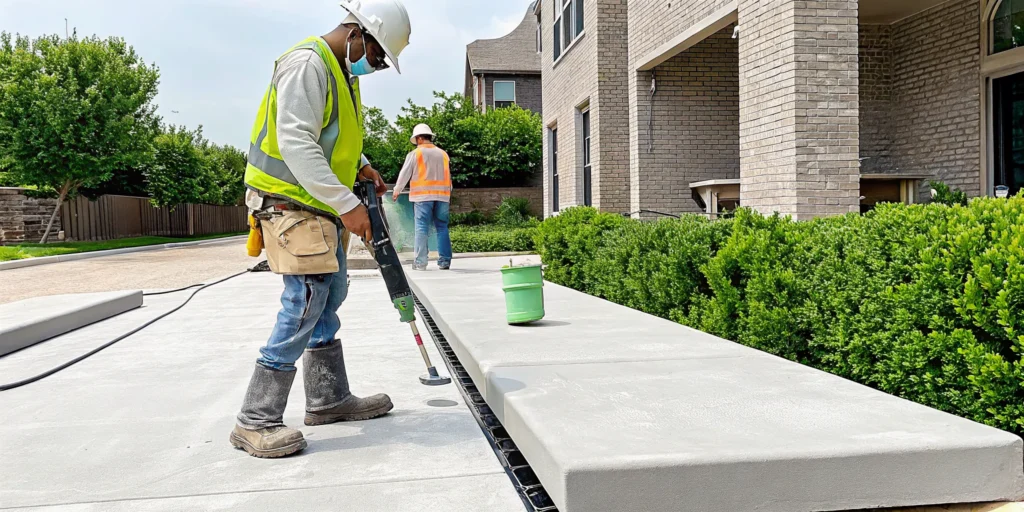
The idea of lifting a massive concrete slab might sound complicated, but the process is surprisingly straightforward and minimally invasive. First, our team drills a few small, discreet holes, about the size of a quarter, through the sunken area of the slab. These holes act as entry points for the lifting material.
Next, we carefully pump a specialized compound through the holes and into the voids beneath the concrete. As the material fills these empty spaces, it creates hydraulic pressure that gently and precisely raises the slab. We monitor the process closely to ensure the concrete returns to its correct level, eliminating trip hazards and restoring proper drainage. Once the slab is level, the small holes are patched, leaving behind a stable, even surface that’s ready for use almost immediately.
Mudjacking vs. Polyurethane Foam
There are two primary methods for lifting concrete: traditional mudjacking and modern polyurethane foam injection. Mudjacking uses a heavy slurry made of cement, soil, and water. While it can be a cost-effective option, the material is heavy, which can add more stress to already weak soil, and the process can be messy.
Polyurethane foam, on the other hand, is a lightweight, high-density material that offers a more advanced solution. The foam expands underneath the slab, filling every gap and contour for superior support. It’s a much cleaner process, cures in minutes, and is waterproof, so it won’t wash away over time. Because it’s so light, it doesn’t burden the soil. You can see the impressive results of this modern technique in our work across the Dallas area.
Why Do Concrete Slabs Sink in Dallas?
If you’ve noticed your driveway, patio, or sidewalk starting to sink and crack, you’re not alone. It’s a common headache for homeowners in the Dallas area, and it’s rarely the fault of the concrete itself. The real problem lies beneath the surface, in the ground supporting that heavy slab. Concrete is rigid, so when the soil underneath it moves, shifts, or washes away, the slab can’t bend. Instead, it cracks and sinks into the void that’s been created.
Here in North Texas, we have a few specific culprits that are notorious for causing soil instability. Understanding what’s happening under your property is the first step toward finding a lasting solution. Most issues come down to three main causes: our unique soil composition, water drainage patterns, and even the beautiful, mature trees in your yard. Let’s look at how each of these factors can lead to sunken concrete.
Expansive Clay Soil
The ground beneath our feet in Dallas is primarily made of expansive clay soil. Think of this soil like a dense sponge. When it rains, the clay absorbs a massive amount of water and swells up. Then, during our hot, dry summers, it loses that moisture and shrinks significantly. This constant cycle of swelling and shrinking creates movement under your concrete slabs. Over time, this movement can cause the soil to settle unevenly, leaving gaps. When a heavy concrete slab is left without solid support underneath, gravity takes over, and it begins to sink and crack. This is a leading reason for foundation repair across our entire service area.
Poor Drainage and Erosion
Water is a powerful force, and if it’s not managed correctly, it can wreak havoc on your concrete. Poor drainage is a major contributor to sinking slabs. When gutters are clogged or downspouts release water right next to a walkway, that water saturates the soil below. Heavy rainfall can soften the ground or even wash it away completely, a process called erosion. This leaves your concrete slab without the stable base it needs to stay level. A yard that slopes toward your home can also direct water under your patio or driveway, creating the same problem. Proper concrete repair often involves addressing these underlying water issues for a permanent fix.
Intrusive Tree Roots
We all love the shade from the mature trees in our neighborhoods, but their root systems can cause trouble. While large roots can sometimes grow directly under a slab and push it upward, a more common issue is soil shrinkage. A large tree can absorb hundreds of gallons of water from the soil every week, especially during dry spells. As the roots pull moisture from the surrounding clay soil, the soil dries out and shrinks, creating voids under your concrete. The unsupported slab then settles into these empty spaces, resulting in uneven surfaces. You can see examples of how we fix this type of damage in our work gallery.
What Problems Can Slab Lifting Fix?
If you’ve noticed a concrete slab around your property starting to sink or crack, you’re not alone. It’s a common issue for Dallas homeowners. The good news is that you don’t always have to resort to a messy and expensive replacement. Concrete slab lifting is a versatile technique that can correct a surprising number of problems, restoring safety and beauty to your home. Let’s look at some of the most common issues that slab lifting can solve.
Sunken Driveways
Your driveway is one of the first things people see, and a sunken, cracked surface can really hurt your home’s curb appeal. More importantly, it can be a hazard. Uneven sections create tripping risks and can even cause problems for your car’s alignment or tires over time. This settling often happens when the soil underneath washes away or compacts. Instead of tearing out the entire driveway, slab lifting raises the concrete back to its original position. This targeted concrete repair is much faster and less disruptive, getting your driveway back in shape without turning your front yard into a construction zone for days.
Uneven Sidewalks and Walkways
An uneven sidewalk is more than just an eyesore; it’s a serious safety liability. A guest, a delivery person, or even a family member could easily trip and fall on a raised concrete edge. In some cities, homeowners are even responsible for maintaining the public sidewalk in front of their house. Thankfully, you don’t have to live with the worry. Concrete lifting is a practical and efficient solution for restoring these surfaces without the headache of a full replacement. We can precisely lift the sunken sections, eliminating the tripping hazard and making your walkways safe and smooth again. You can see the difference this makes in some of our past projects on our Our Work page.
Settled Patios and Pool Decks
Your patio or pool deck should be a place for relaxation, not a source of stress. When these slabs start to sink, they can create dangerous, uneven surfaces where people can trip, especially when the area is wet. A settled patio can also cause water to drain back toward your house, which can lead to bigger foundation problems down the road. Slab lifting services help Dallas property owners fix these uneven, cracked, or sinking concrete slabs. By raising the concrete, we restore a safe, level surface so you can get back to enjoying your outdoor space with peace of mind. It’s a quick fix that lets you get back to your weekend barbecues and pool parties.
Sinking Interior Floors
It can be alarming to see cracks or sloping in your garage floor or, even more concerning, an interior floor inside your home. These issues often point to problems with the soil beneath your home’s slab foundation. Concrete lifting can address sinking corners in a garage, uneven floors under heavy appliances, or settled sections of your main living area. While it’s an effective solution for leveling the slab itself, a sinking interior floor can also be a sign of a deeper issue. It’s always best to have a professional assess the situation to see if more comprehensive foundation repair is needed to address the root cause.
Slab Lifting vs. Replacement: Which Is Better?
When you notice a concrete slab starting to sink, your first thought might be that you have to tear it all out and start over. While replacement is sometimes necessary, it’s often not the only option. Concrete slab lifting is a powerful alternative that can save you a lot of headaches. Deciding between lifting and replacement comes down to a few key factors: how much you want to spend, how quickly you need it done, and what kind of long-term results you’re looking for. Let’s break down the benefits of each approach so you can make the best choice for your Dallas home.
Cost
For most homeowners, the budget is a top concern. This is where slab lifting really shines. Lifting your existing concrete is almost always more affordable than a full replacement. Tearing out old concrete, disposing of it, and pouring a brand new slab is an expensive and labor-intensive process. In contrast, slab lifting uses your existing concrete, saving on materials and labor. The cost for most projects is just a fraction of what you’d pay for replacement, making it a budget-friendly way to restore your property’s safety and appearance. Our team can provide a clear estimate for your specific concrete repair needs.
Time and Disruption
If you can’t afford to have your driveway, patio, or walkway out of commission for days, slab lifting is the clear winner. The replacement process can be messy and long, often taking several days from demolition to the final curing of the new concrete. Slab lifting, on the other hand, is incredibly fast and clean. Most jobs take only an hour or two, and the area is ready for you to walk or drive on the very same day. There’s no heavy equipment tearing up your yard and no waiting around for concrete to dry, which means you can get back to your life with minimal disruption.
Environmental Impact
Choosing to repair instead of replace is also a greener decision. When you replace a concrete slab, all the old, broken material has to be hauled away to a landfill. This creates a significant amount of waste. Slab lifting preserves your existing concrete, which is a much more sustainable approach. The polyurethane foam we use at Solid Base is not only effective but also environmentally friendly. By choosing to lift your concrete, you’re helping to create less waste and reduce the overall environmental footprint of your home repair project, which is a win for both your property and the planet.
Long-Term Results
It’s natural to wonder if a repair will last as long as a brand-new slab. When done correctly by professionals, a slab lifting repair is incredibly durable. The high-density polyurethane foam used in modern slab lifting doesn’t just raise the concrete; it also stabilizes the soil underneath, addressing the root of the problem. This method provides a durable and long-lasting fix that can be considered a permanent solution for sunken concrete. By filling voids and strengthening the ground, slab lifting ensures your concrete stays level for years to come. You can see examples of our lasting repairs in our work across the Dallas area.
How Much Does Slab Lifting Cost in Dallas?
One of the first questions every homeowner asks is, “How much will this cost?” It’s a fair question, and when it comes to concrete repair, the answer can vary. While there isn’t a single flat rate for slab lifting, it’s consistently a more budget-friendly option than tearing out and replacing the entire concrete slab. The final price depends on the specifics of your situation, which is why a professional evaluation is so important.
The total cost is influenced by the extent of the damage, the amount of material needed, and the specific technique used for the repair. Think of it like this: fixing a small, slightly uneven section of a walkway will naturally cost less than lifting a large, sunken portion of a driveway. The best way to get an accurate number for your project is to have a professional take a look. We offer free, no-obligation estimates so you can understand the exact scope and cost before committing to any work. This transparency helps you make an informed decision about protecting your home’s value and safety.
What Affects the Price?
Several key factors determine the final cost of a concrete lifting project. The size of the concrete slab and the depth of the void beneath it are the biggest variables. A deeper, larger void requires more polyurethane foam or slurry to fill and lift the slab back into place, which increases the material cost. The overall scope of the damage also plays a role; a few small cracks are a simpler fix than a large, settled area. Finally, the accessibility of the site can affect labor costs. A straightforward driveway is easier to work on than a tight backyard patio. Our team assesses all these factors to give you a precise quote for your specific concrete repair needs.
Why Slab Lifting Saves You Money
Choosing to lift your concrete slab instead of replacing it can save you a significant amount of money. For most homeowners in our area, slab lifting costs a fraction of what you’d spend on a full replacement. The process is also much faster. Instead of days of demolition, hauling, and pouring, most slab lifting jobs are completed in just a few hours. This speed means lower labor costs and less disruption to your daily life. You can walk or drive on the repaired surface almost immediately. Plus, you avoid the hidden costs of replacement, like repairing your lawn or landscaping that would be torn up in the process. We also offer financing options to make the repair even more manageable for your budget.
Is Slab Lifting a Permanent Solution?
It’s a fair question. After all, if you’re going to invest in a repair, you want it to last. The good news is that for most homes in the Dallas area, slab lifting is a permanent fix. When done correctly, polyurethane foam injection not only lifts the concrete but also stabilizes the soil underneath, addressing the root of the problem. As experts at Sanremo Poly-Foam note, “Polyurethane foam provides a durable and long-lasting fix; in most cases, it is a permanent solution to sunken and settled concrete.”
The key is that this method doesn’t just patch the surface; it creates a solid, waterproof base that prevents future sinking. The polyurethane foam we use is lightweight, so it won’t add extra weight to already unstable soil. It’s also hydrophobic, meaning it repels water and won’t wash away over time. By choosing a modern concrete repair method like polyurethane foam, you’re not just getting a level surface. You’re getting a protective, long-term solution that supports your slab for years to come. Of course, the longevity of the repair also depends on addressing any underlying issues like poor drainage, which our team can assess during your free estimate.
When Slab Lifting Is the Right Choice
Slab lifting is the ideal solution for concrete that is structurally sound but has sunk or become uneven. If your driveway, patio, or sidewalk is intact but sloped, lifting can restore it without the headache of a total replacement. It has become a go-to for homeowners because, as Custom Insulation points out, “Concrete lifting has become a practical solution for restoring these surfaces without the disruption of full replacement.”
This method is also incredibly cost-effective. Instead of paying for demolition, removal, and pouring a brand-new slab, you’re simply raising the existing one. This approach typically costs a fraction of what a full replacement would, saving you significant time and money. It’s a smart, strategic upgrade that fixes the problem efficiently while preserving your property’s original concrete.
When to Consider Replacement Instead
Honestly, it’s rare that a full replacement is the better option. In fact, experts at Lift Right Concrete explain that “Tearing out and replacing the slab is actually a less effective method of repairing damaged concrete.” Why? Because pouring a new slab doesn’t fix the unstable soil that caused the first one to sink. Without addressing the underlying issue, your new concrete is likely to settle over time, too.
Replacement should only be considered when the concrete slab itself is beyond saving. This might be the case if the surface is severely broken, crumbling, or covered in a web of deep cracks. If the structural integrity of the slab is completely compromised, lifting it may not be possible. The best way to know for sure is to have a professional take a look. If you have a cracked or sunken slab, you can schedule a free consultation with our team to find the right solution for your home.
4 Common Slab Lifting Myths, Debunked
When you notice a crack in your driveway or a dip in your patio, it’s easy to fall down a rabbit hole of online advice. Unfortunately, a lot of that information is outdated or just plain wrong. Let’s clear up some of the most common myths about concrete slab lifting so you can make a confident, informed decision for your home.
Myth 1: It’s a temporary fix.
A common worry is that lifting a concrete slab is just a band-aid solution that won’t last. While that might have been a concern with older methods, today’s concrete repair techniques offer a durable, long-term fix. Using high-density polyurethane foam, we don’t just raise the slab; we stabilize the soil underneath it. The foam expands to fill any empty pockets, creating a strong, waterproof base that resists future sinking. This modern approach is designed to be both effective and permanent, giving you peace of mind for years to come.
Myth 2: Filling cracks is good enough.
Seeing a crack and reaching for a tube of sealant is a common reaction. While patching a crack can make the surface look better for a little while, it does nothing to fix the actual problem. It’s important to remember that cracks are almost always a symptom of a deeper, underlying issue, not the root cause. Your slab is cracking because it has sunk or settled unevenly. Simply filling the crack is like putting a bandage on a broken bone. To truly fix it, you have to lift the slab back to its original position and support it properly.
Myth 3: It’s a simple DIY job.
Home improvement shows can make even the most complex jobs look easy, but concrete lifting is not a weekend project. This process requires specialized equipment, professional-grade materials, and a deep understanding of how soil and concrete interact. Without the right training, you could end up making the problem worse, creating new cracks, or even damaging your home’s foundation. A failed DIY attempt can be far more costly to fix than hiring an expert in the first place. This is one job that is definitely best left to professionals.
Myth 4: You can wait to fix the problem.
It’s tempting to ignore a small crack or a slightly uneven patio, thinking it’s not a big deal. The reality is that the problem that caused the slab to sink isn’t going to fix itself. Issues like soil erosion or compaction are progressive, meaning they will only get worse over time. A small dip today could become a major trip hazard tomorrow, and a hairline crack can widen, allowing water to seep underneath and cause even more damage. Proactively addressing the issue early will save you from more extensive and expensive repairs down the road.
How to Choose a Dallas Concrete Repair Company
Finding the right contractor is the most important step in getting a lasting fix for your concrete. With so many options, it can be tough to know who to trust with your home. A great company will not only fix the visible problem, like a cracked patio, but also address the root cause to prevent it from happening again. To make sure you’re hiring a reliable expert, focus on a few key qualifications. Here’s what to look for when choosing a concrete repair company in the Dallas area.
Experience and Specialization
When your home’s foundation is on the line, you want a team that has seen it all before. Look for a company with a long history of successful projects in the Dallas area. General contractors might offer concrete repair, but a specialist will have the specific tools and training for jobs like slab lifting. Companies that focus on foundation and concrete repair have a deeper understanding of the techniques that provide a permanent solution.
Check a company’s website and ask questions about their background. How long have they been in business? Do they specialize in residential concrete leveling? A team of experienced professionals will be able to diagnose your issue accurately and recommend the most effective repair method for your specific situation.
Licensing, Insurance, and Warranties
Never hire a contractor without confirming they are properly licensed and insured. This is non-negotiable. Licensing proves they meet state and local requirements, while insurance protects you from liability in case of an accident on your property. A professional company will readily provide you with proof of both.
Beyond that, ask about their warranties. A strong warranty is a sign that a company believes in the quality of its work and the durability of its materials. It provides you with long-term peace of mind, knowing that the company will stand behind its proven repair solutions if any issues arise down the road. Don’t be afraid to ask for the warranty details in writing before signing a contract.
Knowledge of Local Soil
Dallas is known for its expansive clay soil, which shrinks and swells dramatically with changes in moisture. This constant movement is a leading cause of sinking and cracking concrete slabs. A contractor from another region might not understand the unique challenges our soil presents. That’s why hiring local experts who are familiar with North Texas soil conditions is so important.
A local company will know how to prepare the site and what techniques work best to ensure a stable, long-lasting repair. They can anticipate potential issues related to our climate and soil, offering a solution that is tailored to your property instead of a one-size-fits-all approach. Their local expertise is invaluable for a successful concrete lifting project.
Customer Reviews and Ratings
Before you commit, take some time to see what past customers have to say. Online reviews and ratings on sites like Google, Yelp, and the Better Business Bureau offer honest insight into a company’s professionalism, communication, and quality of work. While a single negative review isn’t necessarily a dealbreaker, a pattern of poor feedback is a major red flag.
Look for comments that mention punctuality, cleanliness, and how the company handled unexpected issues. A reputable contractor will also be happy to provide you with references or show you examples of their work. Seeing before-and-after photos of projects similar to yours can give you confidence in their ability to deliver great results.
Free, Transparent Estimates
A trustworthy concrete repair company should always offer a free, no-obligation estimate. This initial inspection is crucial for a contractor to assess the damage, identify the cause, and determine the scope of the work required. Be wary of any company that tries to give you a quote over the phone without seeing the property first or that pressures you to make an immediate decision.
The estimate itself should be clear, detailed, and easy to understand. It should outline the proposed solution, the materials to be used, and a complete breakdown of the costs. Transparency is key. You should feel comfortable asking questions about any part of the estimate. Getting a free estimate is the best way to understand your options and budget accordingly without any commitment.
Why Dallas Homeowners Trust Solid Base for Concrete Repair
When you see your patio start to sink or cracks appear in your driveway, it’s easy to feel overwhelmed. For years, the only answer seemed to be a messy, expensive, and disruptive full replacement. Homeowners across Dallas are discovering there’s a better way. Instead of tearing everything out, modern concrete repair techniques can lift and restore your existing slabs, saving you time, money, and a major headache. This approach is smarter, faster, and more efficient, which is why it has become the go-to solution for so many in our community.
At Solid Base, we take this modern approach a step further. While older methods like “mud jacking” have been around for a while, we use a state-of-the-art polyurethane foam injection process. This technique is not only incredibly precise for lifting and leveling sunken concrete, but it’s also lightweight and durable. The foam expands to fill every void beneath the slab, creating a strong, stable foundation that resists the future soil shifts common in North Texas. Our patented and proven products ensure a long-lasting repair that protects your investment.
What truly sets us apart, though, is our team. We are your neighbors, and our skilled professionals have deep experience working specifically with the challenges of Dallas’s expansive clay soil. We don’t believe in one-size-fits-all solutions. We start every project with a free, transparent estimate to diagnose the root cause of the problem and explain exactly how we’ll fix it. You can see the quality of our repairs for yourself by looking at our work on homes just like yours. When you choose Solid Base, you’re choosing a local expert committed to doing the job right.
Related Articles
- Polyurethane Slab Jacking: A Homeowner’s Guide
- Concrete Repair – Solid Base
- PolyLevel – Solid Base
- Ultimate Guide to Foundation Repair Options
- A Homeowner’s Guide to Foundation Repair Services
Frequently Asked Questions
How long does a typical slab lifting job take? One of the best parts of slab lifting is how quickly it works. Most projects, like fixing a sunken walkway or a section of a driveway, are finished in just a few hours. Unlike a full replacement that can disrupt your home for days, our process is fast and efficient. You can usually walk on the repaired surface the same day, and it’s ready for vehicle traffic shortly after, so you can get back to your routine with almost no downtime.
My concrete is severely cracked. Is it too late for slab lifting? It really depends on the condition of the slab. If the concrete is still in large, solid pieces, even with significant cracks, there’s a very good chance it can be lifted. The lifting process can actually help bring those cracked edges back together. However, if the slab is completely shattered or crumbling into small fragments, it may have lost its structural integrity, making replacement the better choice. A professional inspection is the only way to know for sure.
Will the repair process damage my lawn or landscaping? Not at all. Slab lifting is a very clean and targeted repair method. We don’t need to bring in heavy equipment that would tear up your yard. The entire process is done by drilling a few small, discreet holes in the concrete slab itself. There is very little mess, and your surrounding lawn and garden beds will be left undisturbed, which is a major advantage over the disruptive demolition involved in a full replacement.
Is the polyurethane foam material safe for my property and family? Absolutely. The high-density polyurethane foam we use is an inert and stable material once it cures, which happens just minutes after it’s injected. It is environmentally safe and will not break down or leach any chemicals into your soil. This makes it a completely safe and reliable solution for use around your home, family, and pets.
How do I know if my problem is just a sinking slab or a more serious foundation issue? This is a great question, as the two can sometimes be related. A sinking patio that causes water to drain toward your house can eventually lead to foundation problems. If you see issues inside your home, like cracks in drywall or doors that no longer close properly, along with sinking concrete outside, it could point to a larger issue. The best course of action is to have an expert evaluate the situation to correctly diagnose the root cause.