
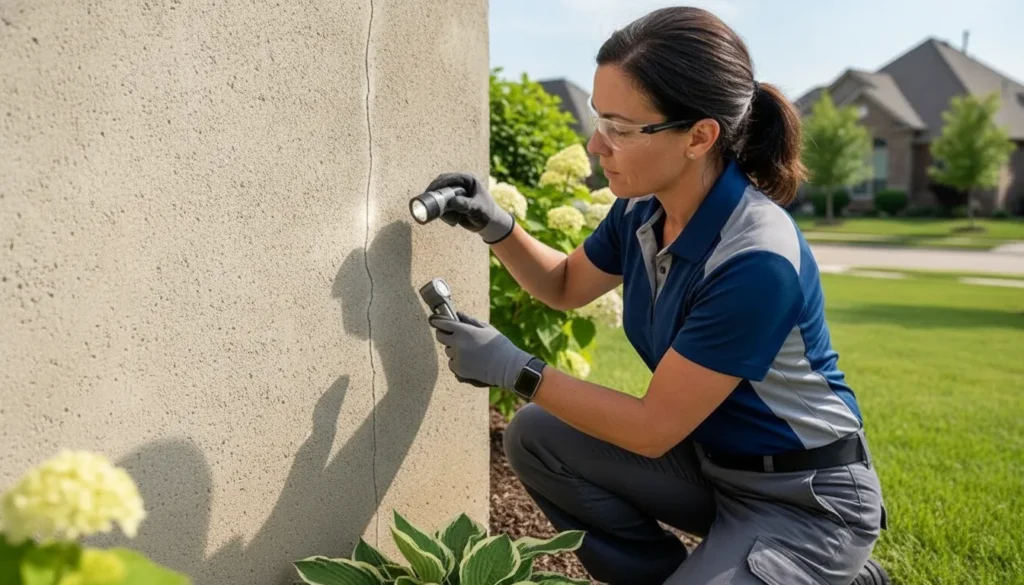
A thin crack in a basement wall or slab can look harmless, but its direction, width, and changes over time matter more than its appearance alone. In North Texas, expansive blackland prairie clay shrinks and swells as moisture conditions change, creating movement that may start as a small surface line and progress into a structural concern.
Schedule a free foundation inspection or call (940) 365-4221 to have a Solid Base Foundations pro assess the crack.
DIY foundation crack repair can be reasonable for a stable, hairline, non-structural crack after a careful assessment. A horizontal crack, one wider than 1/8 inch, or one that continues to open, admits water, or appears with uneven floors and sticking doors deserves a professional evaluation. Sealants may limit moisture, but they cannot stabilize a settling foundation.
Before reaching for a repair kit, look at the evidence around the crack and establish whether the foundation is moving. That distinction determines whether sealing is a cosmetic maintenance step or whether the soil and structure require an engineered, warrantied repair.
When Is DIY Foundation Crack Repair Actually Safe?
DIY foundation crack repair is appropriate only when the crack is clearly non-structural and limited to the surface. A narrow, stable hairline crack in concrete may be suitable for careful sealing, provided it is not accompanied by movement, water pressure, or other signs of foundation distress. The goal is to keep a cosmetic imperfection from allowing moisture inside, not to treat the foundation itself.
Before you apply any product, examine the crack in good light and record its location, direction, and approximate width. If it is wider than 1/8 inch, runs horizontally, or appears to be changing, pause the repair and arrange a professional assessment. Cracks that continue to expand can indicate ongoing structural movement. Horizontal cracking deserves particular caution because it may reflect pressure from surrounding soil against the foundation wall.
What a DIY sealant can and cannot do
Hydraulic cement and other DIY sealants can help stop a small leak or close a surface opening. They do not reinforce a wall, restore load-bearing capacity, stabilize a shifting foundation, or correct settlement caused by soil movement. A sealed crack can look improved while the underlying issue continues to develop.
That distinction matters in North Texas, where expansive clay soil can shrink and swell as moisture conditions change. A cosmetic patch cannot control that movement or repair a failed support system. If the crack is paired with uneven floors, sticking doors, gaps around trim, moisture intrusion, or visible displacement, treat the pattern as a reason to seek diagnosis rather than as a weekend sealing project.
When the crack remains narrow, vertical, stable, and surface-level, clean away loose material and follow the sealant manufacturer’s instructions closely. Do not widen or inject a crack until you have reasonable confidence that it is non-structural. If you are uncertain, a professional inspection is the safer next step. Solid Base Foundations can evaluate the condition and recommend the appropriate foundation repair service for your home.
Cosmetic Cracks vs. Structural Settlement: How to Tell the Difference
A crack’s appearance offers useful clues, but no single visual feature proves that a foundation is safe or compromised. In North Texas, expansive blackland prairie clay shrinks and swells as moisture levels change. That movement can create an apparently minor crack, or it can reflect pressure and settlement that continues below the surface. Consider the full pattern rather than judging the crack by width alone.
The comparison below provides a practical first screen. It is not a substitute for an inspection, especially when several warning signs appear together. If a crack is wider than 1/8 inch, runs horizontally, or changes noticeably over time, pause before attempting DIY foundation crack repair and arrange a professional assessment. For more background on evaluation and repair options, see this professional foundation crack repair services guide.
| Characteristic | More consistent with a cosmetic crack | More concerning for structural settlement |
|---|---|---|
| Width | Hairline or narrow and stable, with no clear sign that the opening is enlarging. | Wider than 1/8 inch, visibly widening, or accompanied by displacement. A professional should assess it. |
| Orientation | A fine vertical or surface-level line may result from normal concrete shrinkage, depending on its location and surrounding signs. | A horizontal wall crack is more concerning because it can indicate soil pressure and structural instability. Diagonal cracks also deserve attention when they occur with movement elsewhere. |
| Pattern | One isolated, shallow line with sound concrete around it and no related changes in floors, doors, or trim. | Stair-step, branching, or interconnected cracks, particularly when they appear with uneven floors, sticking doors, or gaps between walls and floors. |
| Moisture behavior | A dry surface mark with no recurring seepage or dampness may be limited to the finish or outer concrete surface. | Water entering through the crack, recurring dampness, or pressure from saturated soil can signal a drainage or foundation-wall problem that sealant alone will not resolve. |
| Evolution over time | Remains unchanged through ordinary seasonal conditions and does not develop new related symptoms. | Continues to expand, shifts out of alignment, or becomes associated with new cracks and changes in the home. Expansion is a key sign of ongoing structural movement. |
| DIY-safe vs. needs professional | After confirming that the crack is non-structural, a homeowner may consider a surface seal for appearance or minor water control. That repair addresses the opening, not soil movement. | Do not rely on hydraulic cement, filler, or another DIY sealant to correct settlement. These products may stop a leak, but they do not stabilize a moving foundation. Professional evaluation is the safer next step. |
Patterns matter because cosmetic filling can hide evidence while the underlying movement continues. Document the crack’s location, measure its width consistently, and note moisture or related changes after significant weather shifts. North Texas clay can respond to both extended dryness and periods of heavy moisture, so a crack that changes seasonally still merits attention. When the evidence points beyond a surface defect, an inspection can identify whether the home needs monitoring, drainage correction, or an engineered settlement solution.
Why North Texas Clay Soil Creates Cracked Foundations
North Texas homes sit on soil with a built-in response to changing weather. Much of the region’s blackland prairie contains expansive clay, which changes volume as its moisture level changes. After rain, the clay absorbs water and swells. During dry periods, it loses moisture and shrinks. That repeated movement can contribute to ordinary settling in one home and serious foundation movement in another. The effect depends on the soil profile, drainage, grading, and the home’s structural conditions.
Dry weather can be especially revealing. As expansive clay loses moisture, the soil may pull away from portions of the foundation or lose the consistent support the structure previously had. The resulting movement can appear as cracks in foundation walls, slabs, brick, or interior finishes. North Dakota State University Extension explains that dry soil conditions can create building problems, including foundation cracks and settlement in homes built on expansive soils. Read the extension guidance on dry soil and building problems.
Wet conditions create a different pressure. When soil becomes saturated, water contributes to hydrostatic pressure against foundation walls. That pressure can push inward on below-grade walls and worsen an existing weakness, particularly where drainage is poor or water collects beside the home. The University of Minnesota Extension describes hydrostatic pressure from saturated soil as a major factor in basement wall problems and crack development. Learn how moisture and hydrostatic pressure affect basement foundations.
Why the same soil can cause different crack patterns
Clay movement does not affect every part of a property equally. One area may dry faster because of exposure, trees, poor drainage, or a change in the soil’s composition. Another area may remain saturated after a storm. That uneven support can place different stresses on the foundation, producing vertical, diagonal, or horizontal cracking. A crack’s appearance alone does not reveal the full cause, so track whether it changes in width, length, or direction, and note nearby signs such as sticking doors, sloping floors, or gaps around trim.
A sealant may close the visible opening, but it cannot stop soil from shrinking, swelling, or pressing against the structure. If movement is suspected, review foundation settlement repair information and consider a professional assessment before attempting DIY foundation crack repair. The right response addresses the underlying soil and structural conditions, not only the mark left on the wall.
A Step-by-Step Guide to Safe DIY Foundation Crack Repair
Use this process only after the crack has been confirmed as non-structural and cosmetic. A surface seal can manage minor water entry or improve appearance, but it cannot stabilize a home affected by settlement, soil movement, or a failed support system. If the crack is wider than 1/8 inch, runs horizontally, shows signs of shifting, or continues to expand, stop and arrange a professional assessment before applying a filler.
-
Clean out dirt and loose concrete
Brush the full length of the crack to remove dirt, dust, and concrete that is no longer firmly attached. A repair material bonds to sound concrete, not to debris sitting inside the opening. Work carefully so you can see whether the crack remains a narrow surface defect or reveals a deeper, changing gap. Remove loose particles without forcing tools deeper into the wall or slab.
-
Shape the crack for better bonding
For a suitable cosmetic repair, widen the opening slightly into an inverted V shape. This preparation creates a cleaner bonding surface and gives the repair material room to contact solid concrete on both sides. Do not use this step to conceal a crack that appears to be moving. Preparation cannot convert a structural failure into a cosmetic repair.
-
Choose the material for the problem
For a small leak through a non-structural crack, hydraulic cement or another appropriate sealant may help stop water entry. For concrete wall cracks, epoxy or polyurethane injection are established repair methods. The right choice depends on the crack’s width, moisture conditions, location, and structural context. If the crack requires more than surface sealing, consider epoxy injection crack repair rather than treating a DIY product as a structural solution.
-
Apply and finish the repair carefully
Follow the product’s application and curing directions, keeping the material within the prepared crack rather than spreading it over unstable concrete. Smooth the finished surface only after the material has filled the intended opening. DIY sealants can stop leaks, but they do not resolve settlement or restore a foundation affected by soil movement.
-
Monitor the area after sealing
Record the repair date and check the crack periodically for renewed moisture, separation, or widening. If movement returns, the seal fails, or nearby floors, walls, windows, or doors develop new symptoms, do not simply apply another layer. Those changes may indicate an underlying structural issue that requires diagnosis.
Professional epoxy injection, when designed and applied according to engineering principles, can restore the structural integrity and load-bearing capacity of cracked foundation concrete. Engineering research on epoxy injection supports that distinction: the performance of the repair depends on the application, not merely on filling the visible opening.
When to Call a Professional Instead
It is understandable to want to handle a foundation crack yourself, especially when the surface repair appears straightforward. The important question is whether the crack is the problem or a visible symptom of movement below the home. A sealant can close a gap, but it cannot stabilize soil or restore support that has shifted.
Consider a professional assessment when a crack is expanding, wider than 1/8 inch, or accompanied by other changes in the home. Warning signs include:
- Uneven or sloping floors that were not present before.
- Doors or windows that stick, bind, or no longer latch correctly.
- Gaps developing between walls and floors, trim, or ceilings.
- Cracks that continue to widen, reappear after filling, or occur in a horizontal pattern.
These signs do not automatically prove a structural failure, but they do justify prompt attention. Only a professional inspection can distinguish a cosmetic surface crack from settlement that requires an engineered response. That distinction matters in North Texas, where expansive clay soil changes volume as moisture conditions change and can move the foundation over time.
Why surface filling cannot correct settlement
When soil movement causes foundation settlement, the repair must address the support beneath the structure. Surface patching or a DIY sealant may hide the crack temporarily, and hydraulic cement can help limit water entry in some situations. Neither approach corrects the underlying settlement. Foundation settlement often requires structural piers to stabilize the home, rather than another layer of material over the visible damage.
A qualified specialist can evaluate the crack pattern, floor elevations, doors and windows, drainage conditions, and other evidence together. That broader view helps determine whether monitoring, prevention, or structural stabilization is appropriate. Early identification can also open the door to preventive solutions before movement progresses into more extensive damage.
What a professional solution should include
For confirmed settlement, ask how the proposed system will transfer the home’s load and how the work will be supported over time. Solid Base Foundations uses engineered foundation piers designed to transfer the home’s load to stable support and backs its structural work with a comprehensive written warranty. The goal is not simply to make the crack less visible. It is to restore stability with a solution matched to the home’s conditions.
For more detail on the evaluation process, read this guide to foundation settlement repair. If you have noticed movement in a newer home, this guide to new home settling may also help you organize your observations before an inspection.
Get a free foundation inspection and estimate from Solid Base Foundations, or call (940) 365-4221.
Frequently Asked Questions
Can I fix foundation cracks myself?
You can often seal a small, surface-level crack after confirming it is not structural. DIY fillers and hydraulic cement may help with minor leaks, but they cannot correct soil movement or foundation settlement. If the crack is growing, unusually wide, or accompanied by uneven floors or shifting, arrange a professional assessment instead.
What is the best way to repair foundation cracks?
The appropriate method depends on the crack’s width, direction, moisture, and movement. Hydraulic cement can seal some leaks, while epoxy or polyurethane injection may suit specific concrete wall or slab cracks. These materials are not interchangeable, and sealing the surface will not stabilize a foundation affected by settlement.
When should I call a professional for foundation cracks?
Request an inspection for any horizontal crack, a crack wider than 1/8 inch, visible displacement, or continued expansion. Professional evaluation is also appropriate when doors or windows stick, floors slope, or gaps appear around walls and floors. A surface patch cannot address structural movement.
How do I know if my foundation crack is serious?
Track the crack’s location, direction, width, and changes over time. Horizontal cracks and widening cracks deserve prompt attention because they can reflect soil pressure or ongoing movement. In North Texas, expansive clay can shrink and swell as moisture changes, so a professional should interpret the crack alongside the home’s other symptoms.
What causes foundation cracks to form?
Common causes include normal settlement, expansive clay soil, drainage and moisture changes, and hydrostatic pressure against foundation walls. In the Dallas area, blackland prairie clay can move as it gains or loses moisture. Sealing the visible crack without addressing the underlying cause may leave the problem unresolved.
Ready to Schedule a Free Foundation Inspection?
A professional inspection can help distinguish a surface-level crack from movement that calls for a different solution. For a safety-first assessment of your foundation, schedule a free foundation inspection or call (940) 365-4221.