
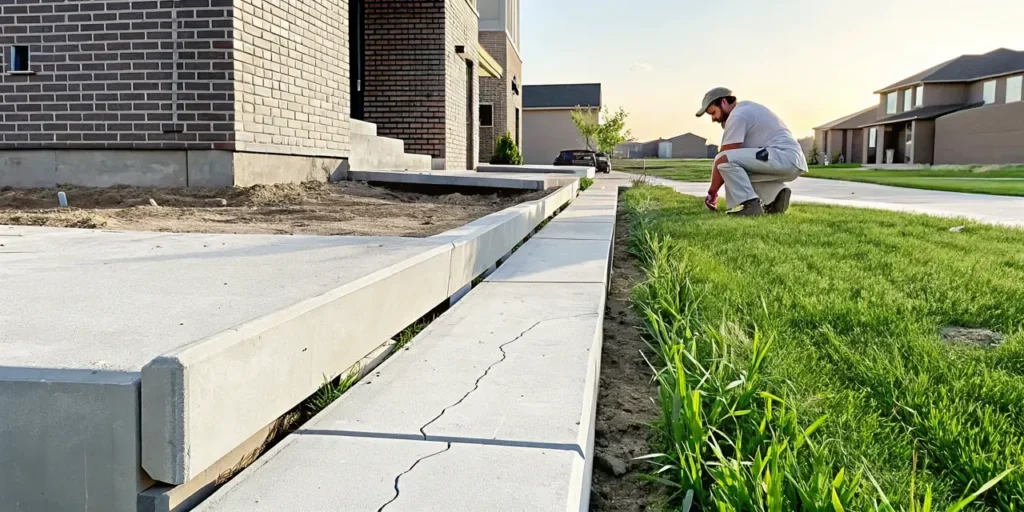
Seeing a few new cracks or uneven floors during the first years in a North Texas home can be unsettling, especially when the house is supposed to be new. Some early movement is normal as the structure adjusts to the soil beneath it, but noticeable or increasing changes deserve attention rather than dismissal.
Call Today for a Free Quote
The professionals at Solid Base Foundations have been providing expert foundation repair and inspection services in the Dallas-Fort Worth area since 1993. Call (940) 365-4221 for your free estimate today!
New house foundation settling is often linked to North Texas expansive clay, which absorbs water and expands, then dries and shrinks as moisture conditions change. Minor settling may occur during the first few years, while excessive movement can signal soil, compaction, or structural issues that warrant a professional evaluation.
Schedule a free foundation inspection with Solid Base Foundations
The key is understanding why this region’s clay can move beneath a relatively new structure, then separating expected adjustment from movement that threatens the home. That starts with the soil behavior beneath the slab and the way moisture changes affect it.
Why New Homes Settle Noticeably on North Texas Clay Soil
Seeing a crack or slight change in a brand-new home can feel especially unsettling. You paid attention to every construction detail, so movement soon after closing may seem like proof that something went wrong. In many North Texas homes, however, minor early movement reflects how the structure is adjusting to the soil beneath it. The important question is whether the movement remains minor and consistent or signals a larger pattern.
North Texas sits over expansive clay soil that responds strongly to changes in moisture. Clay minerals absorb water and expand when wet, then shrink as they dry, leaving voids within the soil structure. That repeating cycle can move the soil beneath a slab and create the conditions for foundation movement. You can learn more about the regional causes and risks in this guide to expansive clay soil problems.
Small amounts of clay can change how soil behaves
Expansive behavior does not require a soil profile made entirely of clay. Research from Missouri University of Science and Technology notes that clay can control the behavior of virtually any soil when it exceeds about 5 percent by weight. Smectite minerals, including montmorillonite, show particularly strong swelling properties because they absorb water between their mineral layers. These soil-pressure and clay-mineral characteristics are documented in the academic review of moisture-induced damages to foundations.
New construction still responds to powerful soil pressure
A new foundation may be sound and still experience movement as moisture conditions change. Expansive soils can exert uplift pressures as high as 5,500 pounds per square foot, a force capable of affecting lightly loaded residential structures. High-plasticity clays, generally those with a plasticity index above 30, also tend to have high inherent swelling capacity. Those figures do not mean every new home will develop structural damage. They explain why local soil conditions matter as much as the home’s age.
For a new homeowner, the practical takeaway is reassurance with attention, not panic. Keep a record of new cracks, sticking doors, uneven floors, or changes around the slab, and watch whether they grow or multiply. A professional evaluation can distinguish ordinary adjustment from movement that deserves action while the issue remains easier to understand and address.
How Long Does New House Foundation Settling Take?
If you notice small changes in a recently built home, it is understandable to wonder whether the foundation is adjusting normally or signaling a larger problem. Minor settling commonly occurs during the first few years as the structure finds its footing on the soil beneath it. In North Texas, that timeline is influenced by expansive clay, which repeatedly shrinks as it dries and swells when it absorbs moisture.
The first few months are often the most active
Most of the noticeable initial movement tends to occur during the first few months through the first year. As a general benchmark, many homes settle roughly 1 to 2 inches during the first 2 to 3 years, although the exact amount and pattern vary by site, foundation design, drainage, soil preparation, and weather. That range describes a broad settling pattern, not a guarantee for every new build. A gradual, relatively even adjustment is less concerning than movement concentrated in one area.
Why the timeline can extend beyond the first year
Clay-related movement does not necessarily stop when the home reaches its first anniversary. Academic research notes that seasonal moisture changes can affect expansive soil from approximately 3 to 40 feet below the ground surface, creating repeated shrink and swell cycles in the upper soil column. Missouri S&T research on expansive soils explains how those cycles can continue to influence foundation movement as North Texas weather shifts between wet and dry periods.
On a slab-on-grade foundation, the corners may move differently from the center because they place less pressure on the soil. The same academic source explains that slab corners can lift relative to the central portion, particularly when moisture differs around the slab edges. That uneven movement can make a new home appear to settle longer than expected, even when the underlying cause is seasonal soil response rather than simple construction adjustment.
Keep a record of changes rather than judging one crack or gap in isolation. If movement is accelerating, appears uneven, or affects doors, windows, walls, or ceilings, consider an evaluation that distinguishes normal adjustment from structural movement.
Normal Settling vs Structural Foundation Damage
Some movement is expected as a new home adjusts to North Texas soil, particularly during the first few years. Expansive clay changes volume as moisture rises and falls, so a slab can move without immediately indicating a structural failure. The useful question is whether the movement stays minor and stable or creates a pattern that affects the structure.
| Usually consistent with minor settling | Reasons to arrange a foundation evaluation |
|---|---|
| Hairline vertical cracks narrower than 1/16 inch, especially when they remain stable. | Cracks wider than 1/4 inch, cracks that grow, or stair-step cracks running through brickwork. |
| Slight floor unevenness, generally less than 1/4 inch over 20 feet, without related wall or door problems. | Sloping floors exceeding 1/4 inch over 10 feet, noticeable changes in level, or separations where walls meet ceilings. |
| Small cosmetic drywall imperfections that do not repeat across several rooms or follow a directional pattern. | Doors or windows that stick, misalign, or become difficult to operate along with visible cracking. |
| No visible separation between the soil and the slab edge, and no clear progression after seasonal weather changes. | A visible gap between the ground and the concrete foundation edge, which can indicate soil shrinkage. |
Patterns matter because movement is rarely uniform. On a slab foundation, corners exert less pressure on swelling soil than the center, making them more vulnerable to lifting. Moisture differences at the slab edge can intensify that effect. As the edges and interior move differently, the resulting stress can transfer into framing, walls, and ceilings. Academic foundation research explains how differential movement creates structural stress.
If several warning signs appear together, consider documenting crack width and location, checking whether doors have changed, and arranging a diagnostic inspection. Early evaluation helps separate manageable cosmetic settling from movement that could worsen as North Texas clay cycles through wet and dry conditions.
Warning Signs to Watch in a New Build
Seeing a crack or a new gap in a recently built home can make you wonder whether normal settling has turned into a larger problem. In North Texas, expansive clay soil can shrink as it dries and swell when it absorbs moisture, so some movement deserves observation rather than panic. A simple watch list helps you separate an isolated cosmetic change from a pattern that merits a closer look.
Cracks that follow a diagonal or stair-step path
Look closely at brickwork around windows, doors, and corners. Stair-step cracks in brick or diagonal fissures in drywall can indicate that different areas of the foundation are moving at different rates. The pattern matters more than a single hairline mark. Photograph the crack, note its location, and check whether it changes after periods of drought or heavy rain. Solid Base Foundations identifies early warning signs of settling that can help you track these changes. Diagonal and stair-step cracks are recognized warning signs, but they do not establish the cause by themselves.
Doors and windows that suddenly stick
Test interior doors and windows that previously opened and closed smoothly. If a door rubs at the top, a window binds, or a frame appears out of square, foundation movement may be stressing the surrounding structure. Structural movement can affect these components and cause them to stick or misalign. Compare several openings rather than judging one tight latch in isolation. A cluster of changes, especially alongside wall cracks, gives you a stronger reason to request an evaluation.
Gaps at the foundation edge and wall-ceiling separations
Walk the exterior after dry weather and look for a visible gap between the soil and the concrete foundation edge. Shrinking soil can leave this space beneath or beside the slab. Inside, inspect the corners where walls meet ceilings for separations or cracks. Differential foundation movement can stress structural framing and contribute to these ceiling and wall changes. Because expansive clay responds to changing moisture, note drainage problems, bare soil, or areas where water collects near the home at the same time.
Early recognition does not mean your new home definitely has structural damage. It gives you useful information while the pattern is still easier to diagnose. If several signs appear together or continue to change, consider a professional foundation assessment that evaluates the soil, drainage, and structure rather than covering one crack cosmetically.
What Builders, Inspectors, and Homeowners Should Do
Concern about movement in a new home is understandable, especially when North Texas clay soil is shrinking and swelling beneath the slab. The right response is not to assume every crack is a failure or to dismiss every symptom as normal settling. Each person involved has a practical role in identifying the cause and protecting the structure.
Builders should control the conditions below the slab
Construction quality starts below the finished floor. Poorly compacted backfill can compress after the house is loaded, while moisture changes in expansive clay can amplify that movement. Builders should document soil preparation, compaction, grading, and drainage, then address deviations before finishes conceal the evidence. Foundation design also matters. In expansive-soil regions, an appropriate foundation can bypass the upper active soil zone rather than relying on unstable near-surface material. The Canadian Building Digest’s discussion of volume-changing clay subsoils explains why selecting a foundation system suited to changing soil conditions is central to stability.
Inspectors should connect symptoms to movement
An inspection should go beyond photographing a crack. Look for patterns across the structure, including diagonal drywall or stair-step brick cracks, sticking doors. Separations at walls and ceilings, and gaps where soil pulls away from the concrete edge. Compare floor elevations, observe drainage and grading, and consider whether the pattern points to differential movement, poor fill, moisture imbalance, or more than one factor. Early recognition can prevent minor settling from developing into structural failure, so the inspection should clearly explain what the evidence supports and what requires monitoring.
Homeowners should ask for diagnosis, not a sales pitch
If symptoms persist or worsen, request a detailed diagnostic evaluation before agreeing to repair. A credible assessment should identify the likely root cause and explain why the recommended system addresses it. A durable solution may involve stabilizing soil moisture, correcting contributing drainage conditions, or adding structural reinforcement, rather than covering a visible crack. Solid Base Foundations emphasizes a root-cause repair system designed for long-term stability. For a deeper explanation of the evaluation process, review this foundation settlement repair guide. Acting early gives you clearer choices while the evidence is still visible and easier to interpret.
How to Protect a New Foundation on Expansive Soil
A new home can feel secure while the soil beneath it continues responding to North Texas weather. Expansive clay absorbs water, expands, then contracts as it dries, so protection starts with consistent moisture conditions and timely attention rather than waiting for a visible failure.
- Direct water away from the foundation. Check that gutters discharge well beyond the slab and that the ground surface slopes away from the house instead of collecting water along the perimeter. Effective drainage helps maintain more consistent soil moisture, which is especially important because expansive soils can experience seasonal moisture changes deep below the surface. Missouri S&T’s academic overview of expansive soils explains how those moisture fluctuations drive cyclic shrink-swell behavior.
- Keep moisture conditions as even as possible. Avoid allowing one side of the home to become significantly wetter or drier than the other. Watch for leaking hose bibs, irrigation overspray, plumbing leaks, and bare soil that dries rapidly beside the slab. During extended dry periods, ask a qualified professional whether controlled moisture management is appropriate for your property and foundation design.
- Record changes and act on them early. Photograph new cracks, note sticking doors or windows, and track any visible gap between the soil and concrete edge. Early recognition can keep a manageable condition from progressing into structural failure. If symptoms appear soon after construction, preserve builder and inspection records and review any applicable warranty process while the timeline is clear.
- Request a diagnostic assessment before choosing a repair. A cosmetic patch may hide evidence without correcting the cause. A proper evaluation considers drainage, soil moisture, movement patterns, construction conditions, and structural response. The goal is root-cause repair, which may involve stabilizing moisture conditions or reinforcing the affected area rather than treating one crack in isolation. Ask what measurements support the recommendation and what problem the proposed work is designed to solve.
- Plan financially without delaying evaluation. If a qualified assessment identifies work that should be completed, review the available financing options and address the underlying condition on a sensible timeline. Prompt, informed action protects the home more effectively than repeated cosmetic repairs.
Schedule a free foundation inspection to know where your new home stands
Frequently Asked Questions
Is it normal for a new house foundation to settle?
Minor movement can be normal during the first few years as a new home adjusts to the soil beneath it. In North Texas, expansive clay can shrink as it dries and swell when it absorbs moisture, so gradual movement deserves monitoring rather than immediate alarm. Widening cracks, uneven floors, or changes in doors and windows call for an evaluation.
How long does a new home foundation take to settle?
Initial settling commonly occurs during the first one to three years, but soil movement can continue in cycles as moisture conditions change. The seasonal moisture fluctuation zone in expansive soil may extend several feet below the surface, so the timeline depends on drainage, site preparation, soil conditions, and foundation design. Soil research describes this recurring shrink-swell behavior.
When should I be concerned about cracks in a new home?
Pay closer attention when cracks are diagonal in drywall, stair-step through brick, or grow over time. Also watch for sticking or misaligned doors and windows, wall or ceiling separations, and a visible gap between the concrete foundation edge and surrounding soil. These patterns can indicate uneven movement rather than ordinary cosmetic settling.
Can expansive clay soil cause foundation problems in a new North Texas home?
Yes. Clay minerals absorb water and expand, then shrink as they dry, creating changing support beneath the home. Moisture differences around a slab can make corners move differently from the center. Good drainage and proper site preparation help, but persistent movement still warrants a professional assessment.
Should I get an independent foundation inspection for a new build?
An independent inspection is sensible when you see progressive cracks, functional changes, or uneven movement, or when you want a documented baseline after construction. An experienced inspector can distinguish expected adjustment from a drainage, compaction, soil, or structural concern and recommend monitoring or further diagnosis.
Schedule a Free Foundation Inspection
If settling in your new North Texas home has raised questions, a focused inspection can help you understand what the movement may mean and what to monitor next. Schedule a free foundation inspection with Solid Base Foundations to discuss your concerns and review practical next steps. Schedule your free foundation inspection on the service page to get started.