
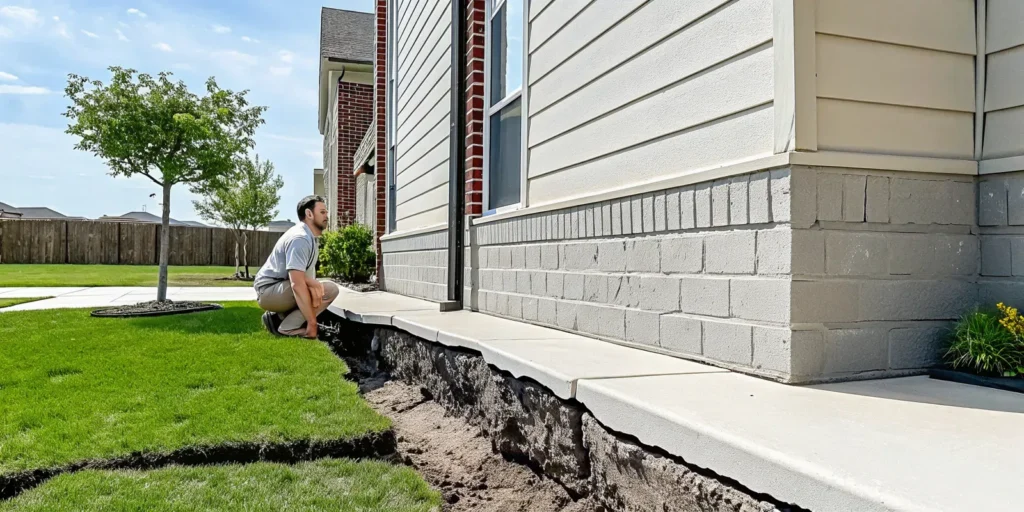
Seeing a floor slope, a widening crack, or a door that suddenly sticks can make you question the safety of your home. In North Texas, those changes often trace back to the ground beneath it, not a problem with the house itself.
Call Today for a Free Quote
The professionals at Solid Base Foundations have been providing expert foundation repair services in the Dallas-Fort Worth area since 1993. Call (940) 365-4221 for your free estimate today!
Foundation settlement happens when soil beneath part of a structure cannot consistently support its weight. In the Dallas-Fort Worth area, expansive clay can shrink during dry conditions and swell when moisture returns, creating movement that ranges from minor early settling to damage that deserves a professional assessment.
Small changes shortly after construction may be normal, but movement that continues, returns seasonally, or appears alongside structural cracks and uneven floors warrants closer attention. Understanding how local clay responds to moisture makes it easier to separate ordinary adjustment from a developing structural concern. The first step is recognizing what happens below the surface.
Schedule Your Free Foundation Inspection in North Texas
What Causes Foundation Settlement in North Texas?
Seeing a new crack or noticing that a floor no longer feels level can make you worry about your home. In North Texas, those concerns often trace back to the soil beneath the structure rather than a visible problem with the foundation itself. Understanding how that soil behaves can make the next step feel more manageable.
Soil that cannot carry the building’s weight
A foundation transfers the home’s weight into the ground. Settlement begins when one or more soil layers below the structure cannot support that load consistently. The movement may affect only part of the home when soil conditions vary from one area to another. That uneven support can place stress on walls, floors, and connected structural components.
North Texas homes face a regional challenge because they often sit on North Texas expansive clay soil. This clay responds to changes in water content, so the ground beneath your home may not remain at the same volume or strength throughout the year. Research in soil and foundation engineering identifies water-content changes as a major driver of volume change in expansive soils (academic research on expansive foundation soils).
Drying clay loses volume and support
During extended hot, dry weather, expansive clay can release moisture, shrink, and pull away from the foundation. As the soil contracts, it may leave portions of the structure with less support than before. A home can respond with downward movement in the affected area, particularly where soil moisture is uneven or vegetation draws water from the ground. The same moisture cycle that causes clay to shrink can later cause it to swell when rain returns, creating repeated stress rather than a single, isolated shift.
Excess water can wash out supporting material
Too much water creates a different pathway to settlement. Leaking plumbing, poor drainage, or concentrated runoff can soften the soil and move fine particles away from the foundation. In an academic case study, excess moisture washed out filter material and led to considerable settlement beside a building. That example shows why the source and movement of water matter, even when the surrounding soil appears firm.
These causes can occur together. A professional assessment can help determine whether movement reflects changing clay conditions, lost supporting material, or another site-specific issue.
Why Expansive Clay Soil Drives Foundation Movement
Worrying about a shifting floor or a new crack is understandable, especially when your home appears solid from the outside. In North Texas, the ground beneath that home can change significantly as weather patterns change. The region’s blackland prairie contains expansive clay, a soil that responds to moisture by changing its volume. That movement helps explain why foundation settlement and foundation heave can occur in the same area.
Moisture changes make clay expand and contract
Clay particles hold water within the soil structure. During dry conditions, expansive clay loses moisture and contracts. As the soil shrinks, it can leave gaps beneath portions of a foundation or reduce the support beneath a slab. The foundation may then settle unevenly instead of moving as one stable unit.
When rain, irrigation, plumbing leaks, or poor drainage add water back into the soil, the same clay can swell. The effect of moisture on foundation soils is especially important when those soils are expansive. Geotechnical research from Missouri University of Science and Technology explains how water content drives this movement (academic research on moisture and expansive foundation soils). Soil volume changes directly with water content, so a foundation can experience alternating pressure and loss of support as conditions shift.
These changes do not always occur evenly. One side of a home may remain damp because of shade, a drainage problem, or a leaking water line while another side dries more quickly in the sun. That difference creates uneven soil movement, which can place stress on slabs, walls, floors, doors, and windows.
Why over-saturation can create another movement cycle
Excess water can do more than make clay swell. Over-saturated soil may produce foundation heave, pushing portions of the structure upward. In some conditions, heavy moisture can also wash out supporting soil or filter material, leaving an area vulnerable to later settlement. As the ground dries again, the clay contracts, and the cycle can repeat.
This is why understanding the soil matters when you evaluate movement in a North Texas home. The issue may not be a single event or a simple downward shift. Shrinkage, swelling, saturation, and uneven drying can combine over time. A professional assessment can distinguish ordinary early movement from a pattern that continues to affect the structure and identify whether drainage or foundation repair should be considered.
Normal Foundation Settlement vs. Structural Damage
Seeing a crack in your wall can be unsettling, but not every sign of movement means your home has a serious foundation problem. In North Texas, expansive clay soil naturally shrinks during dry conditions and swells when moisture returns. That cycle can create minor movement, especially during the first few years after construction. The pattern, size, location, and progression of the change matter more than one isolated crack.
| Normal foundation settlement | Structural damage requiring evaluation and possible repair |
|---|---|
| Usually occurs shortly after the home is built, as the soil beneath the structure adjusts to the building’s weight. | Continues or returns over time, often showing uneven movement in different areas of the home. |
| Creates hairline cracks or other minor cracks with minimal visible change. | Creates wall cracks larger than 1/16 inch, especially when they continue to widen or multiply. |
| Produces small cosmetic changes that do not affect how the home functions. | Causes doors or windows to stick, bind, or become difficult to open and close. |
| Does not typically create a noticeable change in floor level or slope. | May cause sloping or uneven floors, which can indicate movement below the structure. |
| Does not usually create horizontal cracks across brick or block walls. | Horizontal cracks in brick or block walls deserve prompt professional attention because they can signal more serious structural movement. |
A single hairline crack may be minor, but a pattern of growing cracks combined with sticking openings or sloping floors warrants a closer look. Be sure to document when you first notice each change and whether it worsens after heavy rain or extended drought. Those moisture cycles can help explain how the clay soil is affecting your foundation.
Warning Signs of Foundation Settlement to Watch For
Foundation movement can be unsettling, especially when North Texas weather shifts from extended dry periods to heavy rain. Expansive clay soil shrinks as it loses moisture and swells when it becomes wet, which can gradually change the support beneath your home. A single hairline crack may not signal a serious problem, but patterns that grow, repeat, or appear alongside changes in how your home functions deserve attention.
Look for changes in walls, openings, and floors
Walk through your home and compare what you see today with older photos or notes. Pay particular attention to these warning signs:
- Wall cracks wider than 1/16 inch: Cracks that are visibly widening, returning after patching, or extending through multiple rooms can indicate more than normal early settling. Note their location and measure them periodically rather than relying on memory.
- Horizontal or stair-step cracks in brick: Horizontal cracks in brick or block walls deserve prompt evaluation because they may reflect structural pressure. Stair-step cracking that follows the mortar joints can also point to uneven movement rather than a purely cosmetic surface issue.
- Doors or windows that stick: A door that suddenly rubs, will not latch, or no longer closes cleanly can reflect a shifted frame. Windows that become difficult to open or close may signal that movement is affecting the surrounding walls.
- Sloping or uneven floors: A new dip, slope, or noticeable change in floor level can indicate that part of the foundation is moving differently from the rest of the structure. Watch for areas where furniture rocks or where a ball consistently rolls in one direction.
- A gap where soil pulls away from the foundation: If the ground separates from the foundation edge, drying clay may have shrunk away from the structure. That gap can allow water to collect near the footing when rain returns, creating another cycle of soil movement.
These signs do not identify the cause by themselves. Moisture drainage, plumbing leaks, construction details, and the depth of local soil layers can all affect how a home responds. What matters is the pattern, timing, and progression of the changes. Early professional inspection helps distinguish minor settling from ongoing, uneven movement before damage spreads or repair options become more involved. Consider scheduling an assessment when several signs appear together, a crack is growing, or doors and floors change noticeably.
How Foundation Settlement Repair Permanently Stops Movement
It is understandable to worry when cracks widen, floors slope, or doors begin to stick. In North Texas, expansive clay soil can shrink during dry periods and swell after heavy moisture, repeatedly changing the support beneath a home. Effective repair does more than lift a low spot. It addresses the source of movement with an engineered solution designed for the soil conditions beneath your property.
-
Assess the movement and its cause
A qualified evaluation helps distinguish a cosmetic symptom from active structural movement. The assessment considers the pattern of cracks, changes in floor levels, and how the structure responds to moisture-sensitive clay soil. That information guides the repair plan instead of applying a generic fix to every home.
-
Stabilize the foundation with engineered support
When unstable soil can no longer support the building’s weight, underpinning and foundation piers transfer support to more stable soil layers. These systems stabilize the foundation, stop ongoing movement, and help prevent additional structural damage. This is the core of foundation repair in North Texas: a root-cause solution designed around local expansive clay rather than a temporary surface adjustment.
-
Level sunken concrete with minimal disruption
Some settlement affects walkways, driveways, patios, or other concrete rather than the home’s structural foundation. PolyLevel injections fill voids and raise sinking concrete through small access points, with minimal excavation. The process is 96 times faster than traditional mudjacking, according to the supplied product information, while limiting disruption around your property. Learn more about PolyLevel concrete leveling when uneven concrete is part of the concern.
-
Confirm the long-term protection
A permanent repair should come with clear documentation of the system installed and the conditions it addresses. Foundation pier systems may include a 25-year manufacturer’s warranty, giving you an added way to evaluate the proposed solution. The right repair remains minimally invasive while addressing the underlying soil-related cause, not simply covering visible damage.
Repair scope depends on the assessment and the movement found at your property. A free estimate can explain the recommended approach without guessing at cost before the structure and soil conditions are reviewed.
Schedule a Free Foundation Inspection to Confirm the Stability of Your Home
Frequently Asked Questions
What is the difference between normal settling and structural damage?
Normal movement is usually minor, appears relatively soon after construction, and may cause only hairline cracks. Structural damage is more concerning when movement continues, appears uneven, or affects how the home functions. In North Texas, expansive clay can shrink during dry periods and swell after heavy moisture, so a changing pattern deserves attention rather than a one-time glance.
What signs suggest my home should be inspected?
Look for new or widening wall cracks, horizontal cracks in brick or block, sloping floors, and doors or windows that suddenly stick. A crack wider than 1/16 inch is a potential warning sign, not a diagnosis by itself. These indicators are summarized in the supporting foundation guidance from Solid Base Foundations.
How do expansive clay soils affect a foundation?
Expansive clay changes volume as its water content changes. During drought, the soil can shrink and lose support beneath part of a home. When it becomes saturated, the soil can swell and push upward. Uneven moisture around the property can therefore create uneven movement, including both settlement and heave.
Can foundation movement be repaired permanently?
A qualified assessment should identify whether unstable soil is driving the movement and which repair method fits the structure. Underpinning can stabilize affected areas and help stop ongoing movement, while concrete-leveling systems may address sinking slabs. The right recommendation depends on the inspection findings, so request a professional evaluation before choosing a repair.
Schedule a Free Foundation Inspection
Worrying about cracks or uneven floors can make it difficult to know what to do next, especially when North Texas clay soil shifts with changing moisture. A professional assessment can help you understand whether your home shows normal settling or signs that call for repair. Schedule a free foundation inspection and estimate with Solid Base Foundations to discuss your property and the appropriate next step.