
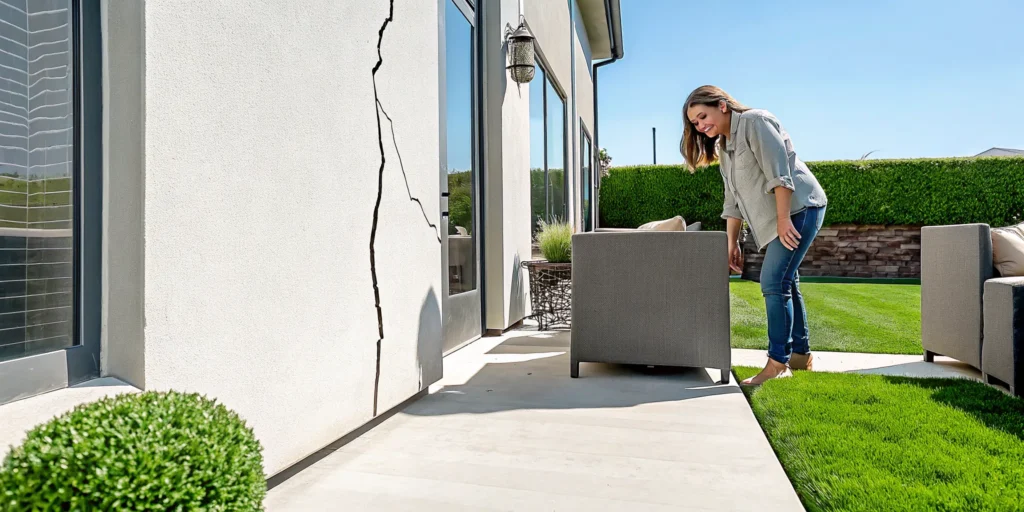
A small crack or stubborn door can be easy to dismiss, especially when your Dallas home otherwise feels solid. But North Texas homes sit on expansive clay soil that shrinks and swells as moisture levels change, putting ongoing movement beneath the slab and foundation.
The early signs of foundation problems include drywall or brick cracks, sticking doors and windows, uneven floors. Gaps around frames or baseboards, a cracked or tilting chimney, separation at the garage floor, and visible exterior foundation cracks. One sign does not automatically confirm structural damage, but a pattern that widens or appears in several areas deserves a professional assessment.
Foundation movement is progressive, and early identification can help limit how invasive a repair becomes. It can also protect your home’s value by addressing concerns before they affect more of the structure. Start by looking closely at the cracks and separations inside and outside your home, where the earliest clues often become visible.
Call Today for a Free Quote
The professionals at Solid Base Foundations have been providing expert foundation inspection and repair services in the Dallas-Fort Worth area since 2008. Our patented PolyLevel and Foundation Supportworks products offer long-term solutions for homes affected by North Texas expansive clay soil. Call (940) 465-1662 for your free estimate today!
Early Signs Of Foundation Problems: 1. Interior Drywall Cracks and Stair-Step Brick Cracks
Cracks around doors, windows, and wall corners can be unsettling, especially when they seem to appear without warning. In North Texas, expansive clay soil shrinks and swells as moisture levels change. That movement can contribute to normal settling or place stress on parts of the structure. Interior damage may show up before the exterior foundation makes the problem obvious.
What drywall crack patterns can tell you
Pay close attention to diagonal cracks that run from the corner of a door or window toward the ceiling. Diagonal cracks near the top of a wall at a house corner can point to corner settlement. A crack that follows a stair-step pattern along a wall joint deserves similar attention. Particularly when it appears with other changes such as sticking doors, gaps, or uneven floors.
Not every drywall crack indicates structural failure. A short, hairline crack may reflect ordinary material movement and can be monitored. Photograph the area, mark the crack’s end points, and note the date so you can compare its size over time. Seasonal monitoring can help show whether the crack remains stable or continues to widen. Review the signs of foundation settlement for additional patterns to watch.
Why exterior brick cracks matter
Walk around the outside of your home and inspect brick walls near corners, windows, and doors. Stair-step cracks that follow the mortar joints can reflect movement beneath that section of the house. A small, stable crack may not require immediate repair, but it should not be dismissed when it is widening or appears alongside interior cracks.
Cracks wider than 1/4 inch in masonry or foundation materials are particularly concerning and should prompt a professional assessment. That measurement is a useful screening point, not a diagnosis. A professional can evaluate the crack pattern, soil conditions, drainage, and the structure’s overall movement rather than treating the visible crack alone. Learn more about cracks in foundation and the signs that warrant closer attention.
When a crack is rapidly widening, extends through multiple materials, or appears with wall separation, document it and arrange an inspection. Early evaluation can clarify whether you are seeing cosmetic movement or a developing settlement issue before the pattern spreads.
2. Sticking Doors or Windows That Won’t Close Properly
A door that suddenly drags, sticks, or refuses to latch can be more than a worn hinge or seasonal swelling. When foundation movement shifts the wall framing, the opening can move out of square. The door or window then rubs against its frame, leaves an uneven reveal, or will not close smoothly. Sticking doors and windows are recognized indicators of possible structural settling, especially when the problem is new or steadily worsening.
Start by checking more than one opening. Test several doors and windows on the same floor level, including openings in different rooms. One isolated problem may result from hardware, moisture, or a damaged frame. Several openings that bind in a similar pattern suggest that the surrounding structure may have moved. Look for related changes, such as a latch that no longer lines up. A gap that is wider at one corner, or a door that swings open or closed on its own.
Why the location and pattern matter
In North Texas, expansive clay soil shrinks and swells as moisture levels change. That movement can affect the support beneath different parts of a home. If several openings on one level begin sticking, note their locations and whether the issue changes after wet or dry weather. Avoid forcing the hardware or planing the door before the cause is understood. A cosmetic adjustment may hide a symptom while the frame continues to shift.
Interior clues often appear before exterior damage becomes obvious. Research on foundation settlement notes that door problems and drywall changes can precede visible deterioration along exterior foundation walls. Document when the issue started, photograph uneven gaps, and watch for additional signs. You can review more signs of foundation settlement to compare what you are seeing. If multiple doors or windows are affected, a professional evaluation can determine whether settlement, soil movement, or a local repair issue is responsible.
3. Uneven or Sloping Floors
A floor that feels noticeably uneven can change how you move through a room. Furniture may rock, doors may drift open, or you may feel as though you are walking slightly uphill. In North Texas, uneven floors can be connected to movement beneath the home, including settlement associated with expansive clay soil.
Try the marble test
Choose a hard-surface floor in an open area, such as a living room, kitchen, or hallway. Place a marble on the floor and watch whether it rolls consistently toward one side. Repeat the test in several locations rather than relying on a single spot. A marble can reveal a slope, but it cannot identify the cause or confirm that foundation repair is necessary.
Check the slope with a level
Use a carpenter’s level across the floor in different directions. Compare the results from the center of the room with areas near walls, doorways, and hallways. A consistent slope across a larger area is more informative than a small dip that may result from flooring installation or normal wear. Look for related changes, such as cracks, gaps along baseboards, or doors that no longer close properly.
Uneven or sloping floors are frequently linked to uneven foundation settlement, but a professional assessment is the appropriate way to distinguish structural movement from a flooring issue. Keep notes about where the slope appears and whether it changes over time. For more context, review these signs of foundation settlement and arrange an inspection if the slope is pronounced, worsening, or accompanied by other warning signs.
4. Gaps Around Exterior Windows or Doors
Stand outside your home and inspect the edges of exterior windows and doors. If you can see daylight between the frame and the surrounding wall. Or if a visible gap is developing where the wall meets the foundation, the structure may be moving. These openings can begin as small separations, but widening gaps deserve attention rather than a quick cosmetic patch.
Look for related changes inside the home, too. Small spaces between the floor and baseboards, uneven trim lines. Or a door frame that no longer appears square can support the concern that movement is affecting more than one area. Separation between a wall and its foundation is a significant warning sign, particularly when it appears alongside widening cracks or doors and windows that no longer operate normally.
North Texas homes face a regional soil challenge. North Texas expansive clay soil expands when moisture increases and contracts during dry periods. That repeated change can place uneven pressure beneath different parts of a home, contributing to settlement or other foundation movement.
Photograph the gap from the same angle, record its approximate width, and check it again after several weeks or a significant weather change. Monitoring helps show whether the separation is stable or progressing. If the gap continues to widen, daylight becomes more pronounced, or several exterior openings show the same pattern. Arrange a professional assessment to identify the cause before relying on sealant or trim repairs.
5. Cracked or Tilting Chimney
Your chimney can reveal foundation movement before the problem is obvious elsewhere. Because a chimney often rests on its own foundation footing rather than the same support system as the main house. It may move at a different rate when North Texas soil shifts. Expansive clay can shrink and swell as moisture levels change, creating differential movement between the chimney and the exterior wall.
What to look for
- A visible gap where the chimney meets the exterior wall
- A chimney that leans or appears to pull away from the house
- Cracks running through the chimney’s brickwork or mortar joints
Pay particular attention when separation and masonry cracks appear together. A large or rapidly widening crack is more likely to indicate a deeper structural issue than a thin, localized crack, according to the foundation settlement repair guide. Severe separation, bowing, or buckling elsewhere on the structure also warrants prompt professional assessment.
Do not dismiss a chimney gap as a cosmetic issue or simply seal it before understanding why it formed. Photograph the area, note whether the opening changes over time, and compare the chimney’s alignment with nearby wall lines. An inspection can help determine whether the movement is isolated to the chimney footing or connected to broader cracks in foundation areas. Early evaluation gives you clearer options before movement causes additional masonry damage.
6. Separation Where Garage Floor Meets House Foundation
A widening gap where your garage floor meets the house foundation deserves attention, especially in North Texas. The garage floor and the home foundation are often separate concrete pours. Because each slab responds to soil movement independently, they can settle or shift at different rates.
In expansive clay soil, moisture changes can intensify that movement. Clay expands when wet and contracts during dry periods, while changing moisture conditions can contribute to concrete distress beneath and around the garage. A small construction joint may be normal, but a gap that grows, drops on one side, or appears alongside other warning signs should not be dismissed.
Why the gap matters
Separation creates more than a cosmetic defect. Open joints and slab cracks can allow rainwater to enter, increasing moisture around the soil supporting the structure. Water intrusion can also create an access point for insects and other pests. Look for dampness after rainfall, staining, widening cracks, or a noticeable height difference between the garage floor and the foundation edge.
What to check next
Photograph the separation and note its approximate width. Recheck it after significant wet and dry weather, then compare it with nearby cracks, sticking doors, or uneven floors. A single gap does not confirm structural damage, but a pattern of movement warrants a professional assessment. If you see several of these foundation repair warning signs, arrange an inspection before water exposure and continued soil movement compound the problem.
7. Visible Exterior Foundation Cracks
Exterior cracks deserve a closer look, but not every line in a foundation wall means the same thing. In North Texas, expansive clay soil shrinks and swells as moisture levels change, creating movement that can show up in masonry and concrete. The crack’s direction, width, location, and changes over time provide useful clues.
What different crack patterns can indicate
Horizontal cracks in a foundation wall are among the more serious patterns because soil pressure may be pushing against the wall. A wall that bows, bulges, or separates near a horizontal crack warrants prompt professional assessment. Significant cracks can compromise the building’s overall structural integrity, so avoid treating a serious pattern as a cosmetic issue. Cracks in foundation walls should be evaluated in context, including the surrounding soil and the home’s load.
| Crack type | Typical cause | Severity | Action |
|---|---|---|---|
| Horizontal | Soil pressure pushing against wall | High | Schedule professional assessment immediately |
| Vertical (narrow, stable) | Normal settling or shrinkage | Low to moderate | Monitor width across seasons |
| Stair-step (brick veneer) | Differential foundation movement | Moderate to high | Inspect if widening or paired with other signs |
Vertical cracks may result from normal settling, particularly when they are narrow and stable. That does not make them irrelevant. A vertical crack that widens, extends, or appears alongside sticking doors, uneven floors, or wall separation deserves more attention. Stair-step cracks through brick veneer can also reflect differential movement, especially around corners, windows, or doors. When masonry begins to separate or a crack follows the mortar joints in a pronounced pattern, schedule an assessment rather than filling it and moving on.
When should you monitor a crack, and when should you call?
For a small, stable crack, photograph it with a ruler for scale and record the date and location. Recheck it after major wet and dry periods, then compare its width across seasons. Monitoring crack width helps distinguish stable seasonal movement from progressive settlement. Cracks are not always structural, but widening cracks should be monitored closely.
Call a professional when a crack is wider than one-quarter inch, widens noticeably, allows water into the home, or appears with bowing walls, separation, or uneven floors. Also watch for signs of foundation heave, such as upward movement or pressure-related distortion. A proper evaluation considers both the crack and the problematic soil conditions beneath the structure. Early identification can make it easier to address the underlying movement before related damage spreads.
Frequently Asked Questions
How can you check a Dallas home for foundation issues?
Walk through the home and look for drywall or masonry cracks, gaps near baseboards, doors that no longer latch, and floors that feel uneven. Outside, inspect the foundation and brickwork for widening or stair-step cracks. A level can help identify a slope, but a visual check cannot determine the cause. Soil conditions and building loads both affect foundation movement, so a professional assessment is appropriate when several signs appear.
Are all foundation cracks a sign of structural damage?
No. Some cracks are cosmetic or related to normal seasonal movement, particularly in a region where expansive clay soil changes with moisture. However, cracks that widen, exceed one-quarter inch, or appear with sticking doors, sloping floors, or separation deserve prompt evaluation. Monitoring crack width over time can help distinguish stable settling from progressive movement. Learn more about signs of foundation settlement.
When should you call a foundation professional?
Arrange an assessment when cracks are widening, multiple rooms show related symptoms, walls separate from the foundation, or a chimney begins to crack or tilt. It is also sensible to call when a door or window problem persists after ordinary seasonal changes. Foundation issues can progress when the underlying soil movement remains unaddressed, and early detection may allow less invasive repair options. A free estimate provides a practical starting point for identifying the cause.
How common are foundation problems in North Texas?
Foundation distress is a recurring concern in North Texas because blackland prairie clay shrinks and swells as moisture levels change. That movement does not mean every crack indicates failure, but it does make regular monitoring worthwhile. Look for patterns rather than one isolated cosmetic mark, and document changes across wet and dry seasons so an evaluator can understand how the structure is responding.
Schedule Your Free Foundation Inspection
If you have noticed one or more warning signs, a professional assessment can help clarify what is happening before you plan your next step. Solid Base Foundations provides a free estimate and uses patented foundation support products when repair is appropriate. Call (940) 465-1662 to schedule your free foundation inspection today.