
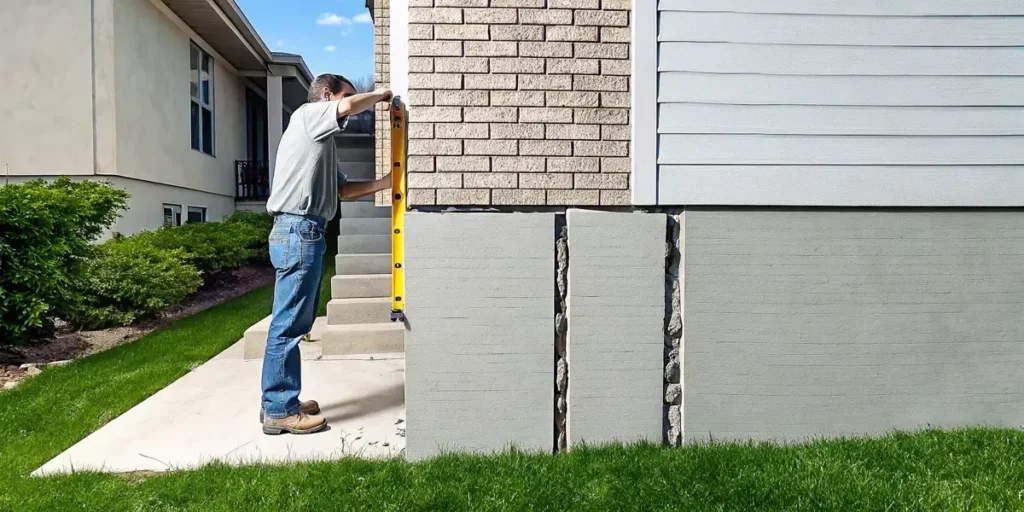
A wall that bows inward can be unsettling, especially when North Texas weather keeps shifting from dry to wet. Expansive clay soil swells and shrinks as its moisture changes, placing repeated stress on your foundation. Water that collects in the soil can add hydrostatic pressure, pushing against the wall and worsening existing movement.
Call Today for a Free Quote
The professionals at Solid Base Foundations have been providing expert foundation wall repair services in the Dallas-Fort Worth area since 2008. Our certified technicians use patented Foundation Supportworks systems backed by a 25-year manufacturer warranty.
Call (940) 365-4221 for your free estimate today!
Bowing foundation wall repair depends on the severity and cause of the movement. Carbon fiber straps may help stabilize limited bowing, while wall anchors or helical tiebacks can address more significant displacement after a professional evaluation.
Early signs deserve attention because the right solution depends on whether the wall has minor cracking, measurable inward movement, drainage-related pressure, or a combination of factors. Understanding how expansive soil affects homes in this region is the first step toward choosing a sound repair approach.
Bowing Foundation Wall Repair: Why Bowing Foundation Walls Are Common in North Texas Homes
If you have noticed a horizontal crack, an inward curve, or a wall that no longer looks straight, it is understandable to feel concerned. North Texas homes face a distinct soil challenge that can place ongoing stress on foundation walls: the expansive clay associated with the region’s blackland prairie.
Beaumont clays are classified as expansive soils because they can change volume significantly as their moisture content changes. That movement can affect foundation performance, particularly when the soil presses unevenly against a wall. Research from the University of Houston’s Construction Industry Materials and Technology program notes that the expansive characteristics of Beaumont clays can adversely affect building foundations.
Seasonal moisture changes keep the soil moving
Dallas-area weather naturally creates a repeating wet-and-dry pattern. During dry periods, clay soil shrinks, including along the edges of a foundation. During wet periods, that soil swells again. Each cycle can change how much lateral pressure the surrounding ground applies to the wall. If rain saturates the soil near the foundation, the added water can also increase hydrostatic pressure against the wall before drainage has time to carry it away.
This does not mean every seasonal crack indicates structural damage. However, repeated movement can gradually widen existing cracks or push a wall inward, especially where drainage concentrates water beside the foundation. The same regional conditions that make ordinary soil movement common can make a developing bowing problem more persistent.
Dry conditions can increase movement potential
It may seem that wet soil would always create the greatest risk. But the research identifies an important distinction: soil in a wet moisture condition has a lower propensity for volume change and movement than soil in a dry condition. In other words, dry expansive clay may be more likely to undergo significant movement when moisture returns. That helps explain why wall stress can become noticeable after a long dry spell followed by substantial rainfall.
Understanding this local geology is an important first step in evaluating bowing foundation wall repair. A professional inspection can distinguish normal seasonal changes from wall movement that warrants stabilization, while also identifying drainage conditions that may continue driving pressure against the foundation.
Signs Your Foundation Wall Is Bowing
It is understandable to feel uncertain when a crack appears in your home. Some settling cracks are cosmetic, while other patterns point to structural movement. A bowing wall usually shows several clues that become more noticeable over time, especially in a basement, crawl space, or lower-level room.
Look for horizontal cracks and inward movement
Horizontal cracks running across a foundation wall deserve prompt attention. They can indicate that pressure from the surrounding soil is pushing the wall inward. By contrast, vertical cracks are more commonly associated with settlement or shrinkage, although the location, width, and pattern still matter. A professional inspection can distinguish a surface crack from movement that is affecting the wall itself.
Stand several feet back and look along the wall rather than directly at it. If the top appears to lean inward, or the center of the wall bows into the room, the change may be easier to see from an angle. A plumb line or straightedge can help identify measurable movement, but avoid relying on a visual check alone.
Check the wall-to-floor connection
A visible gap where the foundation wall meets the floor is another warning sign. The gap may be narrow at first, then become more noticeable as the wall shifts or the floor separates from its edge. You may also see dampness, debris, or daylight in the joint. Water pressure and North Texas soil movement can work together, so drainage conditions outside the affected wall are relevant to the inspection.
Notice changes inside the room
Windows and doors on the same side of the house may stick, bind, or become difficult to latch when framing shifts. Sloping floors, new floor separations, or a countertop that no longer sits level can provide additional context. These signs do not prove that the wall is bowing by themselves, but several changes in one area warrant a closer look.
As a repair benchmark, carbon fiber straps are commonly considered for walls that are cracked or bowing less than 2 inches. While more substantial movement may call for a different stabilization approach. That threshold comes from repair guidance, not a substitute for an evaluation. If you see horizontal cracking, inward lean, or a widening wall-to-floor gap, arrange a professional assessment before the movement progresses.
What Causes Foundation Walls to Bow?
If you notice a horizontal crack or inward movement, it is understandable to worry about what caused it. In North Texas, the answer often begins with how expansive clay soil responds to changing moisture. Several conditions can combine to place uneven pressure against a foundation wall.
-
Water buildup creates hydrostatic pressure
When water collects in the soil around your foundation, it increases pressure against the wall. This force, called hydrostatic pressure, can push a wall inward and contribute to bowing or bulging. North Texas clay makes the problem more significant because the soil holds moisture and changes volume as conditions shift. A consistently wet area beside one section of the foundation can create pressure that is not distributed evenly around the home.
-
Poor drainage concentrates moisture beside the wall
Drainage problems can keep water where you least want it. Downspouts that discharge next to the foundation, missing or misaligned splash blocks, and grading that slopes toward the home can saturate the soil along one wall. Research on expansive soils identifies drainage as a significant contributor to foundation distress, including cracking and bowing. Correcting the water path is an important part of understanding the problem, not just an exterior maintenance detail.
-
Tree roots create uneven soil moisture
Large trees near a foundation can draw moisture from the surrounding soil through their roots. If roots extract more moisture from one area than another, the clay may shrink unevenly. That differential movement can leave parts of the wall carrying stress differently, especially during extended dry weather. Tree roots are not the only possible cause, but their location and the pattern of movement can help a professional evaluate the site.
-
Seasonal wet and dry cycles move expansive clay
North Texas homes experience repeated transitions between wet and dry conditions. Expansive clay swells when it absorbs water and shrinks as it dries, creating recurring movement along foundation edges. Dry soil generally has a greater propensity for volume change than soil in a wet condition. Over time, those cycles can compound pressure from drainage problems and make existing wall movement more noticeable.
Because these causes often overlap, an inspection should look at both the wall and the surrounding soil, grading, drainage, and vegetation before repair options are selected.
Professional Repair Solutions for Bowed Foundation Walls
Seeing a foundation wall move inward can be unsettling, especially when cracks or moisture appear at the same time. The right repair depends on how far the wall has shifted, what is driving the movement, and whether the surrounding soil continues to place pressure against it. In North Texas, expansive clay changes volume as moisture conditions shift, so a lasting repair should address the wall and the conditions around your home.
A professional evaluation may identify one of several structural stabilization methods:
Carbon fiber straps for limited bowing
Carbon fiber straps can be an effective option when a wall is cracked or bowing less than two inches. The straps bond to the wall and help resist additional inward movement while keeping the installation relatively low profile. This benchmark comes from established foundation repair guidance, but a measurement alone does not determine the right solution. A qualified professional should also review the crack pattern, wall material, moisture conditions, and drainage.
Wall anchor systems for common DFW conditions
Wall anchor systems are among the most common approaches for stabilizing bowed walls in Dallas-Fort Worth homes. Anchor plates connect through the wall to reinforced soil outside the foundation, helping counteract lateral pressure and, in some cases, gradually improve the wall’s position. These systems can be particularly appropriate when expansive clay and hydrostatic pressure continue to push against the foundation. Solid Base Foundations uses Foundation Supportworks patented systems, and applicable pier systems carry a 25-year manufacturer warranty.
Helical tiebacks for severe movement
More significant bowing or bulging may call for helical tiebacks. These engineered anchors extend into stable soil beyond the affected area and connect to the wall to provide substantial lateral support. Wall anchors and helical tiebacks are recognized options for more severe bowing, but the appropriate design depends on site conditions and structural measurements.
Solid Base’s process begins with a free inspection. A sales manager visits your property, assesses the wall and surrounding conditions, and develops a custom repair plan rather than recommending a one-size-fits-all product. The plan may also include drainage improvements when downspouts or water-saturated soil are adding pressure. For expert foundation repair services in DFW, or to schedule a professional wall inspection, request an evaluation before the movement progresses.
Wall Anchors vs. Carbon Fiber Straps: Which Is Right for Your Home?
The right stabilization method depends on how far the wall has moved, what is driving the pressure, and whether exterior access is practical. In North Texas, expansive clay soil and changing moisture conditions can continue stressing a foundation wall. So a professional evaluation matters more than choosing a product from a checklist. The following comparison offers a useful starting point for bowing foundation wall repair.
| Application | How it works | Durability and strength | Excavation required | Best for | Warranty |
|---|---|---|---|---|---|
| Mild bowing, generally less than 2 inches | Carbon fiber straps are bonded to the wall with structural epoxy. They distribute tension across the cracked or bowing area and help prevent additional movement. | Low-profile reinforcement with strong tensile performance when the wall remains within the method’s application range. They stabilize the wall but do not typically push it back into position. | None. Installation takes place from the interior side of the wall. | Early-stage bowing, horizontal cracking, and situations where preserving finished space and avoiding exterior disruption are priorities. A less-than-2-inch threshold is a common industry benchmark, not a substitute for an inspection. | Terms vary by installer, product, and project. Request the written warranty before work begins. |
| Moderate to severe bowing, generally more than 2 inches | Wall anchors use a steel plate against the interior wall connected to an anchor installed in stable soil outside. Solid Base Foundations uses Foundation Supportworks wall anchor systems. Helical tiebacks or other engineered options may also be considered. | Provides active structural restraint for more substantial movement. The selected system must match soil conditions, wall construction, access, and the extent of damage. | Yes, wall anchors typically require exterior excavation to place the soil anchor. That access allows the repair design to engage soil beyond the immediate pressure zone. | Walls with more significant bowing or bulging, where simple surface reinforcement would not adequately address the movement. Industry guidance commonly distinguishes repairs above 2 inches from early-stage cases. | Warranty coverage is system-specific. Solid Base notes a 25-year manufacturer warranty for foundation pier systems; confirm the applicable wall-anchor warranty in your proposal. |
A wall that has moved more than two inches is not automatically limited to one solution, and a smaller bow is not automatically minor. Soil pressure, drainage, crack pattern, wall material, and access all influence the design. Ask for measurements, the proposed load path, and the warranty terms in writing so you can compare a repair plan on engineering fit rather than appearance alone.
Preventing Bowed Foundation Walls Through Better Drainage
Drainage cannot reverse an existing structural problem, but it can reduce the water pressure and moisture swings that place additional stress on foundation walls. In North Texas, expansive clay soil swells when wet and shrinks during dry weather. That cycle can create movement around the home, while water concentrated beside the foundation increases the risk of distress. Use this maintenance checklist to keep moisture more consistent and water moving away from the structure.
- Extend every downspout away from the foundation. Route downspouts at least 5 to 10 feet from the house, or connect them to a properly designed discharge system. Roof runoff released directly beside the foundation saturates the nearby soil and can worsen wall pressure. Check extensions after storms to make sure they remain connected, pointed downhill, and free of debris.
- Maintain positive grading. The soil around your home should slope away from the foundation rather than collect water against it. Watch for low areas, erosion, or settled landscaping that creates puddles near the wall. Restore these areas with appropriate fill and keep mulch from building against siding or covering drainage paths.
- Consider a French drain or foundation drainage system. If surface grading and downspouts do not control recurring water, a professionally designed system can collect and redirect groundwater. Review these proper foundation drainage solutions before choosing an approach, since the right system depends on soil conditions, site slope, and the location of the foundation.
- Plan tree placement carefully. Large trees placed too close to the house can draw moisture from the soil through their root systems. Keep new trees a safe distance from the foundation and have an arborist or foundation professional evaluate mature trees near problem areas before removing roots or changing the landscape.
- Water consistently during extended dry spells. Avoid allowing the soil beside the foundation to become exceptionally dry, then soaking it heavily after a long gap. Measured, consistent watering can help limit sharp moisture changes in expansive clay. Use local watering restrictions and avoid directing a hose against the wall.
These steps are especially valuable when combined with periodic inspections. Cracks, a visible inward lean, or water intrusion warrant a professional evaluation rather than continued maintenance alone.
Frequently Asked Questions
Can a bowed foundation wall be repaired without replacing the wall?
Often, yes. The appropriate method depends on the wall’s movement, cracking, drainage conditions, and overall structural condition. A professional inspection can determine whether stabilization with carbon fiber straps, wall anchors, or helical tiebacks is appropriate, rather than assuming wall replacement is necessary.
How serious is a horizontal crack in a foundation wall?
A horizontal crack can indicate that soil pressure is pushing the wall inward. Especially when it appears with bowing, leaking, or a gap where the wall meets the floor. It is important to have the movement evaluated before the damage progresses. Avoid treating the crack as a cosmetic issue until its cause is clear.
Does drainage affect a bowing foundation wall?
Yes. Water that collects in the soil beside a foundation increases pressure against the wall. Downspouts that discharge too close to the home can worsen foundation distress, according to the University of Houston’s expansive-soil guidance. Improving drainage may help reduce ongoing pressure, but it does not replace structural evaluation or repair.
When are carbon fiber straps used for bowing walls?
Carbon fiber straps are commonly considered when a wall is cracked or has limited bowing, often less than two inches. More significant movement may call for wall anchors or helical tiebacks instead. These benchmarks are not a substitute for an on-site assessment because soil pressure, wall construction, and drainage all influence the repair plan.
Can North Texas clay soil cause foundation walls to bow?
It can contribute to foundation movement. North Texas expansive clay swells and shrinks as moisture changes, creating stress around foundations. Wet and dry cycles can also change the pressure conditions beside a wall. Correcting drainage and addressing the structural movement together provides a more complete repair strategy.
Ready to Schedule a Foundation Inspection?
Seeing a bowing wall can leave you unsure about what comes next. A professional inspection can clarify the wall’s condition and help identify an appropriate repair path for your North Texas home. Schedule your free foundation inspection today by calling (940) 365-4221. The Solid Base Foundations team can assess the concern and explain your options clearly, so you can make an informed decision about protecting your home.