
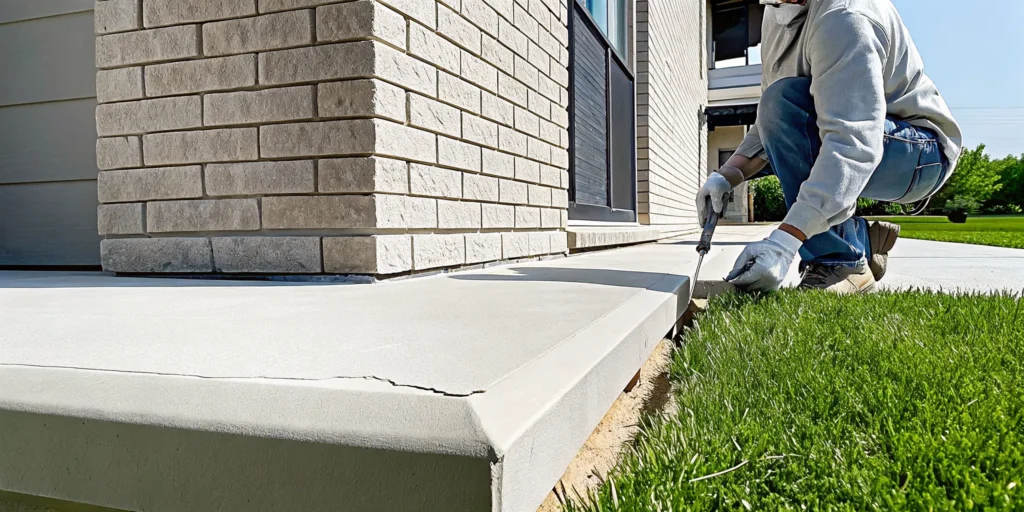
Let’s be honest: when you see a crack in your foundation, one of the first questions that pops into your head is, “How much is this going to cost?” The uncertainty can be more stressful than the crack itself. The price of foundation repair isn’t a one-size-fits-all number; it depends on the specific problem and the right solution to fix it permanently. We believe in transparency, so we’re pulling back the curtain on what influences the cost. This article will explain the factors that determine pricing and what to expect, so you can feel prepared when seeking foundation crack repair near Dallas.
Key Takeaways
- Manage moisture to protect your foundation: The expansive clay soil in Dallas is the primary cause of foundation cracks. You can prevent damage by using proper drainage to guide water away from your home and keeping the soil consistently moist during dry periods.
- Know the signs of foundation trouble: Don’t ignore common red flags like sticking doors and windows, sloping floors, or large, zigzagging cracks in your brick or drywall. These symptoms often point to underlying foundation shifts that need professional attention.
- Choose the right expert for the job: Foundation repair is not a DIY project; it requires a professional to fix the root cause. Select a contractor who is licensed, insured, has specific experience with Dallas soil, and provides a free estimate with a clear warranty.
Why Do Dallas Foundations Crack?
If you’ve noticed cracks appearing in your walls or floors, you’re not alone. Many homeowners across the Dallas-Fort Worth area deal with foundation issues, and it often comes down to what’s happening right under our feet. The ground in North Texas has a unique personality, and when combined with our dramatic weather, it creates the perfect storm for foundation problems. Understanding the root cause is the first step toward finding a lasting solution. It’s not just about patching a crack; it’s about addressing the underlying forces that are putting stress on your home’s structure. When you see these signs, it’s a signal that your home is shifting, and it’s important to figure out why before the damage gets worse.
The Problem with Expansive Clay Soil
The main culprit behind most foundation problems in the Dallas area is our soil. Much of North Texas is built on expansive clay soil, which acts a bit like a sponge. When it rains, the clay absorbs a massive amount of water and swells up, pushing against your foundation. Then, during our hot, dry spells, the soil loses that moisture and shrinks, pulling away from the foundation and leaving it unsupported. This constant cycle of expanding and contracting creates significant movement, putting immense pressure on your home’s concrete slab. Over time, this stress leads to cracks and settlement, which are the telltale signs that your foundation needs attention.
How Texas Weather Impacts Your Foundation
Our wild Texas weather is the other half of the equation. The combination of long, hot droughts and sudden, heavy downpours makes the expansive soil problem even worse. During extended dry periods, the clay soil can shrink dramatically, causing parts of your foundation to sink or settle. This settlement is what leads to those unsettling diagonal cracks in your drywall or brick. Conversely, when we get heavy rains, the soil can become oversaturated, causing it to swell and push upward on your foundation, a process known as heaving. This constant push and pull from the weather is why a small crack can quickly become a major structural issue, making professional foundation repair essential for protecting your home.
Spotting the Warning Signs of Foundation Damage
Your home often gives you subtle (and not-so-subtle) clues when its foundation is in trouble. Catching these signs early can make a huge difference in the complexity and cost of repairs. As a homeowner, knowing what to look for is your first line of defense. Pay attention to changes around your property, because what seems like a minor cosmetic issue could be a symptom of a deeper structural problem that needs professional attention.
Cracks in Walls, Floors, or Brick
While a tiny hairline crack in the drywall might just be from the house settling, other types of cracks are a major red flag. In the Dallas area, our expansive clay soil swells with moisture and shrinks when it’s dry, causing the ground beneath your home to shift. This movement often creates cracks in your home’s structure. Keep an eye out for zigzagging cracks in exterior brick, large diagonal cracks coming from the corners of doors and windows, or cracks in your concrete slab floor. These often point to serious foundation movement that requires professional foundation repair.
Doors and Windows That Stick or Won’t Close
Do you have a door that always seems to jam in the summer or a window that’s suddenly difficult to latch? This is a classic sign of a shifting foundation. When the foundation moves, it can warp the frames of your doors and windows, causing them to stick or not close properly. You might notice uneven gaps around the edges when they’re closed. While humidity can cause wood to swell, persistent issues that don’t resolve are a strong signal that the problem isn’t the door itself, but the foundation it rests on. It’s more than a simple annoyance; it’s your home telling you something is out of alignment.
Sloping or Uneven Floors
A floor that sags, slopes, or feels bouncy is one of the most direct signs of foundation trouble. You might notice it when you walk across a room, or you could try the old trick of placing a marble on the floor to see if it rolls on its own. Uneven floors happen when part of your foundation has sunk lower than the rest, creating a noticeable tilt inside your home. If you suspect your floors are sloping, it’s important to have a professional assess the situation. You can contact us for a free, no-obligation estimate to understand the extent of the issue.
Gaps Around Windows, Doors, or Walls
Another telltale sign of foundation settlement is the appearance of new gaps. Look for space opening up between your walls and the ceiling or floor. You might also see baseboards or crown molding separating from the wall. On the exterior of your home, check for gaps around window frames or where the garage door meets the pavement. These gaps indicate that parts of your home’s frame are pulling away from each other due to foundation movement. Seeing how these issues are resolved in other homes can be helpful, and you can review examples of our work to see what’s possible.
What Different Types of Foundation Cracks Mean
Finding a crack in your foundation can be alarming, but not all cracks signal a disaster. The direction, size, and location of a crack can tell you a lot about what’s happening underneath your home. Some are simply cosmetic, while others are clear warnings of structural stress. Understanding the difference is the first step toward finding the right solution. By learning to identify the various types of cracks, you can get a better sense of when to monitor a situation and when to call for a professional opinion.
Hairline Cracks
Think of these as the tiny, super-thin cracks you might see on a concrete sidewalk. Hairline cracks in your foundation are often caused by the concrete curing and shrinking over time, which is a normal process. They are typically less than an eighth of an inch wide and don’t usually point to serious structural problems. While they aren’t a major cause for concern, it’s a good idea to keep an eye on them. If you notice them getting wider or longer, it’s time to have them looked at. For the most part, these minor cracks can be sealed to prevent moisture from getting in.
Horizontal Cracks
A horizontal crack is one you’ll want to pay close attention to. These cracks run sideways along your foundation walls and are often a red flag for significant structural stress. In the Dallas area, this is frequently caused by hydrostatic pressure from our expansive clay soil. When the soil gets saturated with water, it expands and pushes against your foundation walls with immense force, causing them to bow inward and crack horizontally. This isn’t an issue that will resolve itself; it requires a professional foundation repair solution to stabilize the wall and prevent further damage.
Vertical and Diagonal Cracks
Vertical cracks run up and down, while diagonal cracks spread out at an angle, often starting from a corner of a window or door. These are typically caused by the foundation settling, which can be a natural occurrence. However, the width of the crack is what matters most. A thin, uniform vertical crack might be harmless, but one that is wider at the top than the bottom suggests uneven settling that could become a problem. Diagonal cracks also point to differential settling, where one part of your foundation is sinking faster than another. A professional evaluation is the best way to determine if this type of concrete repair is needed.
How Professionals Repair Foundation Cracks
When you see a crack in your foundation, it’s easy to feel a little panicked. But the good news is that professionals have a variety of proven methods to address these issues head-on. The right solution depends entirely on the type of crack and what’s causing it. A skilled contractor won’t just patch the problem; they’ll diagnose the root cause and apply a targeted, long-lasting fix. From sealing minor cracks to stabilizing the entire foundation, here are some of the most effective techniques we use to restore your home’s structural integrity.
Epoxy and Polyurethane Injections
For smaller, non-structural cracks, epoxy and polyurethane injections are a fantastic solution. Think of it like filling a cavity in a tooth. A technician injects a specialized resin directly into the crack, which then expands to fill the entire void. This process bonds the concrete back together and creates a waterproof seal. This method is especially effective for stopping leaks in basement walls or sealing hairline fractures before they can widen. It’s a precise and minimally invasive way to handle certain types of concrete repair and prevent water from causing more significant damage down the road.
Steel and Concrete Piers
When your foundation is settling, you need a solution that provides serious support from below. That’s where piers come in. These are strong columns, made of either steel or concrete, that are driven deep into the ground beneath your foundation until they reach stable soil or bedrock. Hydraulic jacks are then used to carefully lift the foundation back toward its original level. Piers essentially create a new, solid base for your home, permanently addressing settlement. This is a core component of professional foundation repair and offers a lasting solution for sinking homes.
Carbon Fiber Reinforcement
If you’ve noticed your basement walls are starting to bow inward or show long, horizontal cracks, the cause is likely external pressure from the soil. Carbon fiber reinforcement is an innovative and effective way to counteract this force. We apply incredibly strong, yet lightweight, carbon fiber straps directly to the interior of the foundation wall. These straps bond with the concrete, adding immense strength and preventing any further bowing. It’s a modern, non-disruptive method that stabilizes the wall without the need for major excavation, making it a key part of our foundation repair services.
Concrete Lifting and Leveling
Have you noticed your driveway, patio, or sidewalk has become a tripping hazard due to uneven, sunken slabs? This is often a sign of soil settling underneath. Instead of tearing out and replacing the entire slab, we can often lift it back into place. Using a technique called poly-jacking, we inject a high-density polyurethane foam through small holes drilled in the concrete. The foam expands beneath the slab, lifting it precisely back to its original height. This process is fast, clean, and the area is typically ready for use the same day, making it an efficient concrete repair solution.
How Much Does Foundation Repair Cost in Dallas?
Let’s talk about one of the biggest questions homeowners have: what is this going to cost? The truth is, there’s no one-size-fits-all price for foundation repair. The final cost depends entirely on your home’s specific situation. Think of it like a car repair; a simple oil change costs much less than a full engine rebuild. Similarly, filling a small crack is a different project than stabilizing a sinking foundation.
While I can’t give you an exact number without seeing your home, I can walk you through the typical price ranges and the factors that determine your final quote. This will help you understand what to expect and how to plan for the expense.
What to Expect for Minor vs. Major Repairs
In the Dallas area, foundation repair costs can range from a few hundred dollars to tens of thousands. For minor issues, like sealing a small, non-structural crack, you might spend around $300. However, for more significant problems, the price increases. Most homeowners in Dallas find themselves spending somewhere between $2,000 and $10,000, with the average cost landing around $4,500.
Projects requiring extensive work, such as installing multiple piers to correct severe foundation settlement, can cost $30,000 or more. The best way to know where your home falls on this spectrum is to see examples of different repair projects. You can view some of the solutions we’ve implemented for other Dallas homeowners on our Our Work page to get a better sense of the scale involved.
Key Factors That Influence the Final Price
The price on your estimate is determined by several key factors. The most significant is the extent of the damage and the specific foundation repair method needed to fix it. For example, injecting epoxy into a crack is less intensive than installing steel piers deep into the ground.
Other details about your property also play a role. The size of your home, whether it’s a single or multi-story building, and its foundation type (slab or pier and beam) all affect the scope of the work. Even the unique soil conditions around your property can influence the repair strategy and its associated cost. A professional will assess all these elements during an inspection to create an accurate and effective repair plan.
Exploring Your Financing Options
We know that foundation repair is often an unexpected and significant investment. It’s a crucial repair you can’t put off, but that doesn’t always make it easy on your budget. That’s why it’s important to find a contractor who not only provides a permanent solution but also offers ways to make the cost more manageable.
Many reputable companies provide flexible payment plans. At Solid Base, we offer straightforward financing options to help you get the necessary repairs without financial strain. The first step is always to get a clear, comprehensive estimate. We provide free, no-obligation estimates so you can understand exactly what needs to be done and what the cost will be before making any decisions. You can contact us today to schedule your free inspection.
Should You DIY or Hire a Professional?
When you find a crack in your foundation, it’s natural to wonder if you can handle the repair yourself. A trip to the hardware store for some epoxy or sealant seems much cheaper than calling in a team of experts. For very small, non-structural hairline cracks, a DIY patch might seem sufficient. However, when it comes to your home’s foundation, what you see on the surface is often just a symptom of a much larger issue happening underground.
The truth is, most foundation cracks are caused by soil movement, water pressure, or other complex factors that a simple patch can’t fix. Attempting a DIY repair on a structural problem can be a costly mistake. You might cover the crack, but you won’t stop the underlying cause. This means the foundation will likely continue to shift, leading to more significant damage and a much more expensive repair down the line. A professional assessment is crucial to correctly diagnose the problem. An expert can determine if you need a simple injection or a more robust solution like steel or concrete piers to permanently stabilize your home.
Hiring a professional foundation repair company ensures the job is done right the first time. Experts use patented products and proven methods to address the root cause, not just the cosmetic issue. While the initial investment is higher, it protects your property’s value and prevents future headaches. Many companies also offer warranties for their work and flexible financing options, making this essential home repair more manageable for your budget. It’s about securing your home’s structural integrity for the long haul.
How to Choose the Right Foundation Repair Contractor
Finding the right person for the job can feel overwhelming, but it’s the most critical step you’ll take. The right contractor not only fixes the immediate problem but also gives you peace of mind that the solution will last. A great company will be transparent, experienced, and professional from the first phone call to the final handshake. To make sure you’re hiring a team you can trust, focus on a few key qualifications. Think of it like a job interview where you’re the hiring manager. You want to find a partner who will protect your home, your biggest investment. Here’s what to look for when making your decision.
Look for Licensing, Insurance, and Warranties
First things first, let’s talk credentials. Never hire a contractor who isn’t properly licensed and insured. Licensing proves they meet the required professional standards, while insurance protects you from any liability if an accident happens on your property. Ask for proof of both; a reputable company will be happy to provide it. You should also ask about warranties. A strong warranty shows that a company is confident in its repair methods and the quality of its work. It’s a promise that they’ll stand behind their repairs for years to come, giving you long-term security. These credentials are the baseline for any professional team you consider hiring.
Prioritize Local Experience and Proven Methods
The soil in the Dallas area is notoriously tricky. Our expansive clay soil swells when it’s wet and shrinks when it’s dry, which is a major cause of foundation problems. This is why local experience is so important. A contractor who has spent years working specifically within the Greater Dallas area will have a deep understanding of these unique soil conditions and how to best address them. They’ll know which repair methods work best for our region. Ask about the techniques and products they use. Companies that use patented, proven products show a commitment to providing effective, durable solutions instead of just a temporary patch.
Insist on a Free Estimate and Transparent Pricing
You shouldn’t have to pay just to find out what’s wrong with your foundation. A trustworthy contractor will always offer a free, no-obligation evaluation and estimate. This allows you to get a clear diagnosis of the problem and a detailed breakdown of the proposed solution and costs. Foundation repair costs can vary widely depending on the extent of the damage, so getting a clear quote upfront is essential. Look for transparent pricing without vague line items or hidden fees. A professional company will also be upfront about financing options to help make the repairs more manageable for your budget. When you’re ready, you can contact a specialist to schedule your assessment.
How to Prevent Future Foundation Cracks
After you’ve addressed existing foundation problems, the last thing you want is a repeat performance. Protecting your home from future damage is all about proactive maintenance. Here in the Dallas area, our unique combination of expansive clay soil and unpredictable weather patterns makes this especially important. The ground beneath your home is constantly swelling and shrinking, putting stress on your foundation. By taking a few key steps, you can manage these forces and keep your foundation stable for years to come.
Manage Water and Drainage
Proper water management is your foundation’s first line of defense. The expansive clay soil common in North Texas acts like a sponge; it swells dramatically when it absorbs water and shrinks when it dries. When heavy rains cause water to pool around your foundation, the saturated soil can push upward, creating movement and cracks. An effective drainage system is crucial for directing excess water away from your home. Solutions like French drains or catch basins can help protect your home from settlement and other moisture-related issues. A well-drained property is a key part of any long-term foundation repair strategy.
Maintain Consistent Soil Moisture
Just as too much water is a problem, so is too little. During the hot, dry Texas summers, the clay soil can shrink significantly, pulling away from your foundation and causing it to settle or sink into the newly formed gaps. This is why you see an increase in foundation issues during periods of drought. The goal is to maintain a consistent level of moisture in the soil surrounding your home year-round. A simple soaker hose placed about 18 inches from your foundation can work wonders. Running it for short periods during dry spells helps prevent the soil from cracking and shrinking, providing stable support for your home’s concrete slab and foundation.
Schedule Regular Foundation Check-ups
Think of a foundation inspection like a regular health check-up for your home. Catching potential problems early is the best way to avoid extensive and costly repairs down the road. At least once a year, take a walk around your property and look for warning signs like new cracks in the brick, sloping floors, or doors and windows that have started to stick. Even better, have a professional take a look. We can spot subtle signs of trouble that might not be obvious to the untrained eye. Scheduling a professional evaluation gives you peace of mind and a clear plan if any issues are found. If you notice anything concerning, it’s always best to get a free estimate sooner rather than later.
Related Articles
- How to Fill Large Cracks in Concrete Like a Pro
- Foundation Crack Repair: A DIY vs. Pro Guide
- Foundation Repair Cost: The Ultimate 2026 Guide
- Ultimate Guide to Foundation Repair Options
- Pier & Beam Foundation Repair: Signs, Costs & Fixes
Frequently Asked Questions
How can I tell if a crack is serious or just a normal part of the house settling? The key is to look at the crack’s characteristics. Small, thin hairline cracks are often just from the concrete curing and aren’t a major worry. The red flags are cracks that are wider than an eighth of an inch, run horizontally along a wall, or are diagonal and wider at the top than the bottom. These types of cracks, along with sticking doors or sloping floors, usually point to foundation movement caused by our tricky Dallas soil, which needs a professional evaluation.
Is it okay to just seal a foundation crack myself to save money? While a DIY patch might seem like a quick fix, it usually only covers up the symptom. Most foundation cracks are caused by underlying issues like soil expansion or settlement. Simply sealing the crack won’t stop the ground from continuing to move, which means the problem will likely return and could get worse. A professional can diagnose the root cause and apply a permanent solution, which saves you from more expensive repairs in the future.
Will my homeowner’s insurance cover the cost of foundation repair? Generally, standard homeowner’s insurance policies do not cover foundation repairs caused by soil settlement, which is the most common reason for issues in the Dallas area. Coverage is sometimes available if the damage was caused by a specific event, like a plumbing leak that eroded the soil. It’s always best to review your specific policy, but since coverage is rare, exploring financing options with your contractor is a practical step.
My house is only a few years old. Why am I already seeing signs of foundation trouble? It’s a common misconception that foundation problems only happen to old houses. Here in North Texas, the issue is less about age and more about our expansive clay soil. This soil swells with rain and shrinks during droughts, creating powerful forces that can affect a foundation at any time, even on a newer home. These early signs are your home’s way of telling you it’s reacting to this soil movement.
How long does a typical foundation repair project take? The timeline really depends on the solution your home needs. A simple crack injection might be completed in just a few hours. More extensive projects, like installing piers to stabilize a settling foundation, can take anywhere from one to three days. A professional contractor will give you a clear timeline with their estimate so you know exactly what to expect and how long your property will be worked on.