
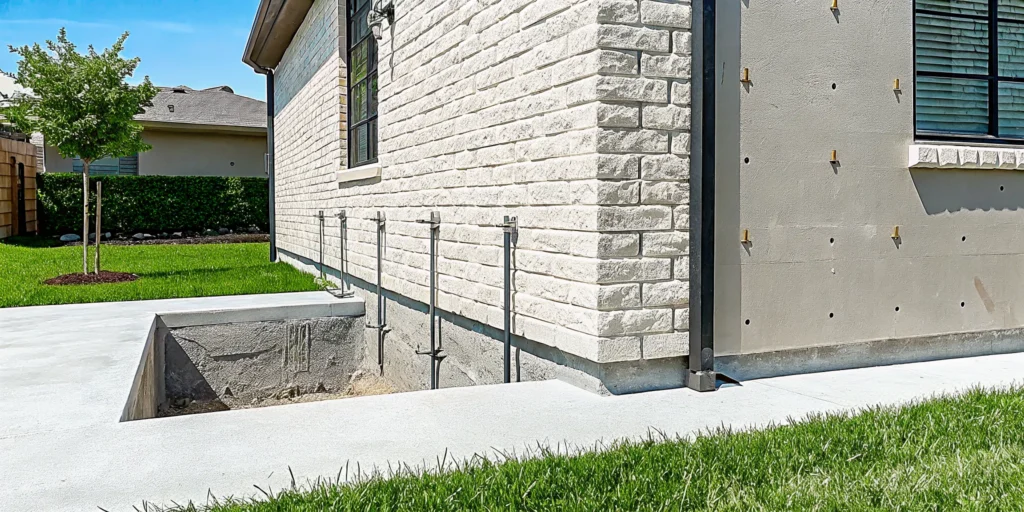
When you hear terms like “helical anchors” or “screw piles,” it can sound complicated and intimidating. But the concept is actually quite simple and brilliant. Think of them as giant steel screws that we drive deep into the ground, bypassing the unstable clay soil near the surface until we hit solid bedrock. This process effectively gives your home a new, unshakable footing. It’s a far cry from older, more disruptive methods. This modern approach is precise, minimally invasive, and incredibly effective. Let’s demystify the technology behind helical pier foundation repair in North Texas so you can feel confident and informed about securing your home’s structural integrity for good.
Key Takeaways
- Blame the Soil, Not the Builder: Foundation issues in North Texas are typically caused by the region’s expansive clay soil; its cycle of swelling and shrinking puts constant, uneven stress on your home’s structure, causing it to shift and crack over time.
- Go Deep for a Real Solution: Helical piers are effective because they bypass the unstable surface soil. These steel piers are drilled down to solid, load-bearing earth, creating a permanent anchor that transfers your home’s weight off the shifting clay and onto a stable base.
- Choose Your Contractor Carefully: The best repair method is only as good as the team installing it, so partner with a licensed, local expert who understands North Texas soil, provides clear pricing, and offers a strong, transferable warranty to protect your investment.
What Are Helical Piers and How Do They Work?
If you’ve noticed cracks in your walls or doors that stick, you might be dealing with a shifting foundation. It’s a stressful situation, but there are proven, permanent solutions. One of the most effective methods we use for foundation repair in North Texas is installing helical piers. Think of them as giant steel screws that we drive deep into the earth to support your home. You might also hear them called helical anchors or screw piles, but they all refer to the same powerful tool for securing a foundation.
These steel piers have helical blades, like the threads of a screw, welded to them. We use hydraulic machinery to twist them into the ground, bypassing the unstable soil near the surface. They are drilled down until they reach solid, load-bearing soil or bedrock that won’t shift. Once the pier is securely in place, we attach a heavy-duty steel bracket to it, which then connects to and supports your home’s foundation. This process effectively transfers the weight of your house from the problematic, shifting soil onto the deep, stable ground below, securing your home for the long term.
How Helical Piers Support Your Foundation
The real benefit of helical piers is their ability to reach deep beneath your home to find solid ground. Here in North Texas, our topsoil is often expansive clay, which shrinks and swells dramatically with moisture changes. Helical piers are designed to bypass this unstable layer completely. We drill the piers down, sometimes 20, 30, or even more feet, until we hit a layer of soil or rock that is dense and stable.
Once a pier reaches this solid stratum, a steel bracket is attached to your home’s foundation footing. This bracket allows us to transfer the entire weight of that section of your house off the failing soil and onto the pier. It’s like giving your home its own underground support column, anchored deep in the earth where surface-level soil movement can’t affect it.
How They Stabilize a Failing Foundation
Helical piers are an excellent solution for stabilizing a foundation because the installation process is so precise. As we twist the pier into the ground, we constantly measure the torque, which is just a technical term for the turning force required. This measurement tells us exactly when the pier has reached soil that is strong enough to support your home. There’s no guesswork involved in the process.
This method is also incredibly versatile. Because the piers are actively screwed into the ground, they don’t rely on the weight of the house to be driven in. This makes them ideal for supporting lighter structures like porches and additions, or for repairs in tight spaces like crawl spaces. You can see how we’ve used them in a variety of situations in our past projects. This precision and flexibility ensure a reliable, long-lasting fix for your foundation.
Debunking Common Helical Pier Myths
There’s a lot of information out there, and it’s easy to come across some common myths about helical piers. Let’s clear a few things up. First, while the technology has been perfected over the years, helical piers are not a new invention; they have been used for well over a century. Second, terms like “helical anchors” and “screw piles” are just different names for the same product, so don’t let the terminology confuse you.
Finally, some people believe helical piers are only suitable for light structures. This is simply not true. Helical piers are an engineered solution that can be designed to support incredible loads, making them a go-to for everything from single-family homes to large commercial buildings. They provide a strong, dependable, and permanent solution for foundation problems of all sizes.
Why Is North Texas Soil So Tough on Foundations?
If you live in the Dallas-Fort Worth area, you know our weather can be a real rollercoaster. What you might not realize is that the ground beneath your home is on a similar ride. The unique soil composition in North Texas is the primary culprit behind many of the foundation problems we see, and it can be incredibly frustrating to watch your home develop cracks and shifts seemingly out of nowhere. It’s not about poor construction or bad luck; it’s about the powerful, natural forces at work right under your feet. This constant battle between your home and the ground can feel overwhelming, but it doesn’t have to be.
Understanding what’s happening in the dirt is the first step to protecting your home’s structural integrity. When you know the cause, you can find the right solution for a lasting foundation repair. Instead of temporary patches, you can implement a fix that addresses the root of the problem, giving you peace of mind that your home is stable and secure for years to come. Let’s break down exactly what makes our local soil so challenging and what you should be looking for.
Understanding Our Expansive Clay Soil
Much of North Texas is built on what’s called expansive clay soil. Think of this soil as a dense, thirsty sponge. When it rains, the clay absorbs a massive amount of water and swells, pushing upward against your foundation with incredible force. Then, during our hot, dry summers, that same clay loses its moisture and shrinks, pulling away from the foundation and causing it to sink or settle. This constant cycle of swelling and shrinking creates powerful, uneven movement beneath your home. Over time, this relentless stress can cause parts of your foundation to shift, crack, and fail, putting your entire structure at risk. It’s this unique characteristic of our local geology that makes professional assessment so critical.
The Impact of Shifting Water Levels and Drainage
The dramatic weather patterns in our region are what make our expansive clay soil so destructive. Heavy spring rains can oversaturate the ground, while long summer droughts can dry it out completely. This fluctuation in water levels is what triggers the soil’s expansion and contraction. Poor drainage around your property can make things even worse by allowing water to pool near the foundation, creating pockets of extreme saturation. This uneven moisture means one part of your house might be pushed up by swollen soil while another part sinks into dry, shrunken soil. This differential movement is a leading cause of serious foundation damage and the need for concrete repair on slabs, driveways, and patios.
Signs Your Foundation Is in Trouble
Your house will often send you signals when it’s struggling with foundation movement, and it’s important to pay attention to these clues before small issues become major problems. Walk around your home, inside and out, and look for telltale signs of trouble. Are your doors or windows suddenly sticking and becoming hard to open or close? Have you noticed new cracks appearing in your drywall, brick, or the foundation itself? Other common red flags include sloped or uneven floors, gaps forming around window and door frames, and even a chimney that appears to be tilting away from the house. If you spot any of these issues, it’s a clear sign that you should contact a professional for an assessment.
Why Helical Piers Are the Ideal Fix for North Texas Homes
When you’re dealing with foundation problems, you want a solution that’s not just a quick patch, but a real, lasting fix. For homeowners in the Dallas-Fort Worth area, helical piers are often the best answer. Their design directly addresses the unique challenges of our local soil, providing a stable and reliable base for your home for years to come.
Unlike other methods that can be disruptive and less effective, helical piers offer a modern approach to foundation repair. They solve the core problem by bypassing the unstable soil near the surface and anchoring your home to solid, load-bearing strata deep underground. This method is not only effective but also efficient and minimally invasive, making it the preferred choice for homeowners who value both performance and protecting their property. Let’s look at why this solution is so well-suited for our homes.
Built to Handle Shifting Clay Soil
If you live in North Texas, you’re familiar with our expansive clay soil. This soil acts like a sponge, swelling dramatically when it’s wet and shrinking just as much when it dries out. This constant cycle of expansion and contraction puts immense stress on your home’s foundation, causing it to shift, settle, and crack. Helical piers are engineered specifically for these conditions. They are screwed deep into the ground, past the unstable clay, until they reach solid, stable soil or bedrock. Because they are twisted into place rather than pushed, they don’t rely on the weight of your house for installation, making them ideal for the variable soils found throughout the DFW area.
A Permanent, Reliable Solution
When you invest in a major home repair, you want it to be the last time you have to worry about that problem. Helical piers are considered a permanent foundation repair solution. Made of galvanized steel, they are designed to resist corrosion and last for the life of your home, potentially a century or more. This isn’t a temporary patch; it’s a long-term structural reinforcement that provides lasting stability and peace of mind. By anchoring your foundation to deep, stable earth, you are addressing the root cause of the issue, not just the symptoms. This commitment to proven, lasting solutions is at the core of our work at Solid Base.
Protect Your Landscaping
One of the biggest concerns homeowners have about foundation work is the potential damage to their yard. The thought of heavy machinery tearing up a carefully tended lawn and garden is enough to cause anyone stress. Helical pier installation is a much cleaner and less invasive process compared to other methods. The equipment used is smaller and more manageable, which means we can work carefully around your trees, shrubs, and flowerbeds. Our goal is to stabilize your home with minimal disruption to your property, leaving your landscaping looking as good as we found it.
Helical Piers vs. Other Repair Methods
It’s helpful to understand how helical piers stack up against other common repair techniques. Unlike concrete pilings, which can be limited by depth, steel helical piers can be installed much deeper to guarantee they reach stable soil. Some fixes, like simple crack injections, are mostly cosmetic and don’t solve the underlying structural problem. Another method, mudjacking, is great for leveling smaller concrete surfaces like a sidewalk or patio, but it’s not designed to support an entire foundation. Helical piers are a true foundation repair solution that fixes the actual problem: an unstable base.
What to Expect During Helical Pier Installation
The idea of a major repair project at your home can feel overwhelming, but knowing what the process involves can make all the difference. When our team arrives to install helical piers, our goal is to stabilize your home efficiently and with as little disruption to your life as possible. We handle every detail so you can have peace of mind. From the initial measurements to the final cleanup, here’s a clear breakdown of what happens during a typical helical pier installation.
The Installation Process, Step by Step
First, our crew prepares the areas around your foundation where the piers will be installed. We then use hydraulic equipment to drill the helical piers deep into the ground, moving past the unstable North Texas clay soil. The process is precise. We constantly measure the twisting force, or torque, which tells us exactly when the pier has reached a solid, load-bearing soil layer. This ensures your home gets the support it needs. Once the piers are securely in place, we attach heavy-duty steel brackets to connect the piers to your home’s foundation, completing the foundation repair and making it stable once again.
How Long Does Installation Take?
One of the best parts of using helical piers is how quickly they can be installed. For most homes, the entire installation process is completed in just one or two days. We understand that your time is valuable, and you don’t want a construction project dragging on for weeks. Our experienced team works efficiently to secure your foundation without turning your life upside down. You can see examples of our streamlined process by looking at Our Work on other homes in the Dallas area. We focus on getting the job done right so you can get back to normal as soon as possible.
Life After Installation
After the helical piers are installed, you can relax knowing you have a permanent solution. These piers are designed to last for the life of your home, potentially 100 years or more, providing a stable base that won’t be affected by shifting soils. This isn’t a temporary patch; it’s a long-term fix that restores your home’s structural integrity and your peace of mind. We stand behind our work with a strong warranty, a promise that reflects our commitment to quality. You can learn more about our dedication to lasting solutions on our About page. Your home is finally on solid ground.
The Cost of Helical Pier Repair in North Texas
Let’s talk about the question that’s likely at the top of your mind: What is this going to cost? Foundation repair is a significant investment in your home’s safety and value, and it’s completely normal to be concerned about the budget. The final price tag isn’t a simple, one-size-fits-all number because every home and every foundation issue is unique.
The good news is that a professional assessment can give you a clear, detailed breakdown of the costs. Instead of a vague estimate, you’ll get a concrete plan tailored to your property. To help you prepare for that conversation, let’s look at the key elements that influence the cost of helical pier repair, from the scope of the work to the guarantees and payment options that make it manageable.
What Factors Into the Final Cost?
The final cost of a helical pier repair project depends on a few key things specific to your home. There isn’t a standard price tag because every situation is different. The type of soil on your property, the size and style of your foundation, and of course, the extent of the existing damage all play a role in determining the scope of the work. A small home with minor settling in one corner will require a different solution than a larger home with widespread foundation distress.
This is why a thorough, on-site inspection is so important. It’s the only way to get a truly accurate picture of what your specific repair will involve. A professional can assess the damage, identify the cause, and create a precise plan. That’s why we always start with a free, no-obligation estimate to give you a clear and detailed path forward.
Understanding Your Warranty
A foundation repair is an investment in your home’s future, and a strong warranty is your protection on that investment. When you’re comparing companies, be sure to ask detailed questions about their warranties. Quality helical pier systems often come with long-term guarantees, such as a 25-year warranty. Some companies even offer a lifetime warranty that can be transferred to a new owner if you decide to sell your home down the road.
A transferable warranty is a huge plus, giving both you and potential future buyers confidence in the structural integrity of the house. It’s a clear sign that the company is confident in its methods and stands firmly behind its work. It means the solution is built to last.
Exploring Your Financing Options
Let’s be honest, foundation problems rarely show up at a convenient time. For most of us, it’s an unexpected and often stressful expense. The great news is that you don’t have to let the cost prevent you from securing your home. Many homeowners are relieved to learn that reputable foundation repair companies often provide flexible payment solutions to help manage the cost of the project.
These can include special financing options, sometimes with no-interest plans available for qualified buyers. This flexibility makes it possible to address critical foundation issues right away without draining your savings. Don’t hesitate to ask about payment plans when you get your estimate. A trustworthy partner will be happy to walk you through the available options.
How to Choose the Right Foundation Repair Company
Choosing a method like helical piers is a great first step, but finding the right team to install them is just as critical. This is a major project for your home, and you want a partner you can trust to get it right. The quality of the installation directly impacts the long-term success of the repair. A great company will not only have the technical skills but will also communicate clearly, respect your property, and stand behind their work for years to come.
When you start looking for a foundation repair contractor, you’re searching for more than just a crew with equipment. You’re looking for a team of specialists who understand the science behind soil and structures, especially in our unique North Texas environment. To help you make a confident choice, focus on three key areas: their experience, their business practices, and their local reputation.
Verify Their Credentials and Local Experience
Your home’s foundation is no place for on-the-job training. The first thing to check is a company’s credentials and their specific experience working in your area. Look for a team that is not only licensed and insured but also has specialized training. For example, some helical pier manufacturers require contractors to complete certification programs to ensure their products are installed correctly. This is a great sign that a company is committed to a higher standard of quality.
A company’s local experience is just as important. A contractor who primarily works in North Texas will have a deep understanding of our expansive clay soil and the specific challenges it presents. They’ll know the local building codes and permit requirements, ensuring your project is done correctly from start to finish. When you talk with a potential contractor, ask about their team’s background and their experience in the Greater Dallas area.
Look for Clear Pricing and Strong Guarantees
A trustworthy foundation repair company will be transparent about costs from the very beginning. You should receive a detailed, written estimate that clearly explains the proposed work and all associated fees. Be wary of any quote that seems vague or unusually low. A reputable company will offer a free, no-obligation estimate so you can understand the scope of the project before making a commitment.
Beyond the initial price, a strong warranty is your best indicator of a company’s confidence in its work. Since helical piers are designed to be a permanent solution, you should look for a lifetime warranty that can be transferred to a new owner if you sell your home. This not only gives you peace of mind but also adds significant value to your property. If costs are a concern, ask about available financing options that can make the repair more manageable.
Partner with a Trusted Local Expert
Ultimately, you want to partner with a local expert who is invested in the community and their reputation. Foundation repair is a complex structural job that involves diagnosing and fixing deficiencies in your home’s core support system. This type of work almost always requires permits and must adhere to strict local building codes. A trusted local company will handle these details correctly.
Take the time to learn about the company and its team. Look at examples of their past projects and read reviews from other homeowners in your area. A professional and experienced team will be happy to answer all your questions and walk you through the entire process, making you feel comfortable and informed. Choosing a local expert means choosing a partner who is accountable and dedicated to protecting your most valuable asset.
Related Articles
- What Are Helical Piles? The Ultimate Guide
- Foundation Repair Cost: The Ultimate 2026 Guide
- Pier & Beam Foundation Repair: Signs, Costs & Fixes
- Ultimate Guide to Foundation Repair Options
- A Homeowner’s Guide to Foundation Repair Services
Frequently Asked Questions
I see cracks in my walls. Can’t I just patch them and call it a day? Patching cracks is a cosmetic fix for a structural problem. Think of those cracks as symptoms; the real issue is the unstable soil moving your foundation. While patching might make your wall look better for a little while, the ground will continue to shift, and new cracks will almost certainly appear. Helical piers solve the root cause by anchoring your home to stable ground deep below the surface, preventing further movement and providing a permanent solution.
Will the installation process completely destroy my yard and landscaping? This is a very common and understandable concern. The good news is that helical pier installation is one of the least invasive foundation repair methods available. The equipment we use is smaller and more precise than what’s needed for other techniques. Our crews are trained to work carefully around your property, protecting your flowerbeds, shrubs, and trees so we can stabilize your home with minimal disruption to the yard you’ve worked so hard on.
Are helical piers the only good option for foundation repair? The best repair method always depends on the specific problem. For example, leveling a small, sunken sidewalk might call for a different technique. However, when it comes to fixing a home’s foundation that is settling due to the expansive clay soil here in North Texas, helical piers are an exceptional solution. They are specifically engineered to bypass that unstable soil and lock your foundation onto solid ground, which is exactly what’s needed to stop settlement for good.
How can I be sure the repair is done correctly and will actually last? There are two key parts to this: a precise installation and a strong guarantee. During installation, we use hydraulic gauges to measure the torque, or turning resistance, as we screw the pier into the ground. This data tells us exactly when the pier has reached solid, load-bearing soil, so there is no guesswork. Afterward, the work should be backed by a long-term, transferable warranty. This is the company’s promise that the repair is a permanent solution built to last for the life of your home.
I’m not sure if my foundation problem is serious. What’s my next step? If you’re seeing signs like sticking doors, uneven floors, or cracks in your brick or drywall, the best thing you can do is get a professional opinion. It’s impossible to know the severity of the issue just by looking at it from the surface. A reputable specialist can perform a thorough evaluation, identify the cause of the problem, and let you know what, if anything, needs to be done. Getting an expert assessment is the first step toward getting clarity and peace of mind.