
Sticking doors and cracking drywall in your Dallas home are signs of a shifting foundation. Underneath your feet, expansive blackland prairie clay shrinks and swells with every heavy rain and dry spell.
The professionals at Solid Base Foundations have been providing expert foundation repair services in the Dallas-Fort Worth area since 2003. Our patented helical pier and push pier systems are engineered specifically for the expansive clay soil that affects North Texas homes.
Call (940) 365-4221 for your free estimate today!
A comparison of helical piers vs push piers is essential when deciding how to stabilize a settling house in Dallas. Helical piers screw into the soil using helical plates, while push piers are driven deep using hydraulic rams and the building’s own weight. Both options are professional foundation repair methods, and academic research proves underpinning is the most reliable way to stabilize homes built on highly expansive clay soil. Helical piers work best for lighter structures or different soils, while push piers excel for heavy homes because they drive straight to load-bearing strata. Both systems from Solid Base Foundations feature expert installation and 25-year warranties, ensuring you get a permanent solution for your unique structural needs.
But how do you know if your home needs this type of deep stabilization? Finding the signs of shifting clay is the first step toward protecting your investment. Let us examine Why Your Dallas Home’s Foundation Needs Pier Support, beginning with
Why Your Dallas Home’s Foundation Needs Pier Support
Dallas sits on a unique type of earth that poses a constant threat to homes. This ground is known as expansive blackland prairie clay soil. Unlike stable soils, this clay reacts strongly to weather. It acts like a giant sponge, swelling up when it rains and shrinking when dry. As the seasons change, this movement shifts the ground beneath your home. Over time, this constant change puts harsh pressure on your concrete slab.
The North Texas clay shrink-swell cycle
In North Texas, this wet and dry cycle is the main root cause of foundation failure. During hot summers, the clay dries out and shrinks, which leaves large gaps in the earth. The soil pulls away from the edges of your home, leaving the concrete with no support. When heavy rains return, the dry clay absorbs water quickly and swells. This harsh movement lifts some parts of the home while other parts sink. This unequal shifting, called differential settling, cracks walls and jams doors.
When local homes need underpinning support
When your home shifts, you must find a way to secure the structure. Simply pouring more concrete under the edge of the house will not work. To fix the issue, you must reach deep below the moving clay. This is where underpinning comes in. Studies show that underpinning is the most reliable way to repair homes on shifting clay. You can learn more about this in geotechnical research on expansive soil. By installing steel piers deep into the earth, you bypass the weak clay and anchor your home on solid rock.
For Dallas homeowners, you may notice several signs that show your home needs deep support:
- Cracks in your outer brick walls.
- Interior cracks, mostly near window and door frames.
- Doors and windows that stick or will not close.
- Sloping or unequal floors in your home.
The two main steel pier families
To support your home, local experts use two main types of steel piers. These are helical piers and push piers. Both systems are designed to transfer the weight of your home past the active soil zone. However, each system has a very different design and setup method. Choosing between foundation repair methods like helical or push piers depends on your specific home.
For example, helical piers use helical plates to pull the pier deep into the soil. They do not rely on the weight of your home for setup. On the other hand, push piers are driven into the soil using the weight of the building as force. Knowing how these two systems work helps you make the best choice for your property. Both families of piers provide a permanent solution that stops your home from sinking.
What Are Helical Piers?
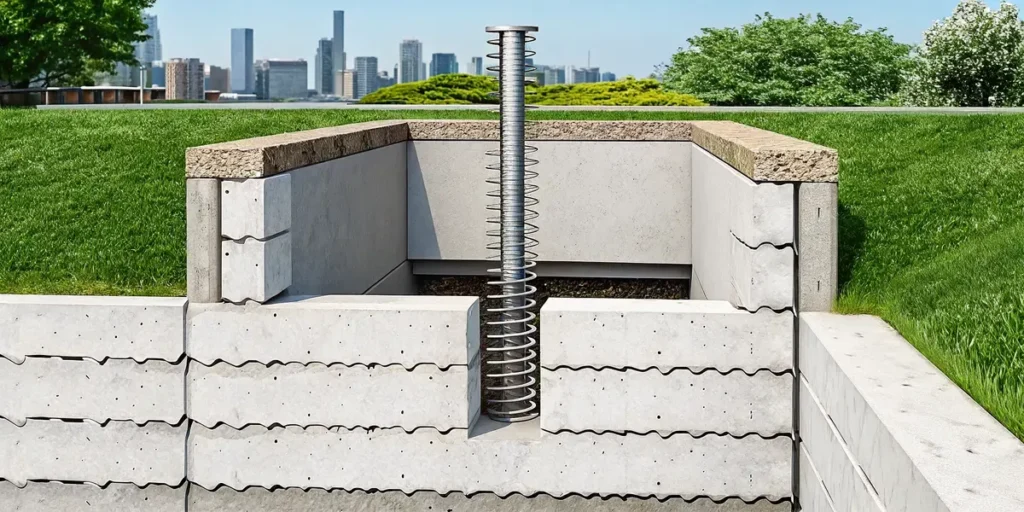
Helical piers are steel piers designed to support a weak foundation. They have a central steel shaft with screw-like plates welded to the outer body. These plates, called helices, act like a corkscrew as a machine spins the pier into the ground. As they turn, the helical plates pull the pier deep into the soil. This allows the piers to reach stable, load-bearing ground without needing the weight of your home.
Design and installation mechanics
To install a helical pier, a worker uses a hydraulic machine to twist the shaft. The twisting force screws the pier into the earth. The plates pull the pier down on their own. We do not need to use the weight of your home to force them in.
This is a key contrast when you look at helical piers vs push piers. Push piers need the massive weight of a heavy brick or concrete home to push them down. In contrast, helical piers screw in on their own. This makes them the best choice when you want to support lighter structures like porches, decks, or slab additions. They also work well under existing foundations that lack the weight to drive other piers down.
Optimal uses and soil conditions
Helical piers work in many situations. They work well in variable soil where soil layers change quickly. Because they screw in, they are great for lighter loads. This includes supporting decks, porches, and new room additions. They are also ideal for new construction. You can set them before pouring a concrete slab. This helps prevent future settling in the shifting North Texas clay.
Both helical piles and push piers are known as slender pile underpinning systems. Under building safety codes, these systems need geotechnical reporting and inspections to meet structural needs. These checks make sure the piers are set to the right depth and torque to support your home.
Patented helical technology from Solid Base
At Solid Base Foundations, we use patented helical pier products with helical plate technology. These plates pull the pier into the soil during install, making sure the pier holds tight. Our trained crew sets each pier to a precise torque rating. This ensures that your foundation rests on strong, stable soil deep beneath the ground.
Our helical pier systems come with a 25-year warranty. Our trained experts handle the full install, giving you long-term peace of mind. With our patented products, you protect your home from the constant swell and shrink of the local clay. If you notice signs of structural damage, you should contact our team for professional foundation repair services right away.
What Are Push Piers?
When North Texas expansive clay soil shrinks and swells with changes in moisture, it can cause your home’s foundation to sink. If your concrete slab or pier-and-beam foundation begins to settle, underpinning is the most proven way to secure it. Push piers are a key foundation repair method that can solve this problem. Crews drive these steel pipes deep into the earth until they reach stable, load-bearing strata.
The mechanics of driven steel
If you seek professional foundation repair services, knowing how helical piers vs push piers differ will help you make a smart choice. During the work, crews place push piers next to the existing concrete footings of your foundation. They use heavy steel brackets to attach each pier right to the building structure. Then, a strong hydraulic ram drives the pipe straight down. This system uses the heavy weight of your home to push the pier until it hits solid ground.
Because they rely on the weight of the structure, these piers are best for heavy homes or commercial buildings. The installation process is direct and causes very little mess in your yard. As a slender pile underpinning system, these steel piers must meet strict local building rules to keep your home safe. Some local building codes even call for a geotechnical report or special inspections before work starts.
Handling unknown soils
Push piers are best when you do not know the exact soil conditions under your home. The depth of North Texas clay soil varies widely from yard to yard. Standard soil tests cannot always predict where the stable strata lies. Since the hydraulic ram pushes the pipe until it cannot move any deeper, you get a custom depth for every pier. This ensures that every pipe rests on a firm layer that can bear the load.
Extra strength with external sleeves
Soil movement in the Dallas area can cause strong upward and downward forces. Standard driven piers handle downward weight well, but they can struggle with tension or side-to-side soil movement. To solve this issue, Solid Base Foundations uses a special push pier system. This design features a patent-pending external sleeve that adds crucial tension resistance. The sleeve locks the pier sections together to stop the pipes from pulling apart when the clay soil swells.
Like our helical pier options, these push piers come with a 25-year manufacturer warranty. Our trained crew handles the entire installation process to ensure you get lasting peace of mind.
Helical Piers vs Push Piers: A Side-by-Side Comparison
When your home settles, choosing the right support is vital. Both helical piers and push piers are proven tools, but they work in other ways. They differ mostly in how they go into the soil. Helical piers screw into the dirt, while push piers are driven deep down.
Direct comparison of pier systems
To help you choose, we can look at their features side by side. This table shows how each system handles your soil and structure needs.
| Pier Feature | Helical Piers | Push Piers |
|---|---|---|
| Installation Method | Screwed into the ground like a corkscrew using torque. | Driven deep using the weight of the home and hydraulic force. |
| Soil Requirements | Best for shifting soils. | Ideal when stable soil depth is unknown before starting. |
| Load Capacity | Suits light to medium structures. | Designed for heavy loads and major settling. |
| Best Use Case | Decks, porches, additions, and new builds. | Older homes with structural movement. |
| DFW Clay Soil Role | Resists movement in the shallow clay. | Goes past moving clay to reach deep, stable strata. |
| Warranty Protection | Backed by a 25-year warranty. | Backed by a 25-year warranty. |
Critical factors for your home
Soil conditions play a huge role in this choice. In areas with highly expansive clay, underpinning a foundation is the best repair method. It stops ongoing damage and keeps the structure stable.
The clay in North Texas shrinks and swells with moisture changes. When the soil moves, your slab can crack and shift. Push piers are great here because they go past this active clay. They reach down to the hard, stable rock beneath it, but if the clay layer is very deep, helical piers might be the better path.
Structural load and foundation type also matter. Both helical piles and push piers are classed as slender pile underpinning methods. They require specific geotechnical reports to meet strict building codes.
Heavy brick homes are ideal for push piers. This is because they use the weight of the building to push the pier into the ground. If your home is light or has a pier-and-beam system, it might not have enough weight. In that case, helical piers are the right choice since they use machine power to screw into the earth without using the home’s weight.
Geotechnical needs in North Texas
Before you choose, an expert review is key. Expert teams can test your soil and check your foundation to find the best fit. At Solid Base Foundations, we offer professional foundation repair services designed for local soils. Both of our pier systems come with 25-year warranties to give you long-term peace of mind.
We do not guess repair costs in advance. Instead, we look at your own home and soil to build a custom plan. Call us today to schedule your free estimate and get a clear picture of what your home needs.
Which Pier System Does Solid Base Foundations Recommend?
Customized Engineering for North Texas Clay
There is no single answer to the helical piers vs push piers debate. Each home in the Dallas area sits on a unique patch of expansive clay soil. This clay shrinks and swells as moisture levels change, putting huge stress on your slab. Because of this movement, your home needs a custom plan based on its foundation type and load needs.
Our team looks at every detail of your home. We look for sticky doors, uneven floors, and cracks in your drywall. These signs tell us how the clay soil has shifted under your slab.
Studies from the University of Houston show that underpinning is a highly reliable way to repair these foundations. Underpinning shifts the weight of your home from weak topsoil down to deep, stable earth. Our engineers check the soil, structure weight, and damage before choosing a pier. This careful check helps us pick the right tool for your specific home.
Patented Helical and Push Pier Technology
When we choose a system, we use strong tools to protect your home. Our push piers and helical piers are designed for the harsh soil in North Texas, and both carry 25-year factory warranties. These systems must meet strict city building codes. As noted in the Portland codes, these slender pile systems need careful planning and checks to support a home.
Our helical piers are screwed into the ground with patented helical plates. This design makes them perfect for lighter loads or variable soils, including porches and decks. For heavier structures, we use push piers with a patent-pending external sleeve. This sleeve gives the pier extra strength to resist tension and keep the steel pipe straight under pressure when the clay soil swells.
Our trained crew does all the repair work. We work quickly to fix your home with very little mess in your yard. Both pier options are backed by our deep local knowledge and strong factory support.
Free On-Site Inspection Process
We never suggest a fix without seeing your property first. Our team gives a free on-site visit to check cracks, measure slope, and test soil. Our team serves the whole Dallas area. Homeowners in Tarrant County can work with the foundation repair experts in Fort Worth to find the best plan.
Once we finish our checks, we will give you a clear plan and a free quote. This plan will explain if you need helical piers, push piers, or a mix of both. We want you to feel sure about the repair work. Our goal is to give you a long-lasting fix that keeps your home safe and stable.
Frequently Asked Questions
What is the main difference between helical piers and push piers?
The main difference is how they are put into the ground. As noted by GoliathTech, helical piers are screwed into the soil while push piers are driven deep. Helical piers use plates to twist into the dirt, while push piers use hydraulic tools. To learn more, check our foundation settlement repair guide.
Why are helical piers chosen for expansive clay soils?
In Dallas, expansive clay soil shrinks and swells with moisture changes. Helical piers work well here because they screw deep into stable soil below this shifting layer. They use helical plates to hold the pier in place without needing the weight of your home. This makes them a strong choice to secure your foundation.
When are push piers better than helical piers?
Push piers are often better when your home is heavy or has deep concrete footings. They are also ideal when we do not know the exact soil types below your home. Hydraulic rams push the steel pipes down until they hit hard bedrock or strong soil. This makes sure the piers can support the heavy load of your foundation.
What kind of warranty comes with these pier systems?
Both pier systems come with a 25-year manufacturer warranty. According to Solid Base Foundations, our trained experts install these piers to make sure they last. Since each home sits on different clay soil, we offer a free on-site check. Be sure to contact us to secure your home.
Ready to stabilize your Dallas foundation?
North Texas clay soil always moves, putting heavy stress on your concrete slab. When you ignore early warning signs like wall cracks or sticky doors, the damage only gets worse. Over time, your home shifts further and repair costs will climb. Fixing these issues today prevents major foundation damage and protects your home’s value. You can get a stable foundation and long-term peace of mind before the next wet season. Our local team offers proven methods backed by a twenty-five year warranty to keep your home safe. We will check your home for free and give you a clear, honest plan.
Ready to protect your home? Call (940) 365-4221 to schedule a free foundation inspection and estimate.