
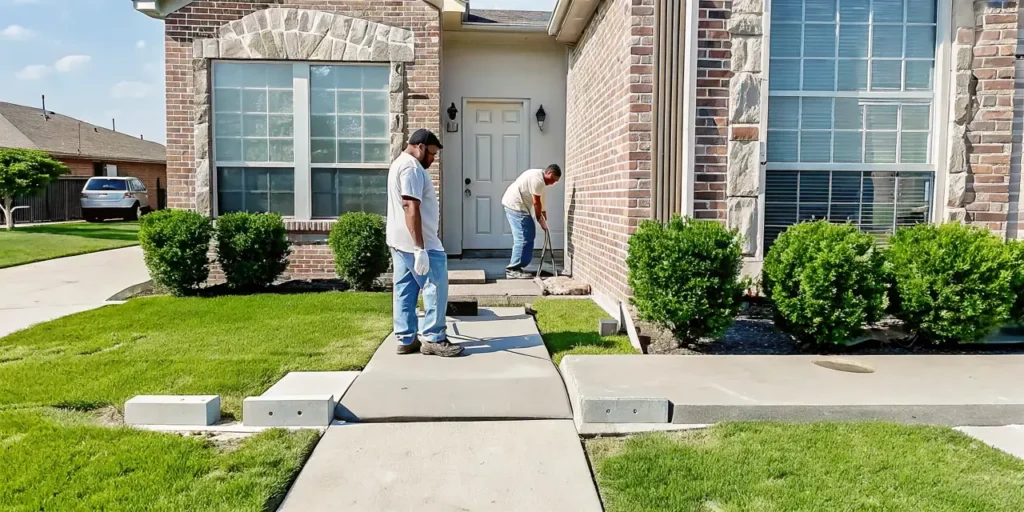
Most residential foundation repair projects in Dallas finish in a single day of active work. Modern structural tools allow crews to stabilize sinking floors without tearing up your entire yard. You can fix your home’s cracks without a month of mess.
Homeowners often ask how long does foundation repair take when they first notice sinking floors, cracking drywall, or uneven concrete foundations in their North Texas property. For a typical residential project in Dallas, the active repair phase usually takes between one and three days to complete. Most pier installations finish in a single day, although the total timeline depends on the severity of your structural damage and local soil conditions. According to Solid Base Foundations, modern methods like PolyLevel are ready for use just fifteen minutes after the material is injected. This efficient approach helps you avoid the long cure times and messy cleanup required by traditional mudjacking or older repair methods.
Every Dallas home faces unique structural challenges due to our shifting clay soils. You need to know what to expect from the moment you call a contractor until the final crew leaves. Finding the specific answer to How long does foundation repair take in Dallas? requires looking at each step, and the local schedule follows this path.
How long does foundation repair take in Dallas?
The time it takes to fix your foundation depends on the type of work your home needs. Most residential jobs only take one to three days to finish. But the full timeline, from your first call to the final check, can be much longer. This is because every home in the Dallas area faces different soil and water issues that change the scope of work.
Active repair versus total project time
There is a big difference between the days crew members are at your house and the time it takes to plan the job. The active work of lifting a home or fixing a slab is often quick. Most residential foundation projects are completed in a single day. However, things like city permits and engineering reports can add weeks to the total schedule. If your city has strict rules, getting a permit might add four to 16 weeks to your timeline for foundation repair.
For more complex jobs, the work can take slightly longer. Foundation pier installations typically take 1 to 3 days to finish. If your project is very large, the number of piers will be the main factor. A job with 30 piers will take much more time than a job with six. Also, indoor repairs take longer than outdoor work because crews must cut through concrete floors and move soil inside the home.
Estimating your repair schedule
The first step in any professional foundation repair timeline is a full site check. A pro will visit your home to see the damage and find the root cause. This foundation inspection typically takes between 1 and 2 hours to complete. During this time, the expert looks for cracks and sinking floors to plan the best fix.
After the check, the total wait time depends on three main things: soil conditions, how bad the damage is, and the tech used. Modern methods like PolyLevel can save time. PolyLevel concrete leveling is ready for use just 15 minutes after the material is injected. Traditional methods may take days to dry. This keeps you out of your garage or off your porch for much longer.
| Repair Type | Active Work Time | Ready for Use |
|---|---|---|
| Standard Piering | 1 to 3 Days | Immediate |
| PolyLevel Leveling | 2 to 4 Hours | 15 Minutes |
| Concrete Sealing | 3 to 5 Hours | 6 Hours |
| Indoor Piering | 3 to 5 Days | Immediate |
Why site checks matter for the timeline
You cannot guess how long a job will take without a technical survey. This survey looks at construction records and government archives to map the soil conditions under your home. Understanding the dirt is key because Dallas clay shrinks and swells with the weather. This can cause settlement issues that require precise tools to measure and track.
A good team will also check how the work might impact nearby buildings. Improvements to one foundation can shift how a home settles. This can lead to problems with adjacent structures. Taking the time to do these tests ensures the fix lasts for years and protects your property value. Once the plan is set, you will know the exact factors affecting foundation repair time for your specific case.
What factors affect the foundation repair timeline?
Knowing how long does foundation repair take helps you plan your life during the fix. While many local jobs wrap up in a single day, others need more time. Every site has its own traits that change the pace of work. The factors affecting foundation repair time often come down to the size of the task and the site itself. Our goal is to work fast while keeping your home safe and stable.
Work size and pier count
The number of piers your home needs is the main driver of the schedule. A simple job with five or six piers may finish by sunset. Large homes with deep cracks might need 20 or more piers. Each pier must be driven deep into the ground until it hits stable rock or soil. This task takes time and care to do right. For big fix jobs, a geotechnical and structural survey is often needed to find the best path. This check ensures the new supports can hold the weight of your home.
The type of support also matters for the pace. Modern steel piers can go in faster than old concrete ones. Steel piers are slim and move through the soil with less force. This helps the team reach the right depth in less time. If the job is small, the crew may move from setup to cleanup in under eight hours. For larger tasks, you should expect the work to last two or three days.
Soil types and Dallas weather
Soil states in North Texas play a huge part in foundation work. The clay soil in our area is very active. It swells when it rains and shrinks when it is dry. This movement causes the sinking that leads to repair needs. If the soil is too wet or too dry, it can be harder to get a stable lift. Deep tree roots near the house can also block the way for piers. These roots must be cut or moved, which adds more work time.
Weather is another thing we cannot control. Heavy rain or storms make it unsafe for crews to work outside. In Dallas, sudden storms can pause a job for several hours or even a full day. We always check the forecast to keep the site and your home safe. If a storm hits mid-job, we secure the piers and cover the soil. Once the rain stops and the ground dries, the team gets back to work right away.
Permits and site prep
Before any digging starts, we must prepare the site for safety. This includes marking service lines like gas, water, and power. Hitting a pipe can cause a big delay and a safety risk. We also need to check if your city needs a permit for the work. Some areas in Dallas have strict rules that require papers and fees. We handle these steps to make sure your repair follows all local laws.
Some key things shape your repair schedule:
- The total number of piers or supports being set.
- How easy it is for crews and tools to reach the work area.
- The depth needed to reach a stable layer of earth.
- Surprises like hidden leaks or old trash buried in the soil.
- The time needed for city checks and final reports.
What happens from inspection to completion?
Foundation repair is a big step for home owners. It starts with a clear plan to fix your house. You need to know what to expect from the first visit to the final cleanup. Each home is not the same, but the path to a solid base follows a set path. Knowing these steps helps you plan your life during the fix.
The initial inspection and diagnosis
The first task is a deep look at your home. An expert will spend one to two hours checking for cracks and floor shifts. This is the only way to find the root cause of your issues. They will look at your walls and floors to see where the house has moved. This visit is the start of your how long does foundation repair take journey.
A pro should check your soil and build records to map out the ground. This helps find if local soil will cause more issues later. They use tools to measure how much your floors have dropped. This survey reports damage like cracks and deep shifts. Getting a clear report is the best way to avoid shocks once the work starts.
According to the University of Alaska Fairbanks, a technical survey should also check how the work might affect nearby homes. This level of care keeps your home and your neighbor’s home safe during the fix. Most people want to know the timeline for foundation repair before they sign a deal. The full process can take weeks if you need permits.
- Expert inspection. A pro visits your home to check for cracks and wall shifts. This takes about two hours.
- Planning and permits. The team writes a plan and asks the city for permits. This part can take the most time.
- Site set up. Crews move tools to your yard. They work to protect your grass, trees, and plants from damage.
- Digging and piers. Workers dig holes to place steel or concrete piers deep into the ground. These reach stable soil.
- Lifting and leveling. The crew uses jacks to lift the home back to its level spot. Not all homes need a lift.
- Cleanup and backfill. The team fills the holes with dirt and cleans up the work site. They leave your yard neat.
How long the active repair takes
Once the plan is set, the crew moves in to do the work. For most Dallas homes, the crew can finish the job in just one day. If you need many piers, it may take up to three days. The speed of the work often depends on the tools and ways used by your team. Using modern tools can help the job go much faster.
Outdoor work is faster than indoor work. Indoor jobs need the crew to cut through your slab, which adds more time and mess. Workers must remove soil from inside your home. This adds a layer of hard parts that outdoor pier jobs do not have. You should ask your pro if your fix needs indoor access. Most home owners prefer to stay outside if they can.
Factors that shift your timeline
Several factors affecting foundation repair time can change when your job ends. The number of piers is the biggest driver of the schedule. A home that needs thirty piers will take much longer than one that needs six. Each pier must be driven deep to hit stable ground. This work takes time and care.
Local city rules and permits can also add weeks to your wait time. You cannot start the work until the city gives the green light. Soil state also plays a part. Very hard or very wet soil can slow down the digging and pier work. The depth of the piers is another factor. In some parts of Dallas, the stable soil is very deep. If the crew must drive piers forty feet down, it will take more time than a ten-foot job. Your pro will know the soil in your area and give you a solid quote.
How repair type changes the schedule
The job size is the main factor in how long foundation repair takes. Small fixes might finish in a few hours, while big shifts can take a week. We start each job with a clear plan so you know what to expect. Knowing the type of work needed helps you plan your own schedule during the fix.
Quick fixes for minor concrete cracks
Some slab issues are easy to solve with modern tools. If you have sinking steps or a cracked walk, we may use a lift method. We often use foam to raise and level the concrete. This foam is ready for use just 15 minutes after we put it in the ground. You can walk on the area soon.
If your concrete needs a sealant to stay safe from water, the wait is a bit longer. Most sealants need about six hours to dry. This quick work is great for homeowners who want fast results without a mess. These foundation repair services keep your home looking good and prevent more damage later.
Timeline for structural pier installation
When your home sinks or tilts, it needs deep support. Most home repair jobs wrap up in a single day. But setting up a full pier system often takes one to three days. The crew must dig holes, drive piers to the right depth, and then lift the slab. The number of piers needed is the top factor in the timeline for foundation repair.
Soil types also change the speed of the work. If the soil is tough or has lots of rocks, driving the piers takes more time. Wet soil can also be a challenge for the crew. Even with these hurdles, we aim to finish the core work quickly. We want to get your home back to a firm state as soon as we can.
Complex structural and drainage projects
Big projects need a deep look at the ground and the home. For large jobs, we often start with a technical survey to find the best plan. This survey may include checking construction records or digging to test the soil. It ensures that the fix we pick will work for a long time. These steps add a few days to the start of the job.
If we must fix drainage as well as the slab, the project grows in size. Moving water away from your home is key to a lasting fix. This work involves digging trenches and laying pipes to clear water from the yard. These complex jobs can take a week or more. Taking this extra time now saves you from more cracks and sinking in the years to come.
How can homeowners prepare for foundation repair?
Prepping your home for a crew can help your project stay on track. When you take the right steps, you help the team work fast and safe. Good prep also helps you know how long foundation repair takes for your home. Most things that slow down a job come from poor access or surprises at the site. A bit of work now can prevent big delays later.
Clear the work zone and landscaping
You should start by clearing the area where the work will happen. Foundation crews need space to dig and move tools. If you have bushes or flowers near your home slab, you may need to move them. Digging for piers takes up room, so move your patio chairs and grills away from the walls. Clear access helps the crew start on time and keeps your yard as neat as possible.
Basic foundation repair in Dallas often uses piers. This active work usually takes about one to three days. If the crew has to spend hours moving your lawn gear, it can push back the finish date. Try to clear a path at least five feet wide around the edge of your home. If you have a fence, make sure the gate is wide enough for a tool cart or small machine to pass through.
Secure indoor items and pets
Foundation work can cause your home to shake. While this is normal, it can move items on your walls or shelves. You should take down pictures, mirrors, and glass art before the work starts. Store these items in a safe spot away from the repair zone. If your repair needs indoor piers, you will need to move chairs and rugs inside those rooms. This prevents dust from getting on your best things.
Keep your pets in a safe, quiet room or take them to a kennel for the day. The loud noise from tools and the sight of new people can stress out dogs and cats. Also, talk to your crew about your daily routine. Expert work often needs a technical survey of structural conditions to find the best spots for support. Taking these steps keeps your home safe and lets the pros focus on the job.
Manage power, water, and parking
Crews need easy access to your home and yard. You should clear a spot in your driveway for the company trucks and trailers. Most crews bring big machines and many parts, so they need to park close to the house. If you live on a busy street, tell your neighbors about the work. This helps them know why extra trucks are there and prevents parking wars.
You will also need to provide access to water and power. The team uses these to run tools and keep the site clean. Check your outdoor faucets and outlets to make sure they work. If you have a lawn sprinkler system, turn it off and mark the lines. This prevents the crew from hitting a pipe while they dig. Proper planning helps avoid small breaks that can add hours to the job.
Plan for cosmetic fixes after the repair
Once the foundation is level, you might see small cracks in your drywall or tile. This is common because the house has shifted back to its right spot. You should wait a few weeks before you fix these spots. This gives the home time to settle into its new position. If you fix them too soon, the cracks might come back.
Planning for these final touches is part of the full process. While the crew works on the slab, you can look for a painter or a floor pro. Knowing that some small repairs come next will keep you from being shocked. It also helps you set a clear budget for the whole project. Good prep makes the shift from a broken base to a solid home much smoother.
Why the total project calendar may be longer
Most home repair jobs happen in one to three days. But the full project calendar often starts weeks before our crew arrives. While the work on your home is fast, many steps must happen first. Planning ahead helps you know how long foundation repair takes for your specific needs.
Pre-work and planning steps
Before any digging starts, we must clear the legal and safety path. In many cities, you need a permit to start structural work. This process can take a few days or up to two weeks. We also call local utility lines to mark gas and water pipes. This keeps your home safe and avoids delays from broken lines during the job.
Big jobs might need a technical survey of the soil and structure. Experts check construction records and soil maps to find the best way to fix your base. These steps ensure the repair lasts for years, but they add time to the total wait.
Weather and crew schedules
The time of year can change your start date. In the Dallas area, heavy rain can delay outdoor work. We want to work in safe, dry conditions to protect your lawn and the repair quality. Also, busy seasons mean our crew schedule may be full for a few weeks. Booking your foundation repair in Dallas, TX early helps you get the best spot on the list.
Questions for your contractor
To keep your schedule on track, ask your team clear questions during the bid. Find out who pulls the permits and how long the city usually takes. You should also ask how they handle rain days and what the wait time is to start. Clear talk with your pro helps you plan your life around the work.
Can you stay home during foundation repair?
Most Dallas homeowners wonder if they need to leave their house while crews work. In many cases, you can stay in your home during the process. The work often happens outside, so you can go about your day as usual. But the answer depends on the size of the job and where the damage is located.
Safety and noise levels
Foundation repair is a loud process. Crews use heavy tools and machines to install piers and lift the house. If you work from home, the noise may be a problem. You should also think about the safety of pets and kids. Work areas often have open holes and moving parts that are not safe for small children or pets.
If the job involves indoor work, it can take more time and create more mess. Indoor projects often need concrete saw cutting and soil removal inside the home. This makes the job more complex than outdoor work. For these larger tasks, a technical survey of the site is needed to plan for safety and success.
Access and crew space
The repair team will need clear access to your yard and home. You may need to move cars, chairs, or plants before the timeline for foundation repair starts. Keeping the area clear helps the job go faster. It also lowers the risk of accidents on your property.
Most residential foundation projects finish in just one day. If your home needs more work, like pier installations, it can take up to three days. During this time, you should keep in touch with the project leader. They can tell you about any changes in the schedule or new safety rules. Clear talk helps the job finish with less stress for everyone involved.
A professional foundation assessment takes about one to two hours to complete. During this visit, you can ask the expert about the best plan for your family. They can help you decide if staying home is the right choice for your specific repair needs.
Frequently Asked Questions
How long does foundation repair take on average?
Most home foundation repair jobs finish in just one day. If your house needs piers, the work often takes one to three days. The total time depends on the repair method and how much damage there is. As shown by Solid Base Foundations, many common fixes for Dallas homes are done quickly to help the owner. This fast pace keeps your daily life on track.
What things change the foundation repair timeline?
Many things change how long a repair takes. These include how bad the damage is, the type of soil, and the tools used. Large jobs with many piers or complex drain systems take more time than small crack fixes. Soil water levels in the Dallas area also matter. Wet clay can slow down a crew. A pro will give you a clear plan after they see the site.
Does indoor foundation work take longer than outdoor repairs?
Yes, indoor foundation work takes more time than outdoor jobs. This is because crews must cut through floors and move dirt inside the house. Outdoor pier jobs are less messy and often faster to finish. Some methods save a lot of time. For example, PolyLevel is ready for use just 15 minutes after injection for concrete leveling. This makes it a great choice for fast fixes.
How long does a foundation inspection take?
A pro foundation check often takes one to two hours. During this time, an expert looks at the inside and outside of your home. They search for cracks, slanted floors, and doors that stick. This helps them find the cause of the shift. You can find more facts on the typical check process to see what to expect during your first visit.
Ready to schedule your foundation repair estimate?
Wait times for home repairs can be long if you do not act fast. Small cracks in your walls or floors may seem fine now, but they often get worse in our Dallas clay soil. If you wait, the damage can spread and make the job take much more time later. A quick fix today saves you from a weeks-long project next year. Most of our pier jobs take only one to three days, so you can get back to your life fast. Do not let shifting ground ruin your home value or safety. Set up a time for us to look at your foundation repair needs now. This can stop the settling before it costs you even more. Our team is ready to help you find the right path for a strong home.
Ready to schedule? Call (940) 465-1662 to schedule a free estimate.