
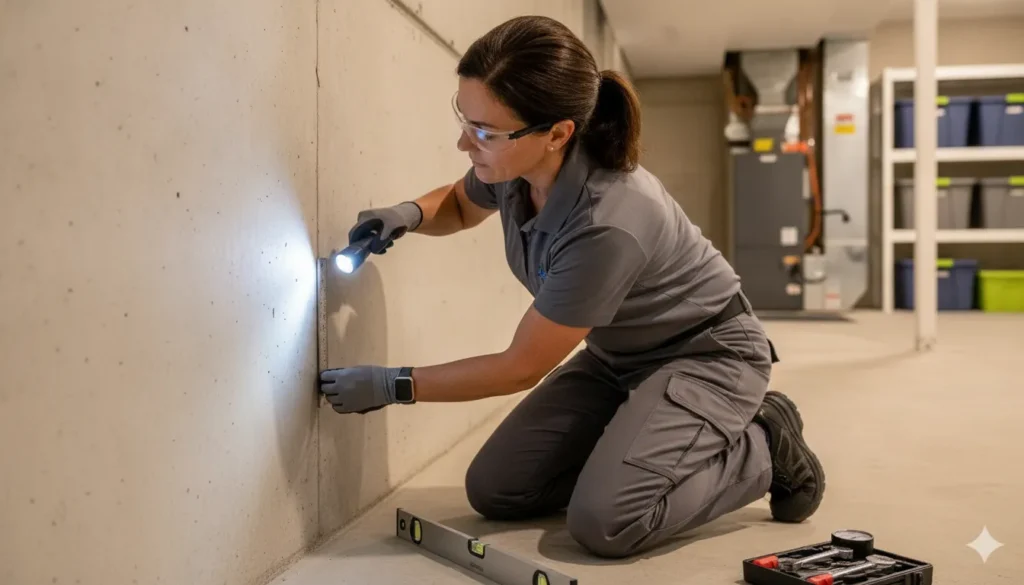
A thin line in a wall does not automatically mean your foundation is failing. In North Texas, concrete can develop hairline cracks as it cures, while expansive clay soil can shrink and swell through moisture cycles, placing additional stress on the structure. The useful question is not simply whether a crack exists, but whether its width, pattern, location, or rate of change points to movement.
To understand how to fix foundation cracks, measure the opening, note whether it runs vertically, horizontally, or in a stair-step pattern, and track any changes over time. Hairline cracks may only require monitoring, while cracks wider than 1/8 inch, horizontal cracks, or zig-zag cracks warrant a professional evaluation.
Photograph the area with a scale for comparison, and note related signs such as sticking doors, windows, or uneven floors. A calm, methodical review can separate routine maintenance from a problem that deserves prompt attention. Start by measuring the crack accurately and comparing its shape and position with the thresholds below.
Schedule a free foundation evaluation, or call (940) 365-4221
Hairline vs. Structural Cracks: How to Measure the Difference
Seeing a crack in your wall or slab can make your largest investment feel uncertain. The appearance alone does not tell the full story. Width, direction, pattern, location, and change over time all help distinguish normal concrete behavior from movement that deserves a closer look.
Hairline cracks are often cosmetic results of shrinkage while concrete cures. They may remain stable and cause no structural concern, but it is important to monitor them rather than dismiss them automatically. In North Texas, expansive blackland prairie clay shrinks and swells as moisture levels change. So a crack that appears minor today can still provide useful information about changing conditions around your foundation.
What width suggests about a crack
Begin by looking for a consistent opening. Hairline cracks that are difficult to see and remain unchanged are frequently cosmetic. A crack wider than roughly 1/8 inch, and especially one approaching 1/4 inch, warrants professional evaluation. These thresholds are not a substitute for an inspection, because a narrow crack can still occur alongside other signs of movement. While a wider crack may have a different cause depending on its location.
Pattern matters as much as width. A zig-zag or stair-step crack through brick or masonry is more suggestive of foundation movement than a straight, fine line caused by curing shrinkage. Also note whether the two sides sit at different elevations. Vertical displacement, a widening opening, or a crack that continues across several materials deserves prompt attention.
How to measure and track changes
For a practical baseline, follow a consistent measurement routine. It keeps your records comparable from season to season and makes progression easier to spot.
- Clean the area. Dust and debris come off the surface without enlarging the crack.
- Measure the width. Place a crack-width gauge over the widest point and record the measurement, date, room, and location. If you do not have a gauge, the edge of a quarter can provide a rough visual comparison, though it is not precise enough for a repair decision.
- Photograph the crack. Shoot it straight on with a ruler beside it, then repeat the photo from the same distance after major weather changes or at regular intervals.
- Track the endpoints. Mark them lightly with pencil to show whether the crack is extending.
Marking the endpoints lightly with pencil can also show whether the crack is extending. Avoid covering a changing crack with fresh patching material before it is assessed, since the repair can hide progression. In newer homes, vertical settling cracks during the first few years are common and frequently non-structural when they remain stable. Tracking confirms whether that is the pattern you are seeing.
If you are researching how to fix foundation cracks, resist choosing a filler based only on the visible line. A professional considers the crack’s width, pattern, foundation type, and the surrounding soil conditions. For additional context, review foundation cracks vs cosmetic cracks before deciding what the next step should be.
What Crack Patterns and Locations Reveal About Your Foundation
A crack’s direction and location often provide more useful context than its appearance alone. Start by looking at the wall or surface from a few feet away, then note whether the crack runs vertically, horizontally, or in a stair-step pattern. Photograph it, measure its widest point, and record the date. Comparing those observations over time can help distinguish a stable cosmetic mark from movement that deserves professional attention.
Horizontal cracks can signal lateral pressure
Horizontal cracks in a foundation wall generally warrant more attention than narrow vertical cracks. Soil outside the wall can exert inward pressure, particularly when moisture conditions change. A horizontal crack paired with a bowing or leaning wall may indicate that the wall is deflecting inward rather than simply shrinking as concrete cures. That combination calls for a prompt evaluation, especially if the crack is widening or accompanied by water entry. The pattern does not establish the repair method by itself, but it helps an inspector determine whether wall stabilization or another structural solution should be considered.
Stair-step cracks point to movement through masonry
Stair-step cracks follow the mortar joints in brick or other masonry, creating a diagonal pattern that resembles a set of steps. When this pattern appears above the foundation line, it can indicate that parts of the foundation or supporting soil are moving differently. Look for changes in the width of the crack, displaced brick, or a matching crack on the interior side of the wall. A single fine mark may not indicate a serious defect. But a widening or zig-zagging pattern is a sound reason to arrange a professional assessment rather than cover it with fresh mortar.
Vertical cracks are often less serious, but context matters
Vertical cracks are common in concrete and may result from initial settling or curing shrinkage. In newer homes, stable vertical settling cracks are frequently non-structural. That is reassuring, but it is not a reason to ignore a changing pattern. Consider the crack’s width, whether the edges are offset, and whether it continues across adjacent surfaces. In North Texas, expansive clay soil shrinks and swells through moisture cycles, so seasonal movement can change a previously quiet crack.
Also check the rest of the room. Sticking doors or windows, sagging floors, and several cracks appearing together can serve as secondary indicators of foundation movement. These symptoms are not proof of a foundation failure on their own, but they make the overall pattern more important than any single crack. For more guidance on distinguishing structural foundation crack signs, consider the possibility of a plumbing issue under a slab as well as soil-related movement. A careful inspection connects the pattern, location, and surrounding symptoms before recommending how to fix foundation cracks.
Why North Texas Clay Soil Creates Foundation Cracks
If a crack appears in your foundation, the soil beneath and around your home deserves as much attention as the concrete itself. North Texas blackland prairie soil contains highly expansive clay. As moisture levels change, this soil can shrink during dry periods and swell after rain or irrigation. Those repeated volume changes place stress on the foundation and can contribute to movement, cracking, settlement, or heave.
This regional geology helps explain why a crack may seem minor at one point and become more noticeable after a season of weather changes. The foundation responds to pressure from the soil, while different areas of the property may experience different moisture conditions. A professional assessment considers that movement in context rather than judging the crack by appearance alone.
Moisture cycles can create uneven pressure
Expansive clay does not always move uniformly. One side of a home may remain wetter because of shade, a leaking gutter, or low grading, while another area dries more quickly in the sun. The resulting difference in soil volume can create uneven support beneath the slab or foundation walls. Poor drainage compounds the problem by directing water toward the foundation, increasing local moisture and expansion.
Managing moisture is an important part of reducing foundation stress. Check that the ground slopes away from the home instead of holding water beside the foundation. Downspout extensions should discharge rainwater far enough away to prevent concentrated runoff at the footing. These steps cannot correct an existing structural problem, but consistent drainage helps limit avoidable moisture fluctuations and supports long-term maintenance.
Do not assume every slab crack has the same cause
Soil movement is a common cause of foundation cracking in this region, but it is not the only possibility. A plumbing leak beneath a slab can wash out or soften supporting soil and create localized movement. It can also produce moisture patterns that resemble other foundation issues. When a crack appears alongside damp flooring, unexplained water use, warm spots, or recurring moisture, an under-slab plumbing evaluation may be an important additional diagnostic step.
That is why deciding how to fix foundation cracks starts with identifying the cause. Sealing the visible opening without addressing expansive soil movement, drainage, or a plumbing leak may leave the underlying stress unchanged. A careful evaluation can distinguish surface shrinkage from movement related to soil or water. Giving you a clearer path forward and helping protect your home through North Texas weather cycles.
How to Fix Foundation Cracks Without Making Them Worse: DIY vs. Professional
Choosing how to fix foundation cracks starts with understanding what the crack represents. A surface repair can improve appearance or reduce water entry, but it cannot correct movement caused by soil pressure, drainage problems, or uneven support. In North Texas, expansive clay soil shrinks and swells through moisture cycles, so the right repair must account for the condition beneath and around the foundation.
DIY crack-repair kits may be reasonable for a narrow, stable, non-structural cosmetic crack. They are not a substitute for an evaluation when the crack is widening, recurring, leaking, horizontal, or part of a stair-step pattern. A professional can assess whether the visible opening is the primary problem or a symptom of foundation movement.
DIY crack repair vs. professional foundation repair
| Consideration | DIY crack repair | Professional foundation repair |
|---|---|---|
| Scope | Limited to non-structural, cosmetic cracks with no sign of ongoing movement. | Evaluates the crack, foundation movement, soil conditions, drainage, and related symptoms before selecting a repair. |
| Best for | A narrow, stable surface crack that is dry, isolated, and not accompanied by sticking doors, uneven floors, or displacement. | Wide, horizontal, or stair-step cracks, recurring cracks, water intrusion, or conditions suggesting structural movement. |
| Typical method | Off-the-shelf patching or injection material applied to the visible opening. | Polyurethane injection for waterproofing and leaks, or epoxy injection when structural bonding is appropriate. |
| Outcome | May seal or conceal a cosmetic crack, but it does not address the underlying cause. | Targets water entry or structural bonding while addressing the conditions contributing to the damage. |
| Durability | Depends on crack stability and preparation. It may fail if foundation movement continues. | Uses an engineered repair plan and specialized or patented products selected for the foundation and site conditions. |
Polyurethane and epoxy serve different purposes. Polyurethane remains useful when the priority is sealing a leaking crack against water infiltration. Epoxy is intended to create a structural bond in a suitable concrete crack. Neither material, applied without diagnosis, automatically resolves soil movement or uneven foundation support. Injection methods are often preferred for leaks because they can follow the crack and form a water-resistant seal.
Professional repair may also require more than filling the opening. The repair plan can include stabilizing the soil, improving moisture control, or using engineered supports where the foundation has lost reliable bearing. Specialized and patented repair products are designed for these conditions rather than treating every crack with the same material.
If you are uncertain whether a crack is cosmetic or structural, consider documenting its width, direction, and location, then arrange a professional assessment. That approach protects the integrity of the repair and helps you make a decision based on the foundation’s condition, not only on the crack’s appearance.
When Should You Call a Professional for Foundation Crack Repair?
Seeing a crack in your home can be unsettling, especially when you cannot tell whether it reflects ordinary settling or a deeper foundation concern. A calm, timely assessment gives you useful information without turning every hairline mark into an emergency. Early detection also creates more opportunities to address movement before it develops into larger, more costly structural repairs.
Consider scheduling a professional evaluation when a crack is wider than about 1/8 to 1/4 inch, continues to grow, or appears in a pattern that suggests movement. Horizontal cracks in a foundation wall, zig-zag or stair-step cracks in brick and masonry, and cracks accompanied by inward bowing deserve particular attention. These patterns can indicate soil pressure or movement rather than simple curing shrinkage.
Watch for changes beyond the crack itself
A crack is more meaningful when it appears alongside other changes in the home. Sticking doors or windows, uneven or sagging floors, and new gaps around frames can be secondary indicators of foundation movement. Water entering through a crack is another reason to act promptly. Moisture can affect the area around the foundation, and a repair plan should address both the visible opening and the conditions that may be contributing to it.
Keep a simple record if you are monitoring a narrow, stable crack. Note its location, approximate width, and appearance, then check it after seasonal weather changes. Hairline cracks are often cosmetic and can result from concrete curing shrinkage, but progression is the important distinction. If the line widens, lengthens, changes direction, or appears with other symptoms, move from observation to professional evaluation.
Why local knowledge matters in North Texas
North Texas homes face a regional stressor that generic repair advice may overlook. Blackland prairie soil contains expansive clay that shrinks and swells as moisture levels change. Poor drainage can compound those cycles by increasing moisture around the foundation. A trained professional who understands these local geological conditions can assess whether a crack is stable. Identify signs of movement, and consider the surrounding soil and drainage rather than treating the surface mark in isolation.
The right next step depends on the foundation type, crack pattern, moisture conditions, and extent of movement. A professional assessment does not require you to guess at repair costs. The scope can be explained after the conditions are evaluated, and a free estimate gives you a clearer basis for deciding how to proceed. You can also review what to expect from a professional foundation repair estimate before scheduling.
Schedule your free foundation evaluation, or call (940) 365-4221
Frequently Asked Questions
Are foundation cracks always structural?
No. Hairline cracks can result from normal concrete curing shrinkage, and stable vertical cracks from early settling are frequently non-structural. Monitor any crack for changes in width, length, or direction, especially in North Texas, where expansive clay soil shrinks and swells with moisture.
How do I know if a foundation crack is serious?
Measure the opening and note its pattern and location. Cracks wider than 1/8 to 1/4 inch, horizontal cracks in foundation walls, stair-step cracks in brick or masonry. Or cracks paired with bowing walls, sticking doors, or uneven floors warrant professional evaluation. These signs can indicate foundation movement rather than surface shrinkage.
Can I fix foundation cracks myself?
A DIY patch may be reasonable for a confirmed, stable, cosmetic crack, but it will not correct soil movement, drainage problems, or a structural defect. Consider a professional assessment before sealing a crack that is widening, recurring, leaking, or connected to other movement symptoms.
What is the difference between epoxy and polyurethane injection?
Polyurethane injection is commonly used to seal cracks against water infiltration, while epoxy injection is intended to create a structural bond in concrete. The appropriate method depends on whether the priority is waterproofing, structural repair, or both, so the crack should be evaluated before selecting a material.
Ready to make a confident repair decision?
Measuring a crack is a useful first step, but a professional assessment can help distinguish routine monitoring from movement that calls for repair. Solid Base Foundations can review the crack’s width, pattern, and location in the context of North Texas homes. Schedule your free foundation assessment and discuss the right next step.
Schedule a free foundation assessment, or call (940) 365-4221