
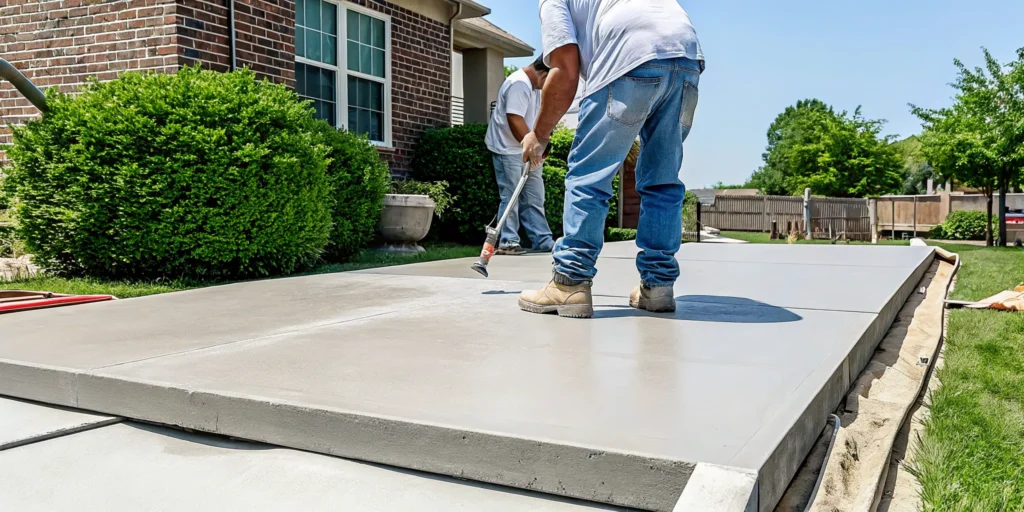
Uneven concrete can turn a driveway, walkway, or patio into a daily worry, especially when North Texas clay shifts as moisture levels change. If a slab has settled, the repair method matters because the material placed beneath it can affect how well it handles future movement.
Call Today for a Free Quote
The professionals at Solid Base Foundations have been providing expert concrete leveling services in the Dallas-Fort Worth area since 2008. North Texas expansive clay soil is exactly what they understand best. Call (940) 365-4221 for your free estimate today!
For homeowners comparing PolyLevel vs mudjacking, PolyLevel is generally the stronger choice because its lightweight polyurethane foam fills voids. Supports the slab, and resists washout without adding the heavy load of traditional slurry to expansive clay soil.
Solid Base Foundations provides PolyLevel concrete leveling across the Dallas-Fort Worth area, including Dallas, Denton, Lewisville, Plano, Allen, and surrounding communities. Understanding how mudjacking works first makes the differences in weight, installation, cure time, and long-term performance easier to evaluate.
How Mudjacking Levels Concrete: The Traditional Approach
When a driveway, walkway, or patio sinks, the uneven surface can make a familiar part of your property feel unexpectedly difficult to use. Mudjacking addresses that settlement by lifting the existing slab rather than replacing it. The process has been used for decades, but its materials and installation method matter, especially in North Texas.
A mudjacking crew drills access holes through the concrete, then pumps a thick slurry beneath the slab. That mixture typically contains sand, water, cement, and soil. As the slurry fills voids and applies pressure from below, it raises the settled concrete toward its original elevation. Because the material must pass through the opening, traditional mudjacking commonly requires a hole about 2 inches wide, roughly the size of a soda can. The larger openings can remain visible after the work is complete.
After injection, the slurry requires time to dry and cure. Plan on at least 24 hours before normal use or significant loading, depending on site conditions and the repair area. During that period, the slab must remain undisturbed so the material can gain enough strength to support it.
Why the weight matters in expansive clay
Traditional mudjacking does more than fill the space beneath a slab. Its heavy slurry can add approximately 100 pounds per cubic foot beneath the concrete. That extra load can challenge soil that already struggles to support a stable surface. North Texas sits on expansive clay, which shrinks as it dries and swells when moisture returns. Those repeated moisture changes can move the supporting soil, making additional weight an important consideration during a leveling project.
How moisture can affect the repair
Water creates another concern. If the slurry dries out, erodes, or washes away through soil voids, the slab can lose support and settle again. Cement-based material may also shrink or crack as it cures, leaving gaps beneath the concrete over time. These risks do not mean every mudjacking project fails, but they help explain why the underlying soil and drainage conditions deserve careful attention.
The process can also be messy because it involves large volumes of soil-based slurry and heavier pumping equipment. If your property has landscaping or finished hardscape nearby, that disruption may be frustrating. A professional assessment can help determine whether traditional mudjacking suits your slab or whether another option within concrete repair services better fits the soil conditions and long-term goals for your property.
Why Polyurethane Foam Is the Modern Concrete Leveling Standard
If settled concrete has left a trip hazard or an uneven surface, the repair method matters as much as the lift itself. PolyLevel uses a high-density polyurethane foam that expands beneath the slab, fills empty space, and provides a controlled lift. U.S. Department of Transportation research documented the efficient PolyLevel application on rigid pavement, noting it stayed within the scheduled work time. Its two-part urethane formula lets a technician make accurate adjustments rather than relying on a heavy slurry to spread beneath the concrete.
That distinction is especially important in North Texas. Expansive clay soil shrinks and swells as moisture changes, so adding unnecessary weight beneath a settled slab can work against long-term stability. PolyLevel adds minimal load while filling voids and supporting the concrete. You can learn more about PolyLevel concrete leveling and how the process fits different slab conditions.
| Feature | PolyLevel | Mudjacking |
|---|---|---|
| Material | High-density polyurethane foam | Cement, sand, and water slurry |
| Weight | About 2 pounds per cubic foot | About 100 pounds per cubic foot |
| Injection hole size | 5/8 inch, about penny-sized | About 2 inches, about soda-can-sized |
| Cure time | Ready for heavy loading in about 15 minutes | 24 hours or more |
| Water resistance | Waterproof and will not wash out | Erodible and can wash away |
| Durability | Permanent stabilization when properly installed | Can re-settle over time |
Less material, more precise control
During injection, the foam expands approximately 25 to 35 times its original size and hardens within 10 to 15 seconds. This rapid reaction allows the technician to monitor the slab and make small, deliberate adjustments. The smaller holes also leave less visible evidence than the larger openings required for thick mudjacking slurry.
Why weight and water resistance matter
Mudjacking can add substantial weight to soil that is already moving. Its cement-based slurry may also shrink, crack, or erode when water travels through the soil. Polyurethane foam is lightweight and closed-cell, so it does not absorb water or wash out during the wet and dry cycles common across the Dallas-Fort Worth area. That combination gives your slab a more stable support system without loading expansive clay with unnecessary material.
Both methods can raise settled concrete, but the material beneath the slab determines how the repair responds to soil movement, moisture, and everyday loads. A professional evaluation can identify whether void filling, leveling, drainage correction, or a combination of solutions will best protect your concrete.
How Long Does Foam Concrete Leveling Last Compared With Mudjacking?
When a driveway, walkway, or patio settles again after repair, the inconvenience is only part of the problem. Repeated movement can leave you with another uneven surface, another disruption, and another call for service. In North Texas, expansive clay soil shrinks and swells as moisture changes, so the material placed beneath your slab matters for long-term stability.
Polyurethane foam leveling is designed to create a more durable repair than a traditional mudjacking slurry. Its performance comes from its resistance to water, its low weight, and its ability to fill voids beneath the slab without adding unnecessary load to changing soil.
-
Water resistance helps prevent washout
Polyurethane foam is a closed-cell, water-resistant material. It does not absorb water in the same way porous fill can, and it will not wash away when moisture moves through the soil. That matters beneath a settled slab, where drainage problems, erosion, or repeated wet and dry cycles can enlarge voids over time.
Mudjacking uses a cement-based slurry that can shrink or crack as it cures. Water movement may also erode or wash away portions of the material, leaving the slab unsupported again. Once that support disappears, the concrete can settle back toward its previous position.
-
Lightweight foam is better suited to expansive clay
Polyurethane foam weighs about 2 pounds per cubic foot, while mudjacking slurry weighs about 100 pounds per cubic foot. That difference is significant beneath a settled slab. Foam fills voids and supports the concrete without placing the same heavy load on soil that already moves with changing moisture.
Adding substantial weight to unstable or expansive clay can contribute to future settlement. A lighter repair gives the slab support while respecting the ground conditions common across the Dallas-Fort Worth area, including Dallas, Denton, Lewisville, Plano, and Allen.
-
Resistance to seasonal movement reduces repeat work
Polyurethane foam maintains its structural integrity through the wet and dry cycles associated with North Texas clay. It also remains stable through freeze and thaw cycles, so seasonal temperature changes do not make it wash out or lose its supporting function. Once cured, the material can support the normal loads placed on residential concrete slabs.
No leveling method can correct every underlying drainage or soil problem by itself. A professional assessment can identify whether water management or another condition is contributing to settlement. When the slab, soil, and moisture conditions are evaluated together, foam leveling offers a more lasting path with fewer reasons to schedule the same repair again.
What Does Concrete Leveling Cost With PolyLevel vs Mudjacking?
Seeing a settled driveway, walkway, or patio can make you worry about both safety and the eventual repair bill. The final cost depends on the condition of your slab and the soil beneath it, so a reliable assessment is more useful than a generic online price.
Several factors shape the scope of either leveling method:
- Slab size: A larger driveway, patio, or concrete floor covers more area and may require more material and injection work.
- Settlement depth: A slab that has dropped farther may have larger voids beneath it, affecting the amount of material and the lift plan.
- Number of injection points: Technicians place injection points according to the slab’s size, shape, and settlement pattern. More complex movement can call for a more detailed installation plan.
- Soil conditions: North Texas expansive clay shrinks and swells as moisture levels change. Drainage, erosion, and the condition of the supporting soil can influence both the repair approach and the long-term result.
Both PolyLevel and mudjacking reuse the existing concrete slab, which can make either option less disruptive and less expensive than removing and replacing the entire slab. That distinction matters when the concrete remains structurally sound and the primary problem is settlement beneath it.
Initial cost is only one part of the value comparison. Federal highway research that evaluated PolyLevel compared with conventional leveling found traditional methods can be costly and time-consuming, while the PolyLevel application stayed on schedule. Mudjacking adds a heavy cement-based slurry beneath the slab, and that material can shrink, crack, or wash out over time. PolyLevel uses lightweight polyurethane foam to fill voids and stabilize the slab. Its water-resistant structure is better suited to the wet and dry cycles that affect North Texas clay soil, which can help reduce the risk of repeat work.
For an accurate recommendation, request a free estimate from Solid Base Foundations. A professional can evaluate the slab, identify contributing soil or drainage conditions, and explain which solution fits your property without guessing at the cost.
Where PolyLevel Works Best Across the Dallas Corridor
Uneven concrete can make a familiar part of your property feel unsafe and frustrating, whether a driveway catches a tire, a sidewalk creates a trip edge, or a pool deck no longer drains as it should. Across North Texas, expansive clay soil shrinks and swells as moisture levels change, which can leave slabs unsupported or out of level. PolyLevel concrete leveling can fill voids and lift the existing slab with a precise polyurethane injection process.
For residential properties, the method is well suited to several common concrete surfaces:
- Driveways: Lift settled sections that create uneven transitions near the garage, street, or walkway.
- Sidewalks and walkways: Correct raised or sunken panels that create trip hazards around your home.
- Patios, porches, and landings: Restore a more even surface where settlement affects access, drainage, or the appearance of your outdoor living area.
- Concrete floors and slab foundations: Fill voids beneath settled slabs and help stabilize areas affected by soil shrinkage or erosion.
- Pool decks: Address uneven sections around the pool while using a water-resistant material that maintains its integrity through wet and dry conditions.
The same approach can support commercial and municipal concrete applications. PolyLevel can be used beneath warehouse and industrial floors, where uneven surfaces can interfere with equipment, storage, or traffic. It also has applications for roads and bridge approaches, along with void filling and erosion control where water or soil movement has left open space beneath concrete.
Because the soil conditions vary across the Dallas-Fort Worth corridor, the appropriate repair plan depends on the slab. The depth of settlement, drainage, and the condition of the supporting soil. Solid Base Foundations serves Dallas, Denton, Lewisville, Plano, Allen, and surrounding Greater Dallas markets. Learn more about PolyLevel concrete leveling and how a local assessment can identify the right application for your property.
Frequently Asked Questions
What’s better, mudjacking or foam?
For most settled residential concrete in North Texas, high-density polyurethane foam offers a cleaner, lighter, and faster repair. It fills voids beneath the slab with small injection holes and adds far less weight to expansive clay than cement-based slurry. Foam also resists washout, while mudjacking material can settle or degrade when moisture moves through the soil.
How much does it cost to PolyLevel a driveway?
The price depends on the driveway’s size, the depth and location of settlement, soil conditions, and the number of injection points. A professional assessment is the reliable way to determine the right repair scope and provide an accurate estimate for your property. Solid Base Foundations offers free estimates across the Dallas-Fort Worth area.
How long does polyurethane jacking last?
Polyurethane leveling is designed as a long-term repair because the closed-cell material resists water absorption and does not wash away during wet and dry soil cycles. That matters in North Texas, where expansive clay shrinks and swells with moisture changes. Longevity also depends on addressing drainage or other conditions contributing to settlement.
Is PolyLevel safe for concrete slabs?
When installed by trained technicians, PolyLevel uses controlled injections of structural-grade polyurethane to fill voids and lift the slab. The process is minimally invasive, with small holes and less disruption than pumping a heavy slurry beneath the concrete. A site evaluation can confirm whether foam leveling fits your slab and the underlying soil conditions.
Ready to Schedule Your Concrete Leveling Estimate?
If settling concrete has left you unsure which repair method fits your property, a professional assessment can help clarify the next step. Solid Base Foundations can review the slab, surrounding soil, and project conditions before recommending an approach. Call (940) 365-4221 to schedule a free concrete leveling estimate for your Dallas-area property.