
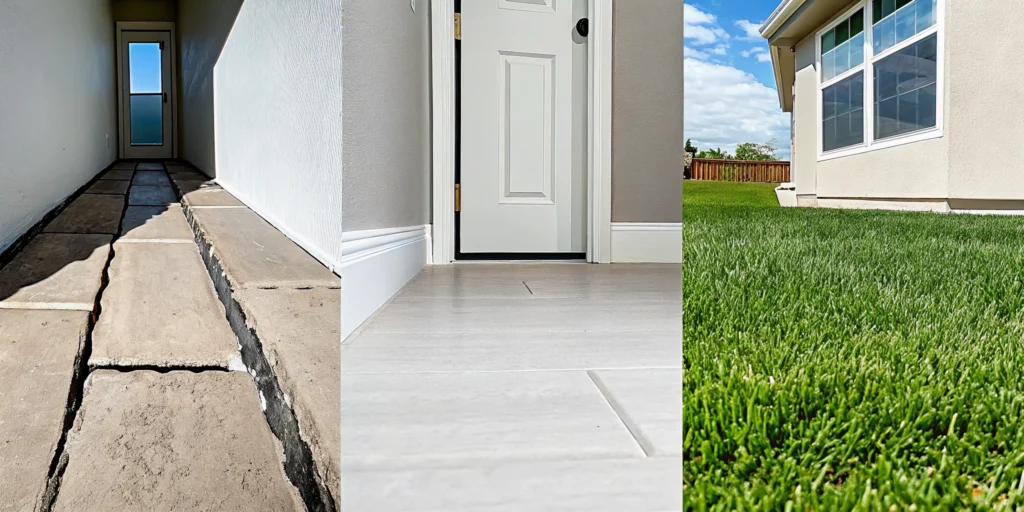
Your home is constantly communicating with you, and you don’t need to be an expert to understand what it’s saying. You just need to know where to look. Those zigzag cracks in the brick, the gap forming between your wall and ceiling, or the uneven floors are all important clues about the health of your foundation. Learning to spot these signs early is the most powerful thing you can do to prevent small issues from becoming major structural problems. This guide is designed to empower you, turning you into a savvy home detective. We’ll show you exactly what to look for and explain what it means for your home’s slab foundation repair Allen.
Key Takeaways
- Inspect your home for key warning signs: Regularly check for zigzag cracks in your exterior brick, drywall cracks around door and window frames, and doors that suddenly stick or refuse to latch properly.
- Understand that local soil is the main culprit: Most foundation problems in Allen are caused by our expansive clay soil, which swells when wet and shrinks when dry, creating constant, powerful movement that stresses your home’s structure.
- Focus on water management for long-term stability: After any professional repair, the best way to prevent future issues is to control moisture. Ensure your gutters and yard grading direct water away from the house, and maintain consistent soil moisture during dry spells.
Does Your Allen Home Need Foundation Repair? Key Warning Signs
Your home’s foundation is its most important feature, but it’s also easy to overlook. Since foundation problems develop slowly, catching them early can save you significant stress and money. In Allen, our expansive clay soil and dramatic weather shifts put a lot of pressure on our homes. The good news is that your house will give you clues when something is wrong. You just need to know what to look for. Here are the key warning signs that your foundation might need professional attention.
Check for Cracks in Your Foundation and Walls
Start by taking a slow walk around your home’s exterior, paying close attention to the foundation and brickwork. Look for cracks in the concrete slab itself. Next, examine the bricks. Stair-step or zigzag cracks running through the mortar are classic signs of foundation settlement. While tiny hairline cracks can be normal, larger horizontal or vertical cracks in the brick or foundation are a definite red flag. If you spot any of these, it’s a strong indicator that your home needs a professional foundation repair assessment.
Don’t Ignore These Interior Warning Signs
The signs of foundation trouble aren’t just on the outside. Inside your home, look for cracks in the drywall, especially around door and window frames. Do you have doors that stick or don’t latch properly anymore? This happens when the frame gets twisted by a shifting foundation. You might also notice that your floors feel uneven or sloped. Other clues include gaps appearing between your walls and ceiling or baseboards pulling away from the floor. These issues are more than just cosmetic quirks; they are direct symptoms of foundation movement.
What to Look for Outside Your Home
Beyond cracks, there are other exterior clues that point to foundation distress. Check the alignment of your windows and doors from the outside. Are there visible gaps forming around the frames? A shifting foundation can cause the entire structure to tilt, creating these openings. Look at your chimney; if it’s leaning or separating from the house, that’s a serious warning sign. You might also see the soil pulling away from the edges of your foundation. If you notice any of these problems, it’s time to get an expert opinion. You can see examples of issues we’ve addressed in our past projects.
What Causes Foundation Damage in Allen, TX?
If you’ve noticed signs of foundation trouble, you’re probably wondering what’s causing it. In Allen, foundation problems usually aren’t random. They’re often a direct result of our local environment. Understanding the root cause is the first step toward finding a lasting solution. The main culprits are almost always a combination of our unique soil, dramatic weather patterns, and issues with water management around your home. Let’s look at how each of these factors can affect your foundation.
Why Our Local Clay Soil Is a Problem
The ground beneath our homes in Allen is a special type of expansive clay soil. Think of it like a sponge. When it rains, this “Blackland Prairie clay” soaks up moisture and swells significantly. During our hot, dry summers, it loses that moisture and shrinks, sometimes pulling away from your foundation. This constant cycle of expanding and contracting puts immense stress on your concrete slab. Over time, this movement can cause parts of your foundation to heave upward or settle downward, leading to cracks and structural instability. It’s this volatile soil that makes proper foundation repair so critical in our area.
How Extreme Weather Stresses Your Foundation
Our Texas weather doesn’t do our foundations any favors. Long periods of drought followed by heavy downpours create a perfect storm for foundation damage. During a dry spell, the clay soil shrinks and can create gaps under your foundation, leaving it unsupported. When the rain finally arrives, the soil can become oversaturated almost overnight, swelling rapidly and pushing against the slab with incredible force. This uneven movement is what causes foundations to shift, settle, and crack. It’s a relentless cycle that can weaken even the most well-built homes over the years, often requiring professional concrete repair to address the visible damage.
The Impact of Plumbing Leaks and Poor Drainage
Water is a foundation’s biggest enemy when it isn’t controlled. A hidden plumbing leak under your slab can release a steady stream of water into the soil, causing it to become oversaturated in one specific spot. If you notice a sudden spike in your water bill, it could be a sign of a slab leak. This oversaturation causes the clay to swell and push that section of your foundation upward, creating uneven support. Similarly, poor exterior drainage from clogged gutters or improper yard grading can cause water to pool around your home. Ignoring these issues only allows the damage to worsen, making repairs more complex and costly down the road. If you suspect a problem, it’s best to contact us for an evaluation.
Your Guide to Foundation Repair Solutions in Allen
Finding out your home has foundation issues can feel overwhelming, but the good news is that there are reliable, long-term solutions. Once a professional assesses the situation, they can recommend the right approach for your home’s specific needs. The best fix depends on factors like the type of soil under your house and the exact cause of the damage. In Allen, repair strategies generally fall into a few key categories, each designed to address different problems, from settling foundations to cracked concrete slabs. Let’s walk through the most common and effective methods used to restore your home’s structural integrity.
Stabilizing Your Foundation with Piers
If your foundation is settling, the most common solution is installing piers. Think of piers as underground stilts that transfer the weight of your home from the unstable clay soil to a more solid layer of earth or bedrock deep below. This process stabilizes your foundation and prevents further movement. In the Allen area, professionals use different pier systems depending on the home’s structure and soil conditions, ensuring the perfect match to provide lasting support. This is one of the most permanent and trusted methods of foundation repair, giving you peace of mind that your home is secure for years to come.
Lifting and Leveling with Slab Jacking
When a concrete slab foundation settles unevenly, it can cause sloping floors and other interior issues. Slab jacking is an effective concrete repair technique used to lift and level the slab without major excavation. The process involves injecting a specialized material through small holes drilled in the slab. This material fills the voids underneath and gently raises the foundation back to its original position, sometimes by as much as four inches. It’s a less invasive and often quicker solution for correcting settlement, making it a popular choice for homeowners dealing with sunken concrete patios, driveways, or interior floors.
Sealing and Reinforcing Cracks
While piers and slab jacking address the root cause of settlement, it’s also essential to repair the resulting cracks. Sealing cracks in your foundation walls, floors, or exterior brick is critical for preventing water from seeping in, which can lead to moisture problems and further damage. Depending on the size and location of the crack, a professional might use high-strength epoxy injections or other durable sealants to close the gap and reinforce the area. This step not only restores the look of your home but also protects its structural integrity. You can see examples of how these repairs restore a home’s foundation by looking at Our Work.
How Much Does Slab Foundation Repair Cost in Allen?
This is one of the first questions every homeowner asks, and for good reason. You need to plan and budget for this important investment in your home’s safety and value. While there’s no single price tag for foundation repair, understanding the typical costs and what goes into them can help you prepare. The final price depends entirely on the specific issues your home is facing, the extent of the damage, and the solution required to make it stable for years to come. The only way to know for sure is to get a professional assessment, but we can walk you through the general numbers and factors that will influence your quote.
Understanding Average Repair Costs
In Allen, the average cost for foundation repair is about $4,200. However, that’s just a midpoint. Most homeowners can expect to pay anywhere from $2,500 to $15,000. This wide range exists because no two foundation problems are exactly alike. A few minor cracks requiring simple sealing will be on the lower end, while a home that needs extensive stabilization with piers will be on the higher end. Think of it less like buying a product off the shelf and more like a custom solution tailored to your home’s specific needs. To get a clear picture of what your repair will cost, you’ll need a detailed, on-site evaluation. We offer free estimates to give you a precise and transparent quote.
What Factors Influence the Final Price?
Several local factors play a big role in determining the cost of your foundation repair. Allen sits on “Blackland Prairie clay” soil, which is notorious for swelling up when it’s wet and shrinking dramatically when it’s dry. This constant movement puts a huge strain on your foundation. The city’s flat terrain can also lead to poor drainage, allowing water to pool around your home and make those soil problems even worse. The age of your home matters, too; many houses in the area are reaching the 15-25 year mark, which is when foundation issues often begin to appear. Ultimately, the severity of the damage, which you can see in examples of our work, and the specific repair method needed will be the biggest drivers of the final price.
How to Choose the Right Foundation Repair Company in Allen
Finding the right team to handle your foundation repair is just as important as the repair method itself. This is a significant investment in your home’s safety and value, so you want to feel confident you’re working with true professionals. Taking the time to vet your options will give you peace of mind and ensure the job is done correctly from the start.
When you start your search, you’re looking for a partner who will protect your home. A great company will be transparent, experienced, and focused on providing a permanent solution, not just a quick fix. Think of it as hiring a specialist for your home’s most critical component. You want someone with the right tools, a deep understanding of local conditions, and a track record of success.
What to Look For in a Repair Company
Start by looking for a company with a strong, established presence in the Allen area. A contractor who is familiar with our local clay soil and weather patterns will be better equipped to diagnose the root cause of your foundation issues. Check online reviews and testimonials to see what other homeowners in your community have experienced. A reputable company should also be able to show you examples of their previous projects. Seeing their past work can give you a clear idea of their quality and capabilities.
Beyond local experience, look for a team of skilled professionals who use proven, high-quality products. The technology and materials used in foundation repair matter, so you want a company that invests in reliable solutions. Find out more about the company’s history and the team’s expertise to ensure they have the background and skill to handle your specific situation.
Key Questions to Ask Before You Hire
Once you’ve narrowed down your options, it’s time to ask some direct questions before making a final decision. During your consultation or estimate, have a list ready. This will help you compare companies and choose the one that feels right for you.
Start with these essential questions:
- What is your specific plan for my foundation repair, and why do you recommend this approach?
- Are you licensed and insured to work in Allen, TX?
- Can you provide references from recent, local customers?
- What kind of warranty do you offer on your work and the materials used?
- Will you provide a detailed, written estimate that breaks down all the costs?
- Do you offer any financing options to help manage the cost of the repair?
A trustworthy contractor will be happy to answer all of your questions thoroughly and without pressure. Their goal should be to educate you and make you feel comfortable with the entire process.
How Can You Pay for Foundation Repair?
Discovering your home needs foundation repair can feel overwhelming, and one of the first questions that pops into your head is likely about the cost. It’s a significant investment in your home’s safety and value, but the price tag doesn’t have to be a barrier. Most homeowners use a combination of savings, financing, and sometimes insurance to cover the expense. Let’s walk through the most common ways to pay for your foundation repair so you can find the best path forward for your family and your budget.
Exploring Payment Plans and Financing
You don’t have to pay for the entire project upfront. Many foundation repair companies understand that this is a major, often unexpected, expense. To make it more manageable, reputable contractors offer payment plans and financing. These programs allow you to break down the total cost into smaller monthly payments that fit your budget. Some companies even offer plans with 0% interest for a set period. At Solid Base, we provide flexible financing options to help homeowners get the necessary repairs without the financial strain. We believe in making the process as straightforward and stress-free as possible.
Understanding Insurance and Warranties
It’s the big question on every homeowner’s mind: will my insurance cover this? The answer depends on the cause of the damage. Generally, homeowners insurance may cover foundation repairs if the problem is caused by a specific event listed in your policy, such as a plumbing leak or a natural disaster. However, damage from gradual soil settlement, which is a frequent cause in North Texas, is typically not covered. Always check your specific policy to be sure. A more reliable safety net is a company warranty. A professional contractor will stand behind their work with a solid warranty, giving you peace of mind. These warranties are often transferable to the next owner, which is a great selling point if you decide to move.
How to Prevent Future Foundation Problems
After you’ve invested in foundation repair, the last thing you want is a repeat performance. The good news is that you can take proactive steps to protect your home’s foundation from future damage. Most foundation issues in Allen stem from one thing: inconsistent moisture levels in the soil around your home. When the soil gets too wet or too dry, it expands or contracts, putting immense pressure on your foundation.
By managing the water around your property and maintaining consistent soil moisture, you can significantly reduce the risk of new problems cropping up. It’s all about creating a stable environment for your foundation to rest on. These simple maintenance habits don’t require a lot of time, but they can save you thousands of dollars and a lot of stress down the road. Think of it as essential home care, just like cleaning your gutters or checking your smoke detectors.
Control Moisture with Proper Drainage
One of the best ways to protect your foundation is to ensure water flows away from it, not toward it. When rainwater pools around your house, it saturates the clay soil, causing it to swell and push against your foundation. A good gutter system is your first line of defense. Make sure your gutters and downspouts are clean and functioning correctly, channeling water at least five to ten feet away from your home. You should also check that the ground around your foundation slopes downward, so gravity naturally pulls water away. If you notice standing water after it rains, you may need to address your property’s grading or consider a drainage solution to prevent future foundation repair.
Maintain the Soil Around Your Home
The soil here in North Texas is famously tricky. It’s mostly expansive clay, which acts like a sponge, swelling dramatically when it rains and shrinking just as much during our dry, hot summers. This constant movement is what causes foundations to shift and crack over time. To counteract this, aim for consistent moisture levels in the soil year-round. During dry spells, water the soil around your foundation. A soaker hose placed about 18 inches from your home is a great tool for this. Run it for about 20 to 30 minutes a couple of times a week to keep the soil from pulling away from the slab. This simple routine helps create a more stable environment for your home.
Related Articles
- Foundation Repair Cost: The Ultimate 2026 Guide
- Foundation Repair – Solid Base
- Pier & Beam Foundation Repair: Signs, Costs & Fixes
Frequently Asked Questions
Are small hairline cracks in my drywall or brick something to worry about? It’s natural for a house to settle a bit over time, so a few tiny, stable cracks aren’t always a cause for panic. The time to pay close attention is when you see a pattern of issues. If those small cracks are getting wider, longer, or are accompanied by other warning signs like sticking doors or uneven floors, it’s a strong signal that the problem is more than just normal settling.
How long will the actual repair process take? The timeline for a foundation repair project really depends on the solution your home needs. A straightforward concrete repair or crack sealing job might only take a day. More extensive work, like installing piers to stabilize the foundation, typically takes a few days. A professional team will give you a clear schedule before they begin and will work efficiently to minimize the disruption to your daily life.
Will the repair work destroy my landscaping? This is a common concern, and a valid one. While some digging is often necessary, especially for exterior pier installations, a professional crew will treat your property with respect. They work carefully to minimize the impact on your lawn, shrubs, and flower beds. The goal is to leave your home structurally sound and your yard looking as neat as possible once the job is complete.
What happens if I wait to get my foundation fixed? Putting off foundation repair is one of the costliest mistakes a homeowner can make. Foundation problems never get better on their own; they only become more severe and more expensive to fix. What starts as a small crack can lead to major structural damage over time, affecting your plumbing, walls, and even your roofline. Addressing the issue early saves you significant money and stress.
Is foundation repair a permanent solution? Yes, the goal of professional foundation repair is to provide a permanent fix. Methods like installing steel piers are not temporary patches. They are engineered solutions designed to transfer the weight of your home to stable soil deep underground, addressing the root cause of the settlement. When done correctly, a quality repair should secure your home for the long term.