
Slab Foundation Repair in North Texas: Signs, Costs, and Options
Slab foundation repair is not something most North Texas homeowners plan for, but the warning signs are hard to ignore once they show up. A diagonal crack above a doorway, a sticking back door, a gap along the baseboard, or a floor that suddenly feels uneven can all point to movement under the concrete slab. In our part of Texas, that movement often starts with expansive clay soil that swells when it is wet and shrinks when it dries out.
This guide explains what slab foundation problems look like, why they are so common in Dallas, Denton, Collin County, and surrounding North Texas communities, which repair methods are typically used, when piers may be needed, and what factors affect the final cost. The goal is simple: help you understand the problem before you invite anyone to inspect your home.
What Is a Slab Foundation?
A slab foundation is a thick concrete pad poured directly on prepared soil. Many homes in North Texas are built this way because slab foundations are efficient, durable, and well suited to single-family residential construction. The concrete slab supports the walls, floors, and much of the structure above it.
When the soil under the slab stays stable, the foundation can perform well for decades. Problems begin when parts of the soil expand, contract, erode, or lose the ability to support the weight of the home evenly. Once the slab is no longer supported consistently, one area may settle, lift, tilt, or crack while another area stays in place.
That uneven movement is what creates many of the symptoms homeowners notice inside and outside the house. The slab itself may be hidden under flooring, but the structure above it usually tells the story.
Why Slab Foundations Move in North Texas
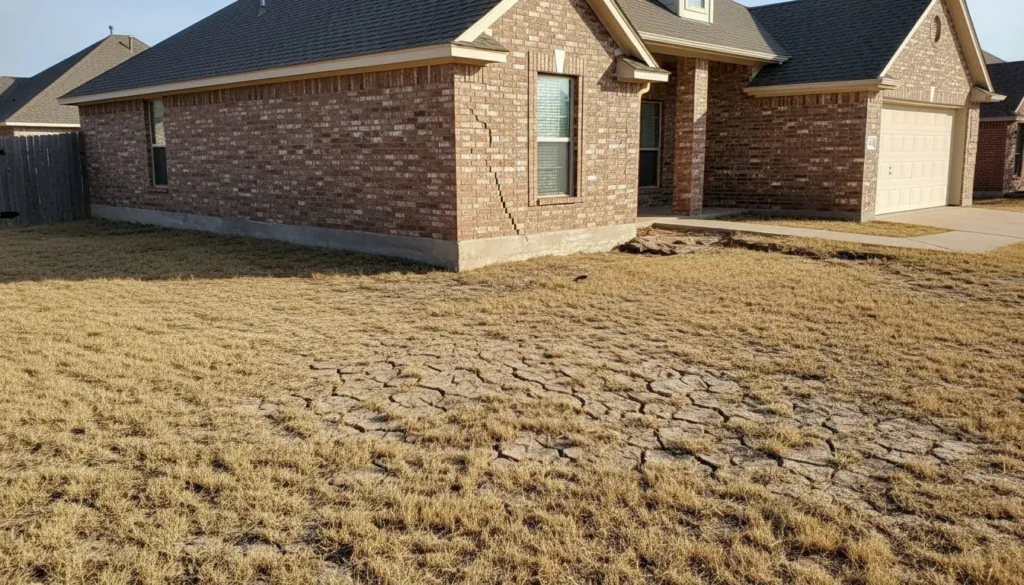
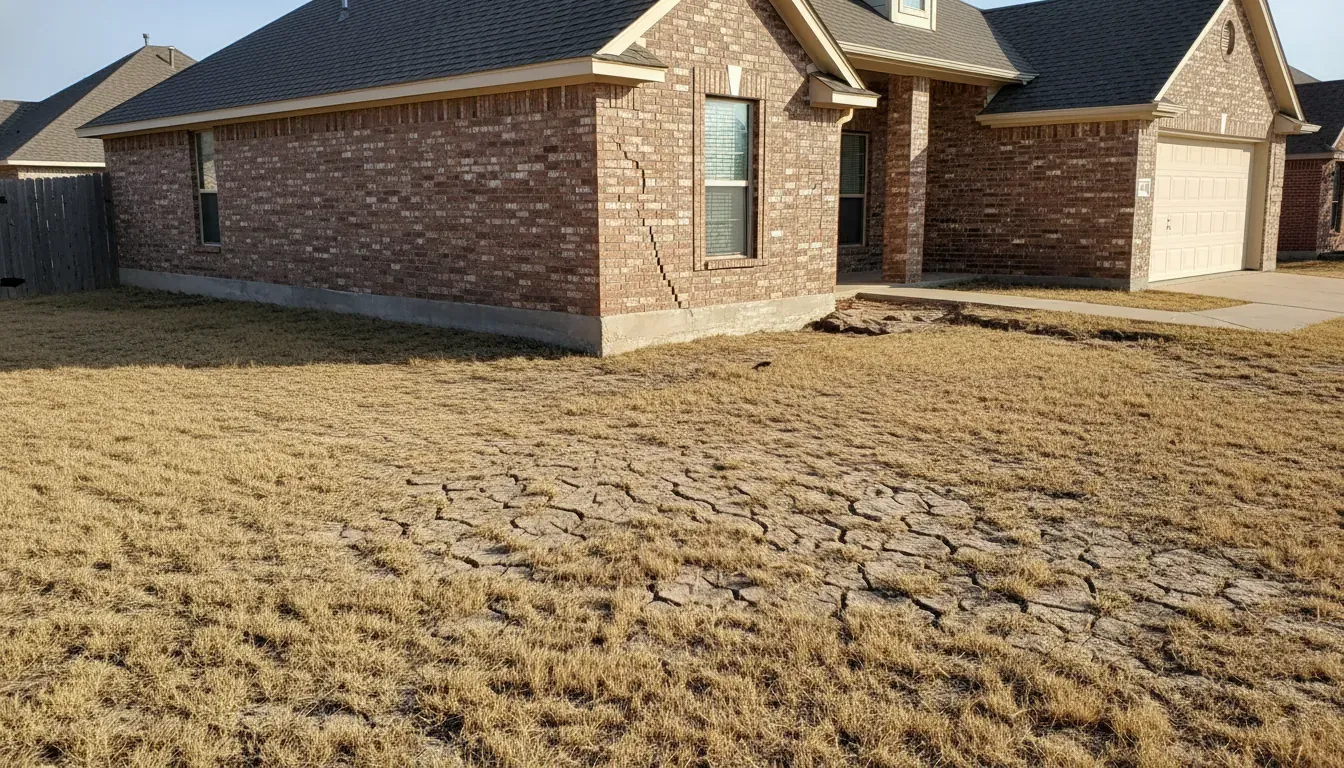
North Texas soil is a major reason foundation repair is such a common topic for local homeowners. Much of the region sits on expansive clay. This soil behaves differently than sandy or rocky soil because it can absorb and release large amounts of moisture.
- During wet seasons, clay soil swells. The soil expands as it takes on water, creating upward pressure against the slab.
- During dry seasons, clay soil shrinks. The soil pulls away from the foundation as moisture leaves, reducing support under the slab.
- During repeated wet and dry cycles, movement compounds. Over time, the slab can experience stress in different directions.
- Poor drainage makes the cycle worse. Water collecting near the home can oversaturate one side of the foundation while another side stays dry.
- Tree roots can contribute to drying. Large trees near the home may pull moisture from the soil unevenly.
That is why two homes on the same street can have different foundation symptoms. Lot grading, drainage, plumbing leaks, landscaping, trees, construction quality, and soil preparation all influence how the slab performs.
Common Warning Signs of Slab Foundation Problems
Foundation issues rarely announce themselves with one single sign. More often, homeowners notice a pattern. One sticking door may be seasonal. A sticking door, new drywall cracks, sloping floors, and exterior brick cracks together deserve a closer look.
Interior warning signs
- Doors that stick, drag, or no longer latch correctly
- Windows that become difficult to open or close
- Cracks in drywall, especially around doors and windows
- Gaps between walls, ceilings, floors, or trim
- Uneven, sloping, or soft-feeling floors
- Tile cracks that run across multiple tiles
- Cabinets or countertops separating from the wall
Exterior warning signs
- Stair-step cracks in brick or masonry
- Cracks in the concrete slab edge
- Separation around garage doors, windows, or trim
- Gaps between the chimney and house
- Soil pulling away from the foundation during dry weather
- Water pooling near the home after rain
If these signs are new, spreading, or appearing in multiple areas, schedule a professional evaluation. Solid Base Foundations provides foundation repair inspections and custom recommendations for homes across the Greater Dallas area.
Can a Slab Foundation Be Repaired?
Yes, slab foundations can often be repaired, but the right method depends on what is actually happening beneath the home. A surface crack, a settled slab corner, and widespread differential movement are not the same problem. Each requires a different diagnosis.
Some repairs focus on stabilizing the foundation so it does not continue to move. Others may lift settled areas closer to their original position. In some cases, concrete leveling or void filling may be appropriate for flatwork or sections of slab. In more serious settlement cases, pier systems may be needed to transfer the load of the home to deeper, more stable soil.
The most important step is not choosing a product first. It is identifying the cause of the movement. A repair that ignores drainage, soil moisture, or support loss may only hide the symptom for a short time.
Slab Foundation Repair Options Homeowners Should Know
There is no single repair method that fits every slab foundation. A trustworthy contractor should explain why a specific option is recommended for your home, not simply sell the same repair to every homeowner.
Push piers
Push piers are steel pier sections driven deep into the ground until they reach load-bearing soil or strata that can support the structure. Heavy-duty brackets connect the piers to the foundation. Once installed, the weight of the home is transferred from unstable surface soils to the pier system.
This method is often considered when a slab foundation has settled because the upper soil layers can no longer support the load. Solid Base Foundations installs foundation pier systems backed by Foundation Supportworks technology and a 25-year manufacturer warranty.
Helical piers
Helical piers use steel shafts with helical plates that are advanced into the soil. They are often used where soil conditions, access, or structural needs make them a strong fit. Like push piers, helical piers are designed to transfer structural loads to more reliable soil.
Homeowners researching repair options can learn more from Solid Base’s guide to helical piles.
Polyurethane foam injection
Polyurethane foam can be used to lift and stabilize certain concrete slabs by filling voids beneath the concrete. Solid Base Foundations offers PolyLevel, a high-density polyurethane foam system that cures in about 15 minutes. It is lightweight, waterproof, and installed through small injection holes.
PolyLevel is often discussed for driveways, sidewalks, patios, pool decks, and some concrete slab applications. It is not a substitute for structural underpinning when the home itself needs deep foundation support, but it can be a strong solution for the right concrete leveling problem. For related applications, see Solid Base’s concrete repair services.
Drainage and soil moisture improvements
Sometimes the repair plan also needs to address water. Gutters, downspout extensions, grading improvements, French drains, plumbing leak repairs, or moisture management may be part of protecting the foundation after structural work is complete.
A pier system can stabilize a settling foundation, but if water keeps collecting against one side of the home, the soil cycle that contributed to the problem may continue. Good foundation repair looks at the structure and the site conditions together.
When Are Piers Needed for Slab Foundation Repair?
Piers may be needed when part of the slab has settled because the soil near the surface is not providing reliable support. The goal of the pier system is to bypass unstable soil and carry the home load to deeper, stronger bearing material.
Common situations that may point toward pier recommendations include:
- Measured elevation differences across the slab
- Repeated cracking in the same area after cosmetic repairs
- Exterior brick cracks combined with interior drywall cracks
- Doors and windows out of square in one section of the home
- Visible settlement at a corner or wall line
- Soil movement that is too significant for surface repair alone
A good inspection should include a review of the symptoms, site drainage, visible cracks, interior performance issues, and foundation elevations. The recommendation should be specific to your home, not based on a guess from photos alone.
How Much Does Slab Foundation Repair Cost?
Slab foundation repair cost varies because every home has a different layout, soil condition, damage pattern, and repair scope. A small crack repair is not priced like a multi-pier stabilization project. That is why Solid Base Foundations uses free on-site inspections and written estimates instead of one-size-fits-all pricing.
Several factors influence the final price:
- Severity of movement: Minor cosmetic cracking costs less to address than structural settlement.
- Number of piers: If piers are needed, the quantity and placement affect cost.
- Foundation access: Landscaping, patios, driveways, and tight work areas can affect installation complexity.
- Soil and drainage conditions: Water problems may need to be corrected to protect the repair.
- Plumbing concerns: A leak under or near the slab can change the repair plan.
- Lift goals: Stabilization and attempted lift are different objectives and should be explained clearly.
- Warranty and product system: Engineered products and manufacturer-backed systems may differ from basic temporary repairs.
For broader budgeting context, read Solid Base’s guide to foundation repair cost. The only way to know what your home needs is to schedule an inspection and get a written scope.
What Happens During a Free Foundation Inspection?
A foundation inspection should give you clarity, not pressure. With Solid Base Foundations, the process starts with listening to what you have noticed around the home. The inspector looks for patterns, checks visible symptoms, reviews drainage and soil conditions, and determines whether the signs point to normal cosmetic issues or structural movement.
After the assessment, you should receive a clear explanation of the findings and a repair recommendation if work is needed. That recommendation may include pier systems, concrete leveling, drainage considerations, or monitoring if the issue does not require immediate repair.
The best outcome is not always the biggest project. The best outcome is the right diagnosis and a repair plan that protects your home long term.
Why Homeowners Choose Solid Base Foundations
Solid Base Foundations has more than 18 years of hands-on experience serving homeowners in the Greater Dallas area. The company is part of the Foundation Supportworks network, giving local homeowners access to engineered products, training, and manufacturer-backed systems.
Key advantages include:
- Local experience with North Texas clay soil and foundation movement
- Foundation Supportworks pier systems with a 25-year manufacturer warranty
- Exclusive PolyLevel dealer advantage for fast concrete leveling applications
- PolyLevel cure time of about 15 minutes for eligible concrete repair projects
- Free, no-obligation estimates with custom recommendations
- Residential and commercial structural repair capabilities
Homeowners can also review Solid Base’s service area to confirm local availability.
FAQ About Slab Foundation Repair
Can slab foundations be repaired?
Yes. Many slab foundation problems can be repaired by stabilizing the foundation, addressing soil or drainage issues, filling voids, or installing piers when deeper support is needed. The correct method depends on the cause and severity of movement.
What is the best repair method for a slab foundation?
The best method depends on the diagnosis. Structural settlement may require push piers or helical piers. Sinking concrete flatwork may be a candidate for polyurethane foam injection. Drainage improvements may also be needed to reduce future soil movement.
Will homeowners insurance cover slab foundation repair?
Coverage depends on your policy and the cause of the damage. Many policies do not cover normal soil movement, settling, or maintenance-related issues. Damage from a covered plumbing event may be treated differently. Ask your insurance provider and review Solid Base’s article on whether foundation repair is covered.
What time of year is best for foundation repair in North Texas?
The best time is when a qualified inspection confirms the foundation needs repair. Waiting for a specific season can allow damage to worsen. North Texas soil moves through wet and dry cycles, so early diagnosis is usually more important than timing the calendar.
How long does slab foundation repair take?
Timing depends on the scope of work. Some concrete leveling repairs can be completed quickly, and PolyLevel cures in about 15 minutes for eligible applications. Structural pier projects may take longer depending on the number of piers, access, and site conditions.
Get a Slab Foundation Repair Inspection in North Texas
If you are seeing cracks, gaps, sticking doors, uneven floors, or other signs of movement, do not guess at the cause. A slab foundation problem can be manageable when it is diagnosed early and repaired with the right method.
Call Solid Base Foundations at 940-365-4221 or request a free no-obligation estimate online. A local foundation specialist can inspect your home, explain what is happening, and recommend the right slab foundation repair option for your North Texas property.