
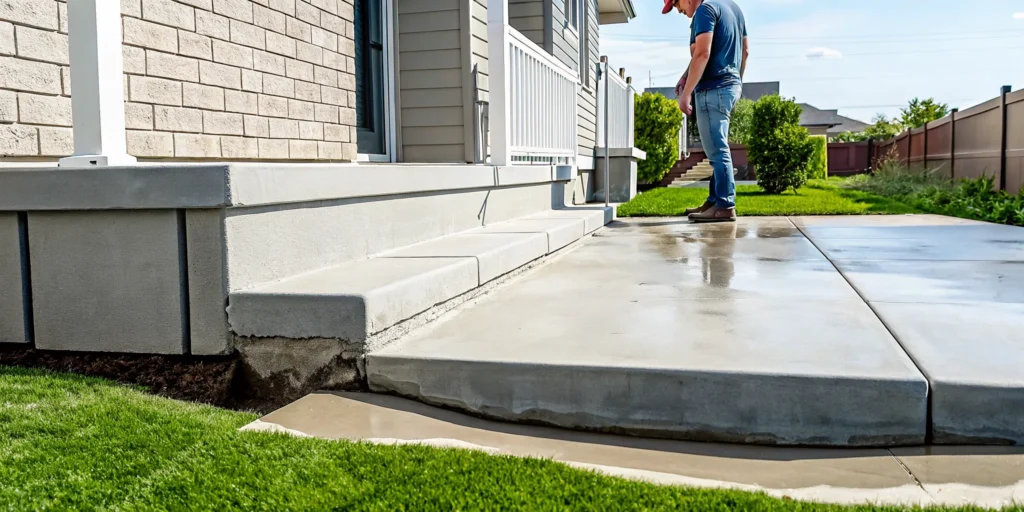
Here in North Texas, our soil has a mind of its own. The expansive clay beneath our homes swells when it’s wet and shrinks dramatically when it dries out. This constant movement can wreak havoc on outdoor structures, making sinking patios a familiar sight for Dallas-area homeowners. While some minor settling is normal, a significant dip or slope is a sign that your patio’s foundation is losing the battle against our shifting ground. This article will explain why this happens, what signs to look for, and what your options are for a lasting sinking patio repair that can stand up to our unique local conditions.
Key Takeaways
- Identify the Root Cause: A sinking patio almost always signals a problem with its foundation, such as a poorly compacted base, soil erosion from bad drainage, or shifting clay soil. Simply leveling the pavers without fixing the underlying issue means the problem will likely return.
- Assess the Scope for DIY vs. Pro: A few wobbly pavers can be a simple DIY fix, but widespread sinking, large cracks, or pooling water require an expert. A professional can correctly diagnose the cause and provide a permanent solution, saving you from repeat repairs.
- Focus on Long-Term Prevention: To keep your patio stable, you must control water and ensure a solid base. This means directing downspouts away from the area, using properly compacted materials, and sealing paver joints with polymeric sand to stop erosion before it starts.
Why Is My Patio Sinking?
That sinking feeling you get when you see your once-perfect patio starting to dip and sag is frustrating. You’re not just imagining it, and it’s a common problem for homeowners. The good news is that it’s almost always fixable. Understanding what’s causing your patio to sink is the first step toward getting it back on solid ground. Most issues trace back to what’s happening underneath the surface, from the initial installation to the way water moves around your property. Let’s look at the four most common culprits behind a sinking patio.
A Poorly Prepared Base
The strength and longevity of your patio depend entirely on its foundation. If the ground wasn’t properly excavated and graded before the pavers or concrete slab were installed, you’re likely to see problems down the road. A poorly prepared base creates an unstable surface from the start. When you notice one part of your patio sinking, it often suggests that the entire base might be compromised. Simply trying to patch the low spot without addressing the underlying foundation is usually just a temporary fix for a much larger issue.
Improper Compaction and Sand
A solid patio needs a well-compacted base of aggregate (like crushed gravel) topped with a layer of sand. Compaction is the process of pressing these materials down to remove air pockets and create a dense, stable layer. If the base wasn’t packed down firmly enough during installation, it will inevitably settle over time, causing the pavers above to sink. The main reason patios fail is a bad base. To fix it correctly, you often have to pull up the pavers, ensure the ground is sloped for drainage, and install a new, properly compacted base.
Poor Drainage and Erosion
Water is one of the biggest enemies of a stable patio. Poor drainage can cause water to pool on or around your patio, and over time, that water will wash away the sand and soil supporting it. This erosion creates voids under the surface, leading to sinking and instability. The source isn’t always obvious, either. A poorly placed downspout, incorrect grading, or even the condensation line from your AC unit can direct a constant flow of water under your patio, slowly undermining its foundation. This is why professional concrete repair often starts with assessing drainage.
Shifting Soil and Natural Settling
Here in the Dallas area, we have expansive clay soil. This type of soil swells significantly when it gets wet and shrinks as it dries out. This constant cycle of expansion and contraction can cause the ground beneath your patio to shift, heave, and settle over the years. Even a perfectly installed patio can experience some natural settling as the earth moves. When this movement is uneven, it results in the dips, slopes, and cracks you see on the surface. This is the same force that can affect your home’s foundation, requiring professional foundation repair to correct.
Signs Your Patio Is Sinking
A sinking patio can feel like a huge headache, but catching it early makes a world of difference. Often, the problem starts small and gets worse over time, so knowing what to look for is key. Your patio might be trying to tell you that its underlying support system is failing. From a slight tilt you feel under your feet to obvious puddles after a storm, these signs point to issues with the base, soil, or drainage. Paying attention to these clues can help you address the root cause before it leads to a more complicated and expensive fix. Here are the four most common signs that your patio is sinking.
Uneven or Sloping Surfaces
The most obvious sign is one you can see and feel. Does your patio table now wobble? Do your chairs feel like they’re on a slight incline? When a patio surface is no longer flat, it’s a clear indication that the ground beneath has shifted or compacted unevenly. You might notice one section is lower than the rest, creating a visible dip or slope. This often happens because the base wasn’t prepared correctly from the start. It’s tempting to think you can just fix the one low spot, but a sinking area can be a symptom of a larger problem. If one part of the base is failing, other areas could soon follow.
Cracks and Gaps Between Pavers
Take a close look at the surface of your patio. Are you seeing new cracks in the concrete slabs or widening gaps between your pavers? This is a red flag. Pavers and concrete slabs are designed to fit together snugly. When the ground underneath them moves, it puts stress on the surface, causing materials to crack or pull apart. These gaps not only look bad but also create tripping hazards. More importantly, they signal that the foundational layers of sand and gravel are no longer stable. Addressing this often requires more than just filling the cracks; it involves a proper concrete repair that stabilizes the base to prevent further movement.
Water Pooling After Rain
Your patio should be graded to allow water to run off, not collect on the surface. If you notice puddles forming in specific spots after it rains, you’re likely looking at sunken areas. These low spots act like small bowls, trapping water instead of letting it drain away. This standing water is more than just an annoyance; it can make the problem worse. Water seeps into the joints and base material, accelerating erosion and causing the patio to sink even further. It’s a cycle that can quickly turn a small dip into a major issue. Consistently wet spots are a clear sign that your patio’s drainage and underlying structure need attention.
Loose or Shifting Pavers
Do any of your pavers feel wobbly or loose when you walk on them? This is a classic sign that the sand bed they rest on has been compromised. Pavers rely on a tightly compacted layer of sand to hold them in place. Over time, water erosion or natural settling can wash away or shift this sand, creating empty pockets underneath. When that support is gone, the pavers become unstable and can easily move or rock back and forth. Loose pavers are not just a nuisance; they are a safety risk and a clear indicator that the patio’s foundation is failing. This is similar to how a home’s foundation repair addresses instability from the ground up.
Tools and Materials You’ll Need
Before you start pulling up pavers, it’s smart to gather everything you’ll need for the job. Having the right supplies on hand makes the process much smoother and helps you get a professional-looking result. A small, localized sinking spot is often a manageable DIY project. However, if you suspect the problem is bigger, like a cracked underlying slab, you might need professional concrete repair. For a standard paver fix, here’s a look at the tools and materials you should have ready.
Tools
You probably have most of these tools in your garage already. Your main goal is to lift the pavers without breaking them and then reset them on a level surface.
- Level: A long carpenter’s level is your best friend for making sure the repaired area is perfectly even and slopes correctly for drainage.
- Small Pry Bar or Flat Screwdriver: You’ll need one of these to gently get under the first paver and lift it out without chipping the edges.
- Broom: A stiff-bristled broom is essential for sweeping away old joint sand and cleaning the area before and after your repair.
- Rubber Mallet: Use this to gently tap the pavers back into place, ensuring they are snug and level without cracking.
- Hose with a spray nozzle: You’ll need water to help compact the new base material and later to activate the polymeric sand.
Materials
The materials you use are just as important as the tools. Using the wrong type of sand or skipping a step can lead to the same sinking problem down the road.
- Base Material: You’ll need coarse sand or fine gravel to create a new, stable base under the sunken pavers. This material needs to be packed down firmly to create a solid foundation that won’t settle over time.
- Polymeric Sand: This is a special type of sand that you’ll use at the very end. When mixed with water, it hardens and acts like a flexible grout, locking the pavers together. This is key for preventing water from seeping into the joints and washing away your new base material.
How to Fix a Sinking Patio: A Step-by-Step Guide
Fixing a sinking patio can feel like a huge project, but for minor dips and uneven spots, it’s often a manageable weekend job. Following a clear process is key to ensuring your repair lasts. This guide will walk you through how to lift sunken pavers, rebuild the base, and create a stable, level surface again. While these steps are great for DIY fixes, remember that widespread or severe sinking can point to deeper soil or drainage problems. In those cases, getting a professional opinion is your best bet to protect your home’s foundation.
Step 1: Mark the Problem Area
Before you lift a single paver, it’s important to identify the full extent of the problem. Use a can of spray paint or a chalk line to clearly outline the sunken section. Don’t just mark the lowest point; use a long, straight board or a 4-foot level to see how far the depression extends. You might be surprised to find the sinking area is larger than it looks. Taking the time to do this ensures you won’t have to come back and fix an adjacent spot in a few months. It’s all about defining your work zone so you can tackle the entire issue at once.
Step 2: Remove the Pavers or Slabs
With your area marked, you can begin removing the pavers. The goal is to get them out without causing any chips or cracks, so you can reuse them. Start from the center of the sunken area and work your way out. You can often wiggle the first paver out by hand, or you can use a pry bar or two flathead screwdrivers to gently lift it. Once the first one is out, the rest are much easier to remove. As you pull them up, stack them neatly to the side in the same pattern they were laid. This makes reassembly much simpler later on.
Step 3: Rebuild the Base
This is the most critical part of the repair. Once the pavers are gone, you need to address the base material underneath. Dig out the old sand and gravel base from the sunken area to a depth of about four to six inches. Then, add a new layer of paver base, which is typically a coarse, crushed stone aggregate. Add it in two-inch layers, compacting each layer firmly with a hand tamper. Finish with a one-inch layer of paver sand, and use a board to screed it smooth. Make sure it has a slight slope away from your house for proper drainage.
Step 4: Re-Level and Reset the Pavers
Now it’s time to put the puzzle back together. Begin placing your pavers back onto the fresh sand bed, following the original pattern you saved. Set them gently in place; don’t press them down hard just yet. Work from an edge and move across the repaired area, leaving a small gap between each paver. Once they are all in position, use a rubber mallet and a piece of scrap wood to tap them down into the sand until they are flush with the surrounding, un-repaired patio. Use your level constantly to check for evenness.
Step 5: Fill Joints with Polymeric Sand and Compact
After resetting the pavers and confirming they are level, you need to lock them into place. This is done with polymeric sand, a special type of sand with a polymer additive that hardens when wet. Pour the sand over the dry pavers and use a push broom to sweep it into all the joints until they are completely full. It’s important to get the sand packed in tightly. Once filled, use a leaf blower on a low setting or the broom to carefully remove all the excess sand from the top surface of the pavers before moving to the next step.
Step 6: Seal the Surface and Clean Up
The final step is to activate the polymeric sand. Using a garden hose with a gentle mist setting, lightly spray the entire repaired area. This moisture causes the polymers to bind the sand particles together, creating a firm, durable joint that resists weeds and insect infestations. Follow the manufacturer’s instructions, as some products may require a second misting. If your patio has widespread issues or you’re not confident in the repair, our team can provide a professional assessment and handle your concrete repair needs.
Common Patio Repair Mistakes to Avoid
Fixing a sinking patio yourself can feel like a major accomplishment. But before you start pulling up pavers, it’s important to know about a few common mistakes that can turn your weekend project into a recurring headache. Getting the repair right the first time means understanding what caused the problem and avoiding shortcuts. By steering clear of these missteps, you can ensure your patio remains stable, level, and beautiful for years to come. Let’s walk through the most frequent errors homeowners make so you can be prepared.
Ignoring Drainage Problems
Water is the number one enemy of a stable patio. If your patio is sinking, there’s a good chance poor drainage is the culprit. It’s easy to focus on the sunken pavers themselves, but if you don’t address the underlying water issue, you’ll be making the same repair again next year. Check for sources of excess moisture, like downspouts emptying too close to the patio or an AC condensate line that’s washing away the soil underneath. Even a subtle slope in your yard can direct water right where you don’t want it. Proper drainage solutions are key to a lasting repair.
Using the Wrong Base Material
A patio is only as strong as the base it’s built on. One of the biggest mistakes in a DIY repair is failing to use the right materials for this crucial layer. Simply throwing some dirt or sand under the pavers won’t work. A proper base requires a layer of compacted crushed stone or gravel, followed by a thin layer of leveling sand. This creates a solid foundation that allows for drainage and prevents shifting. Skipping the gravel or not compacting it firmly enough will almost guarantee your patio will sink again. Taking the time to build a proper base is non-negotiable for a successful concrete repair.
Fixing Only the Sunken Area
When you see one small sunken spot, it’s tempting to just lift those few pavers, add some sand, and call it a day. Unfortunately, this is usually just a temporary fix. A sunken area is often a sign that the entire base is compromised. Fixing just one spot is like putting a bandage on a broken arm; it doesn’t solve the real problem. For a permanent solution, you typically need to remove all the pavers in the affected section, and sometimes the entire patio, to properly rebuild and re-level the base. You can see examples of our comprehensive approach in our work.
Skipping the Sealer
After all the hard work of re-leveling your patio, it’s easy to want to skip the final step. But failing to apply a quality sealer is a mistake that can quickly undo your efforts. Sealer protects your pavers from water penetration, stains, and sun damage. It also helps lock the polymeric sand in the joints, preventing it from washing away and keeping weeds from growing. An unsealed patio is vulnerable to the same elements that caused it to sink in the first place. Think of it as insurance for your hard work. Sealing your patio every few years is a simple step that provides long-term protection.
How Much Does Sinking Patio Repair Cost?
Okay, let’s talk numbers. Figuring out the budget for your patio repair is a big step, and the final price tag can swing quite a bit. The cost depends heavily on whether you roll up your sleeves for a DIY project or call in a professional. The size of the sunken area and the underlying cause of the problem also play a huge role in the final cost. A few loose pavers might be a simple, inexpensive fix, but a patio sinking due to major erosion or a poor foundation is a different story. To give you a clearer picture of what to expect, let’s break down the potential costs for each approach.
When you’re weighing your options, it’s not just about the initial cash outlay. A DIY project might seem cheaper upfront, but you have to account for the cost of materials, tool rentals, and your own time. If the repair isn’t done correctly, you could find yourself facing the same problem again in a year or two, costing you even more in the long run. On the other hand, hiring a professional provides peace of mind and expertise. A pro can accurately diagnose the root cause, whether it’s poor drainage or shifting soil, and apply a lasting solution. They also have access to commercial-grade equipment and materials that might not be available to the average homeowner. Below, we’ll explore the specific costs for both routes to help you make an informed decision.
DIY Repair Costs
If you’re leaning toward the DIY path, be prepared for more than just a weekend project. The material costs alone can add up quickly. For a complete overhaul of a 225-square-foot patio, you could be looking at a budget of around $2,000 to $2,500. This estimate, based on what other homeowners have shared, typically covers new pavers, paver sand, polymeric sand for the joints, and the rental for a plate compactor to get the base properly settled. It’s a significant investment of both time and money, so it’s important to weigh if a full replacement is what your patio truly needs.
Professional Repair Costs
Hiring a professional might be more budget-friendly than you think, especially if you don’t need a total teardown. On average, a professional patio repair costs about $750, with most projects falling somewhere between $250 and $1,250. This price usually includes the labor and materials needed to fix the specific sinking spot, saving you the hassle of sourcing everything yourself. When you consider the cost of materials and tool rentals for a DIY job, bringing in an expert can be a cost-effective and time-saving solution. We offer free estimates to help you understand exactly what your project will involve.
What Affects the Final Cost?
Several key factors will influence your final bill. The type of patio material, the total square footage of the damaged area, and the complexity of the repair are the big three. For example, fixing issues with the patio’s slope or foundation can range from $3 to $25 per square foot, depending on the work needed. Sometimes, the best solution involves a technique like mudjacking, where a slurry is pumped beneath the sunken slab to lift it back into place. This method is a form of concrete repair that addresses the root of the problem without having to tear everything out, making it an efficient fix for more serious settling.
Should You DIY or Hire a Professional?
You’ve spotted the sinking spot on your patio, and now you’re at a crossroads. Do you roll up your sleeves for a DIY project, or is it time to call in a professional? Deciding which path to take really comes down to the scale of the problem, your budget, and how comfortable you are with this kind of work. Tackling a small, isolated dip can be a really satisfying weekend project. You get to fix the problem yourself, learn a new skill, and save a bit of money in the process. It’s a win-win for minor issues.
On the other hand, if your patio has widespread sinking, significant cracks, or a noticeable slope, these are red flags. What looks like a simple surface problem could actually be a sign of a much deeper issue with the patio’s foundation or the soil underneath. This is where a professional’s expertise becomes invaluable. They have the tools and experience to diagnose the true cause and implement a fix that will actually last. While it costs more upfront, hiring a pro can save you from the frustration and expense of having to redo the work in a year or two. Think of it as an investment in your home and your own peace of mind. Let’s break down when each option is the right call.
When a DIY Repair Makes Sense
If you’re dealing with just one or two sunken pavers in an otherwise stable patio, this is likely a job you can handle yourself. Fixing a single low spot or a wobbly paver is a straightforward repair that can make a huge difference in your patio’s appearance and safety. The basic process involves carefully removing the affected pavers, adding and leveling some new base material, and setting the pavers back in place. For a small, contained area, this is a manageable project that doesn’t require expensive, specialized equipment. If you feel confident and the problem is minor, a DIY fix can be a satisfying and cost-effective solution.
When to Call in the Pros
If your patio is sinking in multiple spots, has large cracks, or pools water after it rains, it’s time to call a professional. These are often symptoms of a failing base or significant drainage problems that a simple patch job won’t solve. A pro can correctly diagnose the root cause, whether it’s poor compaction, soil erosion, or another underlying issue. While it’s tempting to just fix the visible sunken area, experts often find that if one part is sinking, other sections are likely to follow. Investing in a professional concrete repair ensures the entire foundation is addressed properly, giving you a stable, long-lasting patio.
How to Prevent Your Patio From Sinking Again
After you’ve put in the work to repair your patio, the last thing you want is to see it sink again. The good news is that with the right preventative measures, you can keep your patio stable and beautiful for years to come. It all comes down to addressing the root causes of sinking: poor drainage, a weak base, and a lack of maintenance. By focusing on these three key areas, you can protect your investment and enjoy your outdoor space without worry.
Improve Drainage Around Your Patio
Water is the number one enemy of a stable patio. When water gets under your pavers, it erodes the base materials and causes the soil to wash away, leading to sinking. Check for any sources of water that could be causing trouble. Your home’s AC unit, for example, can produce up to 20 gallons of condensation a day during a hot Texas summer, which can easily saturate the ground. Also, make sure your gutter downspouts are directed away from the patio, not toward it. Proper grading in the surrounding yard is also essential to guide rainwater away. If you have persistent water issues, a professional can help you explore more robust foundation repair and drainage solutions.
Use the Right Base Materials and Compaction
A patio is only as strong as the base it’s built on. The most common reason patios fail is because of an improperly prepared base. A solid foundation requires a thick layer of crushed gravel topped with a layer of coarse sand. Simply dumping the material in isn’t enough; it needs to be thoroughly compacted. Compaction involves using a heavy tool, like a plate compactor, to pack the gravel and sand down tightly. This process removes air pockets and ensures the base won’t settle over time under the weight of the pavers and foot traffic. This step is crucial and is often where DIY projects fall short, highlighting the value of professional work.
Schedule Regular Inspections
Catching problems early is the easiest way to prevent a major headache down the road. Get into the habit of inspecting your patio a few times a year, especially after heavy rain. Look for any small changes, like new cracks, gaps opening between pavers, or spots where pavers feel loose underfoot. Notice if water is pooling in new areas. These are often the first signs that the base is beginning to shift. Addressing a small, isolated dip is much simpler and more affordable than re-leveling an entire patio. If you spot something that concerns you, it’s always a good idea to contact us for a professional assessment.
Need Sinking Patio Repair in Dallas? Call Solid Base
Fixing a sinking patio yourself can feel like a huge project, and sometimes the problem runs deeper than just a few uneven pavers. If the issue stems from poor soil compaction, improper drainage, or the tricky clay soil we have here in North Texas, a simple DIY fix might not last. You could find yourself redoing the same work a year from now. If you want a permanent solution that lets you get back to enjoying your backyard, it’s time to call in the experts.
At Solid Base, we specialize in getting to the root of the problem. We don’t just put a bandage on your sinking patio; we provide professional concrete repair that addresses the underlying cause. Using proven techniques, our team can lift and stabilize your concrete slabs, creating a secure, level surface that’s built to last. We understand the unique challenges of the soil in the Greater Dallas area and have the right tools and experience to deliver a solution that lasts.
Instead of spending your weekends wrestling with pavers and bags of sand, let our team handle it for you. We’re committed to providing homeowners with reliable, long-term solutions for their concrete and foundation problems. If you’re ready to restore your patio’s safety and beauty for good, contact Solid Base today to schedule your free, no-obligation estimate.
Related Articles
- How to Fill Large Cracks in Concrete Like a Pro
- Ultimate Guide to Foundation Repair Options
- Pier & Beam Foundation Repair: Signs, Costs & Fixes
- A Homeowner’s Guide to Foundation Repair Services
Frequently Asked Questions
My patio is a solid concrete slab, not pavers. Can it still be lifted? Yes, absolutely. Fixing a sunken concrete slab is a very common repair, and you don’t always have to tear it out and start over. Professionals can use techniques like mudjacking, where a specialized slurry is pumped through small holes in the slab. This mixture fills the voids underneath and hydraulically lifts the concrete back into place, creating a stable, level surface again.
Is a sinking patio a sign of a problem with my home’s foundation? It can be, especially if the patio is attached to your house. The same expansive clay soil that causes patios to sink can also affect your home’s foundation. If you notice the patio slab pulling away from your house or sinking right next to the foundation wall, it’s wise to get it checked out. An expert can determine if the problem is isolated to the patio or if it indicates a larger issue that needs to be addressed.
Can’t I just fill the gaps with more sand or pour a thin layer of concrete over the low spot? While that seems like a quick fix, it’s really just a temporary patch. The root of the problem isn’t on the surface; it’s the unstable base underneath that has washed away or settled. Simply adding more material on top won’t solve the foundational issue. The new sand will eventually wash out, and a thin concrete layer will likely crack and sink right along with the original slab.
How long does a professional patio repair usually take? The timeline really depends on the size of the patio and the complexity of the problem. For a smaller, straightforward repair like lifting a section of a concrete slab, the work can often be completed in just a few hours. If the job requires removing pavers and completely rebuilding the base for a larger area, it might take a full day or two. A professional can give you a clear timeline after assessing the damage.
My patio is only a year or two old. Why is it already sinking? It’s incredibly frustrating when a new patio starts to fail, and the cause almost always traces back to the initial installation. The most common reason is that the base wasn’t prepared correctly. This could mean the soil and gravel layers weren’t compacted firmly enough, leaving air pockets that eventually settled. It could also mean the wrong type or amount of base material was used, creating a weak foundation from the start.