
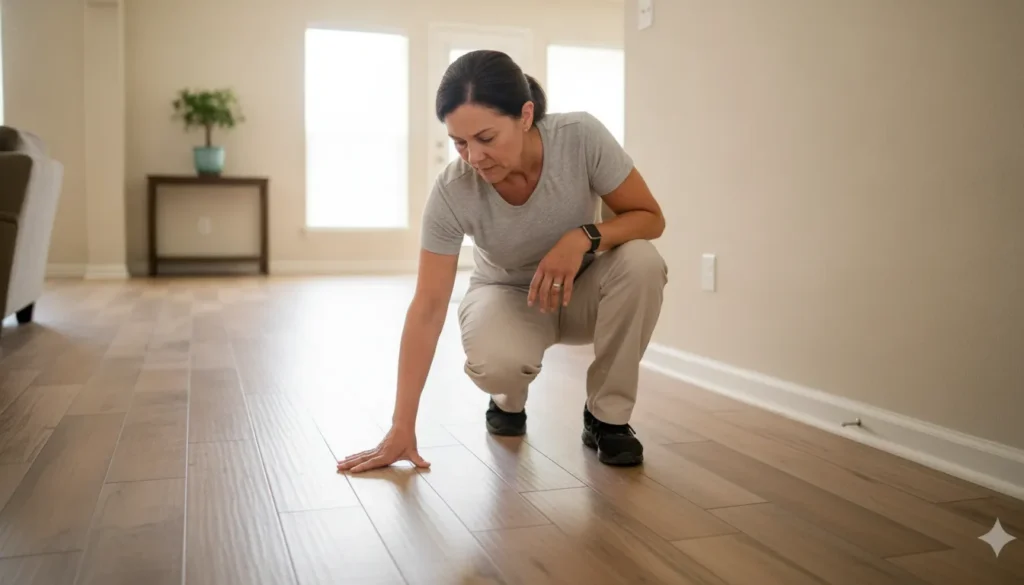
A floor that feels slightly out of level can make you question every crack, creak, and sticking door in your home. In North Texas, that concern is understandable. Expansive clay soil shrinks and swells as moisture changes, which can place repeated stress on a foundation.
Uneven floors foundation concerns are not always structural emergencies. Minor cosmetic settling may remain stable, while a growing slope paired with widening cracks, sticking doors, or windows that no longer close properly deserves a professional assessment.
Start by looking for patterns rather than judging one room in isolation. The location, progression, and related symptoms can help distinguish ordinary settling from foundation movement. Consider a free foundation inspection in DFW or call Solid Base Foundations at (940) 365-4221 if the change persists. First, compare what normal settling typically looks like with the signs that suggest a deeper support problem.
Normal Settling vs. Foundation Movement: What’s the Difference?
Seeing a floor slope or a new crack can make any homeowner worry. Not every change means the foundation is failing, but a pattern that grows, spreads, or affects how the home functions deserves attention. The key question is whether the structure remains stable and reasonably level over time.
A performing residential foundation generally remains reasonably flat and level, allowing for the age and normal wear of the home. Minor cosmetic changes, such as a small drywall crack, may reflect ordinary settling. They still deserve monitoring, especially if the crack widens or appears alongside other changes.
Schedule a free foundation inspection and call (940) 365-4221
What normal settling looks like
Settlement describes what happens when the soil beneath a structure can no longer support the home’s weight uniformly. Small, gradual changes may produce limited cosmetic symptoms without disrupting the overall floor plane. A single hairline crack that remains stable, for example, tells a different story from several widening cracks accompanied by sloping floors, sticking doors, or gaps around trim.
Normal settling should remain limited and relatively consistent. If the floor still feels broadly level and the visible changes do not progress, observation may be appropriate. Keep a simple record of when you notice a crack or slope so you can identify whether the condition is changing rather than relying on memory.
How foundation movement creates uneven floors
Structural movement can involve settlement, heaving, or both. With settlement, a portion of the supporting soil loses uniform capacity, allowing one area of the foundation to move downward. With heaving, swelling clay pushes a section of the foundation upward. Either condition can change the floor plane and create a noticeable slope.
Movement does not always affect the entire house. Unevenness can be localized to one corner or one room when soil moisture exposure differs around the structure. That limited footprint does not automatically make the issue harmless. A floor can feel uneven before wall cracks or other obvious symptoms appear, so the location and progression matter as much as the size of the affected area.
In North Texas, the local clay soil cycle makes this distinction especially important. The goal is not to label every imperfection as a structural emergency. It is to separate stable cosmetic settling from movement that is changing the home’s level, function, or support. When that pattern is unclear, a professional assessment can establish what is moving and where.
Why North Texas Clay Soil Drives Floor Slopes
If a floor feels lower on one side, the cause may be below the house rather than in the flooring itself. North Texas sits over expansive clay associated with the Blackland Prairie. This soil changes volume as its moisture content changes. It can shrink during dry periods, then swell after sustained rain. Those repeated shifts can move the soil supporting a foundation and contribute to settlement, heaving, or uneven floors.
The cycle is especially important in the Dallas-Fort Worth area because weather can change sharply. Long, hot Texas summers draw moisture from the soil. Heavy spring rains can then add moisture quickly. That swing creates recurring stress on foundation support systems. A home may respond gradually, or one portion may move more than another when moisture is uneven around the structure. The Texas Real Estate Commission notes that a residential foundation should remain reasonably flat and level, without excessive movement. Research on North Texas expansive clay also documents the connection between moisture changes and foundation movement.
Why slab-on-grade homes respond to soil movement
Many North Texas homes use slab-on-grade foundations. This system rests close to the ground and relies heavily on reasonably stable soil conditions. When expansive clay changes volume beneath different parts of the slab, support may become uneven. One area can settle as soil loses moisture, while another can rise as wetter clay swells. The result may be a floor slope that is subtle at first but becomes easier to notice over time.
The soil’s high plasticity index helps explain why these changes matter. In practical terms, highly plastic clay has a greater capacity to change volume as moisture fluctuates. That does not mean every sloping floor indicates serious structural damage. It does mean the local geology deserves attention when a slope persists, progresses, or appears alongside other changes in the home.
How homeowners can reduce moisture swings
Consistent soil moisture management is a proactive part of foundation care. Keep water moving away from the foundation with effective perimeter drainage, and watch for downspouts or grading that direct runoff toward the house. Avoid allowing one area to become unusually dry while another stays saturated. A steady moisture environment can reduce movement in highly expansive clay, although it cannot correct movement that has already occurred.
If a floor slope continues to change, consider documenting it and arranging an evaluation. Understanding the soil conditions around your home helps separate ordinary surface changes from a foundation support concern.
Uneven Floors Foundation Warning Signs to Check
A floor that feels slightly out of level can make you wonder whether a cosmetic issue is becoming something more serious. Uneven floors are often an early symptom that foundation support has weakened, but one isolated imperfection does not automatically indicate structural damage. The pattern, location, and progression matter.
Start by noticing whether the slope is localized or spreading. Foundation movement can affect one corner or a single room because soil moisture exposure is not always uniform. A localized slope still deserves attention when it is new, worsening, or paired with other changes. A floor that slopes before any wall crack appears also warrants consideration, since uneven floor surfaces can be an early, less visible indication of foundation instability.
Look for a pattern of related movement
Doors and windows that suddenly stick, bind, or no longer close properly add important context. When these changes occur alongside a noticeable floor slope, they may indicate that portions of the structure are shifting rather than simply showing normal wear. Walk through the affected area and compare it with rooms that feel level. Note whether the problem is concentrated near an exterior wall, a corner, or a transition between rooms.
Hairline drywall or concrete cracks by themselves are often cosmetic, especially when they remain narrow and unchanged. They become more concerning when they widen, recur after patching, or appear with sloping floors and openings that no longer operate normally. In a concrete slab, fissures wider than approximately 1/8 to 1/4 inch merit professional evaluation rather than casual monitoring.
Do not wait for secondary damage
Foundation movement can affect more than the walking surface. If it continues without attention, shifting may contribute to secondary damage such as broken plumbing pipes or severe wall cracks. That does not mean every uneven floor will lead to those outcomes. It does mean persistent or progressive movement is worth documenting and evaluating before additional systems are affected.
Take dated photos of visible cracks, record which doors or windows stick, and note whether the slope changes after drought or heavy rain. These observations give an inspector useful context. Consider a professional assessment when several signs appear together, even if the floor problem is limited to one area.
Simple Home Checks to Decide If It’s Serious
A sloping floor can be unsettling, especially when the cause is not visible. These simple checks cannot diagnose a foundation, but they can help you document what is changing and decide whether to request an evaluation.
- Test the floor with a marble or ball. Place a marble or small ball on the floor in several areas, including the center of the room and near walls. Note whether it rolls, which direction it travels, and whether the same pattern appears in nearby rooms. A single low spot may be localized, while a consistent direction across a larger area deserves closer attention.
- Measure the slope across a long span. Set a level on the floor and record the difference from one end to the other. For a longer room, move the level in sections and add the changes. As a rough screening point, a slope greater than about 1 inch over 20 feet may indicate foundation damage, according to industry guidance. This is not a diagnosis, and shorter spans can make a slope appear more pronounced. Save your measurements and repeat them from the same locations.
- Check doors and windows. Open and close doors and windows throughout the affected area. Look for a door that sticks at the top or latch side, a window that no longer closes smoothly, or a frame that appears out of square. When these changes occur alongside a floor slope, they provide more useful context than either symptom alone.
- Inspect cracks inside and outside. Look at drywall, brick, concrete, and trim around the affected room. Hairline cracks may be cosmetic, but widening cracks, cracks that cross multiple materials, or slab fissures wider than roughly 1/8 to 1/4 inch merit professional review. Photograph each crack with a ruler beside it so you can compare its width later.
- Track diagonal cracks near openings. Pay particular attention to diagonal cracks near doors, windows, and corners. Mark the ends lightly with a pencil, date a photograph, and check again over the next few weeks. Growth, new cracks, or changes after heavy rain or prolonged dry weather are useful information for an inspector.
Do not try to jack, shim, or otherwise level the structure yourself. Incorrect adjustments can worsen movement or create new stress. Professionals use precise digital leveling and laser-measuring tools to map floor movement, identify low points, and determine whether restoration is appropriate.
You can still take a proactive step by managing moisture around the home. Keep gutters and downspouts directing water away from the foundation, address standing water, and maintain consistent soil moisture around the perimeter when conditions are dry. Effective drainage and steady moisture levels can reduce stress in North Texas expansive clay, but they do not replace an inspection when symptoms are persistent.
For more context on documenting a slope, review this sinking floor repair guide.
Normal Settling vs. Foundation Damage: Side-by-Side
A slight change in floor level does not automatically mean your home requires foundation repair. Homes settle over time, and small cosmetic changes can remain stable without affecting how the structure performs. The useful question is whether the condition is isolated and unchanged, or whether several symptoms point to ongoing movement.
| What to check | Normal or cosmetic settling | Possible structural foundation movement |
|---|---|---|
| Wall or slab cracks | Hairline drywall or concrete cracks that remain small and stable. | Cracks that widen, continue across surfaces, or exceed roughly 1/8 to 1/4 inch. These slab fissures merit professional evaluation. |
| Doors and windows | Doors and windows continue to open, close, and latch normally. | Doors stick, frames appear out of square, or windows become difficult to operate or refuse to close. |
| Floor slope | A minor slope that is limited in magnitude and does not affect daily use. | A pronounced or noticeable slope, especially when it occurs with cracks or operating problems elsewhere in the room. |
| Change over time | The condition stays essentially the same when you recheck it. | The slope, cracks, or related symptoms worsen over weeks or months. |
| Location | Unevenness remains localized to one small area or corner. | Movement spreads across several rooms or appears in multiple parts of the home. |
Texas guidance describes a performing residential foundation as reasonably flat and level for its age, without excessive movement. Minor settling can fit within that expectation, while a worsening pattern deserves closer attention. If your uneven floors foundation concern is accompanied by sticking doors, widening cracks. Or movement beyond one localized area, consider a professional assessment rather than attempting to level the home yourself.
For additional context on identifying floor movement, review this sinking floor repair guide. It is also reasonable to monitor a stable, minor slope and document changes before deciding whether further evaluation is warranted.
When to Call a Foundation Repair Professional in DFW
It is understandable to hesitate when a floor starts to slope. A small change may reflect normal wear, but persistent unevenness deserves a clear diagnosis, especially in a North Texas home. Consider scheduling a professional inspection when the slope continues to worsen, appears after a prolonged drought or heavy rain. Or occurs alongside sticking doors, windows that no longer close properly, or widening cracks.
A professional can determine whether the cause is localized soil movement, slab settlement, or another structural concern. Solid Base Foundations provides free on-site foundation inspections and detailed repair quotes, so you can understand the condition of the home before deciding what comes next. The inspection should lead to a repair plan tailored to the foundation type, home size, and observed damage rather than a generic recommendation.
What a professional inspection can clarify
Experienced technicians use digital leveling and laser measuring tools to map floor movement and identify low points. That information helps distinguish a cosmetic variation from movement that affects structural support. It also helps explain why a single room may feel uneven while the rest of the home appears level.
Solid Base Foundations has more than 18 years of experience and serves 14 counties across the Greater Dallas-Fort Worth area. If you are researching foundation repair Dallas homeowners can use for an on-site assessment, ask how the company will document the movement, explain the cause, and match the repair to your foundation.
Slab and pier-and-beam homes require different answers
For a slab foundation, a contractor may recommend a leveling method based on where the slab has settled or heaved. Solid Base uses PolyLevel, a fast-curing polyurethane foam that is injected beneath sunken concrete. It supports precise leveling with less disruption than traditional mudjacking, and the material cures in about 15 minutes. This approach is intended for appropriate concrete leveling conditions, not as a universal answer to every uneven floor.
Pier-and-beam homes require a different evaluation. Uneven floors may result from movement or deterioration of individual support piers rather than a complete slab shift. Moisture and rot in the crawl space can contribute to settling, so the inspection should include the supports and the crawl-space environment. A vapor barrier can help control humidity and reduce soil moisture fluctuations that contribute to support-post sinking. When pier work is appropriate, Solid Base offers a 25-year manufacturer’s warranty on its foundation pier systems.
Do not try to jack up or level a structurally compromised home on your own. Incorrect adjustments can worsen movement or create new stress points.
Schedule a free foundation inspection with a North Texas specialist and call Solid Base Foundations at (940) 365-4221 to discuss what your floor is showing.
Frequently Asked Questions
Do uneven floors mean foundation problems?
Not always. Minor unevenness can reflect normal settling, construction tolerances, or age. A persistent or worsening slope deserves attention, especially when it appears with sticking doors. Windows that do not close properly, wall cracks, or a noticeable change in one room. A professional assessment can distinguish cosmetic unevenness from movement that affects structural support.
What is the difference between normal settling and foundation movement?
Normal settling is usually gradual and limited, with minor cosmetic signs that remain stable. Foundation movement occurs when soil no longer supports the structure uniformly, causing sections to settle or rise. Track whether the floor changes over time, whether cracks widen, and whether the unevenness is localized or spreading. Those patterns help identify whether the issue is active.
Can clay soil cause uneven floors in North Texas homes?
Yes. Expansive North Texas clay shrinks as it loses moisture and swells when moisture returns. That repeated cycle can move a slab or individual supports, creating uneven floors. In pier and beam homes, moisture can also contribute to support-pier movement or crawl-space problems. Consistent drainage and soil-moisture management can help reduce stress around the foundation.
When should I worry about sloping floors?
Consider an inspection when the slope is persistent, progressing, or paired with sticking doors, windows, cracks, plumbing concerns, or a sudden change after drought or heavy rain. A floor can show instability before wall cracks become visible, so waiting for dramatic damage is not necessary. Avoid trying to level a structural foundation yourself, since incorrect adjustments can worsen the problem.
Are uneven floors expensive to fix?
There is no reliable one-size-fits-all price. The scope depends on the foundation type, home size, location, and cause of movement. A qualified professional should identify the underlying issue before recommending work. A free on-site inspection and detailed quote provide a more useful answer than a generic cost range.
Schedule Your Free Foundation Inspection
Uneven or sloping floors can have more than one explanation, and a careful inspection can help you understand what your home is showing. Solid Base Foundations can assess the condition of your foundation and outline an appropriate next step without asking you to guess. Schedule a free on-site foundation inspection or call (940) 365-4221 to talk with the team.