
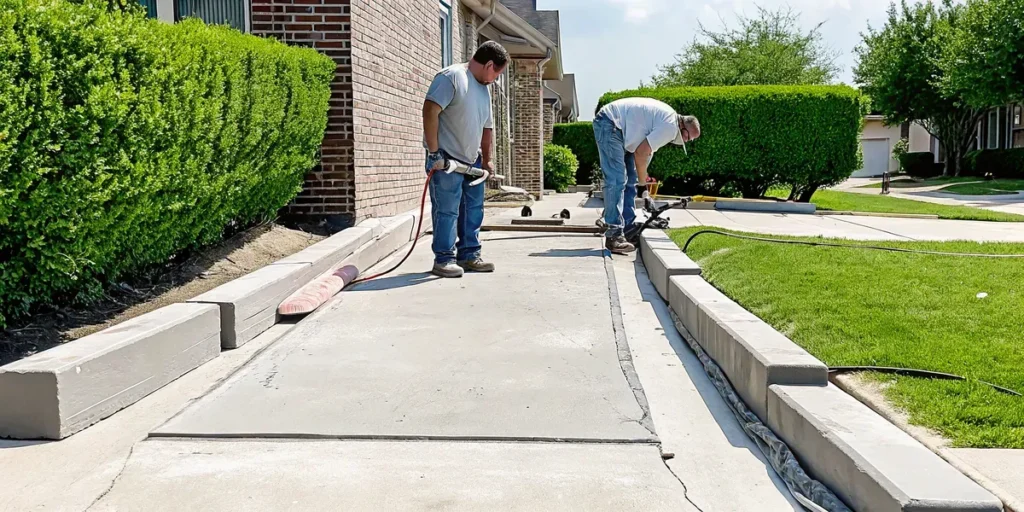
A sunken slab does not automatically mean your driveway belongs in a dumpster. The right fix depends on the concrete’s condition, the soil below it, and whether water is still moving that soil.
Request a Free Concrete Repair Estimate
Concrete repair vs replacement starts with three questions: Is the slab sound, can it be leveled, and has the movement’s cause been fixed? Repair usually makes sense for stable slabs with manageable cracks, settlement, or surface wear that can be lifted, sealed, and protected. Replacement is safer when concrete is crumbling, broken throughout, badly displaced, or resting on a base too unstable to support a lasting repair. In North Texas, expansive clay and drainage problems can keep moving slabs, so fixing the cause matters as much as fixing the surface. Solid Base Foundations can assess the slab and surrounding soil, then recommend targeted concrete repair or replacement when repair will not hold.
Homeowners need a clear way to weigh cracks, sinking, trip hazards, age, drainage, and the disruption of a full repour. The next section, Concrete repair vs replacement: the quick decision framework, turns those signs into a practical first choice. Start with the slab, then look at the soil and water around it.
Concrete repair vs replacement: the quick decision framework
Start by separating surface damage from movement and structural failure. A stable slab with a small crack needs a different fix than a sunken panel. The right choice may be sealing, protection, repair, leveling, or full replacement.
Match the fix to the damage
Seal or protect concrete when the slab is stable and the main concern is surface wear or an isolated crack. Crack sealing is more than a cosmetic step. Research on concrete crack sealing examines both water resistance and mechanical strength.
Choose repair when damage is limited and the slab still performs its job. Choose leveling when an intact section has sunk but can still be lifted and supported. Solid Base Foundations offers several concrete repair services for these conditions.
The table below summarizes common choices.
| Condition | Likely approach | Reason |
|---|---|---|
| Stable hairline or isolated crack. | Seal and monitor. | Limits water entry and tracks change. |
| Worn but stable surface. | Protect or resurface. | Addresses surface wear without removal. |
| Small damaged area. | Repair. | Preserves the sound part of the slab. |
| Intact but sunken panel. | Level and stabilize. | Restores position and support. |
| Widespread deep cracks or failed slab. | Replace. | Removes concrete that cannot be restored. |
Replacement becomes the stronger choice when damage is widespread, deep, or tied to a failed slab. It may also make sense when several old repairs have failed. Do not base the decision on appearance alone, since hidden soil or drainage problems can change the plan.
North Texas soil and drainage
North Texas clay soil expands as it gains moisture and shrinks as it dries. That movement can leave voids, lift sections, or let slabs settle unevenly. Poor drainage can add to the problem by changing moisture levels around and beneath the concrete.
When the concrete remains sound, PolyLevel concrete leveling may lift and stabilize a sunken section without removing the whole slab. Replacement may be needed when the slab itself has broken beyond repair. Either choice should address the cause below the surface.
Why a professional assessment matters
A homeowner can note crack location, width changes, uneven edges, standing water, and past repairs. These clues help frame the problem, but they do not show the full condition below the slab. A professional assessment checks whether the damage is cosmetic, caused by settlement, or part of a larger structural issue.
Ask for a plan that explains both the recommended fix and the reason behind it. The assessment should cover slab condition, soil support, drainage, expected use, and signs of ongoing movement. Solid Base Foundations brings 18+ years of Greater Dallas experience and training through the Foundation Supportworks network to that diagnosis. This approach makes the concrete repair vs replacement choice easier to compare on long-term value.
When does concrete repair make sense?
In the concrete repair vs replacement decision, repair makes sense when most of the slab is still sound. The damage should be limited, and the cause must be clear enough to address. Small cracks, worn surfaces, open joints, and modest settlement often fit this pattern.
Damage that can stay in place
Small, non-structural cracks may need sealing or a targeted repair rather than a new slab. Surface wear may also be treated when it has not exposed deep, weak concrete. Research on concrete crack sealing shows that sealing methods can improve water resistance and strength.
Open control joints are another repair candidate. NexusPro seals joints and cracks to help block water from reaching the soil below. SealantPro protects the concrete surface from moisture and daily wear. These treatments work best before minor damage spreads across the slab.
Sunken slabs that can be lifted
A settled slab does not always need removal. If the concrete remains strong, PolyLevel foam can lift and support it from below. This method can address uneven sidewalks, driveway sections, patios, and pool decks. It is useful when settlement has created a trip hazard but has not broken the slab apart.
PolyLevel cures in about 15 minutes, so the repaired area can return to use with little delay. It also uses small injection holes and adds little weight to the soil. Homeowners can review how the process works when comparing concrete stabilization options.
Early damage tied to water and soil
North Texas clay soil expands and shrinks as moisture levels change. Poor drainage can make that movement less even, which may cause a slab edge or section to settle. Repair is more likely to last when the drainage issue is fixed before the concrete is lifted or sealed.
Watch for water pooling near a driveway, patio, or walkway. Other warning signs include widening joints, a new low spot, or a small height difference between slabs. Acting early may keep the repair focused instead of allowing damage to reach more of the surface.
A repair assessment should confirm that the slab still has enough strength and that movement can be controlled. The inspection should also check nearby soil, runoff paths, and the size of each damaged area. If those conditions are met, a targeted concrete repair service may correct the hazard while keeping sound concrete in place.
When is replacement the better long-term choice?
Replacement makes sense when damage affects the slab as a whole, not just one small area. Deep cracks across several sections, loose or crumbling concrete, and major height changes can point to a broader failure. In these cases, patching the surface may hide damage without fixing its cause.
Signs the slab has failed
A slab needs a sound base to carry weight and stay level. If the soil or original base is unstable, repairs may fail as movement continues. This concern matters in North Texas, where clay soil can swell and shrink as moisture levels change.
Repeated repair failures are another warning sign. New cracks near old patches suggest that damage is still active or reaches beyond the repaired area. Age alone does not require replacement, but an older slab with broad damage deserves a full review. The same applies when the slab must support heavier loads than its original design allowed.
Crack sealing can be useful in the right setting because it can limit water entry and slow deterioration around a focused gap. Still, a crack treatment cannot rebuild a crumbling slab or correct a poor base.
What an assessment should confirm
The choice between concrete repair vs replacement should begin with the source of the damage. A contractor should check crack depth, movement, drainage, base condition, and the slab’s expected load. This review helps separate a repairable surface problem from a structural or base failure.
Replacement warning signs include widespread deep cracks, crumbling concrete, a weak base, repeated repair failures, or damage linked to a major change in use.
Some uneven slabs can still be lifted and stabilized instead of removed. Reviewing available concrete stabilization options helps rule out a practical repair before replacement begins. Replacement is the stronger choice when the existing slab or its base cannot support a lasting repair.
What replacement involves
Replacement usually starts with marking the affected area and planning access. Crews then remove the failed concrete, haul away debris, and inspect the exposed base. Any drainage or soil issue should be addressed before the base is prepared for new concrete.
The new slab must match its intended use, site conditions, and load needs. Crews place and finish the concrete, then protect it while it cures. Weather, access, and the scope of base work can affect the schedule. A site-specific plan is more useful than a broad promise about timing or results.
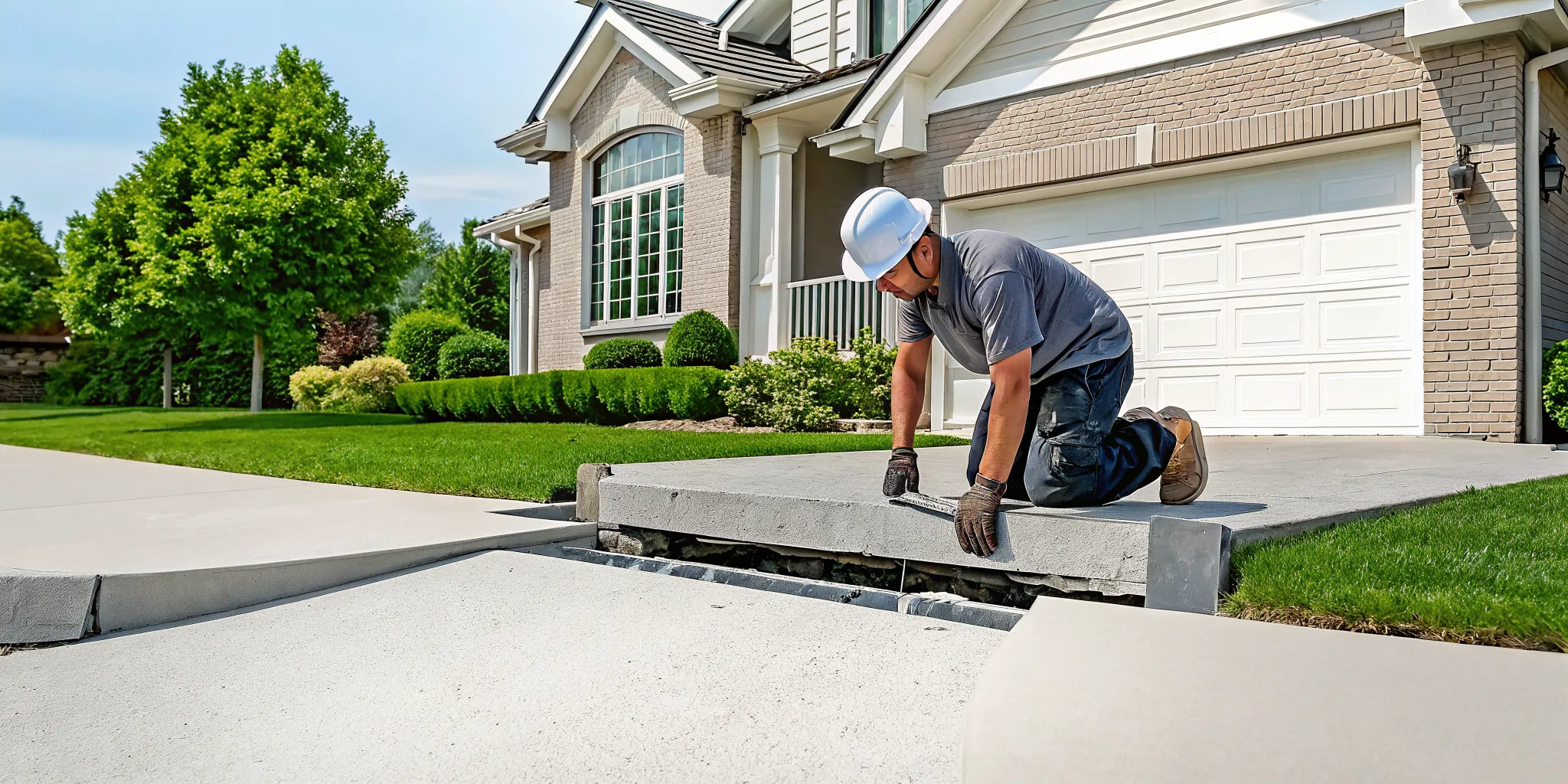
Why does North Texas clay soil change the answer?
North Texas clay soil expands as it gains water and contracts as it dries. That movement can shift the support beneath a driveway, patio, walkway, or foundation slab. As a result, the concrete repair vs replacement choice must start below the surface.
Moisture swings beneath the slab
Long dry spells can pull clay away from the slab and leave gaps below it. Heavy rain can then swell the soil or wash loose material into those gaps. The slab may settle where support is lost, while wetter soil can push another area upward.
This upward movement is called slab heave. It can look like settlement because both problems create uneven sections, cracks, and raised edges. Yet the right response differs, so treating every uneven slab as a simple sinking problem can miss the cause.
Drainage and soil support
Water that collects beside concrete can keep one soil area wetter than another. Downspouts, low spots, leaking lines, and poor grading may all change moisture levels below the slab. Drainage work may be needed before a lasting concrete repair vs replacement decision can be made.
Replacing concrete without fixing weak support or poor drainage may place a new slab over the same problem. Repair can also fall short when soil movement remains active. A site review should trace where water flows, where the slab moved, and whether nearby structures show related distress.
Diagnosis before repair or replacement
Crack patterns alone don’t always show whether damage is cosmetic or structural. Some cracks are surface-level openings that can be sealed, while others point to movement below the slab. The repair method must match the type of damage.
A sound slab that settled over a void may be a candidate for lifting and support. Property owners can review concrete stabilization options when the slab remains usable. Widespread failure, poor slab design, or badly broken sections may point toward removal and replacement instead.
The root-cause check should separate surface wear from soil-driven movement. It should also consider whether drainage changes can reduce future moisture swings. That diagnosis helps avoid replacing usable concrete or repairing a slab that cannot provide safe, lasting service.
Which concrete repair option fits each problem?
The right fix depends on what moved, what caused it, and how much sound concrete remains. A repair can address a focused problem without removing a useful slab. Replacement may make more sense when damage is deep, broad, or tied to a failed base.
Matching the repair to the damage
PolyLevel fits slabs that have sunk but remain strong enough to lift. The polyurethane foam fills gaps below the slab, raises low areas, and helps support the concrete. Homeowners can learn more about repairing sunken concrete before comparing leveling with full replacement.
NexusPro fits cracks and open joints that need a flexible seal. Sealing limits water entry and helps keep debris out of the gap. It also helps reduce the soil-moisture changes that can make nearby slabs move again.
SealantPro fits concrete that is still in fair shape and needs surface protection. It helps guard the slab from moisture, stains, and wear. This option is preventive, so it does not lift a sunken slab or correct a weak base.
A practical homeowner process
A sound concrete repair vs replacement choice starts with the cause, not the surface alone. Use this process to sort a local repair from a larger structural or drainage problem.
- Mark every low spot, crack, open joint, and area that holds water. Take photos after rain so drainage patterns are easier to compare.
- Check whether the slab is intact or breaking apart. An intact sunken slab may suit PolyLevel, while broad deterioration may point toward replacement.
- Look for signs beyond the slab, including wall cracks, sticking doors, or repeated movement. These signs call for a foundation and soil review.
- Trace where roof and yard water flow. Poor drainage can keep soil wet and unstable, so correcting water flow may be part of the repair.
- Compare the full scope of each option. Include preparation, sealing, drainage work, disruption, and the risk that untreated movement will return.
- Have a trained contractor confirm the cause and repair plan. Use a detailed estimate to compare targeted repair with removal and a new pour.
Schedule a Free Concrete Repair Assessment
When movement needs a wider evaluation
Several repair products may work together on one property. PolyLevel can lift a settled walkway, NexusPro can seal its joints, and SealantPro can protect the finished surface. The plan should still address the soil and water conditions that caused movement.
Repeated sinking, heaving, or cracks that return after repair may signal a wider issue. In that case, a foundation and drainage evaluation should come before surface work. A concrete repair vs replacement guide can help homeowners prepare questions before an on-site review.
Replacement is not the default answer for every damaged slab. It is one option when the concrete cannot support a durable repair. A diagnosis that separates surface damage from base movement gives each repair product a clear job.
How do cost, downtime, and safety affect the choice?
Cost matters, but the lowest first quote may not offer the best long-term value. Compare the work included, expected disruption, likely upkeep, and how well each option addresses the cause. A sound concrete repair vs replacement choice should account for the slab’s condition and the soil beneath it.
Upfront cost and long-term value
Repair often avoids demolition, hauling, base preparation, and a full new pour. That can make it a practical choice when most of the slab is still sound. Replacement may offer better value when damage is widespread, the slab is crumbling, or past repairs keep failing.
Ask each contractor what the estimate covers and what could change after work begins. Compare warranties, future maintenance, drainage needs, and the risk of paying twice for a short-term fix. Solid Base Foundations also lists financing options for homeowners who want to plan the work around their budget. For foundation pier work tied to deeper structural movement, the company can provide manufacturer-backed systems with a 25-year warranty.
Downtime, disruption, and curb appeal
Full replacement usually brings more noise, debris, equipment, and limits on access while the new slab sets. Repair may preserve nearby landscaping and let the area return to use sooner. The actual downtime depends on the repair method, site access, weather, and the slab’s intended use.
Appearance also affects the decision. A targeted repair can correct a settled area, but it may not match older concrete in color or texture. Replacement creates a fresh surface, yet nearby slabs may still look different. Homeowners comparing concrete repair vs replacement should decide how much visual consistency matters for the space.
Safety and the value of an on-site estimate
Uneven walkways, raised slab edges, and sinking steps can create trip hazards. Driveways and patios may also direct water toward the home when sections settle. Safety concerns often make prompt action more important than cosmetic flaws.
Repair is not one method, and the right material depends on the damage. Crack type, slab strength, and water resistance all matter when choosing a repair approach. An on-site review can also reveal unstable soil, drainage trouble, or damage that surface photos do not show.
A free estimate is useful when the cause or scope is unclear. Ask the inspector to explain why repair or replacement fits the site, how access will be managed, and when the area can reopen. The estimate should separate urgent safety work from optional appearance upgrades.
Frequently Asked Questions
Is it cheaper to repair or replace concrete?
Repair is usually less expensive when damage is limited to small cracks, surface wear, or a slab that can be leveled. Replacement costs more because it includes demolition, debris removal, base preparation, and pouring new concrete, according to this concrete project guide. However, repeated repairs may not be economical when a slab has widespread structural damage.
How do you know if your concrete slab needs to be replaced?
A slab may need replacement when it is crumbling, missing large sections, deeply cracked across several areas, or severely displaced. Large vertical movement can signal eroded or unstable soil beneath the slab, as explained in this repair and replacement guide. A professional inspection can confirm whether the base can support a lasting repair.
Can you fix sunken concrete without replacing the entire slab?
Yes, many sunken slabs can be lifted without full replacement if the concrete remains structurally sound. Polyurethane foam injection fills voids beneath the slab and raises it toward its original position. This minimally invasive method can work for driveways, sidewalks, patios, and pool decks. An inspection should first identify why the slab sank and whether the underlying soil can be stabilized.
Does North Texas clay soil affect concrete repair decisions?
Yes, North Texas clay soil expands when wet and shrinks during dry periods, which can create movement and voids beneath concrete. Drainage problems can also saturate soil and reduce slab stability. Because the cause affects the correct solution, homeowners should evaluate soil support and water flow before choosing leveling, crack sealing, or replacement. Repairing drainage issues can help reduce the risk of recurring damage.
Ready to Make the Right Concrete Repair Choice?
Cracked, sunken, or uneven concrete rarely becomes easier to address after another season of shifting North Texas clay soil. Waiting can allow water, movement, and everyday use to worsen damage, narrow practical repair options, and increase disruption around your property. Starting now gives you time to compare leveling, sealing, protection, and replacement before a small concern forces a rushed decision.
Ready to choose the right next step for your concrete? Request a free estimate to get a clear assessment of the damaged area and a practical repair or replacement plan. Contact Solid Base Foundations now, so you can plan the work around your schedule instead of reacting after the damage becomes more disruptive.