
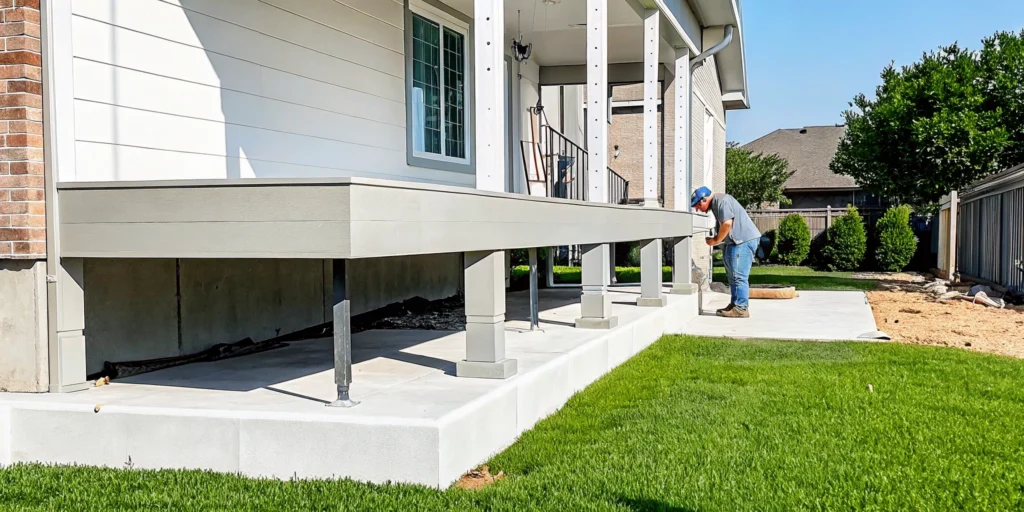
Dallas decks often sink because the local clay soil shifts and pulls on shallow concrete footings. You need a deeper, more stable way to keep your outdoor living space level for years to come. Helical piers offer a modern fix that goes deeper than the shifting surface soil.
Helical deck piers Dallas homeowners consider for decks, porches, and sunrooms are steel shafts with screw-like bearing plates. Installers advance them into suitable load-bearing soil and connect them to the structure above. Compared with poured concrete footings, installation generally requires less excavation and eliminates concrete curing time. Their suitability still depends on the structure, soil conditions, access, and a professional assessment.
Most property owners do not realize how much the local weather and soil affect their outdoor structures. You can avoid costly repairs and safety hazards by learning how helical deck piers work in Dallas soil. Understanding the science behind these deep foundations is the first step toward a stable home. The path begins with
Helical Deck Piers Dallas: How helical deck piers work in Dallas soil
North Texas is known for its tough soil. The ground here has a lot of clay. This clay grows when it gets wet and shrinks when it gets dry. This movement puts a lot of stress on any home.
If you want to build a deck or porch that lasts, you need a strong base. Using helical deck piers is a smart choice for Dallas homes. These piers reach deep into the earth to find firm ground. They keep your deck from sinking or tilting over time.
The design of a helical pier
A helical pier looks a lot like a big screw. It has a long steel shaft with round plates welded to it. These plates are called helixes. They act like the threads on a wood screw.
During the build, a team uses hydraulic tools to twist the pier into the ground. This process is fast and precise. The pier goes down until it hits soil that can hold a heavy load. This deep reach is why they are called a deep foundation system.
Why Dallas soil needs deep support
Dallas soil can be tricky for builders. The top layers of dirt move a lot during the hot Texas summers. Standard concrete footings often sit in this moving soil. This can lead to cracks or uneven decks.
Helical piers solve this by going past the moving soil layer. They anchor your deck in the dense, dry soil further down. This Dallas foundation repair services method works because it skips the surface issues. It gives you a solid base that does not care about the rain or sun.
Fast installation and low mess
One big plus of helical piers is how clean they are. Poured concrete footers need you to dig large holes. This creates a lot of dirt and mess in your yard.
Helical piers need little digging. They cause almost no soil waste. You also do not have to wait for concrete to dry.
You can start building your deck the same day the piers go in. This speed saves you time and cuts down on work costs. It is a great way to get your project done without a huge headache.
The right support plan is specific to the site. A professional should evaluate the proposed loads, soil behavior, drainage, access, and connection details before recommending a pier system.
If you are planning a new deck or porch, we can help. Our team offers free on-site checks to find the best plan for your home. We serve Dallas, Denton, and Collin counties with expert care.
Helical piers vs. poured concrete footings
When you plan a new deck or porch in Dallas, the base is the most vital part. Most builders use poured concrete footings. But many owners now choose helical deck piers instead. These steel shafts twist into the ground like a screw. They offer a fast and strong way to hold up your new structure.
Old concrete footings need big holes and lots of digging. You must wait days for the wet mix to dry before you can build. In contrast, helical piers go in fast with small tools. You can start your project the same day the piers are set. This makes them a top choice for fast builds in North Texas.
Faster build times with no wait
Poured concrete footings take a long time to set up. You must dig a deep hole, add steel bars, and pour the mix. Then you have to wait for it to cure. This wait can stall your project for days. If it rains, you might have to wait even longer for the site to dry out.
Helical piers change the game. Since they do not use wet concrete, there is no wait time. A crew can set the piers in a few hours. Work at Penn State University shows these piers setup fast compared to old ways. Once the pier is in the ground, you can bolt the wood frame to it right away.
Stronger support in Dallas clay soil
Dallas soil has a lot of clay. This clay grows when it is wet and shrinks when it is dry. This move can make old concrete footings shift or sink. When the base moves, your deck or porch will crack or tilt. This is a common issue for many Dallas foundation repair services.
Helical piers work better in this soil. They reach deep into the earth to find firm ground. The steel blades grip the soil to stop the pier from moving up or down. This deep anchor helps your deck stay level for years. They handle both pushing and pulling forces. This keeps your sunroom or porch safe during big storms.
Less mess and site damage
Building a deck with concrete footings creates a huge mess. You will have piles of dirt in your yard. Large trucks may drive over your grass to bring in the mix. This can ruin your plants and leave deep ruts in your lawn. You also have to deal with extra dirt after the job is done.
Helical piers use a clean process. The small gear used to set them does not need much space. There is little dirt left over because the pier is thin. This means less work to fix your yard after the build. It also means you do not have to worry about huge trucks or piles of mud near your home.
| Feature | Helical Piers | Poured Concrete |
|---|---|---|
| Setup Speed | Hours to complete | Days to complete |
| Wait Time | Zero wait time | 24 to 72 hours |
| Yard Damage | Low impact | High impact from digging |
| Soil Grip | Deep steel anchor | Shallow surface base |
| Build Start | Right away | Wait for drying |
Choosing the right base depends on your site and your goals. Helical piers cost more for parts, but they save money on labor. They also let you use your new space much sooner. If you live in an area with tough soil, the deep steel base is worth the cost. It keeps your deck safe and level for a long time.
What happens during helical deck pier installation?
Installing helical deck piers is a fast and clean process that avoids the mess of digging deep holes. Unlike old concrete footings, these steel piers do not need time to dry or cure. This allows you to start building your deck soon after the team finishes the job. The process uses small, hydraulic equipment that protects your yard while providing a strong base in the tough clay soils found around Dallas. These piers offer a deep anchor that keeps your deck from sinking or tilting as the ground shifts.
A step-by-step guide to installation
The installation of helical deck piers in Dallas follows a clear set of steps to ensure your deck stays level for years. Using hydraulic rotary equipment, the team can set these piers in almost any weather. This method is much faster than old ways of building and helps keep your costs down by saving on labor. Most projects take only a few hours to finish, which is much better than waiting days for a concrete truck to arrive and pour footings.
- Site assessment and layout. The team starts with a free on-site check to find the best spots for your piers. They mark the layout based on your deck plan to ensure the load is spread correctly across the soil. This helps avoid weak spots that could cause the deck to sag over time.
- Equipment setup. A small machine with a hydraulic head is brought to the site. This equipment is light enough to move across your lawn without causing the big ruts that heavy backhoes might leave behind. It is small enough to fit through most yard gates and into tight spaces.
- Driving the piers. The steel piers are screwed into the ground like a large corkscrew. The helical plates on the shaft cut into the soil to reach depths where the ground is stable and firm. This deep anchoring is why these piers work so well in the expansive clay of North Texas.
- Load monitoring. As the pier goes deeper, the machine monitors the force needed to turn it. This ensures the pier has reached a layer of soil strong enough to hold the weight of your new deck. This step provides proof that each pier can handle the load before the deck is even built.
- Cutting and capping. Once the pier is at the right depth, the top of the steel shaft is cut to the correct height for your deck. A steel bracket or cap is then placed on top to connect to your wood or steel deck framing. This makes a solid link between the pier and the structure above.
- Immediate construction. Because there is no concrete to wait for, your deck builder can start work right away. This can save days or even weeks on your total project timeline. You can go from an empty yard to a finished deck much faster than with traditional methods.
Why Dallas homeowners choose helical piers
North Texas is known for having soil that shifts and moves, which often leads to foundation repair services being needed later for many homes. Helical piers can bypass less suitable near-surface soil and transfer loads deeper into the ground. A site-specific evaluation determines whether that approach is appropriate and how each support should be designed.
Using these piers also helps the environment. They create very little waste and require minimal excavation, so there is less soil to move or haul away. This means your landscaping stays safe during the work. If you ever decide to remove the deck, the piers can often be taken out or even used again for a new project. This makes them a smart and sustainable choice for any Dallas homeowner.
Where do helical piers make the most sense?
Choosing the right support for your build depends on soil types and your project goals. In Texas, the soil often shifts because of high clay content. This makes deep anchoring a must for long-term strength. Homeowners looking for helical deck piers find they work best for weak soil. These systems bypass soft surface dirt to reach strong layers deep below. They offer a steady way to keep your outdoor living spaces level and safe for many years.
Ideal projects for helical piers
Helical piers are a smart choice for many home builds. They are a modern choice to replace old poured concrete for decks, porches, and sunrooms. Because they do not need time to dry, you can start building right after they are set. This speed helps keep your work on track and lowers your total labor costs. They are also great for home additions. You can match the strength of your current base without making a huge mess in your yard.
Homeowners often use these piers for:
- New deck builds that need deep support to stop sinking
- Adding a roof or heavy cover over an old patio or porch
- Building a sunroom or glass porch that needs a level floor
- Creating a strong base for heavy hot tubs or outdoor kitchens
- Supporting new rooms that attach to the main house build
Solving tough site problems
One of the biggest perks of these piers is how they handle tough sites. Old methods often need large tools that can ruin your lawn. Helical piers use hydraulic gear that is much smaller and easier to move. This makes them the best choice for tight spots where big trucks cannot fit. For example, if you want a deck in a small backyard with a narrow gate, these piers are ideal. They also work well on sloped land where digging a flat hole for concrete is hard. Since the process creates less waste and less digging, your yard stays clean.
In North Texas, weak soil near the surface can lead to deck failure. The soil swells when wet and shrinks when dry. Helical piers reach deep past this active layer to reach dense soil. This makes sure your porch or sunroom does not move with the weather. These piers are also good for eco-friendly builds. They can be removed and used again if you ever change your yard plan. This leads to less waste and a lower impact on the earth.
While these piers are very handy, they may not be the right fit for every job. If your land sits on solid rock near the surface, a screw-in pier may not bite into the ground. Also, very large work sites with huge loads might need other types of heavy deep bases. The best way to know is to get an expert look at your land. Our team offers Dallas foundation repair services. We start with a free on-site check to see if helical piers match your soil and load needs. This no-pressure visit helps you plan your project with trust.
Does your porch or sunroom need better support?
Many homeowners in Dallas love their outdoor living spots. A porch or sunroom gives you a place to relax and enjoy the fresh air. But these spaces are heavy. They need a strong base to stay safe. In North Texas, the ground under your home can move often. This shift can cause your porch to sink or pull away from the main house. If you see signs of trouble, you may need helical deck piers to keep your Dallas home steady.
Spotting early warning signs
You can find big problems if you know where to look. Start by checking the spots where your porch or sunroom meets your house. Look for new gaps or cracks in the wall. You might see a space forming where the porch roof joins the siding. Inside a sunroom, windows may start to stick or become hard to open. These issues often mean the ground has shifted and the posts are no longer level.
Leaning posts are another clear sign of a weak base. If a support beam looks tilted, it is not doing its job. You should also check the floor. A floor that feels bouncy or slopes to one side is a major red flag. These deep foundation systems are often used for home projects because they reach past soft soil to provide real support. Finding these signs early can save you from big repair bills later.
Soil movement vs. surface damage
It is key to know if a crack is just on the surface or a deeper problem. Small cracks in wood or paint are often just from age or sun. But cracks that grow fast or show up in the base are far worse. North Texas has swelling clay soils that grow when wet and shrink when dry. This cycle is a main driver of soil sinking for many local shops and homes. It puts a lot of stress on any building that sits on the ground.
Old concrete piers can be prone to sinking and issues over time. They sit in the top layers of soil that move the most. Helical piers provide better holding strength because they screw far into the earth. This design helps them stay steady even when the top soil dries out or floods. Using Dallas foundation repair services can help you find out if your issues are from soil shifts or just normal wear.
Why an expert check matters
You should not guess when it comes to the safety of your home. A pro can tell you just why your porch is sinking. They look at the soil, the weight of the space, and the current base. This check helps you choose the best fix for your needs. Trying to fix a sinking porch without a plan can lead to more damage. A pro will see things that most homeowners miss.
Our team offers free on-site checks to give you an exact quote for the work. We use hydraulic rotary tools to set piers with speed and care. This tool ensures that each pier reaches the right depth to hold the weight of your sunroom. Getting an expert view first ensures your repair lasts for many years.
How should Dallas homeowners choose a support system?
Picking the right base for your deck is about more than just buying a tool. You must look at what your home needs and the ground below it. In the Dallas area, the soil plays a big part in how long your porch stays level.
Look at your local soil
The ground in North Texas is known for its high clay content. This shifting soil moves a lot when it gets wet or dry. This movement is the main cause of sinking for homes and decks. Because of this, helical deck piers are a smart choice for local people as they reach deep into the earth to find firm ground.
Deep fixing is the best way to fight soil shifts. Common concrete piers often sit in the top layers of dirt. These layers move the most, which can lead to a tilted deck or cracked porch over time. Helical systems avoid this by going past the moving clay to give you a firm base.
Check your project load needs
You must also think about the weight your base must hold. Each deck has different needs based on its size and how you use it. Helical piles are great because they work well for both push and pull loads. This makes them good for many types of builds like decks, sunrooms, and even heavy stone walls.
A pro will look at the total weight of your plan. They also check for side forces, like wind or shifting soil. A deep foundation system must be selected and installed for the actual site conditions. These steel shafts with welded plates act like large screws, but their required size, depth, spacing, and connections vary by project.
Think about setup speed
Time is another main part of your choice. Many people want to use their new outdoor space right away. Common concrete bases need days to dry and set before you can build on them. This wait can slow down your whole project.
Using helical deck piers Dallas soil needs offers a much faster path. Learning about the advantages of helical piers helps you see why they work so well. They give you strength right away, so you do not have to wait for anything to dry. This means you can start building your deck the same day the supports are set.
Speed is not the only win. These systems also create very little mess. The setup uses tools that screw the piers into the dirt with little digging. This means less soil is moved and less harm comes to your yard.
It is a clean and quick way to get the job done right. You can call for a free estimate to find the best fit for your home.
Frequently Asked Questions
How much do helical piers cost to install?
Helical pier pricing depends on the number and type of supports, installation depth, access, connection details, engineering needs, and the structure’s loads. A site assessment is the reliable way to compare the installed cost with concrete footings and get a project-specific estimate.
What are the disadvantages of helical piers?
The main drawback of helical piers is the higher cost of parts compared to simple concrete blocks. You also need a trained crew and special tools to drive them into the ground. They may not work well if your yard has very large rocks or thick stone near the surface. But the speed and strength they offer in Dallas clay often make up for these small issues.
Can I install helical piers myself?
You should not try to install helical piers as a DIY project. These systems need specialized hydraulic equipment, appropriate components, accurate layout, and load-related installation records. A qualified professional can evaluate the structure and site, install each support, and verify the connections before the space is used.
Can helical piers be used to fix an existing deck?
Yes, you can use helical piers to level a deck or porch that is already sinking. A crew can drive the piers next to the old base and use brackets to lift the wood frame. Work from Solid Base Foundations shows this is a smart way to fix base issues without tearing down the whole structure. It provides a deep and steady anchor that stops future sinking in clay soil.
Are you ready to build a deck that lasts on tough Dallas soil?
Waiting to fix a sinking deck or porch will lead to more damage and much higher repair costs. Shifting Dallas clay strains your home each year. By choosing helical piers now, you get deep support that stays firm through every season. You can use your outdoor space right away because there is no wait for concrete to dry. Taking action today prevents future structural stress and keeps your deck safe and level for a long time. Our team provides the Dallas foundation repair services you need to stay safe.
Ready to get started? Call (940) 465-1662 to request a free foundation assessment and protect your home today.