
Push Piers vs Helical Piers: What Should North Texas Homeowners Know?
If your foundation is settling, the choice between push piers vs helical piers can sound like a technical detail. It is not. The right pier system depends on how the home is loaded, what the soil is doing, how the pier can be installed, and what the repair needs to accomplish. In North Texas, where expansive clay soils can shrink in dry periods and swell after heavy rain, that selection deserves a careful inspection instead of a one-size-fits-all answer.
Need a foundation repair recommendation for your property? Request a free, no-obligation foundation estimate or call 940-365-4221.
This guide compares how push piers and helical piers work, where each system tends to fit, what installation looks like, how warranties enter the conversation, and the questions homeowners should ask before approving a repair plan. For a broader overview of settlement symptoms and solutions, see Solid Base Foundations’ foundation settlement repair guide.
Push Piers vs Helical Piers at a Glance
| Comparison point | Push piers | Helical piers |
|---|---|---|
| Basic design | Straight steel pier sections advanced below the footing | Steel shafts with helix-shaped plates turned into the soil |
| How they advance | Hydraulic force uses the structure as reaction weight | Rotational torque drives the pier to the planned depth and resistance |
| Common fit | Existing foundations with enough structural weight for installation | Existing repair situations plus lighter structures and specific load needs |
| Soil conversation | Useful when installers need to drive through uncertain upper soils to reach competent bearing | Useful when torque readings and helical plate configuration support the design approach |
| Repair goal | Stabilization, with lift considered when conditions allow | Stabilization, with lift considered when conditions allow |
Both systems are deep foundation supports. Both are intended to transfer loads away from weak or moving surface soils into more reliable bearing conditions below. The better choice is usually the one that matches the structure, access, and soil behavior identified during the inspection, not the one with the better marketing pitch.
How Push Piers Work
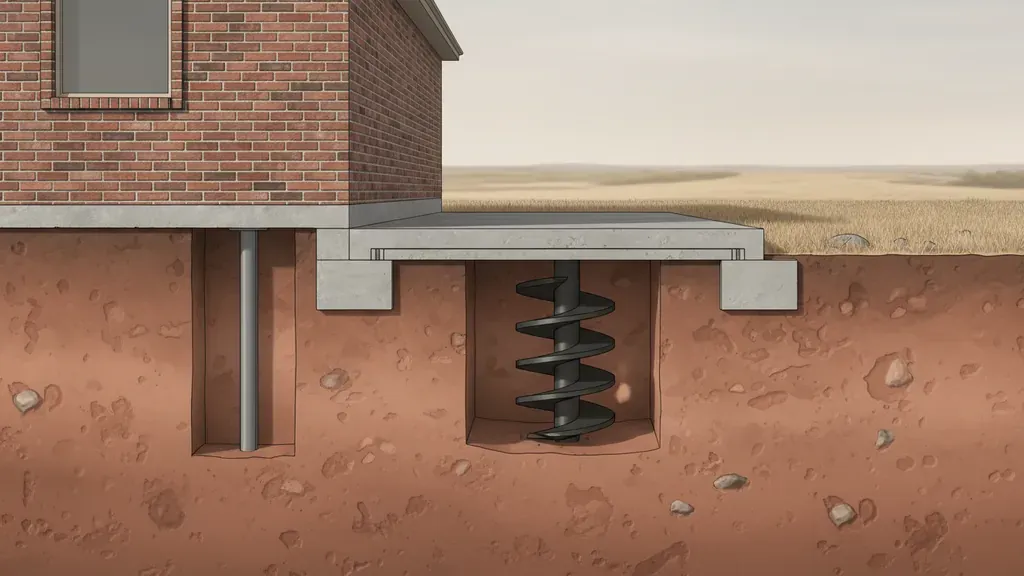
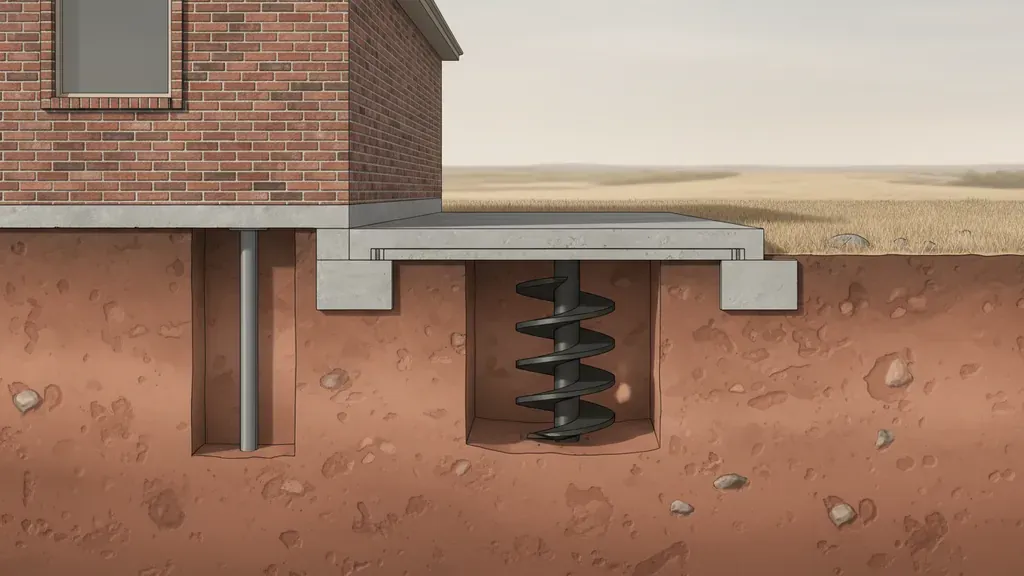
Push piers are steel pier sections installed beside the foundation footing and connected to the structure with a heavy-duty bracket. Hydraulic equipment advances the pier sections into the soil. The weight of the structure provides the reaction force that helps drive the pier downward until it reaches a suitable load-bearing condition.
Solid Base Foundations’ foundation repair service page notes that push piers are often a strong option when soil conditions are unknown. That matters in North Texas neighborhoods where fill soils, moisture variation, and clay movement can create uneven conditions around the same home.
Push piers are often considered when:
- An existing home or building has settled and needs permanent stabilization.
- The structure provides enough reaction weight for pier advancement.
- The repair team needs to reach a more stable bearing layer below problem soils.
- The project may include an effort to recover some lost elevation, if the structure responds safely.
Push piers are not selected simply because a crack is visible. Cracks, sticking doors, uneven floors, and exterior separation indicate movement, but an on-site assessment determines whether piering is needed and where supports should be placed. Homeowners wanting a closer installation walkthrough can read the push pier installation guide.
How Helical Piers Work
Helical piers use steel shafts fitted with round, spiral plates. Installation equipment rotates the shaft into the soil like a screw. As the pier advances, installers monitor torque, which helps confirm the resistance being achieved during installation. Brackets then connect the pier system to the foundation or supported element.
Because helical piers do not rely on the full weight of the structure in the same way push piers do, they can be useful in a wider range of load situations. They are also used for some porches, additions, decks, and other supported elements where the design calls for a screw-pile style solution.
Helical piers are often considered when:
- The repair plan benefits from torque-monitored installation.
- A lighter structural element needs deep support.
- Access and design conditions favor a rotating shaft with helical plates.
- The pier layout calls for a system adaptable to the observed soil profile.
For homeowners who want the fundamentals before comparing systems, Solid Base Foundations also explains what helical piles are and when they are used.
Which Pier System Fits North Texas Clay Soil?
North Texas clay soil is active. It can lose moisture, shrink away from a foundation, then expand when water returns. This repeated cycle is one reason homes in the Dallas-Fort Worth area can show settlement symptoms that worsen seasonally or appear unevenly from one side of a property to another.
Neither push piers nor helical piers “fix” clay soil itself. Their job is to support the structure through or beyond problematic near-surface conditions, based on the repair design. During an inspection, the contractor should evaluate visible damage, elevation changes, foundation type, drainage patterns, access, and the conditions that influence system selection.
What soil-related questions affect the choice?
- How variable are the near-surface soils? Uncertain upper soils can influence whether push piers are attractive for an existing weighted structure.
- What load needs to be supported? A slab home, a masonry element, and a lighter porch can point toward different design choices.
- How will installation resistance be confirmed? Push pier advancement and helical pier torque provide different field indicators.
- Is the goal stabilization only, or stabilization with possible lift? Lifting is not automatic and should be discussed carefully before work begins.
Unsure whether the movement at your home points to piering? See how to get a foundation piering quote, then schedule an evaluation tailored to the property.
Installation Differences Homeowners Should Expect
Both systems require planned pier locations, excavation or access at the foundation edge where brackets will be installed, and careful transfer of structural load onto the new supports. The experience can feel similar from a homeowner’s perspective, but the mechanics differ.
Push pier installation typically includes:
- Expose the footing at planned pier positions.
- Prepare the footing and install steel brackets.
- Hydraulically advance steel pier sections using the structure as reaction weight.
- Load-test or verify the pier’s support condition through the installation process.
- Stabilize the structure and consider lift only when appropriate.
- Backfill the work areas and complete final documentation.
Helical pier installation typically includes:
- Expose or prepare each support location.
- Rotate helical shafts into the soil with specialized equipment.
- Track torque and depth against the repair plan.
- Install brackets or connection hardware.
- Transfer the structural load to the piers and evaluate stabilization or lift.
- Backfill and document the installed system.
No reputable contractor should promise a perfect lift before seeing how the structure responds. Stabilization protects against further settlement at repaired points. Elevation recovery may be possible, but it depends on the home’s condition, the damage pattern, and how much movement can be recovered without creating new stress.
Push Piers vs Helical Piers: Selection Factors That Matter
Homeowners often ask for a simple winner. The more useful answer is a short decision framework. The inspection should connect the recommendation to specific site conditions.
1. Existing structure weight
Push piers use the existing structure as reaction during installation, so the available weight matters. Helical piers are mechanically screwed into the ground, making them useful when the design should not depend on the same installation reaction.
2. Repair location
A main home foundation, garage, patio edge, porch, addition, or masonry element may create different access and loading questions. The repair plan should state where piers go and why those positions were selected.
3. Soil uncertainty and field verification
Soils can vary across a lot. Push piers and helical piers use different installation feedback, but both require professional judgment. Ask how the crew will confirm each pier meets the planned support criteria.
4. Stabilization versus lift expectations
If a salesperson presents piering as a guaranteed cosmetic reset, slow down. The structural goal is support. Cosmetic outcomes, crack closure, and exact elevation changes are not identical from home to home.
5. Warranty details
The system is only as useful as the documented installation and warranty coverage behind it. Solid Base Foundations notes that its foundation pier systems carry a 25-year manufacturer’s warranty, along with written product warranty context. Ask what is covered, what documentation you receive, and what conditions apply.
What Does a Pier Recommendation Include?
A solid estimate should be clear enough that a homeowner can understand the repair logic. It should not just say “install piers” and leave the rest vague.
- The observed foundation concerns and areas of movement.
- The proposed pier type and the reasoning behind it.
- The number and general placement of supports.
- Whether the plan is stabilization only or may include a lift attempt.
- Access considerations, cleanup expectations, and project sequencing.
- Written warranty information and next-step scheduling details.
Solid Base Foundations builds quotes around on-site inspection rather than generic online pricing. That is appropriate for foundation repair, because pier count, access, loading, and soil behavior vary from property to property. If cost planning is a concern, the company’s financing page explains available payment-path conversations.
When Should You Schedule an Inspection?
Schedule an assessment when settlement symptoms persist, expand, or appear in multiple parts of the home. Common warning signs include diagonal interior cracks, brick or mortar cracking, doors that suddenly rub or stop latching, gaps around window frames, sloping floors, or visible separation at exterior trim and masonry.
Not every crack means deep piering is necessary. Still, comparing push piers vs helical piers from an article can only take you so far. The value of an inspection is matching the repair recommendation to your home’s actual movement pattern and North Texas soil conditions.
Ready for a property-specific answer? Request a free foundation repair estimate or call 940-365-4221 to discuss the next step.
Frequently Asked Questions About Push Piers vs Helical Piers
Are push piers better than helical piers?
Not automatically. Push piers can be a strong fit for existing structures with enough weight to assist installation, especially when the crew needs to advance through uncertain upper soils. Helical piers can be a strong fit when a torque-monitored screw-pile approach matches the load and site conditions. The right choice depends on the inspection.
Can both pier systems lift a settled foundation?
Both systems may allow some recovery of lost elevation after support is installed, but lift is not guaranteed. Stabilization is the primary structural goal. The contractor should explain what is realistic for your home before work starts.
Which pier system works best in expansive clay soil?
Expansive clay soil is a reason to seek a deep support strategy, not a reason to select one pier by default. The repair designer should consider the home’s loads, access, settlement pattern, and the installation data each pier system provides.
Do pier systems come with a warranty?
Warranty terms vary by contractor and product. Solid Base Foundations cites a 25-year manufacturer’s warranty for its foundation pier systems. Review the written warranty supplied with the estimate so you understand coverage and conditions.
How do I know whether I need piers at all?
An on-site foundation inspection is the responsible starting point. Visible cracks or sticking doors can indicate movement, but they do not identify the right repair by themselves. A professional assessment connects symptoms to a repair plan.
The Bottom Line
Push piers vs helical piers is not a brand debate. It is a site-specific repair decision. Push piers use the structure’s weight to advance steel supports. Helical piers rotate into the soil and give installers torque-based feedback. Both can be valuable foundation repair tools when they are selected for the right reason.
For homeowners in the Greater Dallas area, the smartest next step is a written recommendation tied to the home’s structure, observed settlement, and local soil challenges. Solid Base Foundations brings more than 18 years of foundation repair experience in North Texas, Foundation Supportworks system access, and a free no-obligation estimate process to that conversation.