
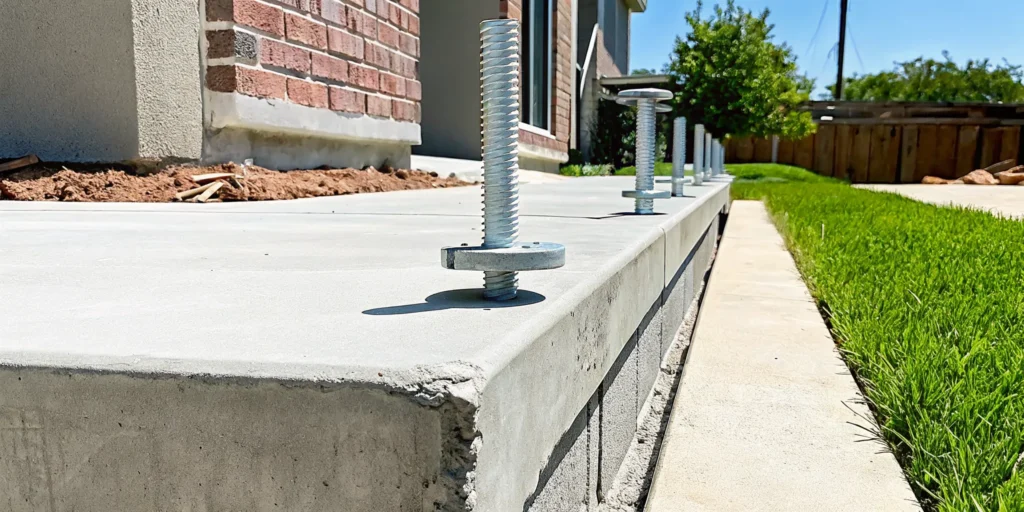
Noticing a crack in your drywall or a door that suddenly sticks can be unsettling. Here in North Texas, these small annoyances are often the first whispers of a much bigger conversation your house is trying to have with you about its foundation. Our infamous expansive clay soil is constantly swelling and shrinking, putting relentless pressure on the very structure that holds up your home. Foundation piers are the definitive answer to this problem. They act like underground stilts, bypassing the volatile soil to anchor your home to stable ground. Finding the right team who installs foundation piers in North Texas is crucial, as a lasting repair demands deep local expertise.
Key Takeaways
- Know why piers are necessary in North Texas: Our expansive clay soil is the main cause of foundation movement. Piers provide a permanent fix by anchoring your home to stable ground deep below the shifting surface soil, effectively bypassing the problem.
- Vet your contractor carefully: Your most important decision is who you hire. Prioritize companies with specific North Texas soil experience, a transferable lifetime warranty, and proven, high-quality products. Always check for insurance and read recent customer reviews.
- Address costs proactively, not with fear: Don’t let cost anxiety stop you from getting an assessment, as waiting often makes problems more expensive. Reputable companies offer free estimates and flexible financing options to make the project manageable for your budget.
What Are Foundation Piers and Why Do They Matter in North Texas?
If you’ve heard neighbors or friends talk about foundation piers, you might wonder what they are and why they’re such a big deal here. Simply put, foundation piers are underground stilts for your house. They are strong support posts that we install deep in the ground beneath your home to provide stability when the soil starts to fail. For homeowners in North Texas, understanding piers isn’t just interesting, it’s essential for protecting your biggest investment. The unique soil in our area makes our homes particularly vulnerable to foundation movement, and piers are often the best and most permanent solution.
The unique challenge of North Texas soil
The ground in North Texas has a mind of its own. We live on expansive clay soil, which acts like a sponge. When it rains, the soil swells up, and during our hot, dry summers, it shrinks and cracks. This constant cycle of expansion and contraction causes the ground beneath your home to shift, leading to an unstable foundation. Foundation piers solve this problem by bypassing the volatile topsoil altogether. We drive steel or concrete piers deep into the earth, sometimes over 20 feet, until they hit solid bedrock or a stable soil layer that doesn’t move. This anchors your home to firm ground, giving it the support the local soil can’t provide and protecting it from future movement in our service area.
Warning signs your foundation is settling
How can you tell if your foundation is waving a white flag? Your house will give you clues, and they often start small. Take a walk through your home and look for doors that stick or don’t latch properly. You might also spot cracks in your interior drywall, especially over doorways, or exterior brickwork. Other telltale signs include sloping floors, gaps appearing between your baseboards and the floor, or windows that have become difficult to open and close. Noticing one or two of these issues doesn’t automatically mean disaster, but they are definite warning signs that your foundation is settling and needs professional attention. Addressing these problems early is the key to a successful foundation repair.
How piers restore your home’s stability
Once we’ve identified that your home needs support, foundation piers become the hero of the story. The installation process is straightforward. We strategically place the piers around the affected areas of your foundation. Then, these piers are driven into the ground until they reach that solid, stable layer we talked about. Once the piers are securely in place, they act as a powerful jack, allowing us to carefully and gently lift the settled parts of your foundation back toward their original position. This process can close up wall cracks, realign sticking doors, and level your floors, restoring both stability and peace of mind. You can see the results of this process in examples of our work with other homeowners.
A Look at Different Foundation Pier Types
When you start looking into foundation repair, you’ll quickly hear about piers. Think of them as underground stilts that we install to support and stabilize your home’s foundation. Because every home and soil situation is different, there isn’t a single “best” pier for every job. The right choice depends on factors like your home’s weight, the type of soil you have, and the specific foundation issues you’re facing. Let’s walk through the most common types of foundation piers used here in North Texas so you can feel more confident about the repair process.
Steel piers
Steel piers are a go-to solution for many homes in the Dallas-Fort Worth area, and for good reason. These piers are made of high-strength steel and are hydraulically driven deep into the ground, pushing past the unstable clay soil until they hit solid bedrock or a stable load-bearing stratum. This process ensures a firm, unmoving base for your foundation. Because they reach such profound depths, steel piers offer a long-lasting and reliable fix for settling foundations. Many experts consider them one of the most effective foundation repair methods available for our region’s challenging soil conditions.
Helical piers
Helical piers look a bit like giant screws, and that’s essentially how they work. We install them by twisting them into the ground with hydraulic machinery until they reach a specific, engineered torque. This measurement tells us the pier has hit stable soil and can support the required weight. Helical piers are incredibly versatile and work well for stabilizing lighter structures like porches and decks, or in areas where you can’t use heavy equipment. Their design provides excellent support against both settling and uplift, making them a solid choice for a variety of structural problems.
Concrete pressed piers
You’ll often hear about concrete pressed piers in foundation repair. This method uses pre-cast concrete cylinders that are hydraulically pressed into the ground one on top of the other. The process continues until the piers meet enough resistance from the soil to support the foundation. While this is a common and often cost-effective technique, its long-term stability depends on reaching a sufficient depth. In the expansive clay soils of North Texas, it’s crucial that these piers are pushed deep enough to bypass the active zone where soil shifts, swells, and shrinks.
Drilled piers
Drilled piers are a heavy-duty solution created by drilling a wide shaft deep into the ground, placing a cage of steel rebar inside for reinforcement, and then filling the shaft with concrete. This creates a single, massive, and incredibly strong support column. Drilled piers are common for new construction but are also an excellent option for repairing existing foundations on larger homes or commercial properties. Because they are custom-engineered on-site, they provide a robust and permanent fix. If you think your property might need this level of support, it’s best to contact a professional for a detailed evaluation.
How to Choose the Right Foundation Repair Company
Finding out you have a foundation problem can be incredibly stressful, and the thought of choosing a company to fix it can feel just as daunting. Your home is likely your biggest asset, so this isn’t a decision to take lightly or rush. The good news is that you can take control of this process by knowing exactly what to look for in a foundation repair partner. The right company won’t just fix the cracks; they will provide a permanent solution and the peace of mind that comes with it. This is especially true in North Texas, where our unique soil conditions demand a specialized approach.
Think of this as hiring a long-term partner for your home’s health. You want a team that is not only technically skilled but also transparent, reliable, and deeply familiar with the challenges our local properties face. A great contractor will walk you through every step, answer your questions without pressure, and stand behind their work for years to come. To find that company, you need to focus on a few key areas: their credentials, their understanding of local soil, the quality of their materials, their reputation with past customers, and their commitment to fair and transparent business practices. By carefully vetting potential contractors on these points, you can move forward with confidence.
Check for credentials and warranties
Before you even consider a proposal, your first step is to verify a company’s credentials. Any professional contractor should be able to quickly provide proof of general liability insurance. This is non-negotiable, as it protects you and your property from any accidents during the repair process. Beyond that, a company’s confidence in its own work is best reflected in its warranty. Look for a strong, lifetime warranty that is also transferable to future owners. This not only ensures your repair is covered for the long haul but also adds significant value to your home. Knowing what certifications to look for helps you make an informed decision and invest in a solution that truly protects your home for the long term.
Prioritize local soil expertise
North Texas is known for its expansive clay soil, which swells dramatically with moisture and shrinks as it dries. This constant cycle of expansion and contraction puts immense stress on foundations, making it a primary cause of structural issues in our region. This is why hiring a company with deep, local expertise is so critical. A generic, one-size-fits-all approach simply won’t work here. An experienced local team understands that a lasting repair requires piers to be driven deep into the ground to reach stable bedrock or a solid load-bearing stratum. A contractor who knows the Dallas-Fort Worth service area will design a solution specifically for our challenging soil, ensuring your home’s stability for decades.
Look for proven products and affiliations
The quality of a foundation repair is only as good as the materials used to perform it. The most reliable companies use the highest-quality products and the strongest materials, so don’t hesitate to ask what kind of piers they install and where they come from. Companies that use patented, engineered products often have affiliations with national engineering networks, which gives them access to superior systems and ongoing professional training. This backing ensures they are using the most effective and up-to-date methods in the industry. At Solid Base, we use top-tier, proven products to ensure every repair is built to last. You can see the quality of our work in homes all across North Texas.
Read reviews and demand transparent pricing
In your search for the right company, online reviews are an invaluable resource. Check Google, the Better Business Bureau, and other third-party sites to get a feel for what past customers are saying. You’re looking for a consistent pattern of positive feedback regarding communication, professionalism, and the quality of the finished job. Just as important is a company’s approach to pricing. A trustworthy contractor will provide a detailed, easy-to-understand explanation of the proposed foundation repair and answer all your questions without resorting to high-pressure sales tactics. Your comfort and confidence in the process should be their top priority.
Ask about free estimates and financing
Many homeowners understandably delay repairs due to cost concerns, but a good company will work with you to make the project manageable. Always start with a contractor who offers a free, no-obligation estimate. This allows you to get a professional assessment of your foundation’s condition without any pressure to sign a contract. During this consultation, be sure to ask about their payment and financing options. Many reputable companies provide flexible financing solutions to help you manage the cost of the project without straining your budget. Don’t let financial worries prevent you from protecting your home’s structural integrity. You can contact us to schedule your free estimate and learn more about the options available to you.
Understanding the Cost of Foundation Repair
Let’s talk about the elephant in the room: the cost. The thought of a foundation repair bill can be stressful, but it’s important to remember that not all foundation problems are catastrophic. A major repair can cost a significant amount, but it’s more likely you’re dealing with a smaller issue. While it’s easier said than done, try not to worry about the price until a professional has diagnosed the root cause of the problem. Understanding what goes into the final price can help you feel more in control of the process.
What factors influence the final price?
The final cost of a foundation repair project isn’t a one-size-fits-all number. Several key factors determine the scope and price of the work. The biggest variable is the extent of the damage; minor cracks will naturally cost less to fix than a severely settled section of your home. The type of foundation you have, the number of piers needed to secure it, and the specific pier type (like steel or helical) all play a role. Even the accessibility of the damaged area can affect labor costs. A professional assessment will consider all these elements to give you a precise and fair quote based on your home’s unique needs.
Common myths about foundation repair costs
Many homeowners delay essential repairs because of common misconceptions about the cost, but waiting often makes the problem worse. One myth is that foundation services are always too expensive. While it’s a significant investment, catching a problem early can lead to a much more manageable repair. Delaying can allow minor issues to escalate into major structural damage, which will be far more costly to fix down the line. Another dangerous myth is that DIY fixes are a good way to save money. Your home’s foundation is not a weekend project. It requires specialized knowledge and equipment, and a failed attempt can cause even more damage, putting your family and your investment at risk.
Your options for financing the project
Feeling anxious about the cost is completely normal, but you have options. Reputable companies are committed to making repairs accessible because they know how important a stable foundation is. The first step is always a free, no-obligation estimate, which allows you to understand the exact cost before you commit to anything. You can contact us to schedule yours today. Many foundation specialists also offer flexible financing plans, sometimes with 0% interest, to help you manage the expense. These payment plans break the total cost into smaller, more affordable monthly payments, so you don’t have to choose between your budget and the safety of your home.
Related Articles
- Foundation Repair Cost: The Ultimate 2026 Guide
- What Are Helical Piles? The Ultimate Guide
- A Homeowner’s Guide to Foundation Repair Services
- Pier & Beam Foundation Repair: Signs, Costs & Fixes
- Ultimate Guide to Foundation Repair Options
Frequently Asked Questions
How do I know if I have a serious foundation problem or just normal house settling? It’s true that all houses settle a bit over time, but the key difference is the pattern and severity of the signs. Minor, hairline cracks might be cosmetic, but you should pay close attention to cracks that are widening, doors that consistently stick or won’t latch, and floors that are visibly sloping. The expansive clay soil in North Texas causes significant ground movement, so what might be “normal” elsewhere can be a red flag here. The best way to know for sure is to have a professional evaluate the situation.
How long does a typical foundation repair project take? The timeline for a repair really depends on the scope of the work. For a straightforward project that requires installing a handful of piers in an accessible area, the work can often be completed in just one to three days. More extensive projects, like those needing a large number of piers or involving complex access points, might take longer. A professional company will give you a clear and realistic timeline after they assess your home’s specific needs.
Will foundation repair ruin my landscaping and yard? This is a common and completely valid concern. While some disruption is unavoidable since we have to dig to access your foundation, a professional crew will be very careful to minimize the impact on your property. We strategically plan excavation sites and work to protect surrounding plants, grass, and structures as much as possible. After the piers are installed, we backfill the holes and clean up the area, leaving your yard looking as neat as we found it.
Is foundation repair with piers a permanent solution? Yes, when done correctly, installing foundation piers is a permanent solution. The entire point of using steel or helical piers is to bypass the unstable, shifting clay soil near the surface. We drive the piers deep into the ground until they reach solid bedrock or a stable soil layer that doesn’t move. This anchors your home to solid ground, providing a lasting fix that protects it from future soil movement and comes with a lifetime warranty.
What happens if I ignore foundation issues? Putting off foundation repairs can unfortunately lead to more significant and expensive problems. A small crack can widen, sticking doors can become impossible to close, and plumbing lines under the slab can break due to the stress. Over time, what started as a relatively contained issue can affect your entire home’s structural integrity. Addressing the problem early is the most effective way to protect your investment and prevent a small repair from turning into a major one.