
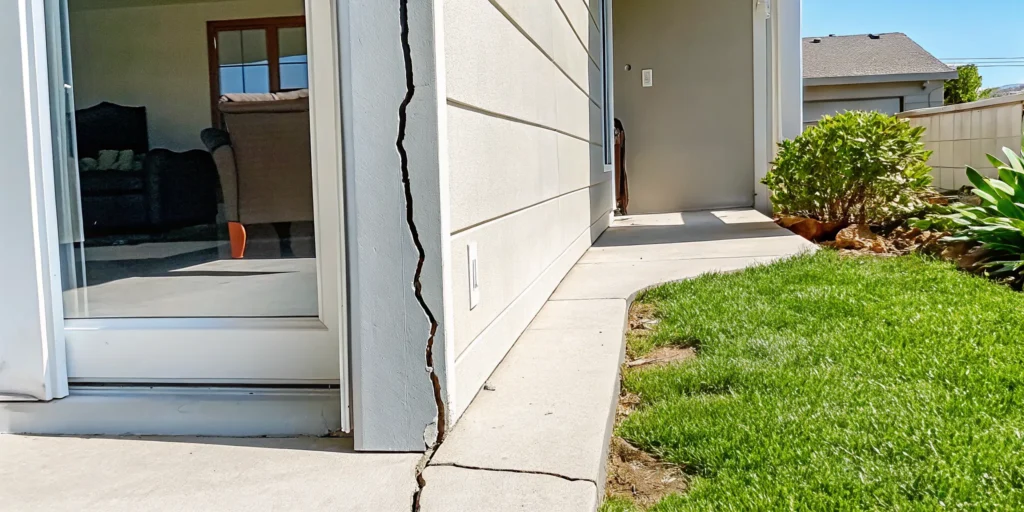
North Texas clay soil causes nearly every home in the Dallas area to shift slightly over time. These small movements are often harmless, yet they look the same as the start of major damage. Knowing when to worry can save you thousands in repair costs.
The signs of house settling include hairline drywall cracks and small window frame gaps that start as a building moves with North Texas clay soil. Most new homes undergo this natural shifting without issue, but you must watch for red flags like stair-step brick cracks or gaps wider than 1/4 inch. According to Leveled Concrete, these larger openings signal deep foundation damage rather than simple settling. These gaps often mean the house is no longer level, leading to sticking doors, sloping floors, and safety hazards that need an inspection. Monitoring these changes helps you tell the difference between harmless cosmetic shifts and active movement that needs permanent repair.
While movement in your foundation feels like a disaster, most homes shift slightly as they age. You must understand the difference between these minor changes and major damage. Learning What Is Normal House Settling, and Why Does It Happen? is the first step, and the path begins with the soil.
Signs Of House Settling: What Is Normal House Settling , and Why Does It Happen?
Every home, no matter how well built, will experience some level of movement over time. House settling is a natural process where a new structure adjusts to the weight it puts on the soil below. According to the National Institutes of Health, building movement is often a standard part of a structure’s life cycle. As a home finds its permanent footing, the soil beneath the slab or crawlspace compresses. This shift typically happens during the first few years after construction is finished.
The science of soil compression
When a builder clears a lot and pours a foundation, the soil must support the massive weight of the wood, brick, and concrete. Even with good site prep, the earth will shift as the load settles. In many cases, you may notice tiny hairline cracks in drywall or near door frames. These signs of house settling are usually cosmetic and do not mean your home is in danger. In a stable environment, a home might move about one-eighth of an inch without causing any major structural issues.
But the geology of the site plays a huge role in how much a home moves. Research published in PMC shows that foundation failure is often linked to a poor understanding of soil properties. If the ground was not packed tight enough before the slab was poured, the settling can become uneven. This is why site preparation is the most critical step in protecting a long-term build.
Why North Texas clay is different
For homeowners in Dallas, Denton, and the surrounding areas, settling is rarely a one-time event. North Texas is known for its expansive clay soil. This type of earth acts like a sponge, swelling up when it is wet and shrinking down during dry seasons. Because of these cycles, your foundation may rise and fall throughout the year. These common signs of settlement are often tied to the local weather patterns.
Expansive clay puts a unique kind of stress on a foundation. When the soil dries out during a hot Texas summer, it pulls away from the concrete. This leaves gaps where the foundation is no longer supported. The heavy weight of the house then causes the slab to drop into those voids. Over time, these repeated cycles of shrinking and swelling can turn normal settling into a much larger problem that needs expert repair.
The timeline of house movement
Most normal settling takes place within the first two to three years of a home’s life. During this window, the moisture in the lumber dries out and the soil reaches a point of balance with the new load. If you see small cracks appear during this time. They are often just the house “breathing.” But if you start to see new cracks in a home that is ten or twenty years old. The cause is likely something else.
Ongoing movement in older homes is usually a sign of changing soil conditions or drainage issues. While a few small cracks in a new build might be expected, large gaps or shifting floors in an older property are red flags. By keeping an eye on these changes, you can catch minor issues before they lead to high repair costs. Knowing the difference between a house finding its place and a foundation in distress is the first step in smart home care.
Signs of Normal Settling vs Foundation Damage
Every home moves as it adjusts to the soil beneath it. While some movement is expected, other signs point to deep structural issues. Knowing how to tell the difference helps you decide when to call for a pro check.
Cracks in walls and brick
Small cracks are a common part of the signs of house settling. Vertical cracks in concrete walls are often caused by the natural drying of the material. These thin lines usually do not mean the structure is failing. But cracks wider than 1/4 inch are a major red flag that needs a look.
Brick walls can also show signs of stress. Stair-step cracks that follow the mortar lines between bricks often mean the house is sinking in one spot. These diagonal breaks are more serious than thin, straight lines. If you see wide gaps in your brick walls, the soil under your home may be shifting too much.
Doors and windows that stick
If a door sticks only when it is humid, it might just be the wood swelling. But doors that do not latch or windows that are hard to open are common signs of settlement. When a house sinks, the frames of these openings can pull out of shape. This makes it hard for doors and windows to glide or close well.
Look for gaps around the edges of window frames or door jams. These spaces often grow over time if the foundation moves. If you must pull hard on a handle just to shut a door, it is time to check your home for more signs of damage.
Floor and wall changes
Horizontal cracks in a foundation wall are a serious sign of trouble. These often happen when wet soil pushes hard against the side of your home. Unlike vertical lines, these breaks suggest the wall might be bowing. This type of damage needs a fast fix to keep the structure safe.
Uneven floors are another clear sign that something is wrong. You might notice a tilt when walking or see gaps at the baseboards. According to the World Health Organization, moisture in buildings can lead to structural decay. Proper care for your foundation helps keep your home stable and dry for a long time.
| Feature | Normal Settling | Foundation Damage |
|---|---|---|
| Crack Width | Hairline lines under 1/4 inch. | Wide gaps over 1/4 inch. |
| Crack Pattern | Straight or vertical lines. | Diagonal or stair-step patterns. |
| Doors and Windows | Minor sticking from humidity. | Stuck doors or frames out of square. |
| Floor Level | Floors stay flat and even. | Sloping, sagging, or tilted floors. |
| Wall Alignment | Walls stay straight. | Horizontal cracks or bowing walls. |
| Window Gaps | Frames stay tight to the wall. | Visible gaps around outer frames. |
What Causes Foundation Damage in North Texas Homes?
North Texas homeowners face a unique set of challenges when it comes to structural stability. While some signs of house settling are normal, the geology of the Dallas-Fort Worth area often leads to more severe issues. Understanding what drives foundation movement can help you spot trouble early and protect your home investment.
Expansive clay soil and seasonal cycles
The primary driver of foundation trouble in North Texas is expansive clay soil. This type of earth acts like a sponge, growing in volume when wet and shrinking as it dries. During rainy seasons, the soil swells and pushes upward against your slab. When the weather turns dry, the soil loses moisture and pulls away, leaving voids that cause the heavy concrete to sink. This constant cycle of expansion and contraction puts immense stress on your home’s structure over time.
This movement is not just a one-time event but a seasonal reality for local property owners. The drought conditions in North Texas can be particularly harsh, causing deep cracks in the yard that allow moisture to escape from under the foundation. As the clay dries out and shrinks, the foundation loses the support it needs to stay level, leading to visible cracks and structural shifts.
Poor site preparation and soil compaction
Foundation integrity often depends on the work done before the concrete is even poured. If a builder does not properly prepare the site or compact the fill soil, the house may settle unevenly as the ground shifts under its weight. Insufficient geological research or a lack of understanding of local soil properties can lead to long-term stability failures. Proper site preparation is vital to ensure the soil can support the weight of the structure without shifting excessively.
Hydrostatic pressure and drainage issues
Water management is another critical factor in foundation health. When water pools near your home due to poor grading or clogged gutters, it creates hydrostatic pressure against the foundation walls. This pressure can force water into tiny pores in the concrete, causing cracks and instability. Effective drainage is needed to manage how moisture interacts with soil and building materials, keeping the ground around your home stable and dry.
The impact of landscaping and tree roots
While trees add beauty and shade to your property, they can also pose a threat to your foundation. Large trees planted too close to the house have root systems that search for water deep underground. During dry spells, these roots can draw huge amounts of moisture from the clay soil directly beneath your foundation. As the roots drink, the soil dries and shrinks, which can lead to localized settlement and significant structural damage that requires professional repair.
When to Call a Professional for a Foundation Inspection
Knowing when to call an expert can save you from high repair costs. While some minor movement is normal, certain signs of house settling show a deep structural problem. If you see cracks wider than 1/4 inch, you should get a professional check as soon as possible. These wider gaps often mean the soil can no longer support the weight of your home.
Recognizing serious wall cracks
You should watch for specific crack patterns on your walls. Stair-step cracks in your brick or masonry are a common sign of structural movement. If you find horizontal cracks in a foundation wall, this is a major red flag. These lines often mean that wet soil is pushing hard against your home and causing the wall to fail. You can recognize house settling by looking for these alarming patterns early.
Issues with doors and windows
Foundation shifts often show up in how your home works. You might find that doors or windows no longer close right or get stuck in the frame. While one sticky door might just be a sign of high humidity, multiple sticking points are a primary indicator of settlement. You should also look for gaps where your walls meet the ceiling or the floor. These openings show that the frame of your house is twisting because the base is not level.
Secondary damage and water signs
Structural problems can cause many other issues inside your house. You might notice sloping floors or gaps in your trim and crown molding. In some cases, a foundation that is not level can lead to secondary damage like large cracks in your drywall. It is also vital to check for water entry. If you see water leaking through a crack, it shows the barrier is broken. Research shows that moisture in buildings can lead to more soil instability over time.
Getting a free expert view
If you see multiple signs appearing at once, do not wait for the problem to get worse. At Solid Base Foundations, we offer a free on-site inspection to help you know for sure if your home is safe. Our team can find out if you have simple concrete settling or a serious structural issue. This check lets you get the facts about your home with no pressure and no cost.
How Foundation Repair Companies Assess and Fix Settlement
When you spot a new crack in your wall, you may worry that your house is sinking. It is hard to know if a gap is a minor sign of age or a major structural failure. A professional team must look at the damage to find the root cause and the best way to fix it.
Diagnostic steps for property owners
The first step in any repair is a full check of the site. Experts look for more than just cracks; they check for sticking doors and uneven floors. This search helps them find out if the soil under your slab is shifting. Proper site checks are needed to find the source of water or soil issues before they cause more harm. Finding the soil type and building design is key to a safe and lasting repair, as noted by the National Institutes of Health.
Finding the type of damage
Not every crack means your foundation is failing. Pros split damage into two groups: cosmetic and structural. Cosmetic issues usually affect the surface or light parts of the house like drywall. Structural damage reaches deep into the slab or the load-bearing parts of the frame. Small cracks are common, but gaps wider than 1/4 inch often mean the home is moving too much. Catching these signs early can stop foundation repair costs from growing as the damage spreads.
- On-site inspection and diagnosis. A specialist walks through your home to map out every crack and slope. They use tools to check if the slab is level and find where the house has dropped. This deep dive is the only way to tell if the movement is normal or a red flag.
- Identifying the type of settlement. The team looks at the width and shape of the cracks. Wide horizontal lines or stair-step gaps in brick mean the house has structural needs. Simple hair-line cracks may only need a light touch to fix.
- PolyLevel foam injection for minor settling. If the concrete is sinking but the frame is strong, we use PolyLevel foam. This light foam goes into a small hole and expands to lift the slab. It is a fast way to fix unlevel floors or patios and it cures in just 15 minutes.
- Push piers or helical piers for structural repair. Large shifts in the soil need steel piers to reach deep, stable earth. Push piers use the weight of the house to drive steel tubes down. Helical piers have screw-like blades that twist into the ground to hold the weight of the home.
- Post-repair monitoring and warranty. Once the piers are in place, the team checks the house one last time. They make sure the lift is even and the doors swing freely. A strong warranty gives you peace of mind that the fix will last for many years.
Tools for a permanent fix
Modern tools let pros fix a home without digging up the whole yard. High-tech foam and steel piers can lift a heavy slab back to its right place. These fixes are much better than old methods that did not last. Using the right materials is vital for building health, according to health guidelines for buildings. These steps ensure your home stays safe and level for a long time.
Frequently Asked Questions
Can a house settle after 20 years?
Yes, homes can settle at any age. Most settling occurs in the first few years, but North Texas clay soil always changes. Dry spells and heavy rain make this soil shrink and swell. This movement can shift a base even after many years. If you see new cracks in an older home, it is wise to get a free on-site inspection to find the cause.
What kind of noises does a house make when settling?
A house often makes popping, creaking, or snapping sounds as it settles. These noises happen when the house frame moves due to shifts in the soil or heat and cold. While some sound is normal for any home, loud noises joined by wall cracks may show a problem. According to Bay Crawlspace, poor site prep can lead to these structural issues over time.
When should you worry about house settling?
You should worry when you see cracks wider than 1/4 inch. Signs like sticking doors, uneven floors, or gaps around windows are also big red flags. According to Leveled Concrete, horizontal cracks in foundation walls are a very serious sign of soil pressure. If you see many signs at once, you should call a pro. Large cracks need a fast, permanent fix.
Is house settling dangerous?
Normal house settling is usually not risky, but true foundation damage can be. Large shifts can cause bowed walls, roof leaks, or even a partial collapse in rare cases. These issues also hurt the cash value of your home. According to Solid Base Foundations, fixing these problems early with steel piers or PolyLevel can keep your house safe and save its worth.
How do you fix house settling?
The fix depends on the cause and scale of the move. For minor concrete sinking, a pro might use PolyLevel foam to lift the slab. This foam cures in just 15 minutes. For deep structural shifts, a team must use steel push or helical piers to reach stable soil. These piers stop the house from sinking further and can often lift it back to its original level.
Ready to see if your house has structural damage?
Ignoring small cracks today can lead to high repair costs later, as small shifts often turn into big breaks that put your home at risk. When you set up a pro check now, you can fix small issues before they grow and save your home value. Our team knows how North Texas clay soil moves under your home and will check your bricks to find the source of any shift. Getting a pro to look at your home now gives you peace of mind while keeping your total costs low. You can learn what to expect during a free foundation inspection in the Dallas area. A quick check protects your home for years, so do not let small signs turn into a big bill. Our local experts see how heat and rain cause movement, so acting now stops further damage.
Ready to schedule a free foundation inspection? Call (940) 365-4221 to talk to a local pro.