
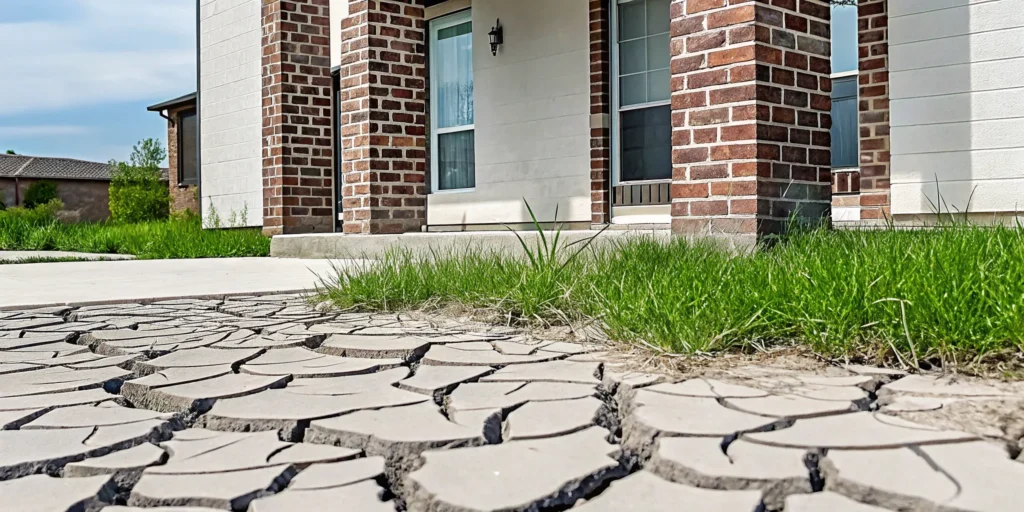
Deep cracks in the North Texas soil show that the earth is pulling away from your home foundation. This shrinkage happens during long dry spells when the local clay soil loses its moisture. These gaps leave your foundation without the support it needs to stay level.
Preventing drought foundation damage North Texas homeowners face starts with understanding how the local clay soil reacts to high heat. During long dry spells, the expansive clay soil shrinks and settles. This movement creates gaps under your concrete slab that can cause the home to shift or crack. Structural experts from the American Society of Civil Engineers estimate that one in four homes has suffered damage from these soils. You may notice sticking doors, gaps around windows, or new cracks in your brick walls that signal movement. Using a foundation watering plan can help you keep the soil moisture levels stable during the summer. Finding these signs early helps you avoid expensive repairs while keeping your house level and safe.
Protecting your biggest investment requires knowing how the North Texas climate impacts your property. You can avoid major structural issues by learning more about the risks to your slab. You should first understand Why drought foundation damage happens in North Texas. The path begins with
Drought Foundation Damage North Texas: Why drought foundation damage happens in North Texas
The main cause of drought foundation damage North Texas homeowners face is our soil. Much of North Texas sits on clay that grows and shrinks. This type of soil acts like a sponge. When it is wet, the clay grows and pushes up. When a long drought hits, the soil loses water and shrinks. As the soil dries out, it pulls away from the concrete slab. This leaves a gap where the foundation used to have support. Without the ground to hold it up, the heavy concrete can crack or sink.
The shrink-swell cycle of clay
Clay soils that grow and shrink are a major hazard for homes. In fact, these soils cause more damage to structures in the U.S. than any other natural threat. This fact comes from the Virginia Department of Energy. In North Texas, the “active zone” for these changes can be 5 to 15 feet deep. This is the layer of earth that moves the most when the weather shifts. When the clay shrinks, it does not always happen in a flat way. One side of your house may stay moist while the other side dries out and drops. This shift is what leads to stuck doors or cracks in your walls.
How dry weather removes support
During a hot Texas summer, the sun bakes the ground until the moisture is gone. You might see large cracks in the grass or a gap between the dirt and your foundation. These are clear signs of drought foundation damage North Texas soil causes. When the dirt pulls away, the foundation loses its base. The weight of the house then pushes down into the empty space. This process can happen fast during a heat wave. Keeping soil moisture steady is one way to maintain stable soil moisture levels and avoid these gaps.
The danger of sudden rain
The return of rain can actually make things worse. If a big storm hits after a long dry spell, the thirsty clay drinks the water too fast. It can swell up with huge force. This fast growth can push against a foundation that just sank. This shift back and forth puts a lot of stress on the concrete and the frame of the home. About 25% of all homes in the U.S. have had foundation damage caused by soil movement or clay that grows. Managing water flow is key to stopping this cycle before it breaks your home.
What warning signs should homeowners watch for?
Drought foundation damage North Texas homeowners deal with often starts deep under the slab. During long dry spells, the local clay soil loses its water and starts to shrink. This shift creates a void between the ground and your home’s base. As shown by the Virginia state energy site, swelling soils cause more damage to U.S. homes than any other natural hazard. You can spot the early signs of trouble if you know where to look. Finding these issues now can save you from high repair costs later.
Signs on the outside
Walk around your house and look at the ground first. During a hot summer, you might see the soil pull away from your concrete slab. This gap shows that the ground is shrinking due to a lack of water. It can lead to sinking issues as the house drops into the new space. You should also check your brickwork for cracks that look like a set of stairs. These zigzag cracks often follow the mortar lines and show that one part of the home is lower than the rest.
Look for gaps around your door frames and windows too. If the frame seems to be pulling away from the wall, it is a clear sign of movement. These changes show that the impact of soil moisture on foundations is causing the ground to shift. You might also see cracks in the foundation slab itself. Large trees near your home can make this worse as they draw moisture from the soil. This further dries out the ground and speeds up the shrinking process.
Signs on the inside
Inside your home, foundation shifts show up in daily ways. Doors that used to swing freely might start to stick or rub against the frame. You may also see cracks in the drywall above doors or in the corners of rooms. If you have tile or hardwood floors, look for new slopes or dips that were not there before. These signs often point to foundation damage caused by soil movement under the home. The active zone for this movement can reach up to 15 feet deep.
Check your ceilings for cracks as well. Small, thin lines might be normal as a house settles over time. But wide cracks or those that grow fast are a major cause for concern. These signs mean the house is no longer level. You can test your floors with a small marble to see if it rolls toward one wall on its own. This simple check helps you see if your home is tilting. Do not ignore these clues, as they show the structural health of your home is at risk.
When to call an expert
One small crack does not always mean your home is in danger. Houses often settle a bit, which can cause minor lines in the paint. You should look for a pattern of signs rather than just one. If you see cracks outside and sticking doors inside, you likely have a structural issue. Homeowners should also watch for new gaps where the floor meets the wall. If you can see light or feel a draft coming through these gaps, the movement is big.
If you find several signs at once, it is time to take action. You can request a professional foundation inspection to get an expert view. A pro can tell if your home has normal settling or needs a real fix. Taking action early is the best way to keep repair costs low. Waiting too long allows the damage to spread, which can lead to broken pipes or major wall breaks. Protect your home and your peace of mind by acting as soon as you see a pattern of damage.
How can you reduce drought-related foundation stress?
Dry spells in North Texas put a lot of pressure on your home. You cannot stop a drought, but you can change how it hits your house. Taking steps early can stop drought foundation damage North Texas from getting worse. Most issues start when the soil under your home loses too much water. When clay soil dries out, it shrinks and leaves gaps that let your house sink. You should focus on keeping soil moisture levels steady to keep your slab safe.
Protect your soil moisture
The ground around your home acts like a sponge. In our area, this soil is mostly clay. This type of earth can change size based on how much water it holds. The Virginia Department of Energy says active soils cause more home damage in the U.S. than any other natural hazard. This happens because the soil pulls away from your foundation during a dry season. Keeping the dirt moist helps prevent these gaps from forming in the first place.
You do not need to turn your yard into a swamp. In fact, too much water can cause just as many problems as too little. The goal is to reach a balance. If you see the ground pulling away from the concrete, it is time to act. Small cracks in the dirt are often the first sign of trouble. If you catch these signs now, you might avoid the need for foundation repair services later on.
Steps for home foundation care
Keeping a stable foundation takes fixed work. These steps help you manage the risks that come with hot and dry weather. Always check your local city rules for water use before you start any new routine.
- Set up a watering plan. Use soaker hoses or drip lines around the edge of your home. Place them about 6 to 18 inches away from the foundation. Run them long enough to keep the soil moist but not muddy.
- Check for plumbing leaks. Even small leaks can cause the soil to swell in one spot. This uneven pressure can crack your slab. Inspect your pipes and faucets to ensure everything stays dry.
- Clear your gutters. Gutters should move water away from your home. Make sure they are clean and that downspouts point at least three feet from the base. This keeps water from pooling when it does rain.
- Manage your trees. Large trees near your home can drink hundreds of gallons of water a day. Their roots can pull moisture from under your house. Consider root barriers if a tree is too close to your walls.
- Grade your yard. The ground should slope away from your foundation. This prevents water from sitting against the concrete. Proper grading helps the soil dry and wet more evenly across the whole site.
- Watch for warning signs. Look for cracks in your bricks or gaps around your windows. Check if your doors stick or if your floors feel unlevel. Finding these signs early helps you stay ahead of major home breaks.
Maintain steady drainage
Proper drainage is the main way to control foundation stress. In North Texas, the soil moves a lot between wet and dry months. If your yard does not drain well, the soil will swell and shrink in a way that hurts your slab. You want the water to move away from your home fast. This keeps the moisture levels in the “active zone” from changing too much. Most damage happens in the top 5 to 15 feet of soil where moisture shifts the most.
Steady care is the key to a strong home. Sudden shifts from very dry to very wet soil are hard on concrete. By following a fixed plan, you help your home handle the tough North Texas climate. If you notice any major shifts, getting an expert check is the best next step. Most experts offer a free look to see if your home is still on solid ground.
Is that crack cosmetic or a sign of foundation movement?
Finding a new crack in your home can be stressful. But not every line in your wall means your house is sinking. In North Texas, the hot sun and dry air often cause soil to shrink. This shift puts force on your home. To keep your house safe, you must know which cracks are small issues and which show deep foundation damage caused by soil movement.
When to worry about drywall cracks
Most small cracks in drywall are just cosmetic. These often happen near the corners of doors or windows. They may also show up where two pieces of drywall meet. If the crack is thin and follows a straight line, it is likely just from the house settling or the air being dry. But if the crack is wide or runs in a stair-step pattern, it may show the impact of soil moisture on foundations. These patterns suggest that one part of the home is moving at a different rate than the rest.
The role of expansive soil
The main cause of these shifts is the clay under your home. This soil grows when wet and shrinks when dry. In fact, expansive soils cause more damage to U.S. buildings than any other natural hazard, according to Virginia Energy. When a long drought hits, the clay loses its grip on your foundation. This can lead to cracks that grow fast. You should look for gaps that are wide enough to fit the edge of a coin. These are signs that the soil is pulling away from your home.
| Feature | Cosmetic Crack | Movement Sign |
|---|---|---|
| Width | Less than 1/16 inch | More than 1/4 inch |
| Direction | Vertical or horizontal | Stair-step or diagonal |
| Location | Drywall seams or trim | Brick or door frames |
| Other Signs | None | Sticking doors or windows |
| Growth | Stays the same size | Gets wider over time |
Watch for patterns across the home
You should not judge a crack by its size alone. Instead, look at the whole house. Do you have a crack in the brick that lines up with a sticking door? That is a clear sign of movement. Drought foundation damage North Texas homes face often shows up in several spots at once. If you see cracks both inside and out, you should request a professional foundation inspection to check for structural loss.
When should you request a foundation inspection?
Watching your home during a dry spell helps you catch issues early. Homeowners in North Texas should keep a log of changes to their home. Start by taking dated photos of your foundation and walls. These images help you track if small gaps grow into larger cracks over time. If you notice new shifts, it may be time to request a professional foundation inspection to check for damage.
Signs of soil shrinkage
Dry weather makes clay soil pull away from your home. You might see a visible gap between the dirt and your slab. Check your doors and windows to see if they stick or fail to latch. These changes often show that the ground beneath your home is shifting. According to the Virginia Department of Energy, these soils cause more damage to U.S. structures than any other natural hazard. Spotting these signs early can help you protect foundation during Texas droughts before the cost grows.
When to call a pro
Not every small crack means your home is in danger, but some signs need expert help. You should call for a check if you find stair-step cracks in your outer brick. Large gaps around your garage door or gaps in your walls are also red flags. These marks suggest the impact of soil moisture on foundations has moved from minor to bad. A pro can tell if your home needs a fix or just better watering.
Tracking changes after rain
Watch how your home reacts when a drought ends. Soil that has shrunk during a dry spell can swell fast when it rains. This cycle of shrinking and swelling puts a lot of stress on your slab. Look for new gaps that appear after a heavy storm. If your doors suddenly start working again or new cracks open, the soil is moving too much. Tracking these shifts helps a team find the best way to keep your home stable for a long time.
What happens during a professional foundation inspection?
When you request a professional foundation inspection, the process starts with a full walk-through. A trained expert looks for foundation damage caused by soil movement. They check the inside and outside of your home for subtle clues. This check helps find issues before they become big, costly repairs.
Initial site assessment
The inspector starts by asking about the house history and any recent changes you have seen. They look for common signs of foundation damage like cracks in bricks, gaps near windows, or doors that stick. These issues often show up first after a long dry spell. The goal is to see how drought foundation damage in North Texas has changed the soil under your slab.
During the walk, the expert also checks your yard and drainage. They look for soil that has pulled away from the house or large trees that might be drinking too much water. Changes in the “active zone,” which is the top 5 to 15 feet of soil, can cause the most harm. You can learn more about how soil moisture affects your home from industry experts.
Measuring floor levels
If the visual check shows signs of movement, the inspector may use a precision level. This tool helps map out the floor heights across your entire house. By doing this, they can see exactly where the slab has settled or shifted. This data is key to finding out if the house is still moving. It also helps them decide which areas need the most help.
Mapping floor heights allows for a clear plan that fits your needs. Since about 25 percent of all homes in the U.S. have had soil damage, these measures are vital. They ensure that any work is based on real data rather than a quick guess. This step shows that the fix will address the root cause.
Final repair plans
After the check is done, you will get a full report of what was found. The expert will explain if you need foundation repair services or if simple care is enough. Sometimes, fixing your gutters or using a soaker hose can stop more movement. They only suggest repairs if there is clear evidence that your home needs them to stay safe.
A good report should also cover ways to keep your soil stable. This might include protecting your foundation during Texas droughts with better watering habits. Most structural issues come from changes in the clay soil. Keeping moisture levels even is a top goal. Your inspector will give you a clear path to protect your home.
Frequently Asked Questions
What causes foundation problems in Dallas-Fort Worth?
The main cause of foundation issues in North Texas is the local clay soil. This soil is expansive, which means it grows when wet and shrinks when dry. Since the weather in Dallas-Fort Worth changes between heavy rain and hot droughts, the ground is always moving. According to Virginia Energy, these soil changes cause more structural damage than any other natural hazard in the country.
Does homeowners insurance cover foundation repair for drought damage?
Most standard homeowners insurance plans do not cover foundation repair caused by drought or shifting soil. These policies usually treat soil movement as a maintenance issue or a natural hazard that falls outside of normal coverage. According to Virginia Energy, insurance often excludes damage from expansive or shrinking clay. You should check your specific policy or speak with your agent to see if you have any special add-ons for structural issues.
How do tree roots affect foundation damage during a drought?
Large trees near your home can make drought damage worse by pulling water from the ground beneath your slab. During dry spells, roots reach deeper and wider to find moisture to stay alive. This process dries out the soil even faster, causing it to shrink and pull away from your foundation. If the soil sinks, the heavy concrete slab may drop or crack. Keeping a safe gap between trees and your home helps keep moisture levels more even.
How far should a soaker hose be from a foundation?
You should place soaker hoses about six to 18 inches away from your foundation wall. Putting them too close can lead to water pooling, while placing them too far might not help the soil near your home. According to Richardson Today, this range helps the clay soil stay damp without getting too wet. Running the hose for short periods a few times a week keeps the soil from shrinking and pulling away.
What are the warning signs of drought-induced foundation damage?
You should look for cracks in your exterior bricks or interior drywall. Other signs include gaps around your window frames or doors that suddenly stick and will not close right. According to Solid Base Foundations, sloping floors are also a major warning sign. If you notice these changes after a long dry spell, it is time to have a professional look at your slab. If your home feels unlevel, an expert check can find the problem before it gets worse.
Ready to stop drought damage to your home?
Dry soil in North Texas is a major risk to your house. When the ground loses moisture, it shrinks and leaves gaps under your slab. This lack of support causes your home to sink or shift out of place. If you wait to act, these small issues turn into major breaks. Large cracks are very hard and costly to fix later on. You should not let the summer heat ruin the value of your home. Checking your home now saves you time and stress. Our team knows how to handle the clay in our area. We can help you keep your base firm and safe with our foundation repair services.
Ready to request a free foundation estimate? Call (940) 465-1662 to talk to an expert and set up your inspection today. We are ready to help you protect your home from drought damage.