
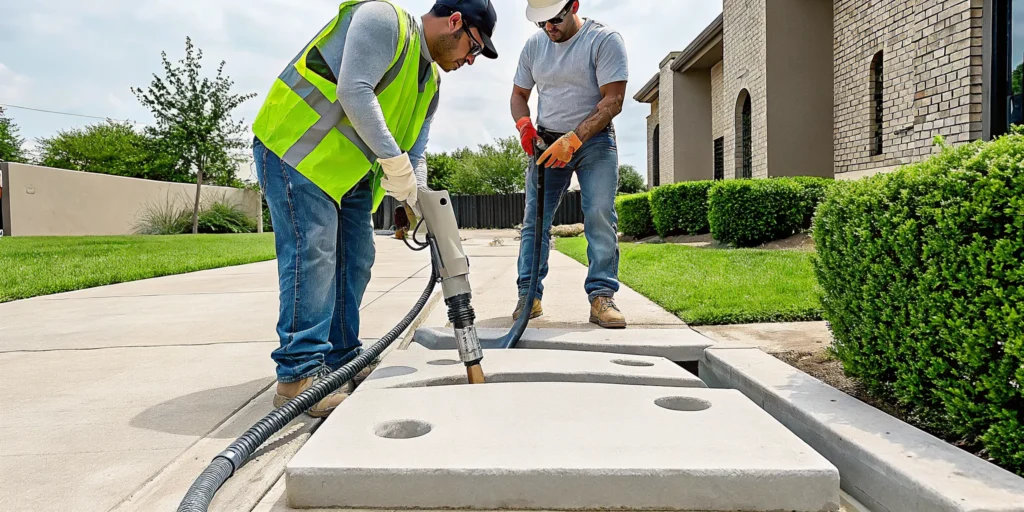
As a team that works on concrete and foundations across Dallas, we see uneven sidewalks every single day. It’s one of the most frequent issues homeowners face, thanks almost entirely to our expansive clay soil. This ground movement leads to sinking slabs and dangerous cracks that only get worse over time. With our local experience, we can show you what to look for and what your best options are. We’ll explain the most reliable methods for how do you fix uneven sidewalks in Dallas and guide you on choosing a contractor who gets the job done right.
Key Takeaways
- Diagnose the Real Problem: Uneven sidewalks in Dallas are usually caused by shifting clay soil, water erosion, or invasive tree roots. A successful repair starts with identifying the true source of the damage to ensure a long-term solution.
- Repair is Often Smarter than Replacement: Don’t automatically jump to a full replacement, which is the most expensive option. Concrete leveling can lift and restore your existing sidewalk, potentially saving you up to 70% and avoiding a major construction project.
- Partner with the City and a Pro: Dallas homeowners are responsible for sidewalk maintenance, but the city offers a cost-sharing program to help. To protect yourself from liability, act quickly and hire a reputable contractor who is insured, offers a warranty, and understands local conditions.
What Causes Uneven Sidewalks in Dallas?
That sinking or cracked sidewalk in front of your house is more than just an eyesore; it’s a common problem for homeowners across the Dallas area. These uneven surfaces create serious trip hazards and can detract from your home’s curb appeal. Before you can find a lasting solution, it helps to understand what’s happening beneath the surface. Most sidewalk issues in our region come down to three main culprits: our unique soil, water drainage, and even the beautiful trees lining our streets. Each of these factors can destabilize the ground your concrete rests on, leading to the cracks and uneven slabs you see.
Shifting Clay Soil
If you live in the Dallas area, you’re living on Blackland Prairie clay. This soil is notorious for causing structural problems because it expands significantly when it gets wet and shrinks dramatically as it dries out. This constant cycle of swelling and contracting creates powerful movement beneath your sidewalk. As the soil shifts, it can no longer provide stable support, causing concrete slabs to settle, sink, and crack. This expansive clay is the leading cause of foundation settlement and uneven concrete throughout Dallas neighborhoods, making it a primary suspect for any sidewalk issues you’re experiencing.
Poor Drainage and Soil Erosion
Water is essential for your lawn, but it can be your sidewalk’s worst enemy when it doesn’t drain properly. Heavy rains or even poorly aimed sprinklers can cause water to pool around and under your concrete slabs. Over time, this excess moisture washes away the soil that supports the concrete, a process known as erosion. This leaves behind empty pockets, or voids, in the ground. Without solid earth beneath it, the heavy concrete slab will eventually sink into these voids, causing it to crack or become uneven. Proper grading and drainage are key to preventing this kind of damage to your concrete surfaces.
Invasive Tree Roots
The mature trees that give our neighborhoods character can also be a source of sidewalk damage. As a tree grows, its roots spread out in search of water and nutrients. If a tree is planted too close to a walkway, its roots can grow directly underneath the concrete. Over the years, the slow but immense pressure from these growing roots can lift the heavy slabs, causing them to tilt and crack. You might notice a sidewalk that seems to be pushed up from below, which is a classic sign of root intrusion. We’ve seen and repaired this exact issue many times, as you can see in examples of our work.
How to Fix an Uneven Sidewalk
When you notice an uneven sidewalk, it’s a problem you want to fix before it gets worse. Luckily, you have a few excellent options depending on the severity of the issue. The right repair method will not only level out the concrete but can also address the root cause, preventing future headaches. Seeing the results of professional concrete repair can help you visualize the best solution for your home. From modern foam injections to a full replacement, here are the most common ways to restore your sidewalk.
Polyurethane Foam Injection
Polyurethane foam injection is a fast and minimally invasive way to fix a sunken sidewalk. This patented process involves drilling small, dime-sized holes into the affected slab. A two-part polyurethane foam is then injected beneath the concrete. As the foam expands, it fills any voids in the soil and gently lifts the slab back to its original position. The foam is incredibly lightweight yet strong, so it won’t add extra stress to the unstable soil below. Best of all, the process is quick, often taking just one day, and the sidewalk is ready for use almost immediately after the job is done.
Concrete Lifting and Mudjacking
Concrete lifting, often called mudjacking, is a more traditional method for raising sunken concrete. It works by pumping a slurry mixture, typically composed of soil, cement, and water, underneath the uneven slab. Like with foam injection, small holes are drilled into the sidewalk, and the material is injected under pressure. This fills the empty spaces and forces the slab upward until it’s level. While it’s a proven and often cost-effective solution, the material is heavier than polyurethane foam and may require a longer curing time before you can walk on the sidewalk again.
Concrete Grinding
If your sidewalk has only a minor height difference, concrete grinding can be a simple and effective fix. This method doesn’t lift the slab but instead grinds down the higher section to make it even with the lower one. A professional uses a specialized grinder to shave off small layers of the concrete surface, eliminating the trip hazard and creating a smooth transition. Concrete grinding is best for small, localized issues where the height difference is less than two inches. It’s a great cosmetic fix, but it doesn’t address any underlying soil problems that may have caused the slab to sink in the first place.
Full Concrete Replacement
When a sidewalk is severely cracked, crumbling, or has deep structural problems, a full replacement might be the only answer. This process is exactly what it sounds like: the old, damaged concrete is broken up, removed, and hauled away. The ground underneath is then prepared and re-graded to ensure a stable base before a brand new concrete slab is poured. While this is the most expensive and time-consuming option, it gives you a fresh start with a brand-new sidewalk. It’s the go-to solution when other repair methods aren’t enough to solve the problem for good.
How Much Does Sidewalk Repair Cost in Dallas?
Figuring out the budget for a home repair project is always the first step, and sidewalk repair is no different. The final cost can vary quite a bit because it depends on the type of damage and the method used to fix it. A small crack will naturally cost less to fix than a completely uprooted concrete slab. While the numbers here will give you a solid baseline, the only way to get a precise figure for your property is to have a professional take a look.
The good news is that you don’t have to guess. At Solid Base, we believe in transparency, which is why we offer free estimates for homeowners in the Dallas area. An expert can assess the damage, explain your options, and give you a detailed quote with no strings attached. This helps you understand exactly what the project involves and allows you to plan your budget accordingly, ensuring there are no surprises down the line.
Comparing Repair Costs
To give you a general idea, repair costs are often calculated per square foot and depend on the severity of the problem.
For minor issues, like hairline cracks less than two inches deep, you can expect to pay around $1 to $3 per square foot. This usually involves simple crack sealing. For more significant problems, such as wider cracks or uneven panels raised more than two inches, the cost is typically $3 to $8 per square foot. These repairs require more intensive work, like leveling. If you’re facing severe damage with crumbling concrete and deep cracks, a full replacement might be necessary, which can run $10 to $25 or more per square foot.
What Influences the Final Price?
Several factors can affect your final quote. The biggest one is the extent of the damage; more severe issues simply require more labor and materials. The accessibility of your sidewalk also plays a role. If the area is difficult to reach with equipment, labor costs may increase.
Other costs to consider include local permit fees, which are usually between $50 and $100. If you need to completely replace a section of your sidewalk, you’ll also have to account for the cost of breaking up and hauling away the old concrete, which can add another $3 to $8 per square foot to the total.
How Concrete Leveling Saves You Money
When you have an uneven sidewalk, your first thought might be that you need to tear it all out and start over. However, that’s often not the case. Concrete leveling, a key part of our concrete repair services, can be a much more affordable solution. In fact, it can save you up to 70% compared to the cost of a full replacement.
The process involves injecting a specialized material beneath the sunken slab, which fills any voids and gently lifts the concrete back to its original position. It’s a fast and effective fix that is typically completed in less than a day, and the results are built to last. This makes it a smart and economical choice for fixing uneven sidewalks without the mess and expense of a total replacement.
Who Is Responsible for Sidewalk Repairs in Dallas?
Figuring out who has to fix a cracked or uneven sidewalk can be confusing. Many homeowners assume it’s entirely the city’s job, but in Dallas, the reality is a bit different. The responsibility is actually a partnership between you and the city. Understanding your role in this process is the first step toward getting that sidewalk fixed and making the front of your property safe again. It’s a system designed to share the cost and upkeep of the thousands of miles of sidewalks that connect our neighborhoods. So, before you start budgeting for the full expense, let’s break down what you’re expected to cover and the help that’s available to you as a Dallas resident. This shared approach ensures that repairs are handled efficiently while keeping costs manageable for homeowners.
Your Responsibility as a Homeowner
In Dallas, homeowners are considered partners with the city in maintaining the public right-of-way. This means you are partly responsible for fixing the sidewalk that runs along your property line. If you have a cracked, crumbling, or uneven sidewalk, the city expects you to take the lead in arranging for its repair. While it might feel like one more thing on your to-do list, addressing these issues is a key part of homeownership in the city. Taking care of your sidewalk not only improves your home’s curb appeal but also contributes to the safety and walkability of your entire neighborhood. When you’re ready to tackle the project, a professional concrete repair service can provide a lasting solution.
Does the City of Dallas Help with Repair Costs?
Yes, there’s good news. You don’t have to shoulder the entire financial burden alone. The City of Dallas offers a cost-sharing program to help homeowners manage the expense of sidewalk repairs. Through this program, the city will pay for half of the replacement cost, which can significantly reduce your out-of-pocket expense. This initiative makes it much more affordable to fix hazardous sidewalks and maintain a safe environment. While the city’s program helps with the cost, you still need a qualified contractor to perform the work. If you’re concerned about covering your half, exploring financing options can help you manage the project without financial strain.
The Risks of Waiting to Repair
It’s tempting to ignore a small crack in the sidewalk, but even minor issues can turn into major liabilities. An uneven or broken sidewalk is a serious trip hazard for pedestrians, from kids on bikes to neighbors out for a walk. As the property owner, you could be held responsible if someone is injured due to a hazard you knew about but didn’t fix. This can lead to expensive personal injury lawsuits and complicated insurance claims. Beyond the legal risk, delaying repairs often allows the damage to worsen, as water intrusion and soil erosion continue to degrade the concrete. Addressing the problem early is the smartest way to protect yourself financially and ensure our work leaves your property safe for everyone.
How to Choose the Right Sidewalk Repair Contractor
Finding the right person for the job is just as important as choosing the right repair method. A great contractor will not only fix your uneven sidewalk but also give you peace of mind that the job was done correctly and will last. But with so many options out there, how do you find a reliable professional? It comes down to asking the right questions and looking for a few key signs of quality and trustworthiness. Here’s what to focus on to find a contractor you can count on.
Check for Licenses, Insurance, and Local Experience
First things first, make sure any contractor you consider is properly licensed and insured. Ask for proof of their general liability and worker’s compensation insurance. This isn’t just a formality; it protects you from any liability if an accident happens on your property during the repair. You also want a team with deep local experience. A contractor familiar with the Dallas area understands our unique clay soil and how it impacts concrete. These skilled professionals will know exactly what to look for and how to apply a solution that stands up to our specific environmental conditions, ensuring a more durable and effective repair.
Look for Warranties, Positive Reviews, and Free Estimates
A reputable contractor will be transparent about their process and pricing. Always start by getting a free, no-obligation estimate. It’s a good practice to get a few quotes to compare services and costs, which helps you understand the fair market rate for your project. Beyond the initial quote, look for a company that stands behind its services with a solid warranty. This shows they are confident in their materials and workmanship. You can also learn a lot from what other homeowners have to say. Check online reviews to get a feel for their reliability and the quality of their work before you make a final decision.
How to Prevent Future Sidewalk Problems
A quick fix that doesn’t address the root cause is just a temporary solution. A truly great contractor will investigate why your sidewalk became uneven in the first place. They should discuss potential underlying issues with you, such as poor drainage or soil erosion around the concrete slabs. It’s also important to know that an uneven sidewalk can sometimes be a red flag for bigger issues. Shifting soil can affect more than just your walkway; it might indicate a problem with your home’s foundation. A thorough contractor will point this out, helping you prevent more extensive and costly foundation repair down the road.
Related Articles
- How to Fill Large Cracks in Concrete Like a Pro
- Concrete Repair – Solid Base
- Foundation Repair – Solid Base
- Ultimate Guide to Foundation Repair Options
- A Homeowner’s Guide to Foundation Repair Services
Frequently Asked Questions
How do I know which repair method is best for my sidewalk? The right fix really depends on what’s causing the problem. If your sidewalk has sunk but is still in good shape, a lifting method like polyurethane foam injection is usually a great, long-lasting choice. For a very small height difference, grinding can smooth things out. However, if the concrete is completely crumbled and broken apart, a full replacement is likely the only way to go. The best first step is to have a professional look at it; they can identify the root cause and recommend the most effective solution for your specific situation.
How long will my repaired sidewalk stay level? When a repair is done correctly, it should last for many years. Methods like polyurethane foam injection are designed to be a permanent solution because they not only lift the concrete but also stabilize the soil underneath it, preventing future sinking. A simple patch job or grinding might fix the immediate trip hazard, but it doesn’t solve the underlying soil issue. A quality repair from a professional contractor addresses the source of the problem, giving you a durable fix that you won’t have to worry about again anytime soon.
Is polyurethane foam injection safe for my lawn and plants? Yes, it’s a very safe and clean process. The polyurethane foam is an inert material, which means once it cures (a process that happens very quickly), it doesn’t break down or leach any chemicals into the surrounding soil. It’s an environmentally stable product that won’t harm your lawn, nearby garden beds, or tree roots. The injection process itself is also very tidy, using only small, drilled holes that are patched up afterward, leaving very little trace.
My sidewalk only has a tiny crack. Can I just ignore it? It’s tempting to overlook a small crack, but it’s better to address it sooner rather than later. That tiny crack is an open invitation for water to seep under your concrete slab. Here in Dallas, that water can speed up soil erosion or cause our clay soil to expand and contract more dramatically. Over time, this will make the crack bigger and can lead to the slab sinking or shifting. Sealing a small crack is a simple, inexpensive fix that can prevent a much bigger and more costly repair project down the road.
How do I start the process for the Dallas cost-sharing program? The best way to begin is by contacting the City of Dallas directly. You can usually find information on the city’s official website by searching for “sidewalk repair program” or by calling the public works department. They will provide you with the necessary applications and guidelines. Many homeowners find it helpful to get a quote from a qualified contractor first, as you will need a professional to perform the work. A contractor familiar with the program can often help you with the steps involved.