
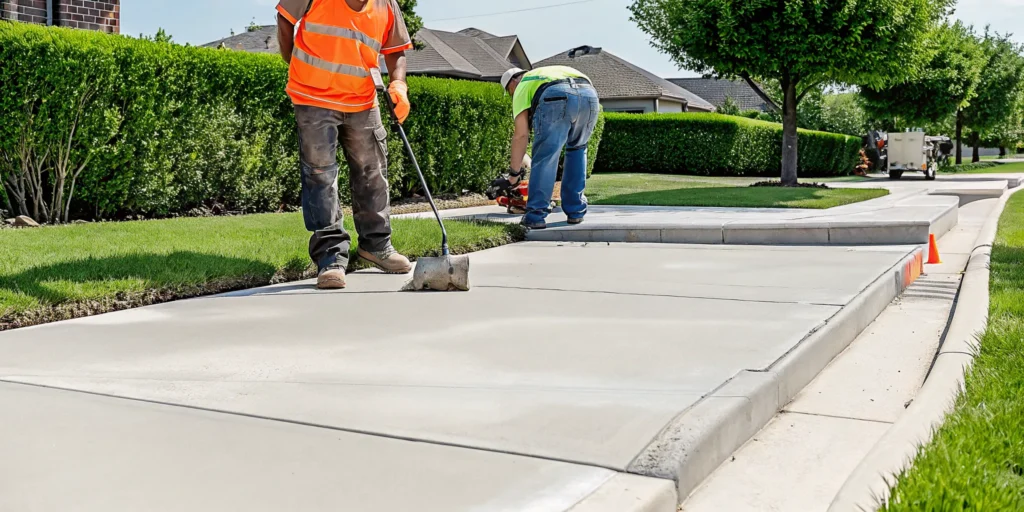
That cracked, uneven sidewalk in front of your home is more than just an eyesore; it’s a potential liability you might not even know you have. Many homeowners are surprised to learn that in most Dallas-Fort Worth communities, the responsibility for sidewalk maintenance falls directly on them, not the city. This means a simple trip-and-fall accident on your property could lead to serious legal and financial consequences. Understanding your role as a property owner is crucial. This guide will clarify your responsibilities and explain the risks, helping you see why proactive uneven sidewalk repair Dallas Fort Worth is one of the smartest investments you can make in your home’s safety.
Key Takeaways
- Understand the Problem and Your Role: Uneven sidewalks in DFW often stem from shifting soil or tree roots, and as the homeowner, you are typically responsible for the repairs to ensure safety and avoid liability.
- Prioritize Modern Repair Methods: Polyurethane foam injection is often a smarter choice than a full replacement; it’s a faster, less disruptive, and more affordable solution that also stabilizes the underlying soil for a long-term fix.
- Vet Your Contractor Carefully: Select a licensed and insured professional with specific experience in North Texas, and always request a free estimate and a strong warranty to ensure you get a high-quality, lasting repair.
What Causes Uneven Sidewalks in Dallas-Fort Worth?
That sinking, cracked sidewalk in front of your home is more than just an eyesore; it’s a sign that something is happening beneath the surface. In the Dallas-Fort Worth area, our unique environment presents several challenges for concrete slabs. From the soil under our feet to the unpredictable weather, a few key culprits are likely responsible for turning your smooth walkway into a tripping hazard. Understanding what’s causing the problem is the first step toward finding a lasting solution. Most uneven sidewalks are the result of unstable soil, invasive tree roots, water damage, or the stress of extreme weather.
The Problem with Expansive Clay Soil
Much of North Texas is built on expansive clay soil, which acts like a sponge. When it rains, this soil swells up with moisture, and during our dry, hot summers, it shrinks and cracks. This constant cycle of shrinking and swelling creates instability right under your sidewalk. As the soil shifts, it can no longer provide the even, solid support your concrete needs. This is a significant reason for sinking concrete, as the ground movement eventually causes slabs to settle unevenly, creating dangerous ledges and cracks. It’s a common issue that requires a professional understanding of North Texas soil.
When Tree Roots Take Over
The beautiful, mature trees that give our neighborhoods character can also be a major source of sidewalk damage. As trees grow, their roots expand outward in search of water and nutrients. If a root system runs under your sidewalk, its slow but powerful growth can push against the concrete from below. This pressure can cause the sidewalk to lift, heave, and crack. Tree roots can cause sidewalks to become uneven as they grow, disrupting the surface and creating significant trip hazards. If you notice a slab lifting near a tree, you’re likely seeing the need for a concrete repair caused by this natural process.
The Impact of Water and Poor Drainage
Water is essential for life, but it can be destructive to your home’s concrete surfaces when it isn’t managed properly. Heavy rainfall, common in the DFW area, can erode the soil from beneath your sidewalk slabs. If your property has poor drainage, or if downspouts are dumping water right next to your walkway, the problem gets worse. This water washes away the dirt that supports the concrete, creating empty pockets or voids. Without solid ground underneath, the heavy concrete slab will eventually crack and sink into the void. This kind of damage is often linked to broader drainage issues that can also affect your home’s foundation.
How DFW’s Weather Affects Concrete
Our weather in Dallas-Fort Worth can be intense, with scorching summer heat and occasional winter freezes. These extreme temperature fluctuations cause concrete to expand and contract. Over time, this repeated stress can lead to cracks and surface spalling, which is when the top layer of the concrete flakes away. While weather alone might not cause a sidewalk to sink, it weakens the concrete’s structural integrity. This makes it much more vulnerable to damage from shifting soil, tree roots, and water erosion. You can see our work to understand how we address these weather-related issues for DFW homeowners.
Could Your Uneven Sidewalk Be a Liability?
That uneven sidewalk in front of your house is more than just an eyesore; it’s a potential legal and financial hazard. Many homeowners assume the city is responsible for all sidewalk maintenance, but that’s often not the case here in the Dallas-Fort Worth area. When someone trips on that cracked or sunken slab, the liability could fall directly on you. This can come as a shock, turning a simple crack into a source of significant stress and financial risk.
Understanding your responsibility is the first step toward protecting yourself from costly lawsuits and insurance claims. It’s about shifting your perspective from seeing a simple repair job to recognizing a crucial part of maintaining a safe property. Ignoring the problem won’t make it go away, and the potential consequences are too serious to overlook. Let’s walk through the specific risks you face as a property owner and clarify who is typically responsible for making the repairs in our local communities.
Your Risk: Trip-and-Fall Accidents
The most immediate danger of an uneven sidewalk is the risk of a trip-and-fall accident. A raised edge or a sunken slab can easily catch the foot of a jogger, a child, or a mail carrier, leading to serious injuries. As the owner of the adjacent property, you could be held liable for those injuries. This can lead to expensive personal injury lawsuits and claims against your homeowner’s insurance, which could cause your premiums to increase. Fixing your sidewalk is a proactive way to manage this risk, ensuring the safety of your community and protecting your finances from unexpected legal issues.
Meeting ADA Compliance
The Americans with Disabilities Act (ADA) sets standards for accessibility on public pathways, and these guidelines are a great measure for sidewalk safety. While often applied to commercial properties, the principles are important for residential areas too. Severely cracked or uneven sidewalks can create barriers for people using wheelchairs, walkers, or other mobility aids. Ensuring your sidewalk is smooth and free of obstructions makes your neighborhood more accessible and inclusive for everyone. Following these standards is a good practice that helps reduce your overall liability and demonstrates care for your community.
Who’s Responsible for Sidewalk Repair?
In many DFW cities, the responsibility for sidewalk maintenance falls directly on the homeowner. For instance, in Fort Worth, property owners are responsible for the repair of sidewalks adjacent to their land. The city of Dallas also places partial or full responsibility on homeowners for fixing and replacing their sidewalks. You can’t assume the city will handle it. This means if your sidewalk is cracked, sunken, or uneven, the duty to fix it is likely yours. Taking action and seeking professional concrete repair is the best way to resolve the issue and remove the liability.
Your Sidewalk Repair Options
When you notice an uneven sidewalk on your property, it’s easy to assume you’re facing a massive, expensive tear-out project. The good news is that’s rarely the only choice. Several repair methods can correct the problem efficiently and affordably, saving you from the headache and cost of a full replacement. The right one for you depends on the extent of the damage and the underlying cause, whether it’s from shifting soil, invasive tree roots, or water issues. Understanding your options helps you make an informed decision that fits your budget and provides a lasting fix.
Before you call a contractor to rip out the old concrete, it’s worth learning about the repair techniques available. Methods like mudjacking and polyurethane foam injection are designed to lift and level existing concrete, which is far less disruptive than demolition. These solutions not only fix the immediate trip hazard but can also address the soil problems that caused the sinking in the first place. A full replacement is sometimes necessary, but it’s typically reserved for concrete that is beyond saving. Let’s walk through the three main approaches, from traditional fixes to modern solutions, so you can see what’s possible for your home. Each has its own set of benefits and is suited for different situations. Getting familiar with them is the first step toward restoring your sidewalk’s safety and appearance.
Mudjacking
Mudjacking is a classic method for lifting sunken concrete. The process involves pumping a slurry, which is a mixture of cement, soil, and other materials, into holes drilled through the concrete slab. This mixture fills the void underneath and hydraulically lifts the slab back into place. It’s a technique that has been used for decades and can be a functional solution for leveling large sections of concrete. While it can be cost-effective, the material is heavy, and the drilled holes are noticeably larger than those used in more modern methods.
Polyurethane Foam Injection
A more advanced and precise alternative is polyurethane foam injection. This technique uses a high-density, lightweight foam that is injected as a liquid through small, dime-sized holes in the sidewalk. Once underground, the foam expands, filling every void and gently lifting the concrete back to its original position. This method of concrete repair not only fixes the symptom but also addresses the cause by stabilizing the soil beneath. The foam is waterproof, so it won’t wash away, and it cures in minutes. Most jobs are finished in just a few hours, and you can use your sidewalk almost immediately.
Full Concrete Replacement
Sometimes, a sidewalk is too damaged for repair. If the concrete is severely crumbled, shattered into many pieces, or has widespread, deep cracks, a full replacement might be your only option. This involves demolishing and removing the old sidewalk, preparing the ground, and pouring brand-new concrete. It’s the most disruptive, time-consuming, and expensive route. Before you commit to a full replacement, it’s always worth getting a professional opinion to see if you can save time and money by exploring repair options first. Often, even significant-looking problems can be fixed without a complete tear-out.
Why Polyurethane Foam Is the Smarter Fix
When you’re weighing your sidewalk repair options, polyurethane foam injection often comes out on top. It’s a modern approach that directly addresses the common causes of uneven concrete in North Texas without the cost and headache of a full replacement. This method, also known as poly-lifting or poly-leveling, uses a high-density foam to lift and stabilize sunken slabs from below. For homeowners in the Dallas-Fort Worth area, it offers a powerful combination of speed, durability, and affordability that older methods just can’t match. Let’s look at why this is the go-to solution for so many.
Quick Curing with Minimal Disruption
Your daily routine shouldn’t have to stop for a sidewalk repair. Unlike a full concrete replacement that can turn your front yard into a construction zone for days, polyurethane foam injection is incredibly fast and clean. Our professional team can complete most jobs in just a few hours. We drill a few small, dime-sized holes into the concrete slab and inject the foam, which expands and lifts the concrete back into place. The foam cures quickly, and you can typically walk on your sidewalk within 30 minutes of the job’s completion. This means less disruption to your family, your landscaping, and your life. It’s a simple, efficient concrete repair that gets the job done right.
A Long-Term Solution for DFW Soil
In North Texas, a lasting repair has to stand up to our challenging expansive clay soil. Polyurethane foam is uniquely suited for this. Once injected, the structural-grade polymer creates a strong, stable base beneath your sidewalk. It’s waterproof, so it won’t wash away or erode from heavy rains or shifting, moist soil. Unlike mudjacking slurry, the foam doesn’t shrink or break down over time. Instead, it compacts the loose soil around it and fills every void, preventing future settlement. This method provides a durable, long-term fix that addresses the root cause of the problem, giving you peace of mind that your sidewalk will stay level for years to come. Our team of experts uses only proven products designed for this purpose.
Comparing the Costs: Foam vs. Replacement
Fixing your sidewalk shouldn’t break the bank. Tearing out and replacing an entire concrete slab is a major expense, involving costs for demolition, hauling away old material, and pouring new concrete. Polyurethane foam injection, on the other hand, can save you up to 70% compared to the cost of replacement. Because we are targeting the specific problem area instead of redoing the entire sidewalk, the process is much more efficient and affordable. You avoid the extra costs and hassle associated with a total tear-out. If you’re curious about what your specific repair might cost, you can always get a free estimate to see the savings for yourself.
How to Choose a DFW Sidewalk Repair Contractor
Finding the right person for the job can feel like the hardest part of any home repair project. When it comes to your sidewalk, you want a contractor who not only fixes the problem but ensures it stays fixed. The good news is that a few key questions can help you separate the pros from the rest. Taking a little time to vet your options will give you peace of mind and a safe, level sidewalk for years to come. Here’s what to look for when choosing a sidewalk repair contractor in the Dallas-Fort Worth area.
Check for Licensing, Insurance, and Local Expertise
This is the absolute baseline for any contractor you consider hiring. Proper licensing proves they meet state and local requirements, while insurance protects you from any liability if an accident happens on your property. Don’t just take their word for it; ask to see proof. Beyond the paperwork, look for a team with deep local expertise. DFW’s expansive clay soil presents unique challenges, so you want a contractor who understands these specific conditions. A company with a long history in North Texas will have the right experience to provide a lasting concrete repair, not just a temporary patch.
Ask About Methods, Materials, and Pricing
Once you’ve confirmed a contractor is qualified, it’s time to talk specifics. Ask them to walk you through their proposed repair method. Will they use polyurethane foam injection, mudjacking, or recommend a full replacement? A great contractor will explain the pros and cons of each option for your situation. For example, many modern contractors use high-density polyurethane foam to lift and level sunken concrete because it’s a durable, minimally invasive fix. Also, make sure you get a clear, itemized quote. Understanding the breakdown of costs for materials and labor helps you accurately compare offers and ensures there are no surprises when the bill arrives.
Look for Free Estimates and Strong Warranties
A confident and reputable contractor will always offer a free, no-obligation estimate. This is a standard practice that allows you to gather information without any pressure. It’s a smart idea to get at least two or three quotes from different companies. This isn’t just about finding the lowest price; it’s about comparing the proposed solutions, the materials used, and the overall value. Finally, always ask about warranties. A strong warranty shows that the company stands behind its work and is committed to providing a long-term solution. It’s your assurance that if any issues arise after the job is done, they’ll be there to make it right.
Related Articles
- Concrete Repair – Solid Base
- Polyurethane Slab Jacking: A Homeowner’s Guide
- How to Fill Large Cracks in Concrete Like a Pro
- PolyLevel – Solid Base
- Ultimate Guide to Foundation Repair Options
Frequently Asked Questions
Why can’t I just leave my uneven sidewalk as it is? An uneven sidewalk is a significant safety hazard that can lead to trip-and-fall accidents. As the property owner, you could be held financially responsible for any injuries that occur. In many Dallas-Fort Worth cities, sidewalk maintenance is the homeowner’s duty, not the city’s. Fixing it is a proactive step to protect yourself from potential lawsuits and keep your property safe for everyone.
Is polyurethane foam really better than just pouring new concrete? For most situations involving sunken slabs, yes. A full replacement is a disruptive and expensive project that involves demolition and days of waiting for new concrete to cure. Polyurethane foam injection saves your existing sidewalk by lifting it from below. This process is much faster, significantly more affordable, and addresses the underlying issue by stabilizing the soil, which simply pouring a new slab doesn’t do.
How long does a polyurethane foam repair take, and can I use my sidewalk right away? One of the biggest advantages of polyurethane foam is its speed. Most sidewalk repair jobs are completed in just a few hours. The foam itself cures very quickly, meaning you can walk on your newly leveled sidewalk in about 30 minutes after the work is finished. There’s minimal disruption to your yard and your daily routine.
My sidewalk is sinking because of the clay soil here in DFW. Will this foam method actually last? Absolutely. The high-density polyurethane foam is an ideal solution for our expansive clay soil. The material is waterproof, so it won’t erode or wash away during heavy rains. It’s also inert, so it won’t shrink or break down over time. By filling voids and compacting loose ground, the foam creates a strong, stable base that prevents the soil from shifting and causing the sidewalk to sink again.
What if my sidewalk is really badly cracked? Can it still be repaired? Polyurethane foam is excellent for lifting and leveling sunken concrete slabs, even those with some cracks. However, if your sidewalk is completely shattered into many small pieces or is crumbling apart, a repair might not be possible. In those severe cases, a full replacement may be the only realistic option. A professional evaluation is the best way to determine the right solution for your specific situation.